
The campaign to cripple Iran’s military had been underway for one day when U.S. forces experienced their single deadliest episode. An explosive-laden one-way attack drone slipped through the defensive layers surrounding a tactical operations center at the Port of Shuaiba in Kuwait.
Six U.S. Army Reserve soldiers, assigned to the 103rd Expeditionary Sustainment Command, were killed when that Iranian drone struck their position on March 1. Several others were injured.
The March 1 strike showcased the challenges that can arise in a large-scale conflict, when waves of attack drones are mixed into salvos of ballistic missiles to exhaust defensive networks. These relatively inexpensive weapons are driving military planners to reevaluate their defensive systems and strategies.
Addressing the deadly attack, War Secretary Pete Hegseth said the U.S. military has “incredible air defenders,” but “every once in a while, you might have one, unfortunately, ... that makes its way through.”
A seventh U.S. soldier died on March 8 as a result of injuries he sustained in a separate drone attack targeting the Prince Sultan Air Base in Saudi Arabia on March 1.
Attack drones also have exacted a toll on other allies and partners in the Middle East.
Bahrain’s Ministry of Interior reported that several civilians were injured in drone strikes on the island of Sitra on March 9.
A French soldier was killed and six of his teammates were injured when a one-way attack drone struck their outpost in Iraq on March 12.
Drones have been used to set fire to fuel depots in Persian Gulf states that have hosted U.S. forces.
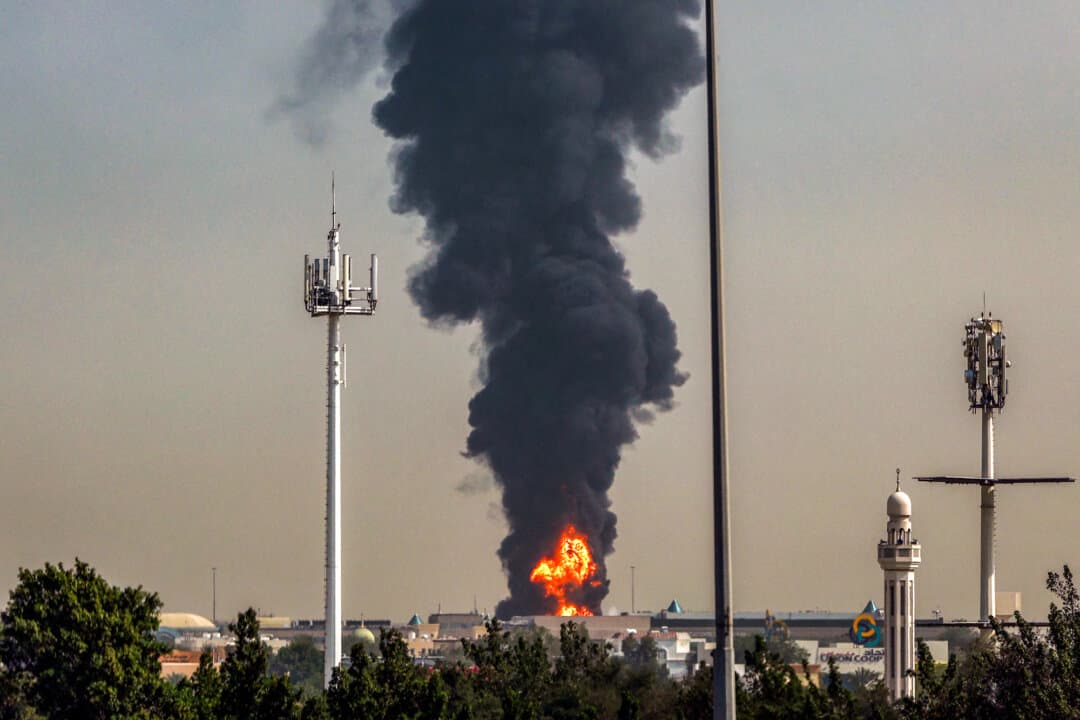
A smoke plume rises from a fire near Dubai International Airport in Dubai, United Arab Emirates, on March 16, 2026. Flights gradually resumed after a March 1 Iranian drone attack that was part of a broader wave of strikes targeting U.S. assets across the Gulf. (AFP via Getty Images)
“The challenge, particularly with Iran, is that Iran has a very wide selection of potential targets,” said Doug Bandow, a senior fellow at the Cato Institute who specializes in foreign policy.
“It’s very hard to defend everything across the Gulf when you’re talking about airports and air bases, energy centers, et cetera.”
Lessons From Ukraine
Before the current Middle East conflict, one-way attack drones had already begun reshaping modern battlefield dynamics.
After Russian troops poured into eastern Ukraine in 2022, Ukrainian forces rapidly weaponized disposable drones to slow their advance.
Without full control of the skies over Ukraine, Russian forces have often used one-way attack drones to hammer Ukrainian cities and critical infrastructure. A prominent Russian propeller-driven one-way attack drone design used in the Ukraine conflict—known as the Geran-2—is derived from the Iranian Shahed 136 drone, which is now featuring heavily in the ongoing clash in the Middle East.
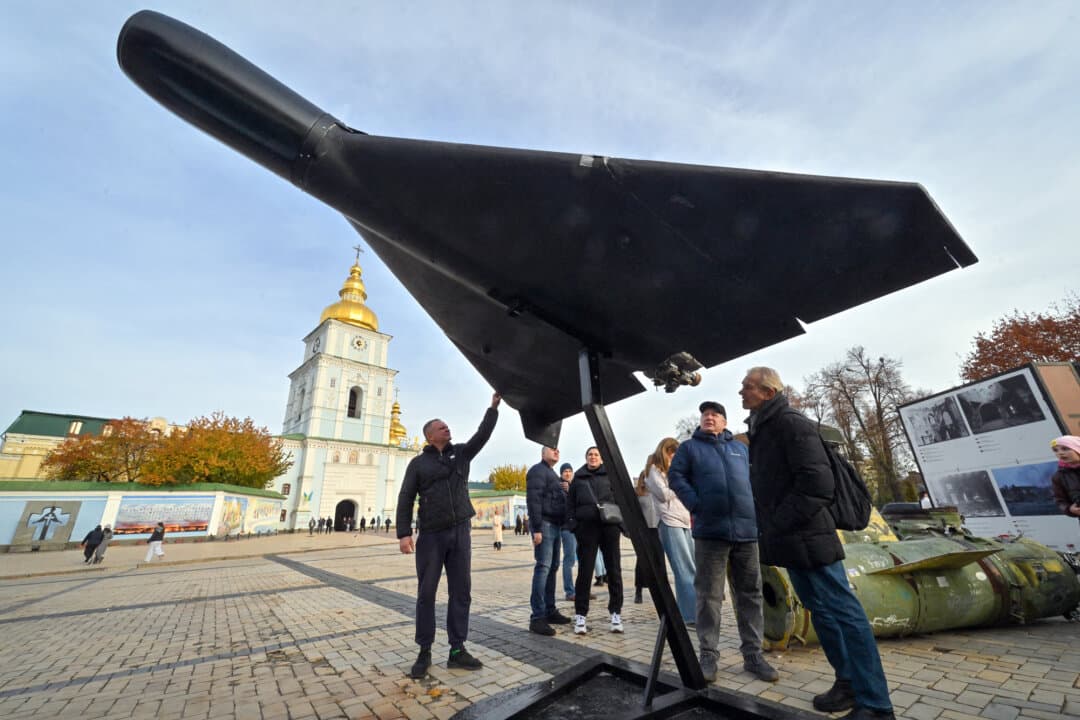
People look at an Iranian-designed Shahed 136 (Geran-2) drone of the Russian Army at an open-air exhibition of destroyed Russian equipment in Kyiv, Ukraine, on Nov. 2, 2025. Without full control of the skies over Ukraine, Russian forces have often used one-way attack drones to hammer Ukrainian cities and critical infrastructure. (Sergei Supinsky/AFP via Getty Images)
The U.S. military has developed its own Shahed derivative, called the low-cost uncrewed combat attack system (LUCAS). U.S. forces have incorporated LUCAS attack drones in ongoing strike operations against Iran.
U.S. military planners have also taken steps to bolster air-defense capabilities since the start of the Ukraine conflict.
A 2024 Army force design document called for the formation of multiple new battalions to provide short-range air-defense capabilities against aerial drone attacks.
Last summer, Hegseth ordered the establishment of a joint interagency task force to find ways to speed the delivery of additional capabilities for countering aerial drones.
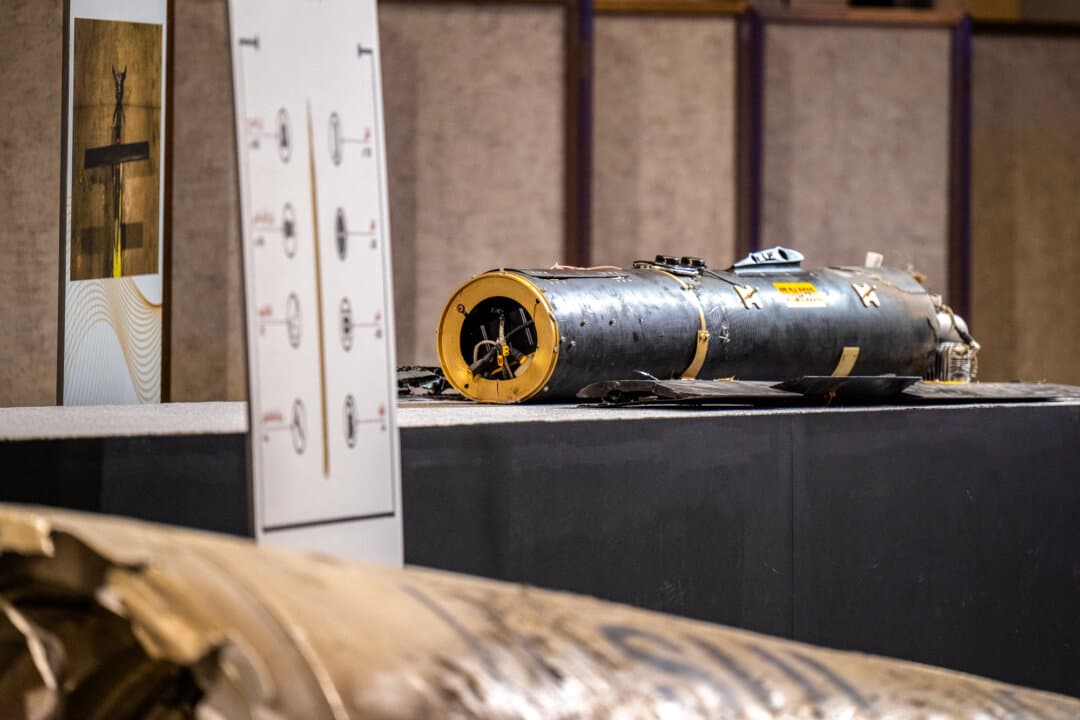
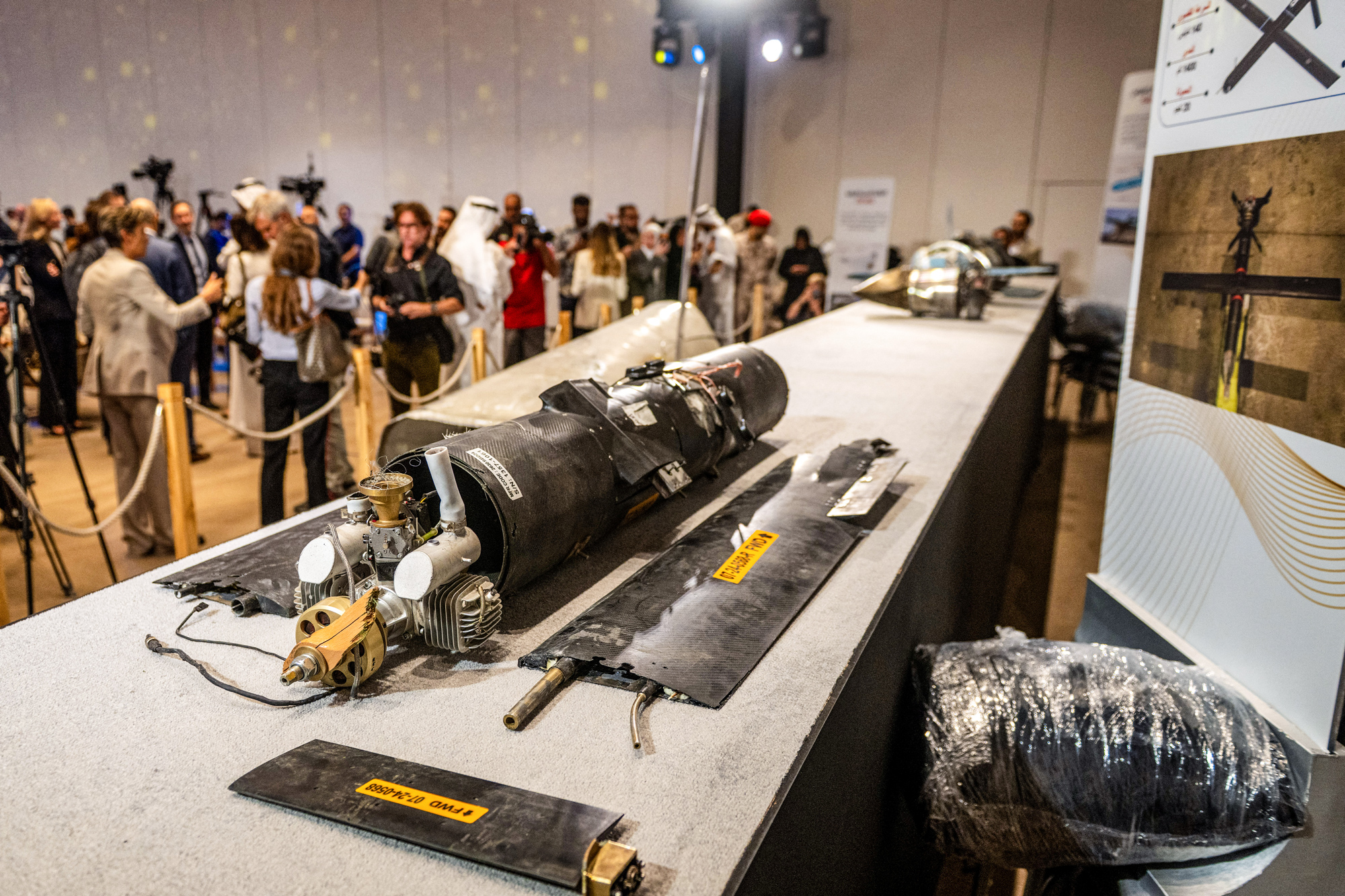
Pieces of missiles and drones recovered after Iran's strikes are displayed during a government press briefing in Abu Dhabi, United Arab Emirates, on March 3, 2026. (Ryan Lim/AFP via Getty Images)
A Multinational Effort
U.S. and Israeli forces have been working to cut off the Iranian drone threat at its source.
In his latest assessment on March 19, Hegseth said that recent joint strikes have targeted Iranian drone production facilities and that launches of Iranian one-way attack drones remain down by 90 percent from their peak near the start of the conflict.
Even at a fraction of peak launch rates, Iranian drone attacks are reported in the dozens each day by Persian Gulf states. On March 20, Kuwait, Saudi Arabia, and the United Arab Emirates had reported more than 50 total drone incursions over their airspaces.
A Pentagon spokesperson said Bahrain, Jordan, Kuwait, Qatar, Saudi Arabia, and the United Arab Emirates have all joined efforts to intercept drone attacks. Some of those efforts are taking place mid-flight.
Gen. Dan Caine, chairman of the Joint Chiefs of Staff, said during the Pentagon press briefing on March 19 that partner forces in the region have flown AH-64 Apache attack helicopters to shoot down Iranian drones.
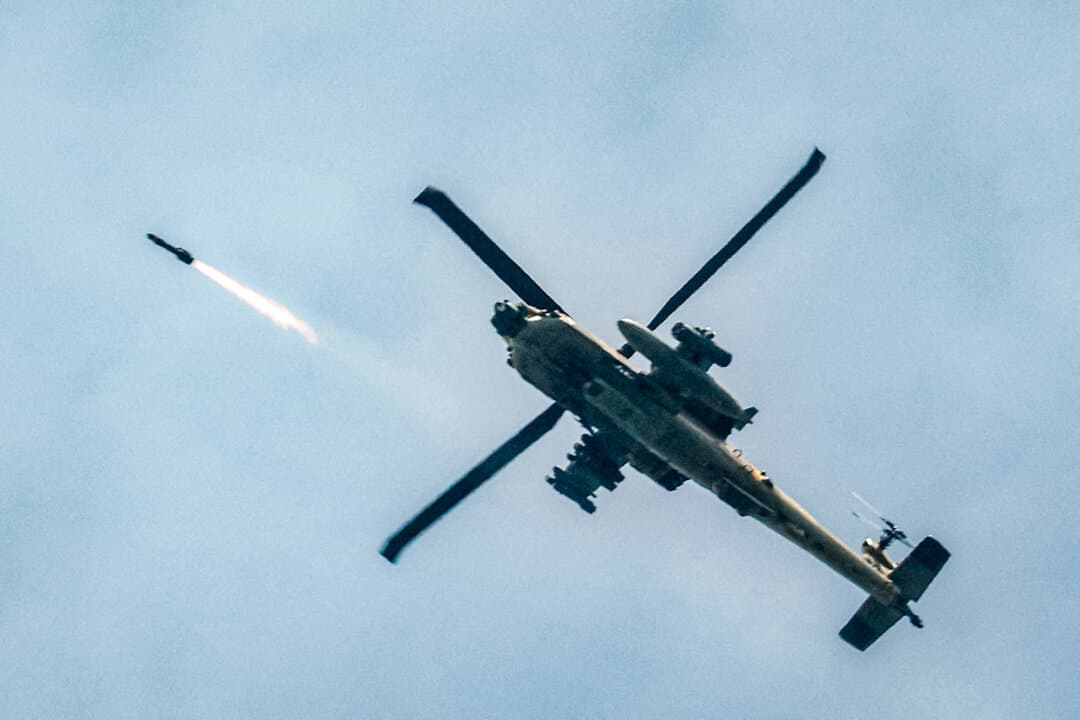
An Israeli Air Force AH-64 Apache attack helicopter fires rockets along the Israel–Lebanon border on March 18, 2026. On March 19, U.S. Secretary of War Pete Hegseth said joint U.S.–Israeli strikes had targeted Iranian drone production facilities, with launches of one-way attack drones down by about 90 percent from their peak. (Jalaa Marey/AFP via Getty Images)
The Advanced Precision Kill Weapon System—a 2.75-inch-diameter Hydra rocket retrofitted with a guidance kit—can be used for counter-drone purposes. These rockets can be mounted on the Apache helicopter or jet aircraft for aerial interceptions. A ground-launched version of the rocket is also available.
Not all attack drones can be destroyed on the production line, on their launchers, or mid-flight. Systems such as the counter rocket, artillery, and mortar system (C-RAM)—which can fire up to 75 air-bursting 20mm shells per second—may provide a last line of defense close to an attack drone’s intended target.
The U.S. Embassy in Baghdad was struck on March 17. Witnesses told Reuters that a C-RAM shot down two incoming drones, but a third struck inside the embassy compound.
Of the 25 attack drones detected in Kuwait’s airspace on March 20, Kuwaiti forces were able to intercept 15.
In response to a request for comment, a U.S. Central Command spokesperson declined to share attack drone interception rates by U.S. and partner forces during the ongoing conflict.
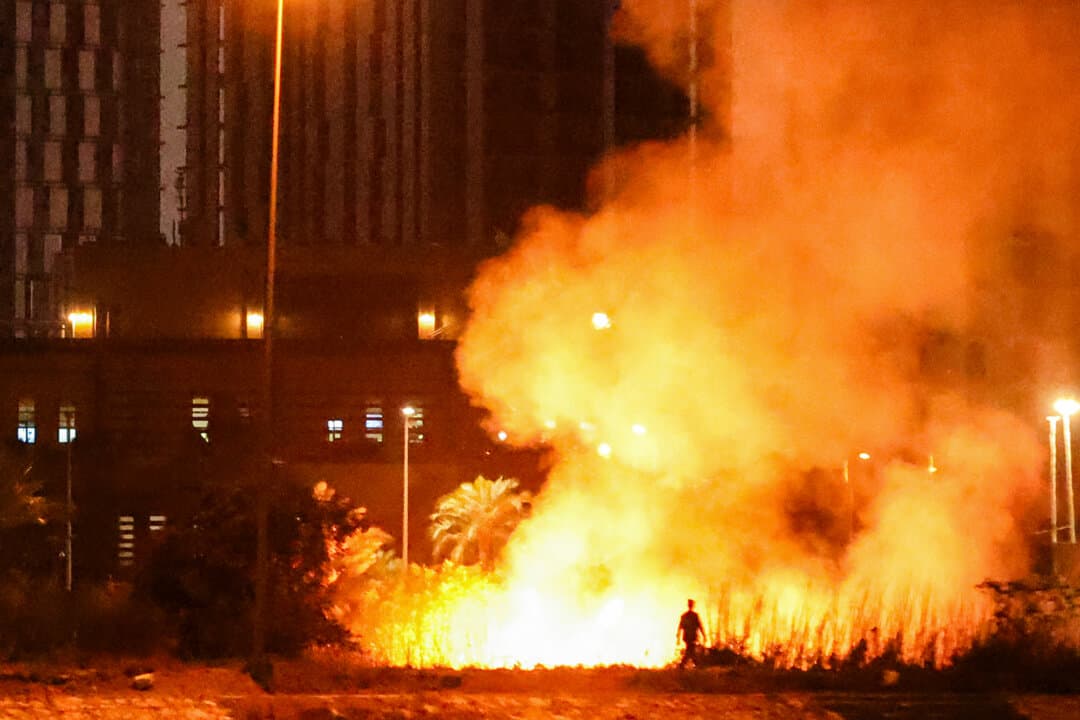
A person walks near a fire burning outside the U.S. Embassy compound following a drone and rocket attack in the fortified Green Zone in Baghdad, Iraq, on March 17, 2026. (Ahmad Al-Rubaye/AFP via Getty Images)
Searching for Cheaper Countermeasures
The cost and ease of production of one-way attack drones make them difficult to counter economically.
Bandow said that Shahed-style drones costing tens of thousands of dollars could be used to destroy far more expensive systems, such as a multimillion-dollar tank. Even the systems used to shoot down these attack drones could be more expensive than the drones themselves.
“Very often, the missiles used to try to take them down [cost] in the millions,” Bandow said.
The rapid adoption of cheap drones in modern warfare may vex military planners who spent years treating air defense as a head-to-head matchup with an enemy on near-equal technological footing.
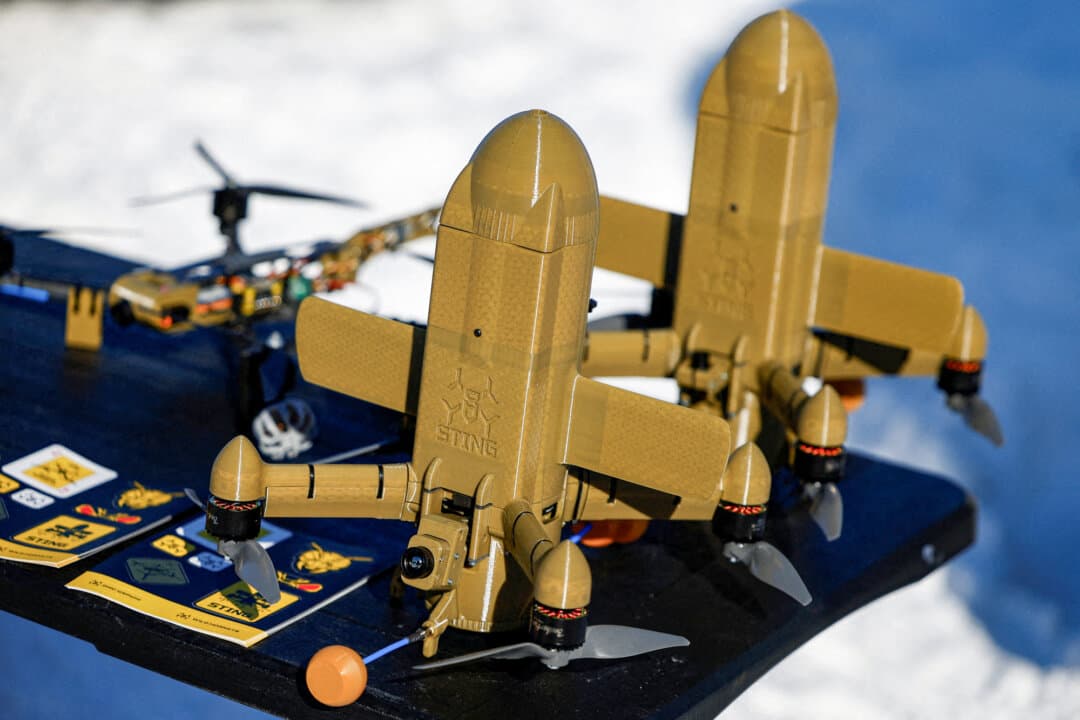
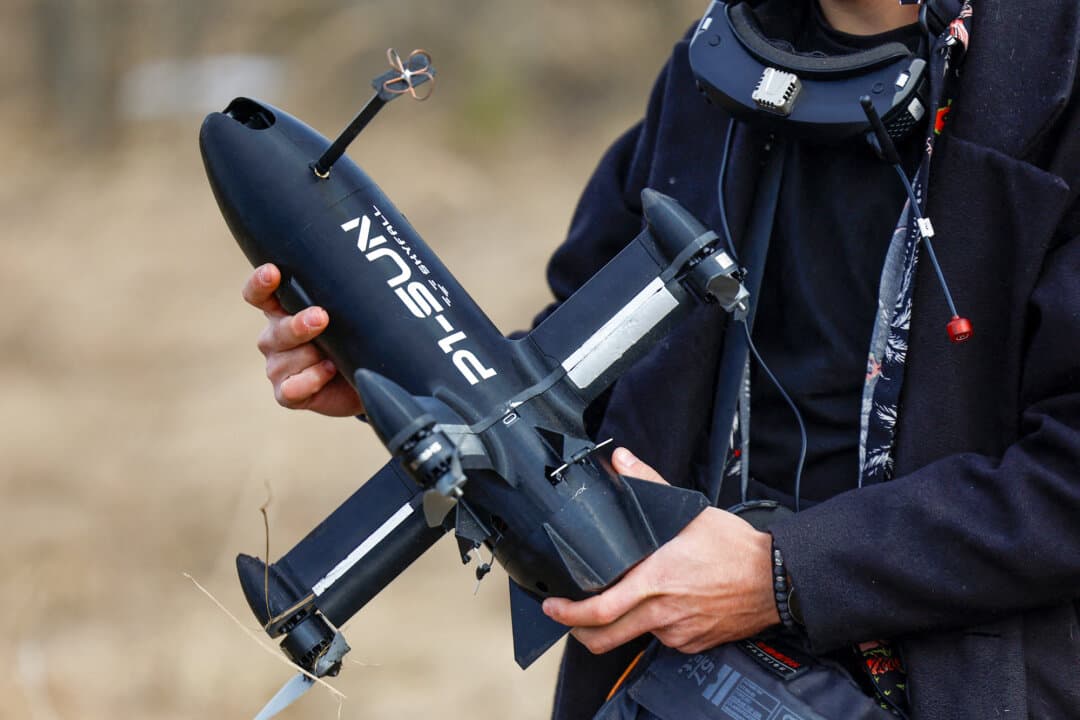
(Left) A STING FPV interceptor drone is displayed at an exhibition in Ukraine on Feb. 20, 2026. A Ukrainian security official said on March 20 that Ukraine had sent equipment and operators to several Gulf Arab states to assist with drone interception during the Iran conflict. (Right) A SkyFall employee carries a P1-Sun FPV interceptor drone before a test flight at a training ground in Ukraine on March 6, 2026. (Valentyn Ogirenko/Reuters/File Photo)
“We always thought it would be, you know, $2 million missile against $2 million missile,” said Jeff Thompson, president and CEO of drone technology company Red Cat Holdings. “When you throw in cheap Shahed 136s that are $30,000 or $40,000, that changes everything.”
Thompson said he has been staying up to date not just with the latest in one-way attack drone developments, but also with the tools that can stop them.
So-called non-kinetic methods of interception—including signal jamming and directed energy weapons—could lower the costs for blunting drone attacks. But non-kinetic interceptors aren’t a panacea.
Thompson said directed energy systems, such as lasers and high-powered microwave bursts, require large power sources.
“You can’t just depend on those to be there, protecting you for 24 hours, because you might not have enough power to do that,” he said.
Irina Tsukerman, president of security advisory Scarab Rising Inc., said attack drones have also become increasingly resilient to signal jamming.
“Flight routes are usually loaded before takeoff, after which the aircraft will follow internal navigation supported by inertial systems and periodic satellite correction when available,” Tsukerman told The Epoch Times. “Interference against GPS can degrade accuracy, sometimes significantly, but degradation does not necessarily translate into prevention.”
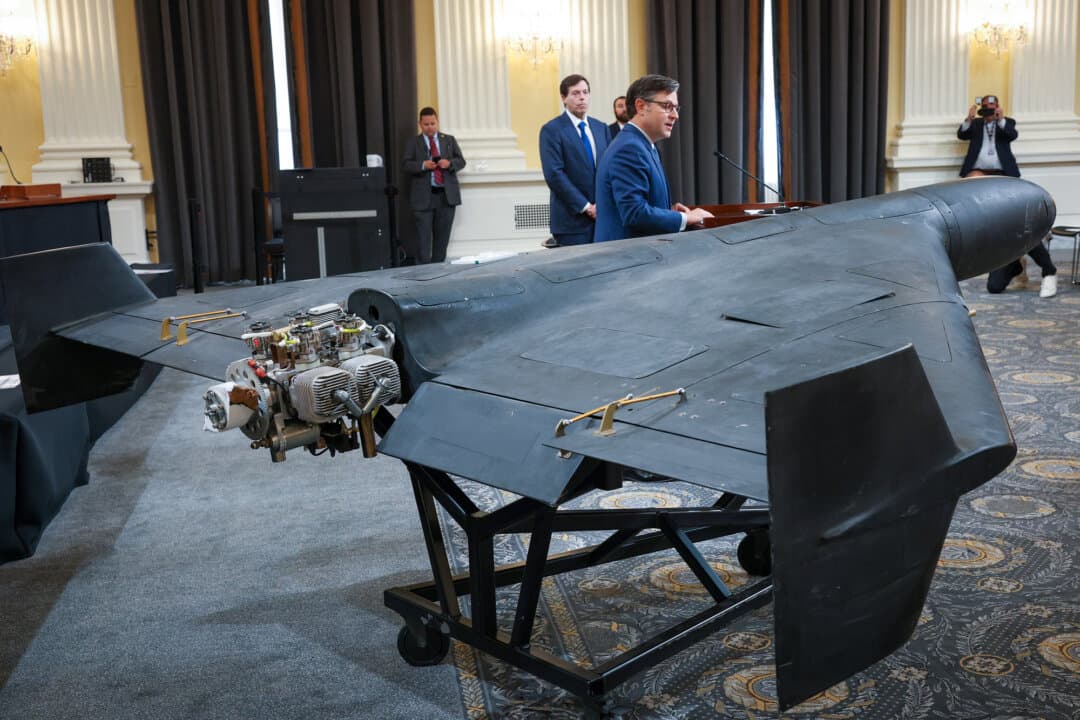
U.S. Speaker of the House Mike Johnson (R-La.) delivers remarks next to a Shahed 136 military drone during a press conference on Capitol Hill in Washington on May 8, 2025. Experts say the low cost and ease of producing one-way attack drones create economic challenges for countering them. (Win McNamee/Getty Images)
Thompson said he believes that kinetic interceptors are still the best option for now. He mentioned some emerging low-cost interceptor missiles, as well as artificial intelligence systems that can automatically aim and fire a machine gun to knock out even the smallest speeding attack drones with a few bullets.
Ukraine has developed smaller and more agile drones that can crash into larger and slower incoming attack drones such as the Geran-2.
On March 20, Ukrainian security council secretary Rustem Umerov announced that Ukraine had sent equipment and teams of operators to multiple Persian Gulf states to assist with drone interception efforts during the Iran conflict.
As one-way attack drones force air defenses to evolve, emerging drone countermeasures may likewise drive attackers to come up with innovations of their own.
Thompson said the next generation of Shahed-style drones will likely rely on rocket propulsion, rather than a propeller, making them faster and harder to intercept.
Reuters and The Associated Press contributed to this report.