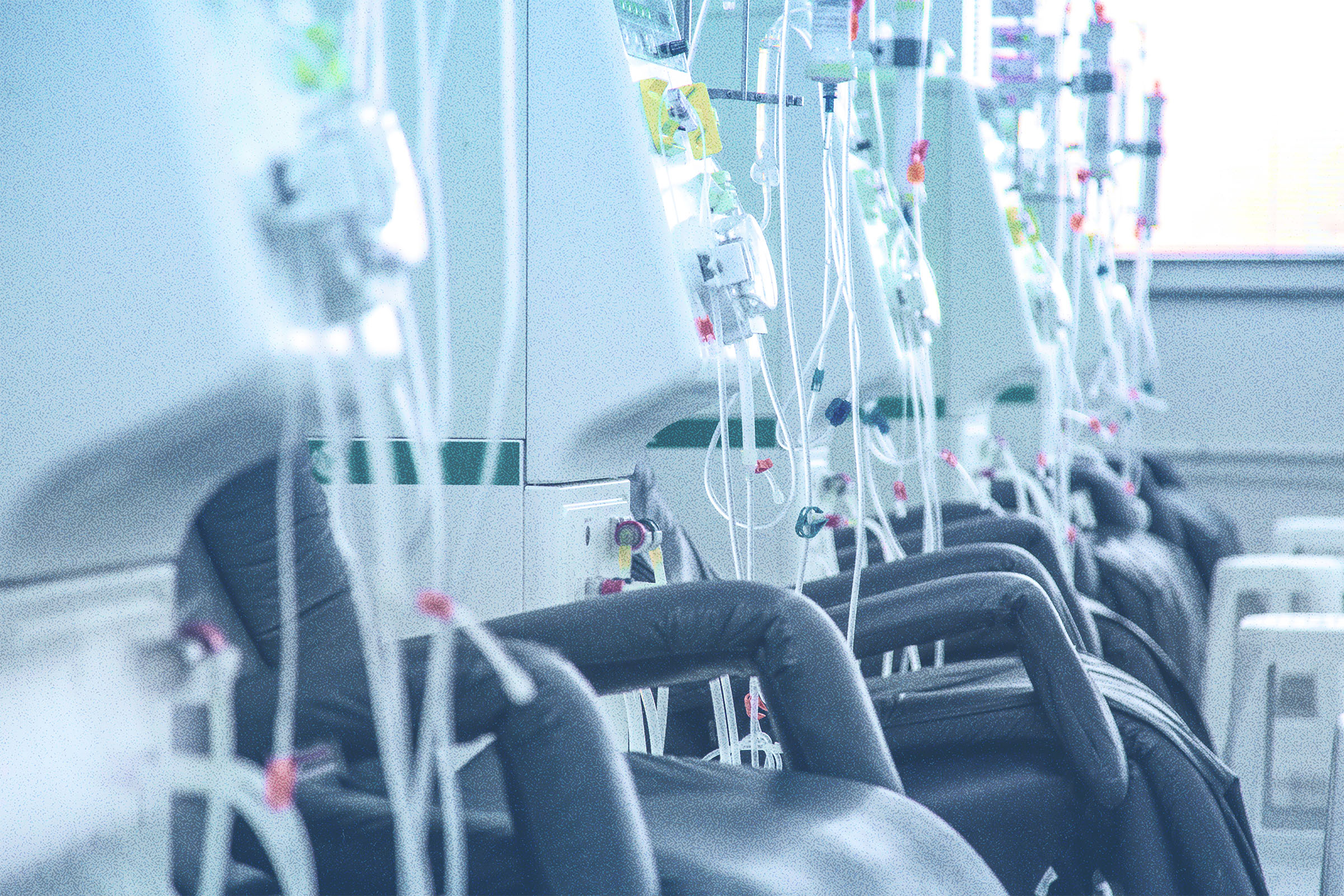

For Liddy Lawson, living without dialysis once felt impossible. In 2020, at 36, she was undergoing chemotherapy for a rare leukemia when her heart stopped twice and her lungs filled with fluid.
“They put me in a medically sedated state and actually called my family to come say goodbye,” Lawson told The Epoch Times.
She woke up after 51 days in the intensive care unit—attached to a dialysis machine running around the clock. Her kidneys had failed under the strain of chemotherapy, unable to filter her blood effectively.
“I came in with cancer, and I woke up on another machine,” she recounted. For the next two years, Lawson continued dialysis as an outpatient, a grueling routine that left her nauseated, exhausted, and unable to do much beyond treatments and doctors’ visits.
Then she agreed to try something new—an approach that let her kidneys handle their normal filtering work whenever possible, rather than having the machine completely take over.
By the age of 39, she had completely recovered. Today, she has been dialysis-free for more than two years.
Could Dialysis Weaning Be Safer?
When kidneys suddenly fail, dialysis—which substitutes for the kidneys—can save lives. However, sometimes giving organs too much help can actually slow, or even block, recovery.
The treatment that Lawson was placed on was conservative dialysis, which is received only on an as-needed basis, as compared with routine dialysis treatment, which is typically received three times weekly.
A new study building on the success of Lawson’s case, presented in October during Kidney Week 2025, found that hospitalized patients who experience a sudden kidney injury had a 64 percent chance of recovery if given dialysis only as needed, as compared with a 50 percent chance on the standard dialysis schedule.
The trial enrolled 220 adults with an average age of 56 who had severe acute kidney injury, at four U.S. hospitals. Participants were randomly divided into two groups: those who received dialysis only for urgent medical needs—such as dangerously high potassium levels or fluid that makes breathing difficult—and those following the standard thrice-weekly schedule regardless of day-to-day changes.
More people in the as-needed dialysis group made a full recovery. They also required fewer dialysis sessions overall and had fewer episodes of low blood pressure—a common and risky side effect of hemodialysis. There was no increase in other serious complications or deaths.
Treating acute kidney injuries conservatively is really a new concept, Dr. Chi-yuan Hsu, chief of nephrology at University of California–San Francisco (UCSF) School of Medicine and the study’s senior author, told The Epoch Times.
Standard treatment recommends regular dialysis, as it is considered safer for patients.
However, in patients with acute kidney injury, “dialysis itself can sometimes get in the way of recovery,” Hsu said. “It can lower blood pressure and even make the kidneys lazy, because the machine is doing the filtering for them. At best, it masks signs of recovery, and at worst, it may prolong the injury.”
Acute kidney injury is different from chronic kidney failure. It happens suddenly, often in hospitalized patients, and often occurs as a result of being critically ill from infection, surgery, or heart problems.
Unlike chronic kidney disease—which develops slowly and most often leads to lifelong dialysis or transplant—acute kidney injury offers a window for potential recovery if the proper support and monitoring are provided.
One Patient’s Journey
For Lawson, the conservative treatment took her from permanent disability to a full life.
“I didn’t do anything outside of doctor’s appointments and dialysis,” she recalled. “I didn’t have the energy.
“I would vomit multiple times a day. Every single day, I’d get migraines during and after the [dialysis] treatments. I’d sleep the entire next day, feel a little better the day after that—and then have to start the whole process over again. It was miserable.”
When Hsu later encouraged her to try one last trial off dialysis, Lawson said that she agreed, although she didn’t expect much to change.
“Dr. Hsu believed my kidneys still had a shot,” Lawson said.
A year later, he called with the news: “Your blood work looks beautiful—no more dialysis for you.”
She has since walked a marathon, regained her strength, and returned to a life that once seemed impossible.
“I feel like I got my life back,” she said. “I can eat. I’m a healthy weight. I can do anything I want.”
Who Benefits Most
Not every patient with sudden kidney failure is a candidate. The conservative approach works best for people who need dialysis only for the kidney injury, are not on other life-support medications, and who typically have not already been on dialysis for several months.
“We’re talking about patients who survived the worst of their [intensive care unit] stay,” Hsu said. “Once the immediate danger passes, the focus shifts from survival to recovery. That’s when the kidneys can start healing on their own, if we give them the chance.
“In the hospital, daily monitoring gives us a chance to safely reduce dialysis while the patient is still under close observation.
“Once they leave, they often end up on routine sessions, and that opportunity is lost.”
A Paradigm Shift in Care
In an accompanying editorial, Dr. Sushrut. S. Waikar, chief of nephrology at Boston University School of Medicine, praised Hsu’s team for tackling a major clinical gap: when and how to wean hospitalized patients with acute kidney injury off dialysis.
Waikar commended the study for questioning the long-standing reflex that “more is better,” and urged kidney specialists to pause and ask why before every session.
The shift to a more conservative treatment won’t happen overnight. Conventional thrice-weekly dialysis is deeply ingrained, modeled after standard care for permanent kidney failure. Many doctors default to the safer-seeming path of “doing more”—but the trial hints that, for the right patients, less can be both safer and more effective.
Larger studies are still needed to explore whether this approach can be extended safely to outpatient settings. Outpatient dialysis centers often do not have the infrastructure to support weaning interventions, lead author Dr. Kathleen Liu, who specializes in acute kidney care for patients at UCSF, said in a statement.
That challenge resonated with Lawson, who encouraged other patients to advocate for themselves.
“It breaks my heart that not everyone can come off dialysis,” she said. “But for people who have a chance—whose kidneys were injured, not permanently destroyed—it’s worth trying.
“Ask your doctor if there’s an endgame.
“Don’t just accept that dialysis is forever.”