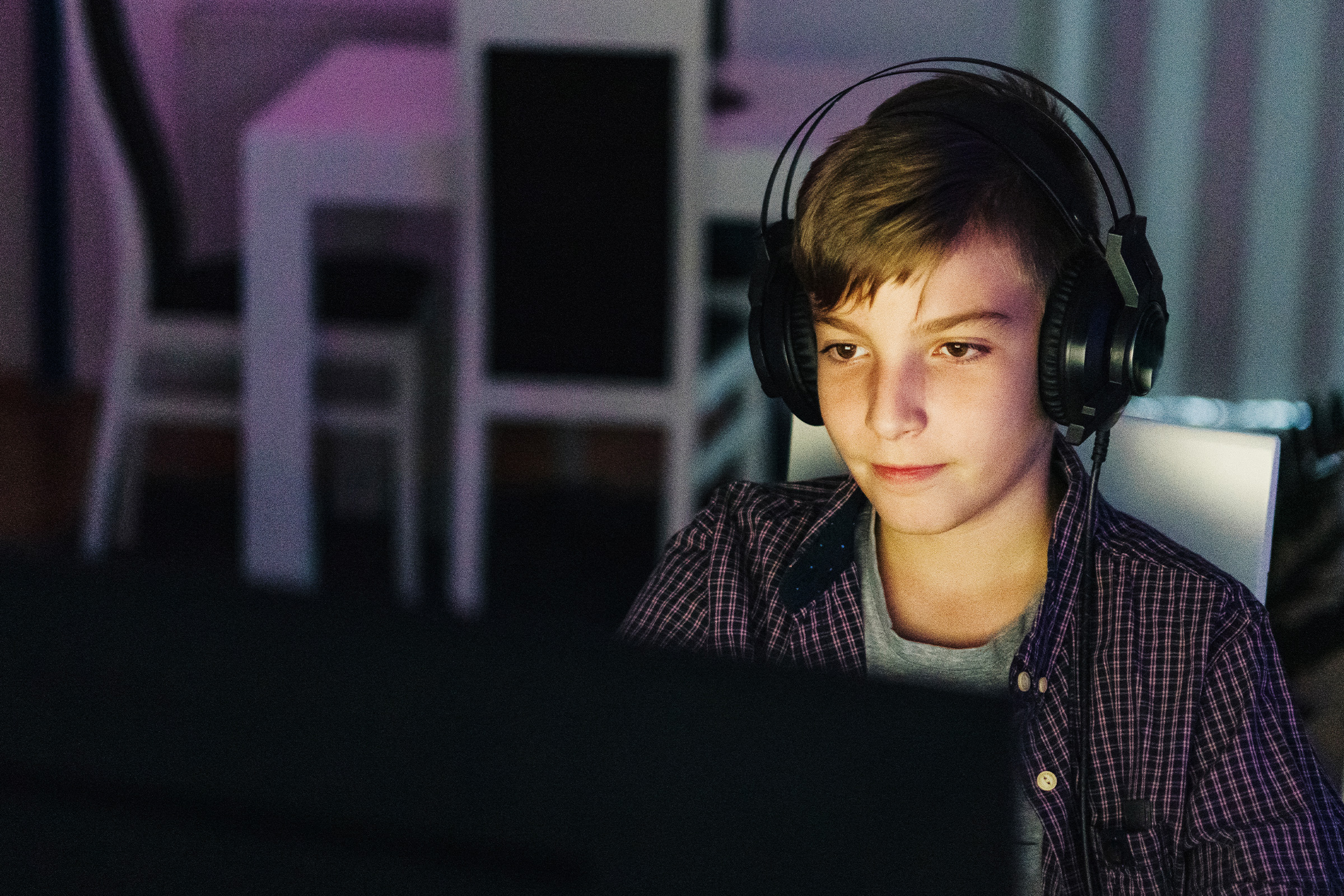
Every teen needs a way to blow off steam. The pressure of school, shifting friendships, and the constant sense of being watched and judged can be exhausting.
Some teens run it off on a field. Others lose themselves in music or art.
Many turn to video games.
For most, a few hours in an immersive world helps them decompress and move on. However, for some teens, those same games—designed to reward persistence and discourage stopping—become impossible to walk away from.
When gaming becomes a teen’s primary way of coping, it can tip from relief into compulsion.
From Coping to Compulsion
Coping itself isn’t the issue. A few hours of gaming after homework can provide a welcome break, helping teens relax without interfering with school, sleep, or family life. Problems arise when gaming replaces other ways of managing emotions—when, instead of helping a teen regain balance, it deepens isolation and stress.
For example, a teen may play for six hours, neglect homework, see grades slipping, and argue with parents whenever a break is suggested.
Dr. René Weber, director of the Media Neuroscience Lab at the University of California–Santa Barbara, told The Epoch Times that “gaming can often be a coping mechanism.” He said it is helpful to keep this in mind when trying to understand a teen’s behavior without jumping straight to punishment.
Video games are particularly powerful coping tools because they’re designed to be highly captivating.
For adolescents who are already struggling emotionally and having difficulty regulating their behavior, the pull of games can fuel compulsive play.
What the Research Shows
A long-term
study, tracking more than 4,200 American teens over several years, found that those who went on to develop gaming disorders were already struggling emotionally—a pattern that helps explain why gaming can shift from coping to compulsion.
“In our study, it was preexisting issues—like attention disorders, depression, and anxiety—that predicted who developed gaming disorders later on,” Weber, who led the study, said.
These weren’t fleeting bad moods, according to Weber. The emotional difficulties were persistent and disruptive, interfering with school, family life, and relationships.
Teens who are already struggling emotionally often have a harder time managing stress and keeping their impulses in check. For these vulnerable teens, a highly engaging and pleasurable activity such as gaming can make it difficult to step away, increasing the risk of compulsive play.
The study suggests that for teens with existing emotional struggles, gaming can start as a coping tool.
However, as Weber said, “Mental health issues can lead to excessive gaming as a coping strategy—and once that gaming becomes compulsive, it may then make the underlying issues worse.”
In other words, for vulnerable teens, gaming can become part of a reinforcing loop. Other research describes it as a “downward spiral,” in which compulsive gaming reinforces stress and isolation, pulling the teen back into the game again and again for relief—as day-to-day life starts to crumble.
Why Escapism Can Turn Slippery
Video games can be a coping tool like any other activity, but they’re in a league of their own. Unlike playing an instrument or taking a walk—which give space to process emotions—games are designed to keep players inside their worlds. Immersive environments, role-playing challenges, and instant rewards make it easy to lose track of time, and the pull of the game is often too strong for vulnerable teens to resist.
A qualitative study of adult online gamers found that many began playing to escape stress or dissatisfaction with life. Over time, the games’ built-in mechanisms—leveling systems, social rewards, and immersive goals—pulled players deeper, gradually replacing real‑world responsibilities and routines.
One participant described it as “a slippery slope of escapism.” The very features that made the game rewarding also made it hard to step away.
Although that study focused on adults, researchers see echoes of this dynamic in adolescents. For teens already struggling emotionally, game design can magnify vulnerabilities, turning a coping strategy into a source of distress.
Recognizing When Gaming Is a Problem
“Gaming disorder isn’t just about spending a lot of time playing,” Weber said. It’s about losing control—when a teen can’t stop, even when he wants to, and when gaming becomes more important than school, relationships, or his own well-being.
Warning signs may include declining grades, withdrawal from friends, disrupted sleep, or frequent family conflict. The teen may even acknowledge that gaming is making things worse but continue anyway.
Still, not all intense engagement is cause for concern. Weber recalled a teen who practiced violin for six to eight hours per day and became visibly unsettled if she missed a session—yet continued to do well academically, socially, and physically.
“By clinical standards, it might resemble some aspects of a behavioral addiction,” he said.
However, it is not.
The distinction lies in consequences. Concern arises when gaming consistently interferes with daily life, leads to harm, and continues even when the teen recognizes those negative effects.
What Parents Can Do
When parents see a teen slipping deeper into gaming, the instinct is often to shut it down: cutting the Wi-Fi and confiscating the console. However, experts warn that abrupt crackdowns can backfire, especially if gaming is a teen’s main coping tool.
“I understand why parents feel alarmed,” study co-author Kylie Woodman Falcione, a doctoral candidate in the Department of Communication at the University of California–Santa Barbara, told The Epoch Times. Simply removing games without addressing the underlying stressors can push the behavior elsewhere.
“That behavior is going to show up somewhere else—maybe social media, maybe substances,” she said.
A more effective approach starts with curiosity rather than punishment.
“If your child is turning to games or social media compulsively, start with connection—and seek professional support if needed,” Falcione said.
Start With the Why, Not the Screen
Parents can begin by asking what role gaming is serving. Is it helping manage anxiety? Avoid social stress? Feel competent or connected in ways that feel harder offline?
Talking about what a teen is dealing with—not just how much he is playing—changes the tone of the conversation and helps parents assess whether gaming is filling a temporary gap or masking a deeper struggle.
Set Structured Limits and Support
Clear boundaries still matter, especially when gaming is interfering with sleep, school, or relationships. Limits tend to work best when they’re predictable, collaborative, and paired with support—not imposed suddenly during moments of frustration.
Many child psychologists recommend structured screen fasts, which are temporary breaks from compulsive gaming, typically lasting for two to four weeks. These resets can help teens recalibrate, particularly when gaming has become their default coping strategy. Crucially, the breaks work best when the time is filled, not emptied.
Expand Coping Options
Parents can help by encouraging offline activities such as sports, creative outlets, in-person time with friends, or unstructured downtime without screens. The goal isn’t to eliminate gaming altogether but to expand the menu of ways a teen can cope so gaming is no longer the only option.
After the reset, families can bring back gaming with clear limits and regular check-ins. Some use a “tech menu,” a list of approved activities with time caps and earned screen time.
When to Seek Extra Help
Families may want to consider professional support if a teen’s gaming is accompanied by persistent mood changes, anxiety, declining grades, withdrawal from friends, or frequent conflict at home. Teens with diagnosed depression, anxiety, or attention-deficit/hyperactivity disorder may be especially vulnerable to compulsive behaviors, including gaming.
“You want to be particularly careful with potentially addictive behaviors,” Falcione said. “Video games, social media, even substances like alcohol or marijuana—all carry higher risks for kids who are already vulnerable.”
Weber said that getting closer—to both the screen and your child—can make all the difference.