
Wisconsin-based Saputo Cheese USA Inc. (SUSA) is recalling several cottage cheese items sold across 24 states as the liquid dairy ingredients used in the products may not be fully pasteurized according to state regulatory standards, the company said in a Feb. 24 announcement published by the Food and Drug Administration (FDA).
Three different products are being recalled. The first item is “Great Value Fat Free Small Curd Cottage Cheese—0 percent Milkfat” sold in 24 oz. containers, with UPC code 078742373393, and “Best If Used By” dates of April 1 and 3.
The second product is “Great Value Lowfat Small Curd Cottage Cheese—2 percent Milkfat” sold in 24 oz. containers, with UPC code 078742116730, and “Best If Used By” dates of April 1, 2, and 3.
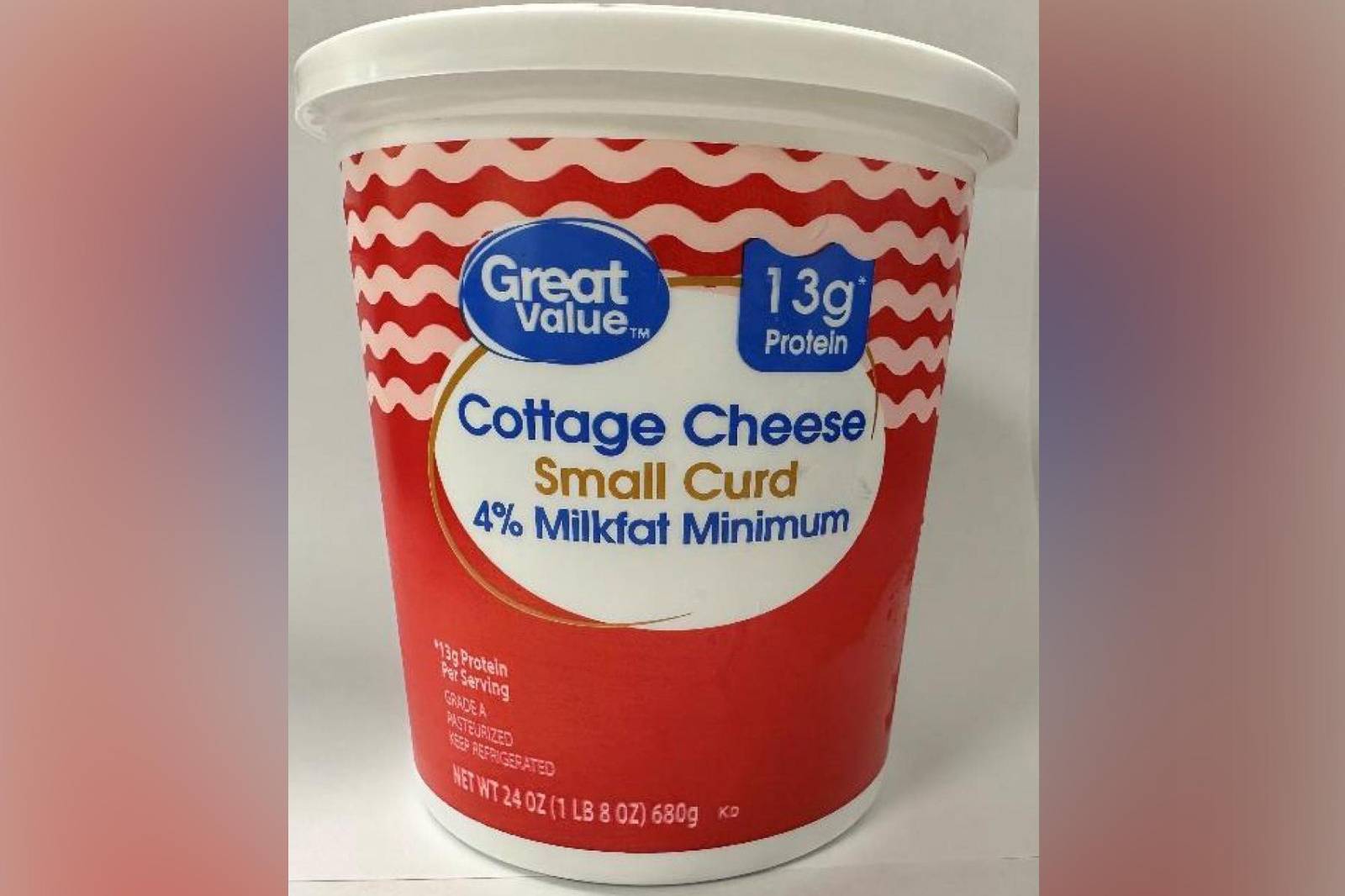
The final recalled item is “Great Value Small Curd Cottage Cheese—4 percent milkfat minimum” that was sold in varying container sizes. The 16 oz. container has a UPC code 078742372358 and a “Best If Used By” date of April 2. The 24 oz. container comes with UPC code 078742372365 and “Best If Used By” dates of April 2 and 3. The 3 lb. container has UPC code 078742147970 and “Best If Used By” dates of April 1 and 2.
Great Value is a private label brand owned and sold exclusively by Walmart.
All products were sold in white plastic tubs with white lids. The items were distributed to Walmart stores and distribution centers across Alaska, Alabama, Arkansas, Arizona, California, Colorado, Georgia, Iowa, Idaho, Illinois, Kansas, Kentucky, Louisiana, Missouri, Mississippi, Montana, New Mexico, Nevada, Oregon, Texas, Tennessee, Utah, Washington, and Wyoming, between Feb. 17 and 20.
“While no illnesses or hospitalizations associated with the recalled products have been reported to date, consuming products that are not fully pasteurized can pose a significant health risk,” the announcement said.
“The issue was discovered during pasteurizer troubleshooting exercises conducted by SUSA in conjunction with the California Department of Food and Agriculture,” according to the company.
“The impacted pasteurizer was returned to normal function and was verified and sealed by the California Department of Food and Agriculture. No other products produced in the facility were affected.”
The company advised customers who have bought the recalled items not to consume them and to either dispose of or return the products to the place of purchase to secure a full refund. Customers with queries can contact the company at 1-888-587-2423.
The Epoch Times reached out to Saputo and Walmart for comment but did not receive a response by publication time.
According to a May 2024 post by the FDA, unpasteurized milk can pose a “serious health risk” to consumers.
“Raw milk can carry dangerous germs such as Salmonella, E. coli, Listeria, Campylobacter, and others that cause foodborne illness, often called ‘food poisoning,’” the FDA said.
“These germs can seriously injure the health of anyone who drinks raw milk or eats products made from raw milk. However, the germs in raw milk can be especially dangerous to people with weakened immune systems (such as transplant patients and individuals with HIV/AIDS, cancer, and diabetes), children, older adults, and pregnant women.”
The impact of pasteurization on milk is a debated topic. In a Sept. 5 commentary at The Epoch Times, Mollie Engelhart, regenerative farmer and rancher at Sovereignty Ranch, said a study that followed almost 1,000 infants across five nations found that babies who drank unprocessed cow milk had roughly 30 percent fewer fevers and respiratory infections during their first year.
Two other studies, conducted in children across Europe, found “significantly lower rates” of allergies and asthma among kids who consumed raw farm milk, Engelhart wrote.
Researchers discovered that various protective components in milk, such as whey proteins, omega-3 fatty acids, and immune complexes, were degraded by industrial pasteurization processes, according to the commentary.
“In other words, the same proteins and bacteria that pasteurization destroys may also be the ones our immune systems most need,” Engelhart said.
However, in a January 2025 report, the Centers for Disease Control and Prevention said that pasteurization is “crucial for milk safety.”
According to the agency, pasteurized milk offers the same nutritional benefits as raw milk, but without any of the risks associated with raw milk.