
After surging rapidly, crude oil prices crashed on Monday following U.S. President Donald Trump’s suggestion that the Iran war was nearing its end.
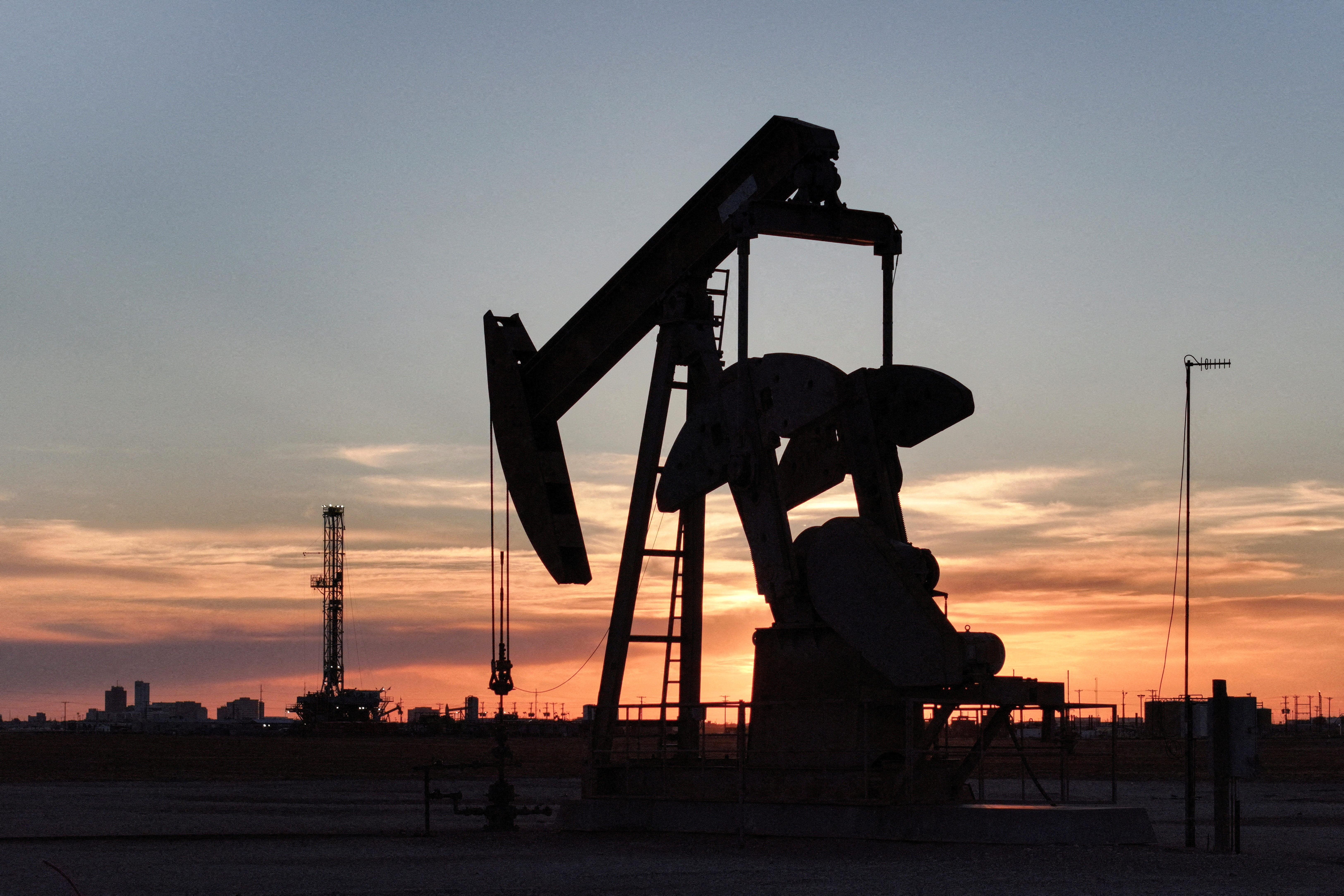
In the futures market, crude oil prices surged past the $100 per barrel level on Sunday and hit a high of nearly $120 amid tensions in the Middle East. Prices then dropped to the low 80s on Monday, with crude oil trading at $89.38 per barrel as of 9:35 p.m. EDT.
On Monday, the U.S. stock market also experienced wild swings before ending with gains. The S&P 500 index fell as much as 1.5 percent before ending the day with a gain of 0.8 percent. The index rose by 55.97 points for the day.
The Dow Jones Industrial Average gained 239.25 points, or 0.5 percent, with the Nasdaq composite rising by 308.27 points, or 1.4 percent.
The oil price collapse and surge in stock markets came after Trump said in an interview with CBS that the U.S.-Israeli military operation against Iran was “very complete, pretty much.”
The United States is “very far” ahead of the initial four to five weeks initially estimated time period for the war. The administration is considering taking over the critical Strait of Hormuz waterway, which provides the only passage from the Persian Gulf to the ocean, and is a crucial shipping transit region.
At the pump, the national average price for regular gasoline was $3.47 per gallon on March 9, up over 16 percent from a week back, according to data from the American Automobile Association.
In California, gas prices exceeded $5 per gallon. Prices in four states—Washington, Hawaii, Nevada, and Oregon—exceeded $4 per gallon.
The Iran conflict, which began on Feb. 28, was on its 10th day on Monday.
Energy experts warn of serious ramifications if the war gets drawn out.
Jim Burkhard, vice president and global head of crude oil research at S&P Global Energy, pointed particularly to rising production cuts and storage constraints—noting that the crisis had evolved past a solely transportation issue, and that restoring outputs will be “a massive technical exercise that could last weeks or more.”
And even higher oil prices could arrive in the near future. If the Strait of Hormuz, in particular, remains closed for only a few weeks, oil and gas strategists at Macquarie Research said the price of crude could push to $150 per barrel or higher. That would top previous peaks of around $147 reached just ahead of the 2008 financial crisis.
Others, however, expect disruptions to be more short-lived.
Oxford Economics researchers predict prices will fall to an average of $80 a barrel for the quarter, but noted Monday that the “risk of a more prolonged crisis has clearly increased.”
In a March 5 report, ING Bank predicted Brent crude prices to average $71 per barrel in the second quarter of the year in their base case scenario of the Strait of Hormuz getting disrupted fully for two weeks, followed by a 50 percent disruption for the next two weeks.
However, in the worst case scenario where the Strait gets disrupted for a full three months, oil prices are expected to average a much higher $110 per barrel.
Trump announced on March 9 plans to lift sanctions on certain countries to help reduce prices driven by the ongoing conflict with Iran.
“We’re looking to keep the oil prices down,” Trump said during a press conference at Trump National Doral in Miami, Florida. He said that the prices have risen artificially due to the conflict, calling it an “excursion.”
He said the United States would be “waiving certain oil-related sanctions” to cool down energy prices.
He later suggested that once the war ends, sanctions may no longer be necessary.
“Then, who knows, maybe we won’t have to put them on. There’ll be so much peace,” the president said.
On Friday, Treasury Secretary Scott Bessent said the administration could ease sanctions on more Russian oil after Washington granted a 30-day exemption to India to buy crude from Moscow.
“We had asked them to stop buying sanctioned Russian oil this fall. They did. They were going to substitute it with U.S. oil, but to ease the temporary gap of oil around the world, we have given them permission to accept the Russian oil,” Bessent said. The United States may also “unsanction” other Russian oil to ensure global supply remains sufficient amid the conflict with Iran.
“There are hundreds of millions of barrels of sanctioned crude on the water, and in essence, by unsanctioning them, Treasury can create supply. And we are looking at that, the Treasury secretary said. “We’re going to keep a cadence of announcing measures to bring relief to the market during this conflict.”
Meanwhile, Senate Minority Leader Chuck Schumer (D-N.Y.) on March 8 called on Trump to release oil from the country’s Strategic Petroleum Reserve, arguing that the Iran conflict was driving up gas prices for Americans.
On Monday, Energy Secretary Chris Wright said the United States was considering the sale of oil from the U.S. Strategic Petroleum Reserve, in coordination with similar releases from other countries.
Emel Akan and The Associated Press contributed to this report.