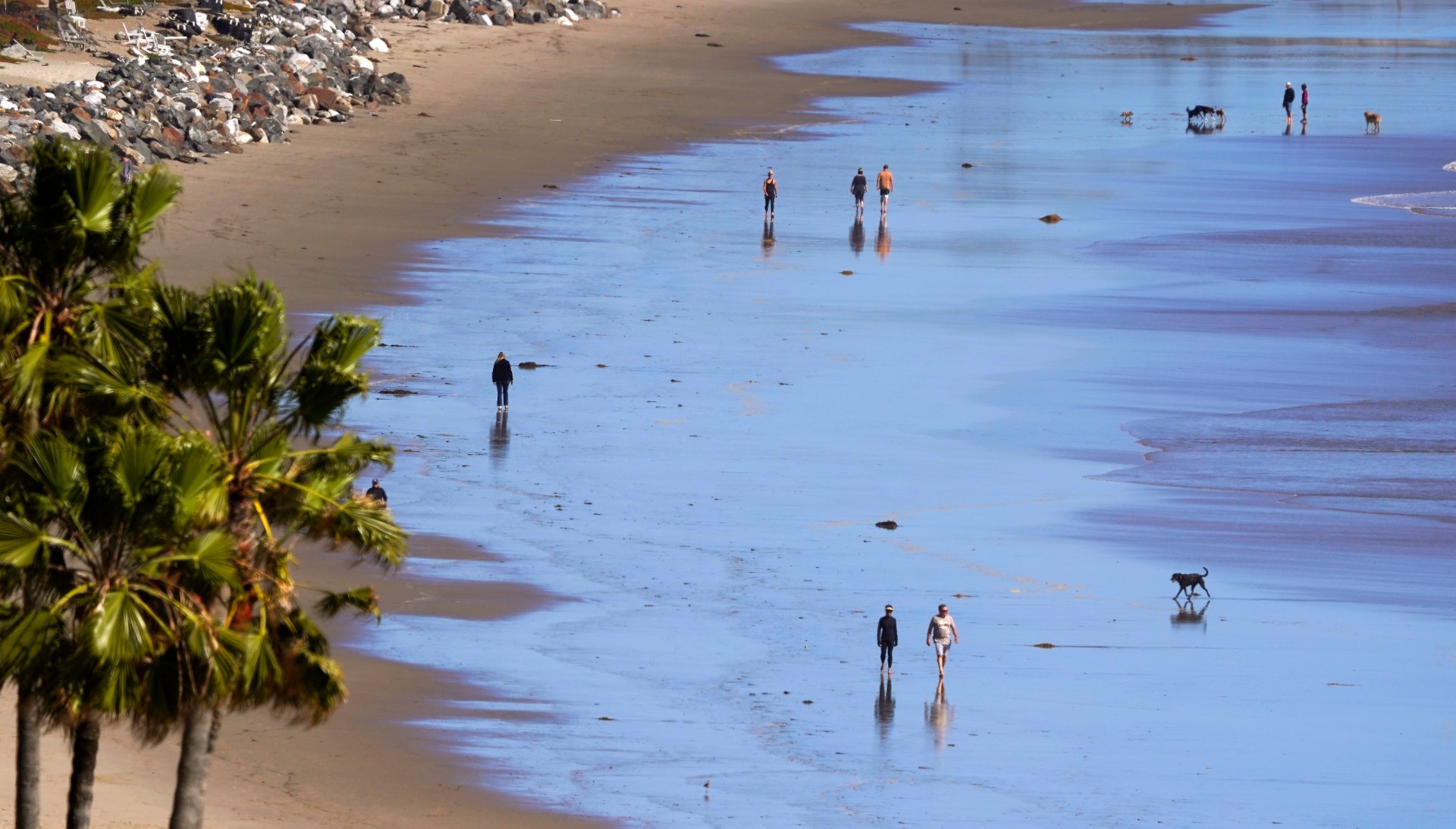
Health officials warned that some Southern California beaches may be unsafe for swimming due to elevated bacterial levels this week amid elevated temperatures across the region.
The Los Angeles County Department of Public Health on March 18 said that visitors should avoid swimming, surfing, or playing in the ocean waters between Malibu and Santa Monica due to bacteria levels that it said exceed state health standards.
“These warnings are issued because recent water samples showed bacterial levels exceeding health standards, which may increase the risk of illness,” the department warned.
The health department did not elaborate on the species or type of bacteria that prompted the warnings.
The warnings issued by the county health department appear to apply mainly to areas near storm drains, restrooms, and creeks.
Specifically, the advisory said the warnings applied to areas within 100 yards up and down the coast from:
- the Culver Boulevard storm drain at Dockweiler State Beach
- the public restrooms at Leo Carrillo State Beach in Malibu
- Walnut Creek at Paradise Cove
- the Wilshire Boulevard storm drain at Santa Monica Beach (north of Tower 12)
- Topsail Street in Venice
- the lagoon at Topanga Canyon Beach in Malibu
- Escondido Creek at Escondido State Beach
- and the entire swim area at Mother’s Beach in Marina del Rey
Advisories were lifted at Inner Cabrillo Beach in San Pedro, the Santa Monica Pier in Santa Monica, the Marie Canyon Storm Drain at Puerco Beach, the Santa Monica Canyon Creek at Will Rogers State Beach near Will Rogers Tower 18, and the Malibu Lagoon at Surfrider Beach, the Los Angeles Health Department said.
Temperatures in Southern California are under a “long-duration heatwave” throughout this week, according to the National Weather Service (NWS). Temperatures are around 25 to 35 degrees Fahrenheit above normal, and a number of daily records will be broken, the weather agency said.
Forecasters say that for March 19 and March 20, temperatures across Los Angeles are set to exceed 90 degrees Fahrenheit, while the weekend will see lower temperatures.
“Numerous and widespread daily and March monthly record highs are likely, with some locations in California already breaking their March monthly records on Tuesday,” the NWS wrote in a bulletin Thursday.
Elevated bacteria at beaches have long been a concern for some groups. Nearly two-thirds of beaches tested nationwide in 2024 experienced at least one day in which indicators of fecal contamination reached potentially unsafe levels, conservation group Environment America said in a report issued last summer.
The group reviewed beaches on the coasts and Great Lakes and found that 84 percent of Gulf Coast beaches exceeded the standard at least once. The number was 79 percent for West Coast beaches, 54 percent for East Coast beaches, and 71 percent for Great Lakes beaches, it said.
The report also said more than 450 beaches were potentially unsafe for swimming on at least 25 percent of the days tested.
The Associated Press contributed to this report.