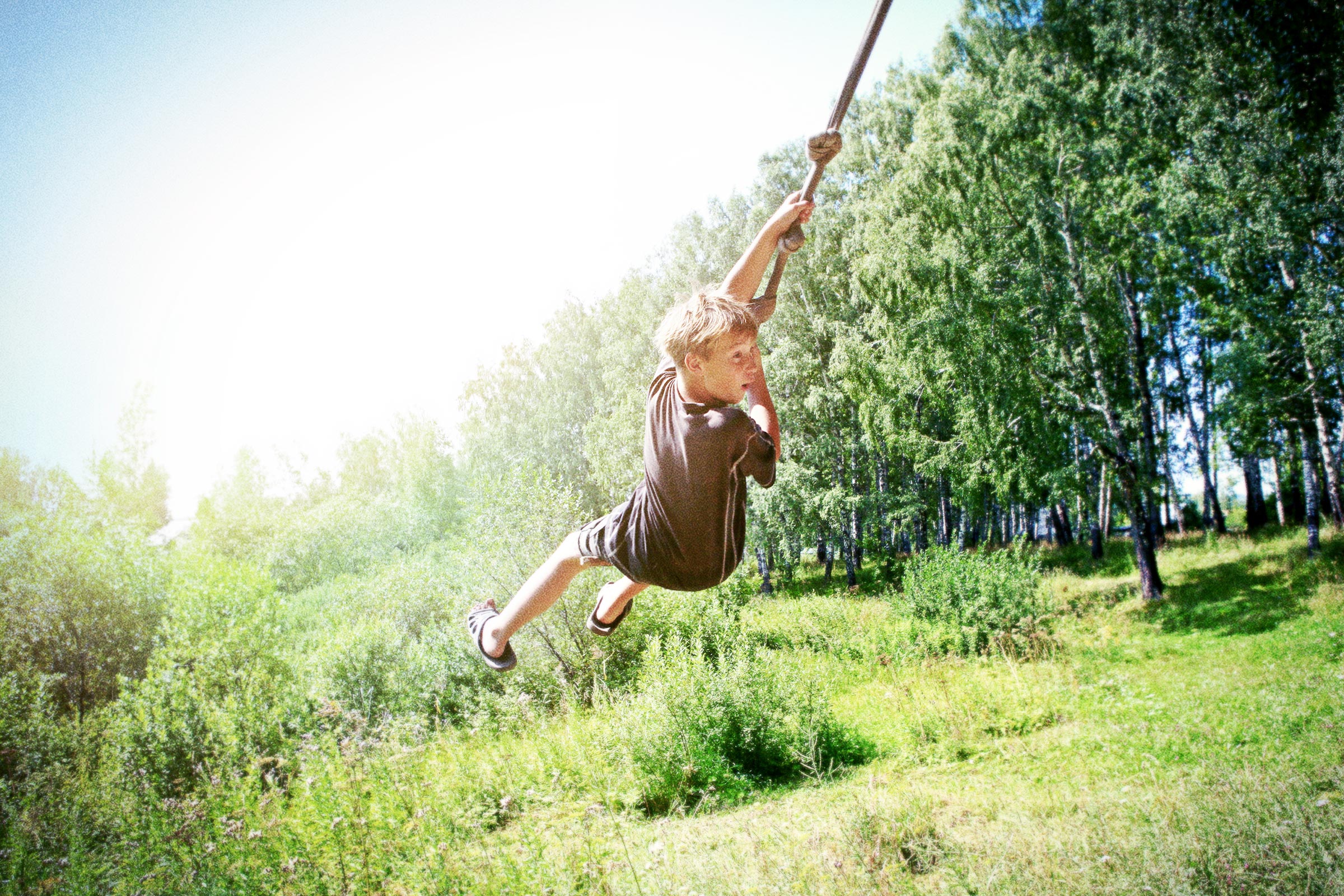

That neighborhood park might be doing more than offering kids a place to play. A recent analysis from the UK of U.S. brain scan data suggests that even brief exposure to greenery could shape how a child’s brain develops—particularly in areas tied to learning, focus, and emotional regulation.
The findings, published in Biological Psychiatry, come from researchers at King’s College London, who examined data from more than 7,000 children enrolled in the Adolescent Brain Cognitive Development (ABCD) study, the largest long-term study of brain development in the United States.
Researchers have long observed that kids who grow up near parks and natural spaces tend to do better in school and report fewer mental health issues.
“Our study shows that exposure to green space is associated with children’s neurodevelopmental outcomes over and above other family and neighborhood-level factors,” Divyangana Rakesh, co-lead investigator at King’s College London’s Institute of Psychiatry and a lecturer in psychology and neuroscience, told The Epoch Times in an email.
This means that, compared even with household income, parental education, and neighborhood conditions, being in nature had a stronger influence on a child’s brain development.
Nature isn’t just a luxury—it may be a vital part of healthy childhood development.
Nature’s Protective Effect on the Developing Brain
To understand nature’s effect on children’s brains, researchers analyzed data from the ABCD study. This analysis focused on children aged 9 to 12.
Satellite images were used to estimate the amount of greenery near each child’s home at ages 9 to 10. Two years later, those children underwent magnetic resonance imaging scans.
The results showed that children with greater access to green space had increased surface area and volume in several key brain regions. These included areas related to sensory processing, motivation, language, and emotional control—such as the temporal lobes and the insular cortex.
The strongest effects were found in the surface area of the prefrontal cortex, which is critical for attention and planning, and in the striatum, a region that is involved in motivation, reward, and goal-setting.
Children living in greener areas also showed greater cortical thickness in language-related regions and increased surface area in regions like the insula, which helps regulate emotion and attention.
Exposure to nature also appeared to offer a protective effect during a vulnerable period of brain development. In adolescence, some areas of the brain undergo natural thinning of gray matter as part of the brain’s normal pruning and reorganization. However, children in greener areas showed less of this typical thinning.
In areas of the brain that typically grow during this period, green space supported that expansion, according to the researchers. And in regions that usually shrink, green space was linked to slower decline.
Previous research has linked being in higher-income environments to faster cortical thinning—possibly reflecting brain aging.
In contrast, this study found that green space appeared to have the opposite effect. The researchers believe that high-income environments tend to involve more structured lifestyles and are more cognitively demanding, while natural settings may be more restorative.
Additionally, green space exposure was linked to better mental health and academic achievement in children.
“Even small, regular interactions with green space—like going for a walk in a park—may have a meaningful influence on brain development,” Rakesh said.
How Nature Might Restore the Brain
Researchers believe that time in nature may support brain development by helping kids manage stress. One theory centers on the body’s stress response system, called the hypothalamic-pituitary-adrenal axis.
When kids are under chronic stress, their bodies produce more cortisol, a hormone that—over time—can interfere with healthy brain growth, especially in areas tied to attention, emotion, and memory.
Being in natural settings, the researchers suggest, may help lower cortisol levels and reduce inflammation. That creates a healthier environment for the brain to grow and change. It may also help explain why children exposed to more green space showed slower thinning of the cortex and more growth in surface area—a sign of more flexible, extended development.
Researchers also proposed that nature gives people a different kind of brain stimulation that allows for a more protective brain development.
Other research has proposed that nature gives the brain a break from mental fatigue—a theory called the attention restoration theory.
Urban areas are full of alerts—sirens, signs, screens—that demand focused attention. Nature works differently. Things such as birdsong and rustling leaves gently capture children’s attention without overloading the brain, which helps it recharge.
Psychologist Gloria Mark, a professor of informatics at the University of California–Irvine, told The Epoch Times that her research has shown that even 20 minutes in nature can help people feel less stressed and think more creatively.
In an older experiment, people who took a 50-minute walk through a wooded park performed better on memory and attention tasks than those who walked along a busy city street.
“It helps people focus better,” Mark said. “You come back mentally refreshed.”
Spending More Time Outdoors
The latest findings offer guidance for a public health opportunity that may be essential for children’s brain development.
Yet today’s kids are spending less time in nature than previous generations, with much of that time shifting to screen-based and indoor activities. Reversing that trend, even in small ways, could have lasting benefits.
Schoolyards, for example, can be redesigned to include more trees, gardens, and natural play areas, Rakesh said. Urban planners could prioritize tree-lined streets, green rooftops, and community nature events—especially in neighborhoods with limited access to parks.
“These are not just expenses, but a long-term investment in children’s well-being,” Rakesh said.