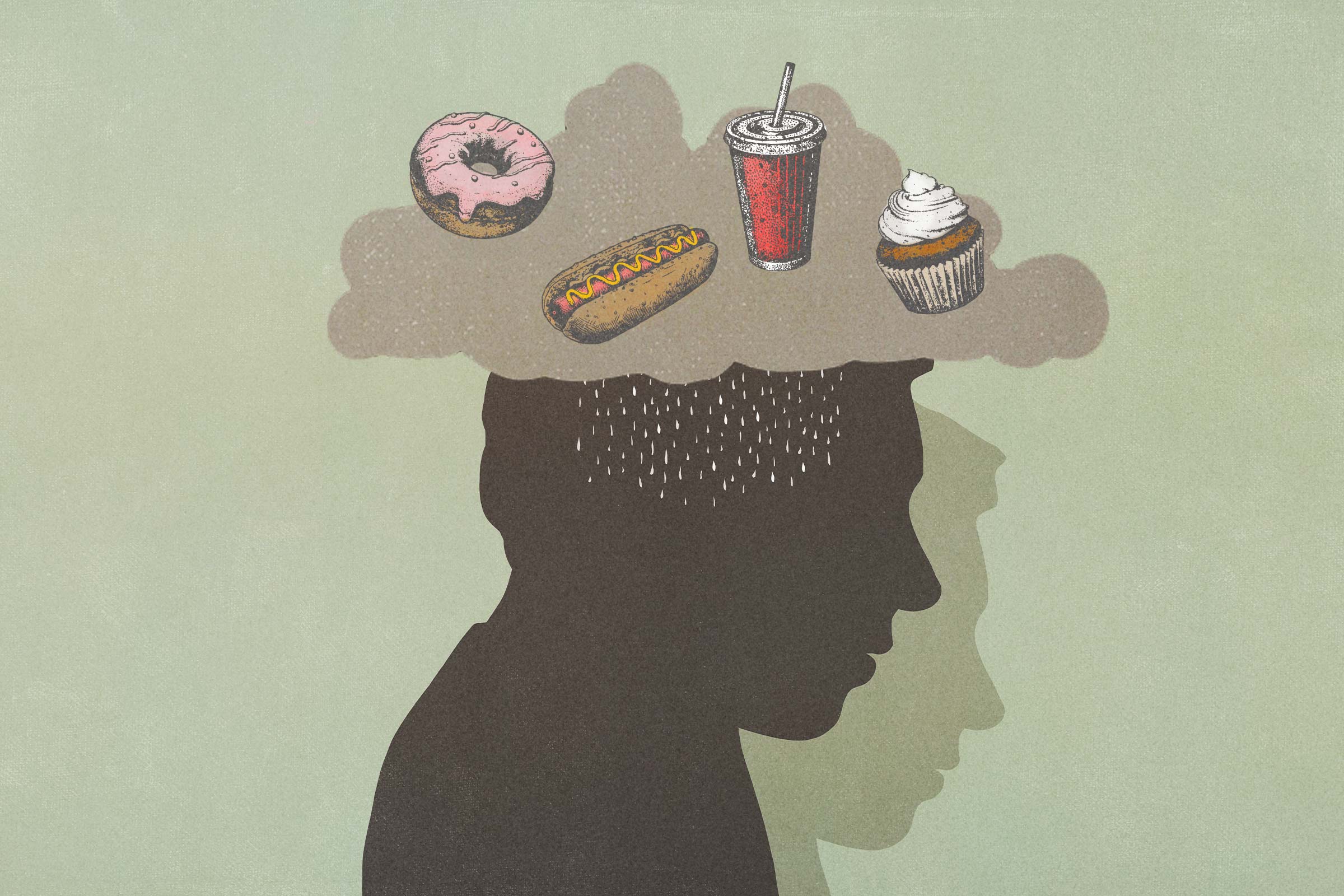

Adults with depressive symptoms reported moderate to large improvements after four weeks on a diet low in ultra-processed foods, according to a small, early-stage study from the University of California, San Francisco.
The preliminary study, published in JAMA Psychiatry and funded by the National Institutes of Health, is part of a body of research showing associations between diets high in ultra-processed food and depression, among other psychological disorders.
The preliminary study enrolled 20 adults (one didn’t complete the study) with an average age of around 44, of which 14 were women. All had high body weight and at least one metabolic disorder, such as high blood pressure or elevated cholesterol. In addition to depression, 14 of the 19 participants also experienced anxiety.
Participants followed two diets in a crossover design. One group continued eating their usual highly processed diet for four weeks, while the other switched to a researcher-guided diet low in ultra-processed foods, omitting foods such as packaged snacks, fast food, and sugary drinks. After four weeks, the groups swapped.
Those who reduced their intake of ultra-processed foods by more than 85 percent experienced moderate to large improvements in depression symptoms, with some also seeing modest reductions in anxiety.
“What stands out to me is how quickly symptoms appeared to change when participants changed what they were eating,” Sanam Hafeez, a neuropsychologist and director of Comprehend the Mind in New York, who was not involved in the study, told The Epoch Times.
This challenges the idea that food only affects physical markers such as weight, cholesterol, or blood sugar, she said. “The brain is part of the body, so it makes sense to investigate whether the quality of what we eat can influence how we feel and function mentally.”
One of the shortcomings of the trial was that it didn’t separate the effect of the food itself from other possible explanations for the psychological improvements. It is unclear whether the people who felt better did so because of the food, weight changes, or the extra attention. Participants knew which diet they were on, researchers guided their diets, and all volunteers had metabolic conditions and high body mass index, so the results may not apply to everyone.
One explanation for the link: the gut. Dr. Nyasha Chagwedera, the study’s lead author and founder of the UC San Francisco Metabolic and Mental Health Program, said in a statement that ultra-processed food may damage the gut’s protective lining, producing what she called a “leaky, out-of-balance gut.”
“Leaky gut” is a colloquial term for increased intestinal permeability, a condition where the tight junctions of the intestinal lining loosen, allowing toxins, bacteria, and undigested food particles to pass into the bloodstream.
“This gut damage can create low-grade, chronic inflammation throughout the body that either directly causes depression or makes people more vulnerable to it,” she said. “In other words, junky processing may harm your gut in ways that ripple up to your brain.”
That remains a hypothesis. “The researchers did not prove that changes in the gut microbiome were responsible for those improvements,” Hafeez said.
Foods Designed to Be Addictive
Ultra-processed foods are industrially made products that often contain preservatives, artificial colors, flavors, and emulsifiers. They are also cheap, convenient, and engineered to be appealing.
Such foods trigger the release of dopamine, a brain chemical tied to pleasure and reward, leading to cravings that “make you want to eat more,” Chagwedera said.
Just because someone craves an ultra-processed food doesn’t mean they have an addiction to it, Dr. Vinay Saranga, founder and psychiatrist at the North Carolina Institute of Advanced NeuroHealth, who was not involved in the study, told The Epoch Times. However, “The more we learn, the more we are seeing that ultra-processed foods are extremely effective at driving reward and reinforcing eating behavior.”
Healthy Gut, Healthy Mind?
The link between a healthy gut and a healthy mind lies in a complex, two-way communication network known as the gut-brain axis. Far from being independent systems, the brain and the digestive tract are in a constant, rapid dialogue that directly affects emotions, stress levels, and cognitive health. This connection is so profound that scientists frequently refer to the gut as a “second brain.”
The gut/brain relationship operates through several channels:
The Vagus Nerve: An Information Highway
The vagus nerve is one of the longest nerves in the body, serving as a direct hotline between your brain and your gut. Up to 90 percent of the signals passing through this nerve travel upward from the gut to the brain. This means your digestive system is constantly reporting its status back to your central nervous system, heavily influencing your daily mood and stress responses.
Brain Chemicals
The brain depends heavily on chemicals called neurotransmitters to regulate feelings of happiness, calm, and motivation. Surprisingly, the vast majority of these “feel-good” chemicals are manufactured in your gut, not your brain. These include serotonin (happiness), dopamine (motivation), and GABA (calmness).
When gut health declines, this chemical factory slows down, which can trigger or worsen symptoms of anxiety and depression.
The Gut Microbiome
The trillions of bacteria, viruses, and fungi in the gut produce compounds that may affect inflammation and the brain’s response to stress.
When bad bacteria overpower the good ones—a state called dysbiosis—they can release toxic compounds that cause system-wide inflammation. Chronic inflammation can breach the blood-brain barrier, contributing to brain fog, cognitive decline, and mood disorders.
Can Food Treat Depression?
Both Saranga and Hafeez said diet is not a replacement for medicine and therapy. “I think diet and gut health are worth considering as part of the bigger mental-health picture, but not as a replacement for established treatment,” Hafeez said.
The findings “most definitely” suggest that addressing gut health could be a viable complement to traditional mental health treatments like therapy or medication, Saranga said, but not a replacement. “I would never tell a patient with depression to stop their medication and just watch their diet alone,” he said. “The foods you consume are simply a piece of the overall puzzle.”
This research suggests that there is a link between the brain and the body, he said. If diet, exercise, sleep, and other lifestyle changes can improve the body’s underlying biology, they may also help create “a better environment for psychiatric treatment to work.”
“The gut, immune system, our metabolism, and brain are all communicating,” Saranga said.
Chagwedera and her team plan to begin enrolling participants for a second phase of the study in 2028.