
The Centers for Disease Control and Prevention is warning about drug-resistant bacterial and fungal pathogens, saying there has been a rise in infections and deaths from more than a dozen different germs highlighted by the agency.
In the 2026 update of its Antimicrobial Resistance Threats Report, released on Oct. 26, the CDC listed 19 bacterial and fungal pathogens categorized by their “level of threat to human health—urgent, serious, and concerning.”
The CDC said an average of 9.7 million infections and 50,800 deaths from drug-resistant microbes occur in the United States “each year.” The agency did not provide a breakdown of deaths or cases on a yearly basis.
The figure represents a sharp increase in the number of infections that were reported by the CDC in 2019. An archived CDC page said that drug-resistant bacteria and fungi were responsible for around 2.8 million cases as well as 35,000 deaths each year, on average.
“These numbers are alarming by any measure but are particularly sobering when infectious diseases physicians connect real patients with these statistics in their everyday experience,” said Infectious Diseases Society of America President Wendy Armstrong in a statement, responding to the new CDC reporting.
Those infections, she warned, can “prolong hospital stays, drive up health care costs and make it increasingly difficult—and sometimes impossible—for doctors to safely provide care like cancer chemotherapy, organ transplants, hip and knee replacements, and other medical care and surgeries.”
In the CDC report, four were labeled as urgent, or the most serious. Among those is Candida auris (C. auris), a type of fungus that can spread in healthcare facilities that the CDC warned has increased nearly five-fold between 2019 and 2022.
In August, the CDC produced data showing that cases of C. auris have been found in at least 27 states so far this year. The fungal infection is potentially deadly and spreads among people who have “severe underlying medical conditions who require complex medical care,” while people using breathing tubes and feeding tubes can see a higher risk of developing an infection.
The others listed as urgent by the CDC on Monday are carbapenem-resistant acinetobacter, a multi-drug-resistant bacteria that spreads in healthcare settings; carbapenem-resistant Enterobacterales (CRE), a family of gut bacteria like E. coli or Klebsiella pneumoniae that have become resistant to certain antibiotics known as carbapenem; and drug-resistant Neisseria gonorrhoeae, another drug-resistant bacterium that is sexually transmitted and known as gonorrhea.
Carbapenems are a class of antibiotics considered a last resort for treatment of serious infections, health officials have said. Drugs that fall under that classification include ertapenem, meropenem, tebipenem pivoxil, and cilastatin/imipenem.
Pathogens listed as serious by the CDC include Clostridioides difficile (C. diff), drug-resistant campylobacter, drug-resistant candida, drug-resistant Mycobacterium tuberculosis, drug-resistant Neisseria meningitidis, drug-resistant nontyphoidal Salmonella, drug-resistant Salmonella typhi, and drug-resistant Shigella.
More include drug-resistant Streptococcus pneumoniae, extended-spectrum cephalosporin-resistant Enterobacterales (ESC-RE), methicillin-resistant Staphylococcus aureus (MRSA), multidrug-resistant Pseudomonas aeruginosa, and vancomycin-resistant Enterococcus (VRE).
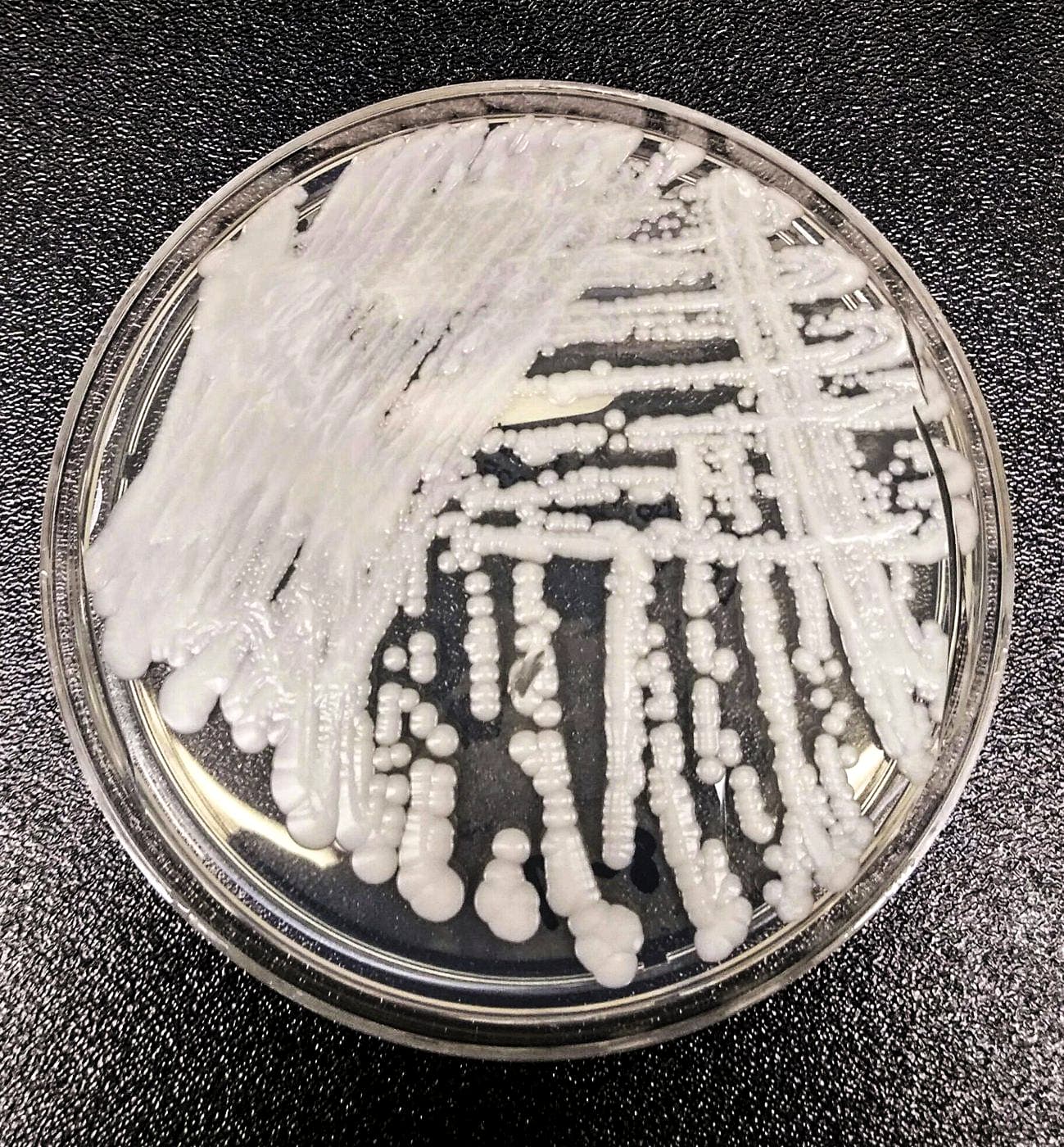
This undated photo made available by the Centers for Disease Control and Prevention shows a strain of Candida auris cultured in a petri dish at a CDC laboratory. (The Canadian Press/Shawn Lockhart-CDC via AP)
Notably, C. diff is estimated to cause about 400,000 infections and more than 11,000 deaths in the United States each year, according to the CDC. It was listed in the CDC’s urgent threats list in 2013 and 2019 but was downgraded to serious because it has seen “measured declines” since 2011, the agency said.
Concerning threats, or the least severe germs listed by the CDC, include clindamycin-resistant group B Streptococcus (GBS) and drug-resistant group A Streptococcus (GAS).
On the CDC’s watch list, Azole-resistant Aspergillus fumigatus, drug-resistant Bordetella pertussis, drug-resistant dermatophytes, drug-resistant Haemophilus influenzae (Hi), drug-resistant Mycoplasma genitalium, and nontuberculous mycobacteria (NTM) were listed.
Notably, Bordetella pertussis is the bacterium that causes whooping cough, a highly infectious disease that more severely impacts young children and infants.