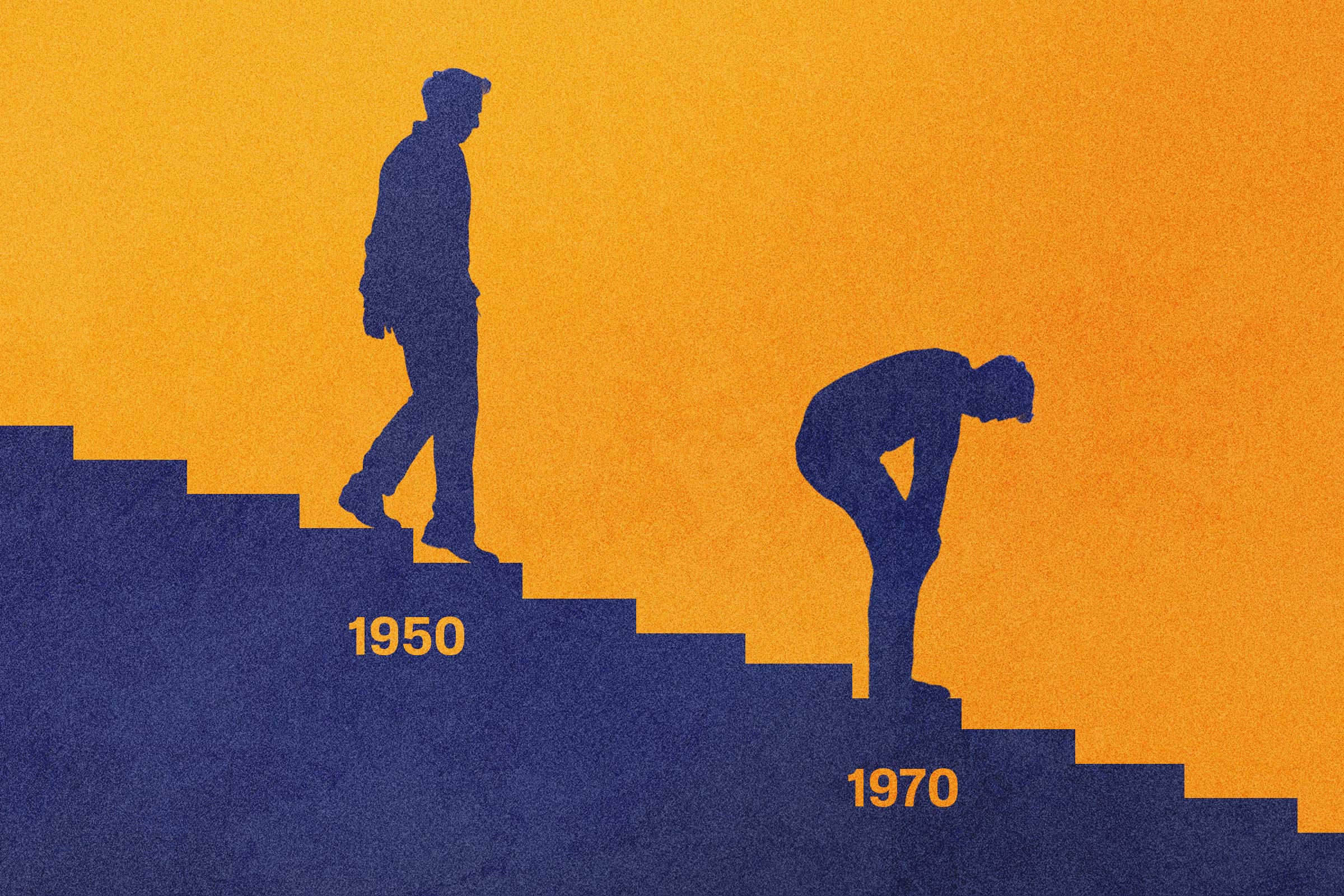

You are 40 because you were born 40 years ago. But your body keeps a different kind of time.
Unlike the age on your ID, your biological age reflects how your body is holding up: how inflammation, metabolic strain, and the wear on your organs and immune system compare with what’s typical at your age. Two people can turn 40 on the same day and carry very different histories inside them.
Scientists can now estimate that difference, and it appears to be getting worse, generation by generation.
In a cancer study of more than 154,000 people in the UK, people born between 1965 and 1974 had blood profiles that appeared biologically older than those of people born during the 50s, with a 23 percent greater variation between their chronological age and their biological age.
A greater variation means that more people may be biologically older as well as younger than their actual age.
A smaller U.S. group of 10,000 participants showed an even larger biological age gap between people born in the 1990s and those born in the late 1960s.
The more a person’s biological age outpaced their chronological age, the greater the risk of early-onset cancer. People with the biggest gap had a 15 percent higher risk of getting cancer before 55, as shown in the UK sample. The effect was strongest for cancers of the lung, gastrointestinal tract, and uterus.
The Body Keeps a Record
A person’s biological age is, in part, a record of the world in which a person has grown up.
The “exposome” is a term researchers use for how the world around us affects our health. It is essentially a life’s worth of environmental and lifestyle exposures, added up. Genes play a role, as does everything that happens before and after birth.
“Biological aging is discrepant from chronological aging because it is influenced by genetics, lifestyle, and environmental exposures,” Elissa Epel, a professor of psychiatry and behavioral sciences at the University of California, San Francisco, who was not part of the study, told The Epoch Times via email. Biological age, she said, can therefore be viewed as an indicator of cumulative exposures—“stressors, toxins, processed food and other pro-aging factors.”
Biological aging also does not happen evenly across the whole body. The immune system, fat tissue, brain, liver, kidneys, and heart can age at their own pace.
“It is possible for a person to have a higher predicted brain age and a lower liver age,” Ludger Goeminne, a researcher at Harvard University who was not part of the study, told The Epoch Times via email.
In the study, two organ-level patterns stood out. An older-looking immune system was associated with a 1.89-fold higher relative risk of lung cancer before age 55. Older-appearing fat tissue was associated with a 60 percent higher relative risk of colorectal cancer before age 55.
Is Modern Life Aging Us Faster?
By 40, many people feel their bodies don’t always bounce back the way they used to. A late night can leave them dragging for days. A stressful week at work can disrupt sleep long after it ends.
Some of these changes may be driven by age, but some by our environments.
Work has become increasingly sedentary. In the United States, about half of private-sector jobs required at least moderate physical activity in the early 1960s. By 2008, about one in five did. People’s diets have become more processed. From 2001 to 2018, ultra-processed foods—from packaged snacks to ready-to-eat meals—made up a growing share of adults’ daily calories.
Metabolism Under Strain
In the United States, the share of adults ages 20 to 39 with metabolic syndrome—a cluster of problems involving waist size, blood pressure, blood sugar, and cholesterol—rose from about 16 percent in 2011–2012 to 21 percent in 2015–2016.
Fat tissue is not simply a place to store excess calories; it sends hormonal and immune signals throughout the body. As it expands and becomes dysfunctional, cells may become less responsive to insulin, resulting in elevated insulin, while the stressed fat tissue releases inflammatory signals.
Over years, elevated insulin and chronic inflammation can alter the environment cells grow and repair themselves in, increasing the risk of aging and cancer.
Alarms Keep Sounding
Among U.S. adults ages 18 to 25, the number of people reporting serious psychological distress has increased from about 8 percent in 2008 to 13 percent in 2017, suggesting a growing mental-health burden among young adults.
In the short term, stress sharpens focus and prepares the body to respond. The problem is when the alarm doesn’t switch off. Chronic stress can disrupt sleep, change eating and activity patterns, and wear down immune and metabolic health over time. Researchers are also finding evidence that repeated stress can leave a more direct biological mark.
Glucocorticoids, stress hormones that include cortisol, can influence how genes behave throughout the body. Research has linked cumulative lifetime stress with changes in epigenetic markers—chemical tags that help regulate which genes are turned on or off—at sites tied to aging.
Traumatic stress early in life has been associated with older readings on epigenetic clocks, Epel said.
In other words, repeated or traumatic stress becomes part of the body’s biological history, leaving traces long before disease is visible.
Environment Getting Under the Skin
The chemical landscape has changed dramatically: global production of synthetic chemicals and plastics has expanded 50-fold since 1950, according to a 2025 article in the New England Journal of Medicine.
Studies have linked long-term exposure to fine particulate air pollution with faster epigenetic aging. Researchers are still investigating inflammation, oxidative stress, and DNA damage as main pathways.
Microplastics and nanoplastics—tiny particles detected in human tissues, including the placenta–are also under investigation. A 2025 meta-analysis associated these particles with markers of oxidative stress and inflammation.
Environmental influences can also begin before birth. Inflammation during pregnancy, for example, can shape how a child’s developing immune system responds later in life. With up to 50 percent of pregnant mothers carrying at least one metabolic risk, for younger generations, some of the pressures that may accelerate aging could begin before they take their first breath.
The Clock Starts Early
Some of the strain we see in adulthood did not begin in adulthood.
Childhood and adolescence are periods of rapid growth, when immune, metabolic, and hormonal systems are still developing. What happens during those years shapes how those systems function later in life.
In a 2025 study that followed 205 adults in Chile from birth into their late 20s, those whose obesity began in childhood or adolescence and persisted over time showed molecular signs of faster biological aging.
That’s part of why researchers studying early-onset cancers, including colorectal cancer, are looking backward: at childhood weight gain, diet, antibiotic exposure, changes in the gut, puberty timing, and other developmental factors.
What You Can Do
“Unlike the genome, which we cannot change, the exposome is partly under our control, and should be our focus for preventing accelerated aging,” Epel said.
A 45-year-old whose immune profile looks like a 60-year-old’s has not literally lived an extra 15 years, Goeminne said. “The important next step is to determine which biological and environmental processes give rise to the age deviation, and whether changing those processes changes cancer risk.”
Some of that control sits at the individual level. Avoiding tobacco, limiting alcohol, exercising regularly, supporting metabolic health, and getting enough restorative sleep can improve long-term health.
Learning to regulate yourself can also slow down aging. In a study of healthy young-to-middle-aged adults, cumulative stress tracked with faster epigenetic aging, but people with stronger emotion-regulation skills showed less of that effect.
“The good news is that biological age, unlike chronological age, is malleable and thus partly under our control,” Epel said. “Even when we are older, we can slow biological aging in meaningful ways through our daily choices.”
Your next birthday is already marked on the calendar. But you may have more of a say than you think in the body that gets you there.