
Most cancer deaths this year will come from cancers that no one is routinely screened for. The Food and Drug Administration puts the figure at about 58 percent. Galleri, a blood test that looks for signs of more than 50 cancers, is built to fill that gap.
The harder question is whether finding more cancers through the test actually helps people live longer.
The First of Its Kind
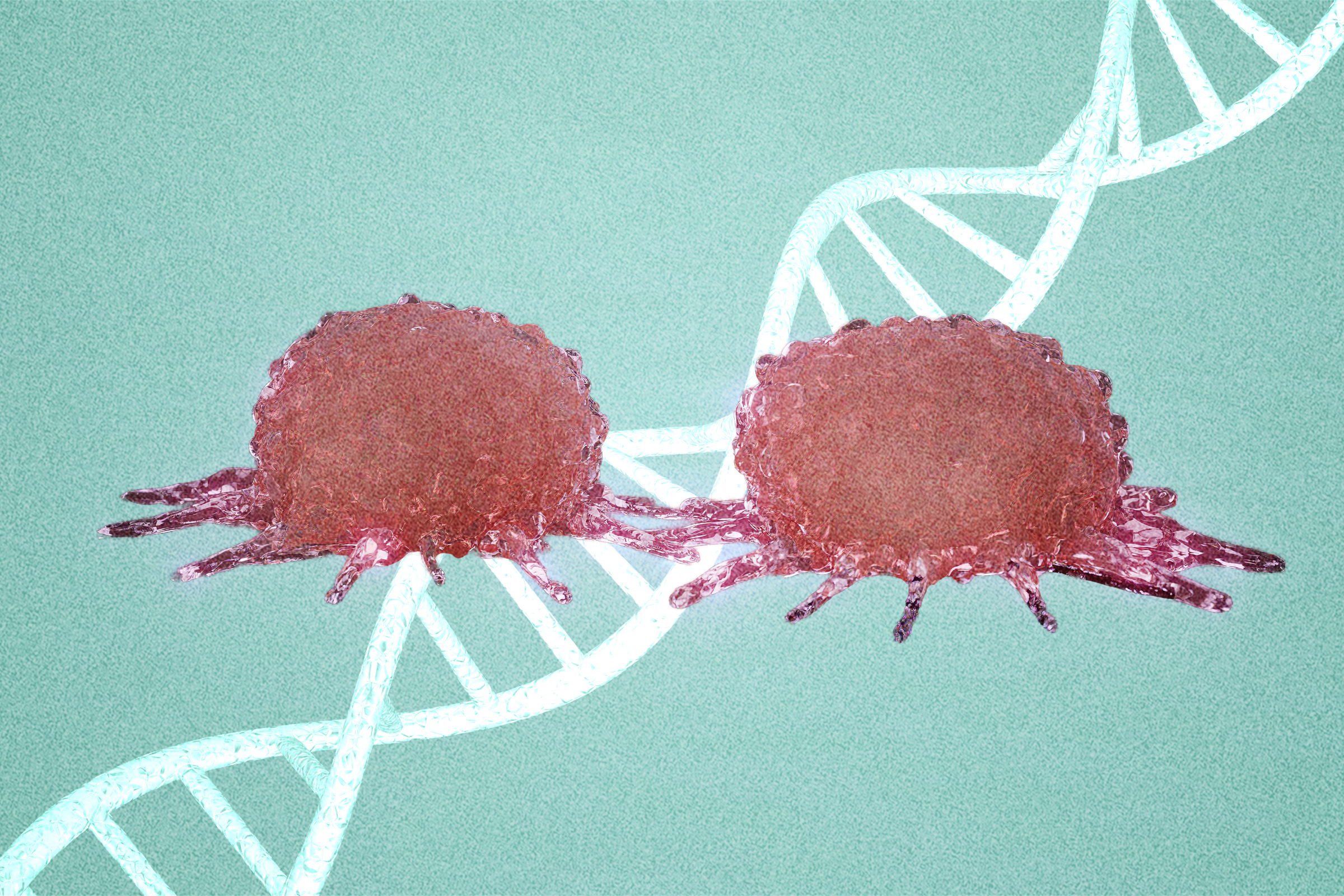
Galleri, a multi-cancer test (MCD), does not run 50 separate cancer tests. Tumors shed tiny DNA fragments into the blood, and the test looks for the fragments to find signs of cancer.
If it finds a signal, the test then predicts the tissue or organ where that signal most likely came from. That prediction gives doctors a “more focused” starting point for follow-up scans—an endoscopy or a biopsy, or other testing needed to determine whether cancer is present, Dr. Deborah Schrag, chair of the Department of Medicine at Memorial Sloan Kettering Cancer Center, told The Epoch Times via email.
Galleri cannot detect every cancer. Detection varies by type and stage, and earlier studies found early-stage prostate cancers hard to detect. Some tumors release so few DNA fragments into the bloodstream that a negative result does not rule cancer out.
Nor does Galleri measure inherited cancer risk. Tests for BRCA (Breast Cancer gene) or Lynch syndrome gene variants show whether you are more likely to develop cancer. Galleri looks for signs that cancer may already be present.
The Trial Missed Its Primary Goal
The largest study of Galleri so far was the NHS-Galleri trial, a randomized study of more than 140,000 adults ages 50 to 77 in England. Participants were randomly assigned to get Galleri once a year for three years on top of usual screening, or to get usual care alone.
The trial’s main question was whether adding Galleri would reduce the number of combined cancers diagnosed at an advanced stage (stage 3 or I4), though the Galleri group had more stage 3 diagnoses but fewer stage 4 diagnoses. It did not meet that primary goal across the 12 prespecified cancer types. Those types are anal, bladder, colorectal, esophageal, head and neck, liver and bile duct, lung, ovarian, pancreatic and stomach cancers, plus lymphoma and myeloma.
There were encouraging findings. Diagnoses of stage 1 and 2 cancers also increased by 16 percent, which can help pick up earlier-stage cancers. This was a secondary endpoint.
The study also did not test if testing for cancer helped reduce cancer mortality in patients.
Why Finding Cancer Earlier May Not Help
Earlier is not always better. “Finding a cancer earlier does not mean you will change that cancer’s fate,” Ruth Etzioni, a biostatistician who focuses on cancer screening at Fred Hutchinson Cancer Center, told The Epoch Times via email.
The study findings do not establish that Galleri reduces cancer deaths.
For a slow-growing cancer, such as some prostate cancers, screening may simply move the date of diagnosis earlier without changing the outcome. “The person just ends up knowing sooner,” Etzioni said.
That can also lead to overdiagnosis: finding a cancer that would never have caused symptoms or shortened a person’s life. Treatment can then cause harm without providing a benefit—for example, prostate cancer treatment can lead to urinary incontinence or erectile dysfunction. Researchers do not yet know how often multicancer testing might lead to overdiagnosis.
At the other extreme, an aggressive or fast-growing cancer, such as some pancreatic cancers, may spread so quickly that even finding it earlier does not prevent death, Etzioni said.
“What I hear most frequently from individuals who have had a positive test is that the stress of not knowing ‘whether it is or isn’t cancer’ is the hardest part,” Schrag said.
Testing Positive: More Tests
A “cancer signal detected” result is not a cancer diagnosis. It means further testing is needed, Schrag said. The initial test report may also give clues about where the cancer signal originated, which can help doctors decide where to look first.
The next step is usually a conversation with the physician who ordered the test, followed by diagnostic testing such as bloodwork or imaging.
In many cases, the follow-up gives an answer. In the recently published North American PATHFINDER 2 study of more than 35,000 participants, 287 people received a cancer-signal-detected result. Of those, 173—about 60 percent—were subsequently diagnosed with cancer. Among those confirmed cases, Galleri named the correct location about 91 percent of the time.
But as the study also showed, 40 percent of the patients did not get a cancer diagnosis—and that is where the process can become more complicated. Doctors do not have one agreed-upon set of steps to follow after every positive multi-cancer test.
If initial testing finds nothing, they may order more scans, investigate another part of the body, or schedule follow-up visits to watch for changes. Doctors are still deciding how far to keep looking for cancer, and when it is reasonable to stop.
Almost half of these patients underwent at least one invasive procedure, such as an endoscopy or biopsy, which can bring expense and anxiety, as well as medical risks such as bleeding, infection, or a reaction to sedation.
Schrag, who was an investigator in the original PATHFINDER study, said the medical risks of follow-up testing are generally small and manageable. The bigger burden, she said, may be the uncertainty itself.
What a Negative Result Means
A “no cancer signal detected” result is not an all-clear. It means Galleri did not detect the cancer-associated patterns it looks for in that blood sample.
In the FDA-reviewed PATHFINDER 2 data, Galleri detected a cancer signal in about 35 percent of those diagnosed with cancer during the following year—about one in three. Some cancers may not have been present when blood was drawn, while others may have been present but went undetected. A negative result cannot rule out cancer.
That has two important implications, according to the FDA. A negative Galleri result is not a reason to skip a mammogram or a screening for colorectal, cervical, or lung cancer. Symptoms, such as unexplained bleeding, weight loss, persistent bowel changes, or a new lump deserve medical evaluation, even after a negative Galleri result.
Galleri is intended for people with no suspicion of cancer—not to explain symptoms.
The Question Before the FDA
In September, an FDA advisory committee reviewed GRAIL’s application to market Galleri as an annual screening test for adults 50 and older. The panel voted 6 to 4 that the test was effective and 7 to 2—with one abstention—that its benefits outweighed its risks.
However, the FDA advisory committee’s vote is only meant as a recommendation, and the FDA still has to make its own decision if it’s going to approve Galleri as a diagnostic test.
There is a regulatory precedent: In 2024, the FDA approved Shield, a blood test for colorectal cancer, after an advisory panel voted 6 to 3 in favor of its effectiveness. But Shield screens for one cancer and has an established next step after a positive result: colonoscopy, compared to Galleri’s complicated diagnostic search.
Approval would mean the FDA found sufficient evidence of safety and effectiveness for Galleri’s specified use of detecting cancer signals—not that it had been shown to reduce cancer deaths. It would also open a path to future insurance coverage, including Medicare.
Whatever the agency decides, Galleri does not replace established screening, according to the FDA. Mammograms, cervical and colorectal screening, and low-dose CT scans for eligible people can reduce cancer deaths. Cervical and colorectal screening can also detect precancerous changes, allowing treatment before cancer develops.
If you’re considering Galleri, which lists for $949, the first question is whether you are up to date on the screening already proven to help. Then ask whether you would be prepared for the time, cost, and uncertainty if the test finds a signal but follow-up finds no cancer.
“It is stressful to be in limbo and uncertain,” Schrag said.