
The Los Angeles school board on April 21 approved a resolution to regulate student screen time during classroom instruction, amid growing concern among educators and health experts about the effects of prolonged digital exposure on children.
The school board for the Los Angeles Unified School District voted 6–0, with one recusal, to adopt the measure directing officials to develop age-appropriate limits on classroom technology use across all grade levels, the district said in a statement.
The policy builds on a 2024 district-wide cellphone ban and positions the district, the second-largest in the nation, among the first in the United States to pursue systemwide restrictions on instructional screen time.
District leaders said the move represents a recalibration after the rapid expansion of digital learning during the COVID-19 pandemic.
“Our charge now is to recalibrate, evaluate the role of educational technology in the classroom, and balance access to that technology with the kinds of instruction and interaction we know help students thrive,” said board member Nick Melvoin, who sponsored the measure.
The resolution calls for eliminating device use for the youngest students, restricting student-led use of platforms such as YouTube, and conducting a full review of classroom technology contracts.
Acting Superintendent Andrés E. Chait said that technology remains a valuable tool.
“But it is most effective when used purposefully and guided by educators,” he said.
Health Concerns
The resolution to limit student screen time cites findings from the American Academy of Pediatrics that associate prolonged screen exposure with anxiety, addiction, depression, reduced attention span, and lower academic performance.
According to the district’s resolution, children aged 8 to 11 who exceed recommended screen time levels face a higher risk of obesity and perform worse on cognitive assessments.
Board Vice President Rocío Rivas said the policy aligns with both research and lived experience.
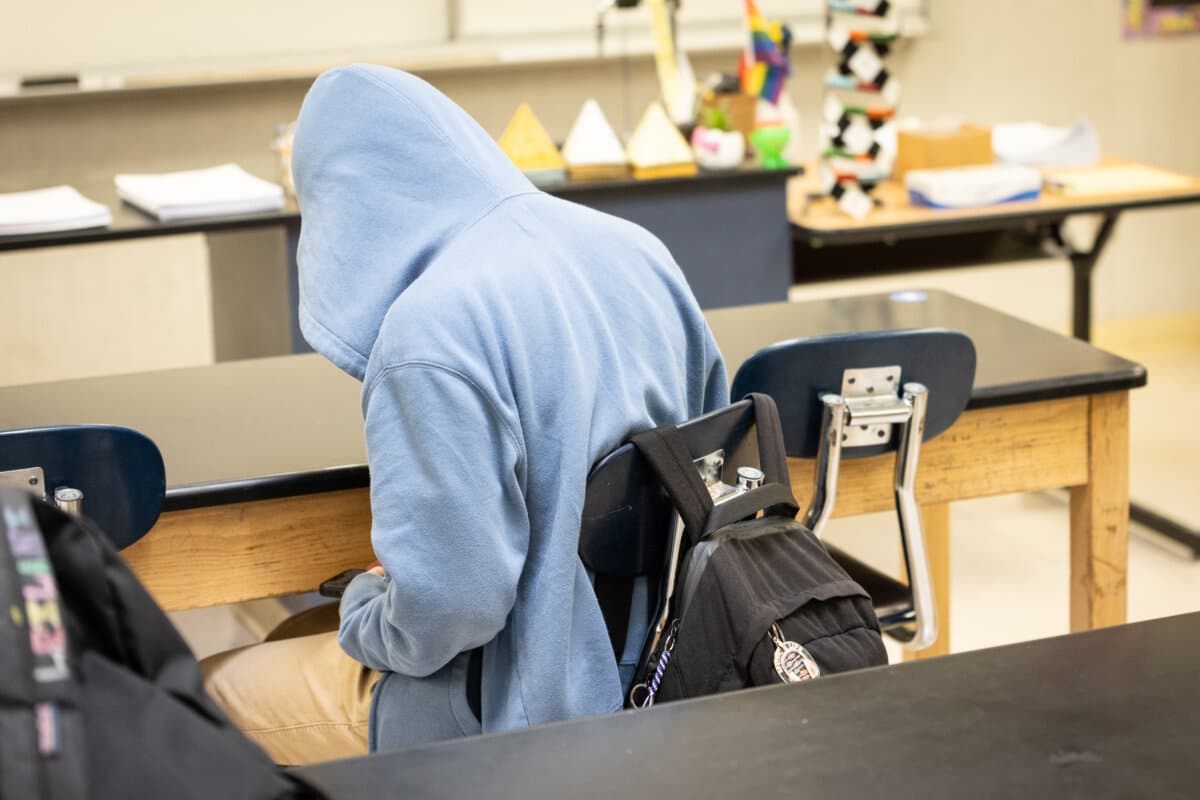
A student in the Los Angeles Unified School District uses his phone in Los Angeles on Jan. 8, 2024. (John Fredricks/The Epoch Times)
“This resolution aligns our classrooms with what research, neuroscience, and our own lived experience are telling us: intention matters, balance matters, and our students’ minds and wellbeing must come first,” he said in the statement.
Supporters framed the measure as an effort to restore human interaction in classrooms.
Board member Tanya Ortiz Franklin said that structured limits would help younger students develop foundational cognitive and social skills while giving older students more meaningful opportunities for collaboration within their community.
Not an Immediate Ban
The resolution does not impose an immediate, uniform cap on screen time. Instead, district staff will work with educators, families, and public health experts to develop guidelines tailored to different age groups.
Existing school-level policies will remain in place in the interim. Board member Karla Griego said that such an approach is overdue.
Some educators and disability advocates say students with disabilities often rely on assistive technology, so broad limits on screen use could unintentionally restrict access to important learning tools.
When governments create policies limiting screen time or electronic devices, they must ensure that those rules do not conflict with students’ rights under disability rights laws, the Council of Parent Attorneys and Advocates said in a September 2024 statement.
The group warned that poorly designed restrictions could reduce access to tools some students need to communicate, learn, and participate in class.
Across the country, some districts have adopted full-day cellphone bans, while others are experimenting with reducing reliance on classroom computers or tablets.
The Houston Independent School District began enforcing a ban on personal communication devices for the 2025–2026 school year.
According to district policy, students must keep devices turned off and stored from arrival through the end of the school day, including during lunch and passing periods.
Similarly, the Clark County School District has introduced signal-blocking pouches for middle and high school students during class time.
Reuters contributed to this report.