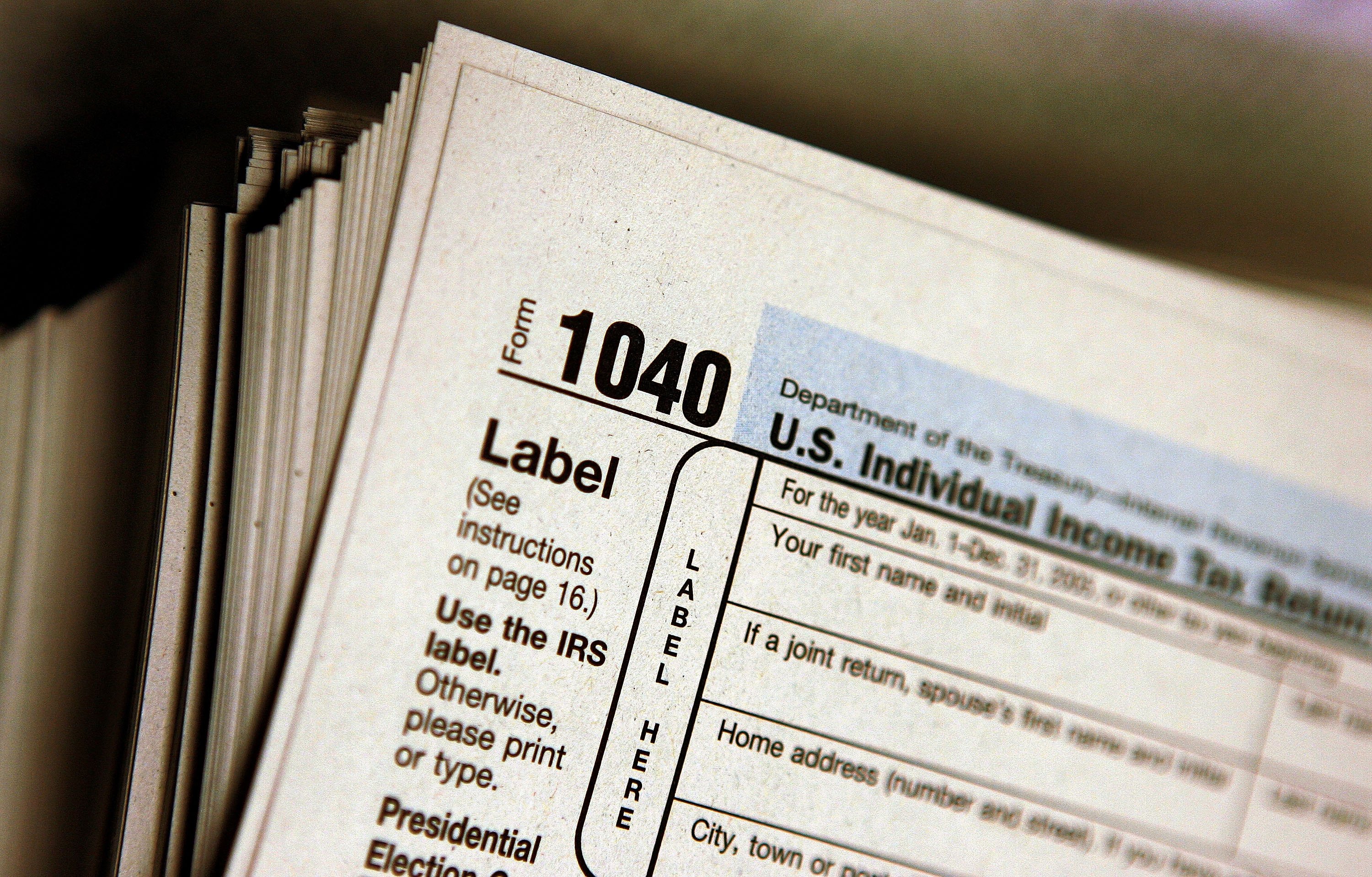
The 2026 tax filing season is due to start in January as Trump administration officials have predicted that it will lead to significant tax refunds for most Americans.
However, several other changes will be coming as taxpayers start to file their taxes in the coming weeks. The tax filing start date has not yet been officially announced, although it’s expected to start in late January.
Direct File No More
The IRS Direct File, an electronic system for filing tax returns established under the Biden administration, will not be offered in 2026, officials have said.
Treasury Secretary Scott Bessent, who is also the IRS commissioner, said in November that the service “wasn’t used very much” and “better alternatives” exist.
The Direct File pilot program was started in tax year 2023, and as of April 20, 2025, 296,531 returns were filed by users and accepted by the tax agency through the program, according to a recent Treasury Department report.
New Mileage Rates Coming
The IRS announced Monday that beginning Jan. 1, the standard mileage rate for a qualifying vehicle will be 72.5 cents per mile, up 2.5 cents from 2025.
The rate will be 20.5 cents per mile driven for medical purposes, down a half cent from 2025 and will be 20.5 cents per mile driven for moving purposes for certain active-duty members of the military and certain members of the intelligence community, a half-cent reduction from last year.
The change, meant to reflect updated cost data and annual inflation adjustments, applies to fully electric and hybrid automobiles, and gas and diesel-powered vehicles.
Larger Refunds Likely Coming, Officials Say
Officials including Treasury Secretary Scott Bessent have predicted that American workers will see greater spending power due to tax refunds that were included in a federal law that was passed over the summer.
Speaking to the “All-In Podcast” last week, Bessent said that workers will see changes to their tax withholdings starting next year due to a provision under the One Big Beautiful Bill Act.
“They will change their withholding schedule at the beginning of the year and they will get an automatic increase in real wages,” he said. “So I think that’s going to be a very powerful combo.”
The Trump administration-backed One Big Beautiful Bill Act contains several income tax provisions including an increase to the child tax credit, an increase to the standard deduction, a state and local tax (SALT) deduction limit, and also deductions on auto loan interest. Other provisions include tax cuts on overtime and tip income as well as a new deduction for seniors who receive Social Security payments and have to pax taxes on those earnings.
The secretary also again predicted that households will see $1,000 to $2,000 in refunds next year.
“I think that’s going to be a very powerful combo of corporate and individuals,” he said, referring to taxes.
The CEO of the IRS, Frank Bisignano, also said in an interview with Fox Business that around 94 percent of middle-class taxpayers will see higher returns.
Roughly $800 Average Boost
The nonpartisan Tax Foundation also echoed Trump administration forecasts that many Americans will shoulder a lower tax burden next year,
predicting that the average refund will be around $800 next year.
“When taxpayers file their 2025 tax returns in 2026, many will see larger refunds than in recent years. That’s due to the One Big Beautiful Bill Act, which reduced individual income taxes for 2025 by an estimated $144 billion,” the Tax Foundation’s Erica York said in an analysis released in mid-December.
York added that because the IRS did not adjust its withholding tables after the passage of the law, “workers generally continued to withhold more taxes from their paychecks than the new law required.”
“As a result, instead of gradually receiving the benefit of the tax cuts through higher take-home pay during the year, most taxpayers will receive it all at once when they file their returns,” she said.
Less Tax on Tips or Overtime
The One Big Beautiful Bill Act says that workers who get tips will be able to deduct up to $25,000 in tips if they make less than $150,000, or $300,000 if they’re married and filing jointly. The amount workers can deduct is reduced by $100 for every $1,000 they make over $150,000.
Overtime workers can deduct up to $12,500 in overtime or up to $25,000 in a joint return. Like the tip measure, the amount workers can deduct is reduced if they make more than $150,000. And they must include a Social Security number when they file.
Trump Accounts
Also part of the tax and spending bill, so-called “Trump Accounts” will be
rolled out starting next year. The program gives a $1,000 bonus to babies born during the calendar years of the Trump administration, and multiple billionaires including Michael Dell and Ray Dalio have contributed funds to the accounts so far.
During an interview in mid-December, Bessent said parents whose children are eligible for the program will be able to select a newly made IRS form to claim it as they file their taxes.
“To claim this investment, most families need merely to check a box on Form 4547,” he said, referring to the IRS form.
The Treasury hasn’t yet launched the Trump Accounts. Bessent said that they would go into effect on July 4, 2026.
The Associated Press contributed to this report.