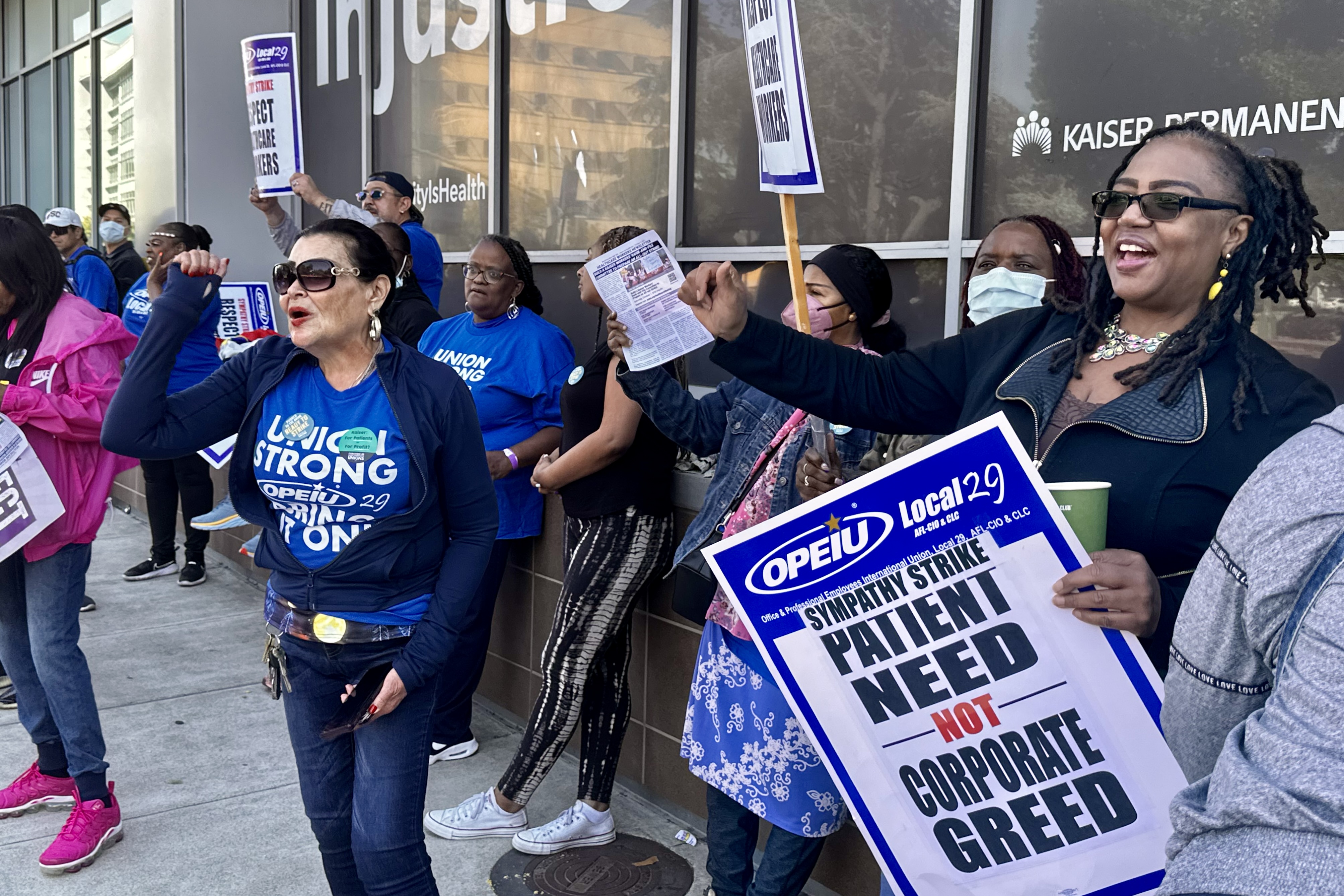

Kaiser Permanente nurses and health care workers began a strike on Jan. 26 across California and Hawaii while bargaining is ongoing.
The strike involves 31,000 nurses and health care professionals, according to the United Nurses Associations of California/Union of Health Care Professionals, part of the Alliance of Health Care Unions.
“Historic strike over Kaiser’s unfair labor practices will span dozens of hospitals, hundreds of clinics across California and Hawaii,” the union said in a Jan. 25 statement.
Health care workers say they want a fair contract, including safe staffing levels, timely access to quality care, and fair wages for frontline caregivers.
“We’re not going on strike to make noise,” said Charmaine S. Morales, president of the United Nurses Associations of California/Union of Health Care Professionals, in a statement.
“We’re striking because Kaiser has committed serious unfair labor practices and because Kaiser refuses to bargain in good faith over staffing that protects patients, workload standards that stop moral injury, and the respect and dignity that Kaiser caregivers have been denied for far too long.”
Kaiser stated, “Not all of the Alliance unions currently in negotiations will be taking part in the strike.”
Bargaining
The bargaining between the union and Kaiser began in May 2025.
In September 2025, 600 union members, including midwives and nurses, went on strike for one day in Northern California to highlight patient care issues and cuts to their wages and retirement benefits, according to the union.
In October, the Alliance of Health Care Unions held a five-day labor strike at Kaiser over staffing, compensation, benefit cuts, and other issues.
Kaiser had offered a 21.5 percent wage increase over a four-year contract in October.
In December 2025, negotiations stalled, the union said. It filed an unfair labor practice charge against Kaiser, alleging that the health system walked away from the negotiating table and attempted to bypass the national bargaining process.
Local bargaining on “a set of national and local contracts” returned to the table, according to a Jan. 25 statement on Kaiser Permanente’s website.
The strike will continue until an agreement is reached, the union said.
Twenty-nine of 53 local bargaining units have reached tentative agreements as of Jan. 22, according to a statement on Kaiser’s website.
Kaiser has proposed a 21.5 percent wage increase over the life of the contract, with a 16 percent increase within the first two years, according to its statement responding to the strike.
According to union data, nurse compensation averaged $152,000 annually from 2020 to 2023. During the same time frame, the CEO’s wages neared $13 million, and both the chief financial officer and chief operating officer received more than $4 million each.
“Our Alliance employees already earn, on average, about 16 [percent] more than similar roles at other health care organizations, and in some markets, they earn 24 [percent] more,” Kaiser stated.
In California, one in four residents gets care from Kaiser, and in Hawaii, Kaiser serves 272,000 health plan members, according to the union.
Opposing Claims
“Despite this massive accumulation of wealth, Kaiser has not reduced premiums or held them steady,” the union said in a Jan. 15 report.
Union data suggest that Kaiser’s reserves reached $68 billion to $72 billion by the end of 2025, up from $66 billion in 2024.
Following average premium increases of 8.2 percent (Northern California) and 5.1 percent (Southern California) in 2025, Kaiser has announced further increases of 7.1 percent and 6.5 percent, respectively, for 2026.
“Premiums are faithfully paid, yet the care experience feels delayed, diminished, and transactional, eroding confidence that the system delivers the promised value,” the union said in the report.
“Kaiser has raised premiums, while failing to staff as legally required,” the union said.
Kaiser responded with a statement that reads, “Despite the union’s claims, this strike is about wages,” noting that the strike was intended to disrupt patient care. The company stated it had contingency plans in place to ensure ongoing patient care during the strike.
The union report mentions allegations that Kaiser submitted fraudulent diagnosis codes for Medicare Advantage plan enrollees to receive higher federal government payments.
On Jan. 14, Kaiser agreed to pay $556 million to resolve allegations without admitting wrongdoing.