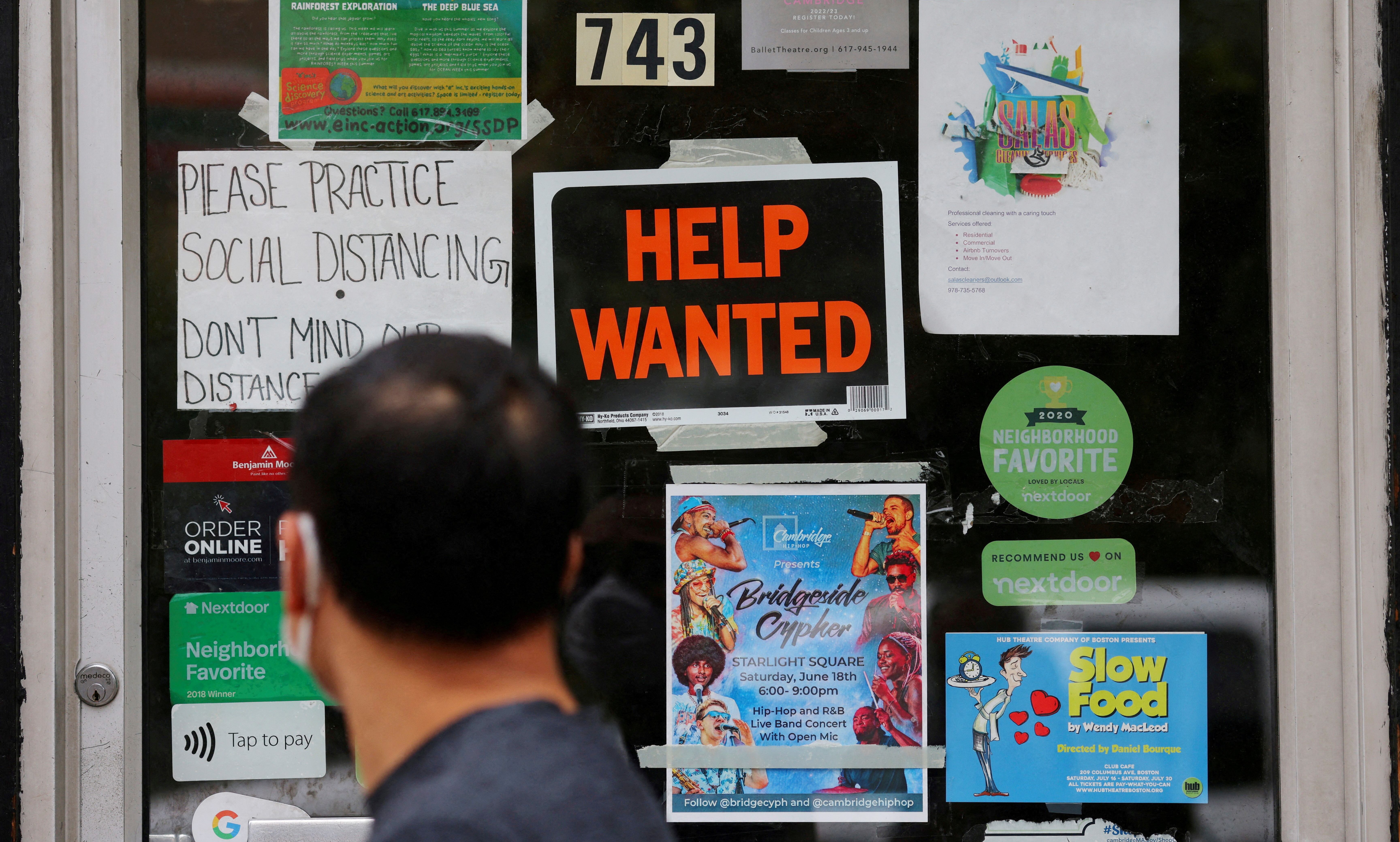

A decline in new applications for unemployment benefits has offered further evidence of labor-market resilience ahead of the October jobs report.
Initial jobless claims fell by 6,000 to 189,000 for the week ending on Oct. 31, according to Department of Labor data released on Nov. 5.
The lower-than-expected reading matched the 57-year low logged this past summer.
Stripping out week-to-week volatility, the four-week claims average slipped below 195,000.
Despite economic headwinds, steady consumer demand and healthy corporate profits have supported many employers, helping limit layoffs this year. Many companies have refrained from trimming headcount, as shown by new job-cut numbers.
October layoffs were the lowest for the month since 2023, as U.S.-based firms announced fewer than 44,000 job cuts, according to global outplacement organization Challenger, Gray and Christmas. That was down by 71 percent from a year earlier and below the 10-year October average of 56,348.
Last month’s personnel reductions were concentrated in food (9,677), technology (5,576), services (5,458), fintech (4,173), and retail (3,692).
In the first 10 months of 2026, employers announced more than 617,000 layoffs, down by 44 percent from the same span last year.
“This is a low-fire environment,” Andy Challenger, the company’s chief revenue officer, said in a statement.
Heading into the holiday season, employers are keeping their staff, and the hiring that is taking place is “largely short-term, seasonal work,” he said.
“Companies want the flexibility to meet holiday demand without adding permanent headcount,” he added.
“Seasonal employers are staggering their announcements and waiting longer to see how the season shakes out before they commit to numbers.”
U.S. businesses announced plans to hire almost 445,000 workers last month, up by 57 percent from October 2025. It also marks the highest October total since 2009.
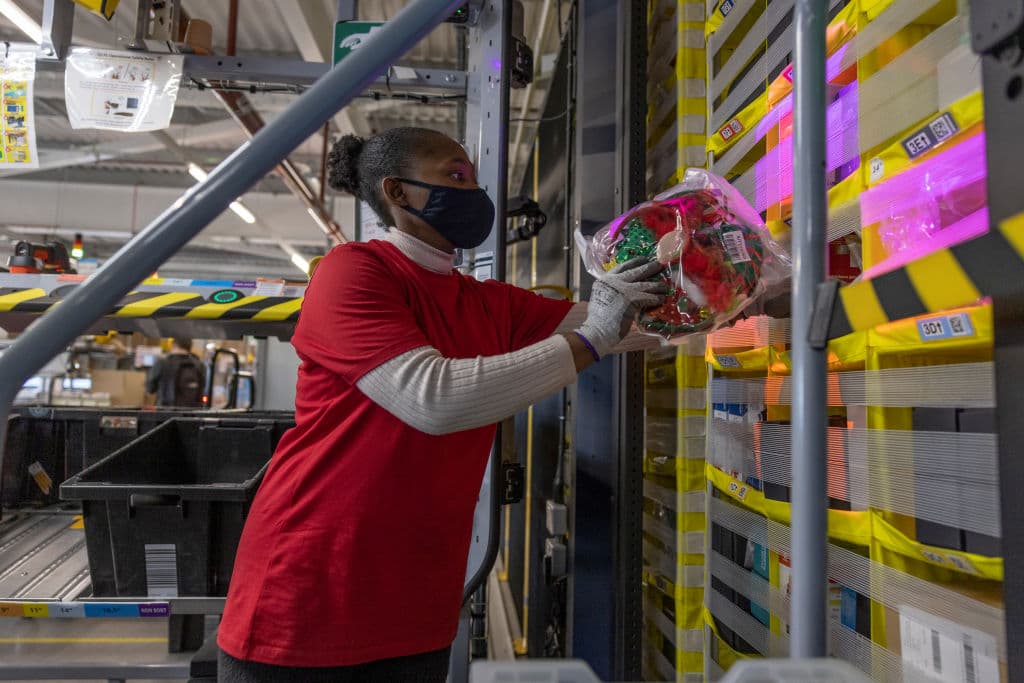
Goods are packaged at an Amazon fulfillment center, in this undated file photograph. (Dan Kitwood/Getty Images)
This was driven mainly by Amazon’s announcement that it would add 300,000 seasonal workers, 50,000 more than in each of the previous three years.
Since early September, the number of people currently receiving unemployment benefits has been choppy, according to the Labor Department. Continuing jobless claims rose to 1.72 million, from a downwardly revised 1.70 million in the previous week.
Economists use this measure to gauge how difficult it may be for workers to find jobs. It can also suggest that recipients have exhausted their benefits, with many states capping eligibility at 26 weeks.
Demand for labor picked up steam in September as job openings surged above 7.5 million—higher than expected—for the first time since May.
Previewing the October Jobs Report
The Bureau of Labor Statistics will release the highly anticipated October nonfarm payrolls report on Nov. 6.
Markets estimate 65,000 new jobs and a jobless rate holding steady at 4.2 percent.
Healthcare and nonresidential construction will likely support a large share of October’s hiring, according to RBC Economics. Transportation and warehousing may also have contributed to job creation ahead of the holiday shopping season.

A 49.5-megawatt three-level data center under construction in Vernon, Calif., on Oct. 29, 2026. (Mario Tama/Getty Images)
“Month-to-month net new job creation is not as good a gauge of labor market health as the unemployment rate, especially since breakeven employment is exceptionally low,” RBC said in an Oct. 30 research note.
Estimates vary widely, with some economists suggesting that the breakeven rate—the number of new jobs needed to keep the unemployment rate stable—may be close to zero.
“But the [Bureau of Labor Statistics] diffusion index points to more sectors hiring,” RBC added.
The bureau’s diffusion index measures how broadly employment gains or losses are spread across industries. Anything above 50 reflects more industries adding jobs than cutting.
Since the October 2025 low, the index has trended higher, with the three-month average reaching 58.8 in September.
Economic observers got a sneak peek at the private sector’s hiring efforts last month.
Payroll processor ADP reported on Nov. 4 that businesses added 86,000 new jobs for the second consecutive month in October.
This came in firmly above the consensus forecast of 69,000.
“Employers of all sizes were hiring last month,” ADP’s chief economist, Nela Richardson, said in a statement.
Job-changers were also attracted by higher base pay, more hours, overtime, and bonuses.
“Taken together, earnings growth for these workers hit its fastest pace since March 2024,” she said.
The bureau is expected to report 2.9 percent average annual earnings growth, below the current headline inflation rate of 3.7 percent.