
Resuming the sale of lower-end Nvidia chips to China to prevent the acceleration of the Chinese regime’s domestic chip innovation is in the United States’ strategic interests, according to a top economic adviser to President Donald Trump.
“After very, very careful scrutiny of all the factors that President Trump and his team decided to let the Nvidia chips go,” Kevin Hassett, director of the National Economic Council, said in a July 30 interview on Fox News.
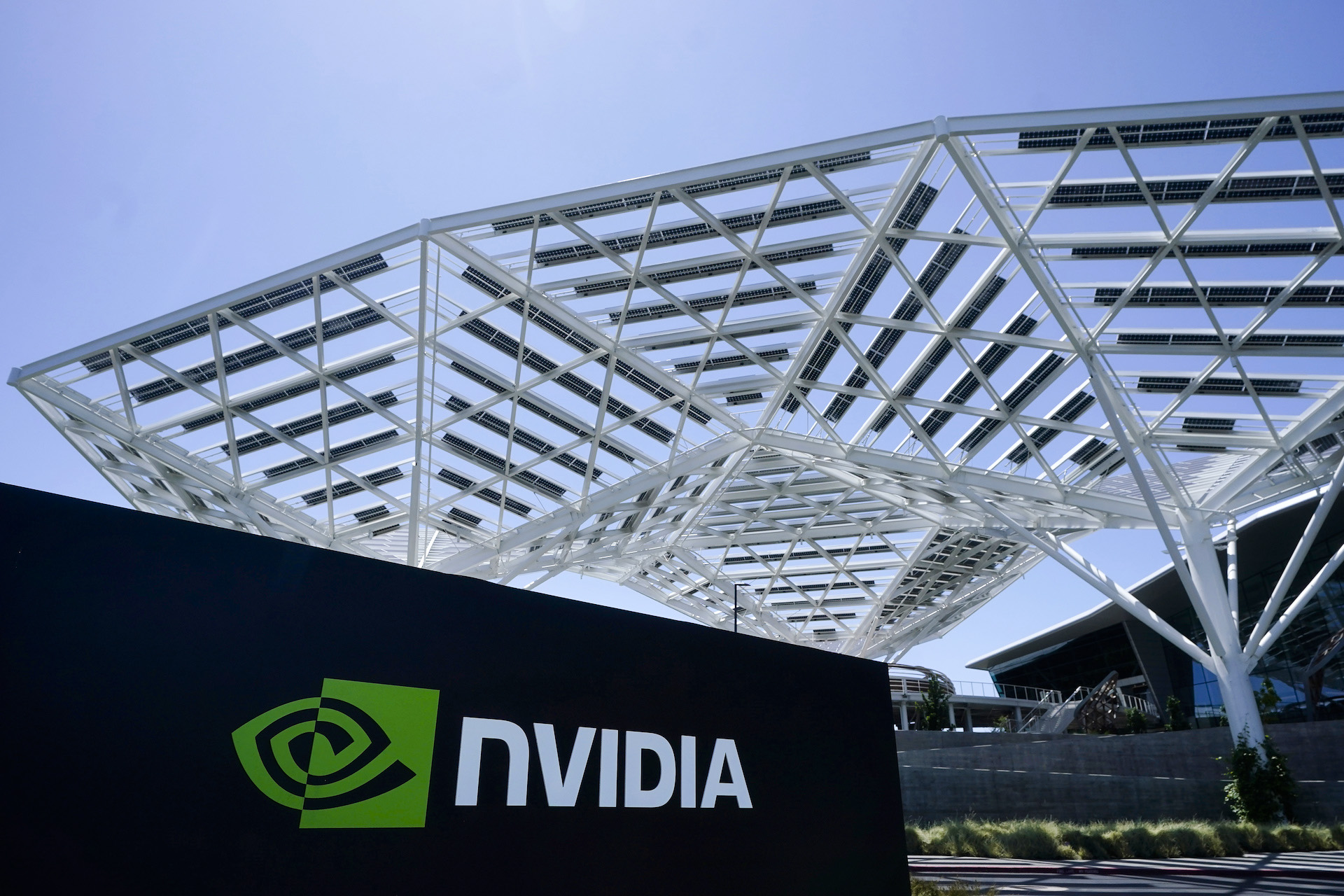
Nvidia said two weeks ago that it received assurance from federal regulators that it will get the licenses needed to resume sales to China of its H20 graphics processing units. The company was ordered to halt the export of H20s in April, during a period when Washington and Beijing were engaged in an intense exchange of tariffs and trade restrictions.
The H20 was first introduced in 2022 with a design specifically tailored to comply with Biden-era export controls. Those regulations, built on policies from the first Trump administration, were in part meant to prevent China from acquiring the most advanced chips needed to develop artificial intelligence (AI) technology.
Though less powerful than Nvidia’s flagship processors, the H20 has still been adopted by Chinese tech giants such as ByteDance, Alibaba, and Tencent. It was also credited with the launch of DeepSeek, China’s most advanced large language model and a leading competitor of OpenAI’s ChatGPT.
According to Hassett, the White House has decided that it would be better to give Chinese AI developers access to downgraded Nvidia chips than to completely cut them off and risk fueling China’s demand for homegrown chips.
“One of the risks that you have to take seriously is that if China’s not buying chips from us, then they’re innovating, making their own chips,” he told Fox News’ Martha MacCallum. “You don’t want China to become the world standard for AI chips, as we have to win that horse race.
“Taking our lower-end chips and letting China have them, while our best chips are still kept for us, I think was a decision the team made,” he continued. “I think that it was a wise one.”
Hassett defended the decision as it continues to draw skepticism from bipartisan members of Congress.
In a speech on July 22, Rep. John Moolenaar (R-Mich.), chairman of the House Select Committee on the Chinese Communist Party, said that while he understands the rationale behind lifting the ban, he still disagrees with the decision because of a greater concern that it could help the Chinese military advance its AI capabilities.
“The H20 is a stark improvement over what the Chinese can indigenously produce at scale. When, not if, these chips are diverted to a PLA supercomputer, they will substantially upgrade their ability to run advanced AI models,” he warned, referring to the acronym of the Chinese regime’s military, the People’s Liberation Army.
Meanwhile, Reps. Gregory Meeks (D-N.Y.) and Raja Krishnamoorthi (D-Ill.), ranking members of the House Foreign Affairs Committee and the Select Committee on the Chinese Communist Party, respectively, criticized the Trump administration’s use of chip sales as a bargaining tool in trade negotiations with Beijing.
“If we want to prevent Beijing from winning the AI race of our own accord and preserve the multilateral export control regimes that we have strived on a bipartisan basis to establish and preserve, we cannot allow the lines between national security policy and trade policy to become blurred,” they wrote in a July 28 letter to Commerce Secretary Howard Lutnick.
Outside of Capitol Hill, a coalition of former Trump officials and conservative policy influencers is calling on Lutnick to reverse course on H20 sales.
Citing the Chinese regime’s military-civil fusion strategy, they argued it should be fully expected that the H20—and the AI models it enables—will be used for military applications. They also argued that, as the effect of the global chip shortage still lingers, even lower-end chips like the H20 should be prioritized for U.S. needs before being exported to China.
Lutnick’s office did not respond to a request for comment by publication time.
In interviews earlier this month, he said that the H20 shipments were part of the agreement in which China would loosen export control on rare-earth magnets that are critical to electronic, automotive, and clean energy industries.