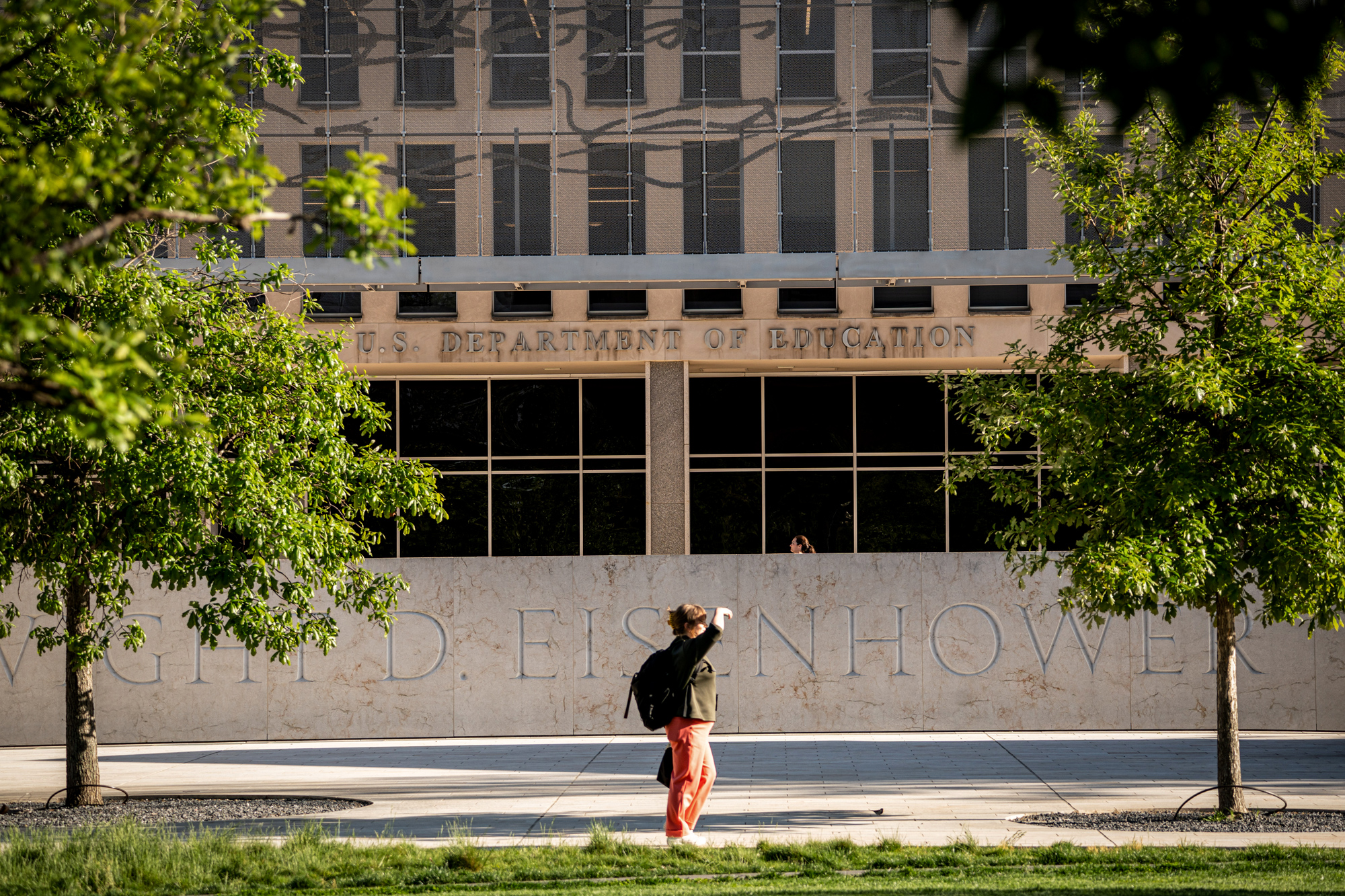

The Department of Education said it has prevented more than $1 billion in federal student aid-related fraud so far this year, including schemes in which scammers posed as students to steal money from the taxpayer-funded program.
The department said on Dec. 11 that this was achieved by strengthening oversight of how colleges and universities verify identities and distribute student aid dollars. These measures include mandatory identity verification for certain first-time student applicants enrolling in the summer term, as well as a permanent screening process for all applicants beginning this fall.
Under current rules, students filing the Free Application for Federal Student Aid (FAFSA) form must present an unexpired, government-issued photo ID—either in person or over a live video conference—to a school official authorized to verify identity. The schools must keep a record of the ID review.
“American citizens have to present an ID to purchase a ticket to travel or to rent a car—it’s only right that they should present an ID to access tens of thousands of taxpayer dollars to fund their education,” Education Secretary Linda McMahon said in a statement.
Since taking office, McMahon has reinstated several anti-fraud safeguards that had been suspended during the COVID-19 pandemic. These include a post-screening system that automatically flags students who have exceeded their lifetime eligibility for Pell grants, preventing college officials from awarding additional aid to such students.
The department also resumed flagging financial aid applicants suspected of using someone else’s identity. This is done through data-analysis models that detect potentially suspicious or inconsistent information submitted on the FAFSA form.
The Biden administration had paused these checks during the pandemic in an effort to make applying for financial aid easier for students. The Trump administration warned that the pause created opportunities for fraudsters to exploit the FAFSA system.
In May, the department reported that nearly $90 million in federal aid had been improperly disbursed to suspected scammers during the pandemic-era suspension of safeguards. That included more than $30 million sent to deceased individuals between 2022 and 2025, uncovered through a cross-check of student aid payments against the Social Security Death Index.
Community colleges have been among the hardest hit by the scams. California officials, for example, reported that in 2024, roughly 1.2 million fraudulent applicants—nearly 30 percent of all new student accounts in the state’s community colleges—blocked real students from enrolling in classes and siphoned off millions of dollars in financial aid. Taking advantage of the rise of remote learning during COVID, scammers would use chatbots to pose as students to join online classrooms and stay just long enough to collect a financial aid check.
Some of the fraud schemes have led to high-profile federal cases. In July, a Florida woman was sentenced to 30 months in prison for submitting more than 50 fraudulent FAFSA applications and stealing more than $930,000 in federal student aid money. In September, two Michigan men were charged in schemes involving fraudulent federal student aid claims for more than 1,200 individuals, with a total of $12.5 million allegedly disbursed.
“Colleges and universities across the country reported being under siege by highly sophisticated fraud rings and requested the Trump administration for help,” the Education Department said on Dec. 11.
Looking ahead, the department said it is expanding its anti-fraud capacity by building a new fraud-detection team within the Office of Federal Student Aid. The team will be tasked with monitoring, investigating, and combating fraud and abuse across the federal student aid system.
The Education Department has also created a new page on the Federal Student Aid website to help students and families identify “fake schools” and avoid scams. Officials warn that some fraudsters, now aided by artificial intelligence tools, have created college websites that appear legitimate in order to trick prospective students into providing personal information or paying bogus fees.