

President Donald Trump sent another round of letters to several heads of state on July 9, outlining the new U.S. tariff rates their countries will face starting on Aug. 1.
Sharing copies of each letter on Truth Social, the president called out 8 countries throughout the day, including BRICS founding member nation Brazil.
Trump told Brazilian President Luiz Inácio Lula da Silva that the South American nation will be charged a 50 percent tariff on all of its imported goods at the start of August. He said it was due in part to Brazil’s “insidious attacks on Free Elections, and the fundamental Free Speech Rights of Americans,” specifically citing its supreme court’s censorship orders against U.S. social media platforms.
Trump began the letter by criticizing Brazil’s treatment of its former president Jair Bolsonaro—a Trump ally—accusing Brazil of becoming an “international disgrace” for charging Bolsonaro in an alleged coup plot to overturn the nation’s 2022 election results and assassinate da Silva.
Bolsonaro, who is currently on trial, has denied wrongdoing and any involvement in the alleged plot.
Trump ended the letter by announcing that he was directing U.S. Trade Representative Jamieson Greer to initiate an immediate Section 301 Investigation of Brazil due to the South American nation’s “continued attacks on the Digital Trade activities of American Companies, as well as other unfair Trading Practices.”
Meanwhile, Algeria, Iraq, Libya, and Sri Lanka will each be charged a 30 percent tariff.
Brunei and Moldova will face a 25 percent tariff, and the Philippines will face a 20 percent tariff.
All letters threatened higher tariffs on goods transshipped in the hopes of avoiding the new costs.
Trump’s letters are nearly identical to the ones sent to 14 other countries, including Japan, South Korea, and Thailand, this week.
The president had hinted on July 8 that he would release a list of a “minimum of 7 countries” on the morning of July 9, with additional countries to be announced later in the day.
Among the recently tariffed countries, the United States has the largest trade deficit with Iraq, totaling $5.8 billion in 2024, a 7 percent decrease over the previous year. Moldova had the lowest total, at $85 million, in 2024.
All Eyes on Aug. 1
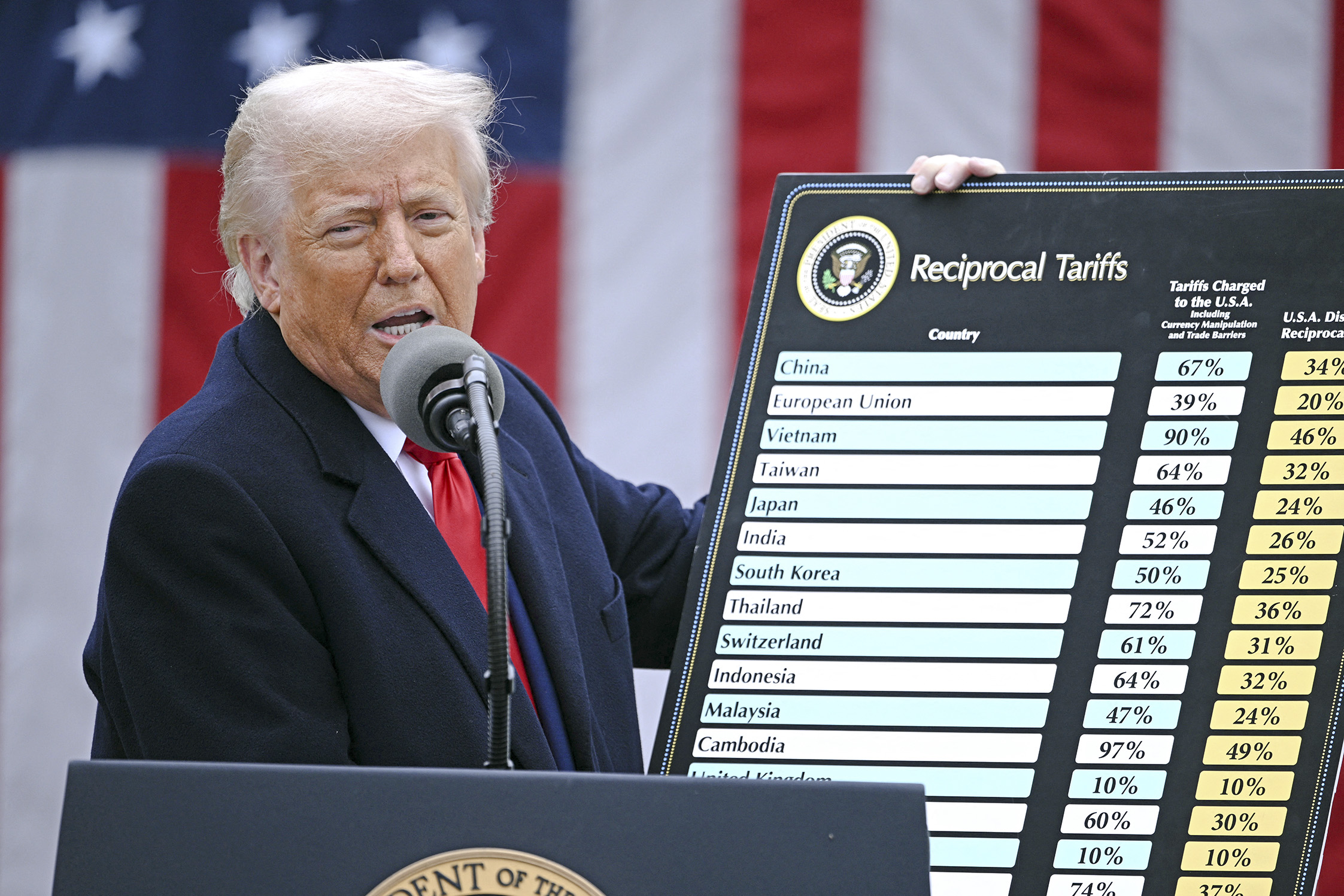
The latest tariff rates are nearly identical to those announced on April 2, when at a White House event, Trump unveiled the contours of his sweeping global tariff plans, triggering turmoil in global financial markets. Days later, Trump introduced a 90-day tariff pause and implemented a blanket 10 percent tariff on imports entering the United States, allowing for a negotiation window between the United States and the rest of the world.
With the deadline fast approaching, Trump and senior administration officials confirmed that the deadline would be extended to Aug. 1.
“There has been no change to this date, and there will be no change,” Trump wrote on Truth Social on July 8. “In other words, all money will be due and payable starting August 1, 2025—No extensions will be granted.”
These letters suggest that the United States may reconsider its tariff levels.
“We will, perhaps, consider an adjustment to this letter,” they state. “These tariffs may be modified, upward or downward, depending on our relationship with your country.”
Trump also announced on social media an additional 10 percent tariff on nations aligned with the BRICS bloc, a coalition that includes Brazil, Russia, India, China, and South Africa.
Speaking to reporters aboard Air Force One on July 3, Trump said it would be simpler to institute tariff rates across the board rather than negotiate trade agreements with every country.
However, this does not ensure that other nations will make concessions in trade talks, according to Siebert Financial chief investment officer Mark Malek.
“All that still, however, does not guarantee that they will bend to Trump’s whims, but similar to China, a successful negotiation would be beneficial for both sides, so it is likely that common ground will be found,” Malek said in a note emailed to The Epoch Times.
“The same goes for South Korea or any of the others that are on or may be added to the list.”
There was no direct mention of BRICS in Trump’s July 9 letter to Brazil.
Tariff Income
According to the Daily Treasury Statement, the United States has collected approximately $120 billion in tariff income this fiscal year.
Treasury Secretary Scott Bessent, speaking at a White House Cabinet meeting on July 8, projected that tariff revenues could reach $300 billion by Dec. 31.
He also pointed to the Congressional Budget Office’s forecast that tariff revenues will total approximately $2.8 trillion over 10 years, which the Treasury Department thinks “is probably low,” he said.
Official data will be highlighted in the June Treasury Statement. Early estimates suggest that the federal government ran an $11 billion budget deficit in June.
Market Reaction
Wall Street shrugged off the latest tariff notifications, with the leading benchmark indexes up by as much as 0.6 percent in the middle of the trading week.
U.S. Treasury yields were lower midweek as investors continued to monitor tariff news. The benchmark 10-year yield slipped to 4.34 percent.
The U.S. dollar was little changed.
Investors will also digest minutes from June’s Federal Reserve policy meeting. Traders expect that the document summary will reveal insights into officials’ latest views on tariffs, inflation, employment conditions, and the broader economic landscape.
Hours before the minutes’ release, Trump said Federal Reserve Chairman Jerome Powell is costing the United States $360 billion annually per point in refinancing costs.
“Our Fed rate is at least 3 points too high,” he said on Truth Social. “Lower the rate!”