
President Donald Trump announced on Sept. 29 that he will impose a 100 percent tariff on all movies produced outside the United States.
In a Truth Social post, Trump said foreign markets are stealing the movie-making industry and that a hefty levy is required to reverse the trend.
“Our movie making business has been stolen from the United States of America, by other Countries, just like stealing ‘candy from a baby,’” the president wrote on the social media platform.
Trump said the California market has been hit the hardest.
“Therefore, in order to solve this long time, never ending problem, I will be imposing a 100 [percent] Tariff on any and all movies that are made outside of the United States,” the president said.
It remains unclear when the new tariffs will be introduced or how they will be imposed. For instance, Trump did not say whether distributors or producers would face the import duties. It is also uncertain how this tariff would affect recent trade agreements.
The U.S.–European Union trade deal, for instance, contains provisions that would cap new tariffs at 15 percent.
Netflix share prices rose by about 0.4 percent, while Disney and Amazon stock prices climbed by about 0.7 percent. Warner Bros. Discovery share prices dropped by nearly 1 percent, and AMC share prices surged by more than 3 percent.
Foreign Market Incentives
In the spring, Trump warned in a May 4 Truth Social post that he would implement similar measures, writing that foreign governments were using various “incentives to draw [U.S.] filmmakers and studios away from the United States.”
“This is a concerted effort by other Nations and, therefore, a National Security threat,” he wrote, noting that U.S. messaging power is being affected.
He then said he was directing the Commerce Department and the U.S. Trade Representative “to immediately begin the process of instituting a 100 [percent] Tariff.”
“We want movies made in America, again!” Trump wrote.
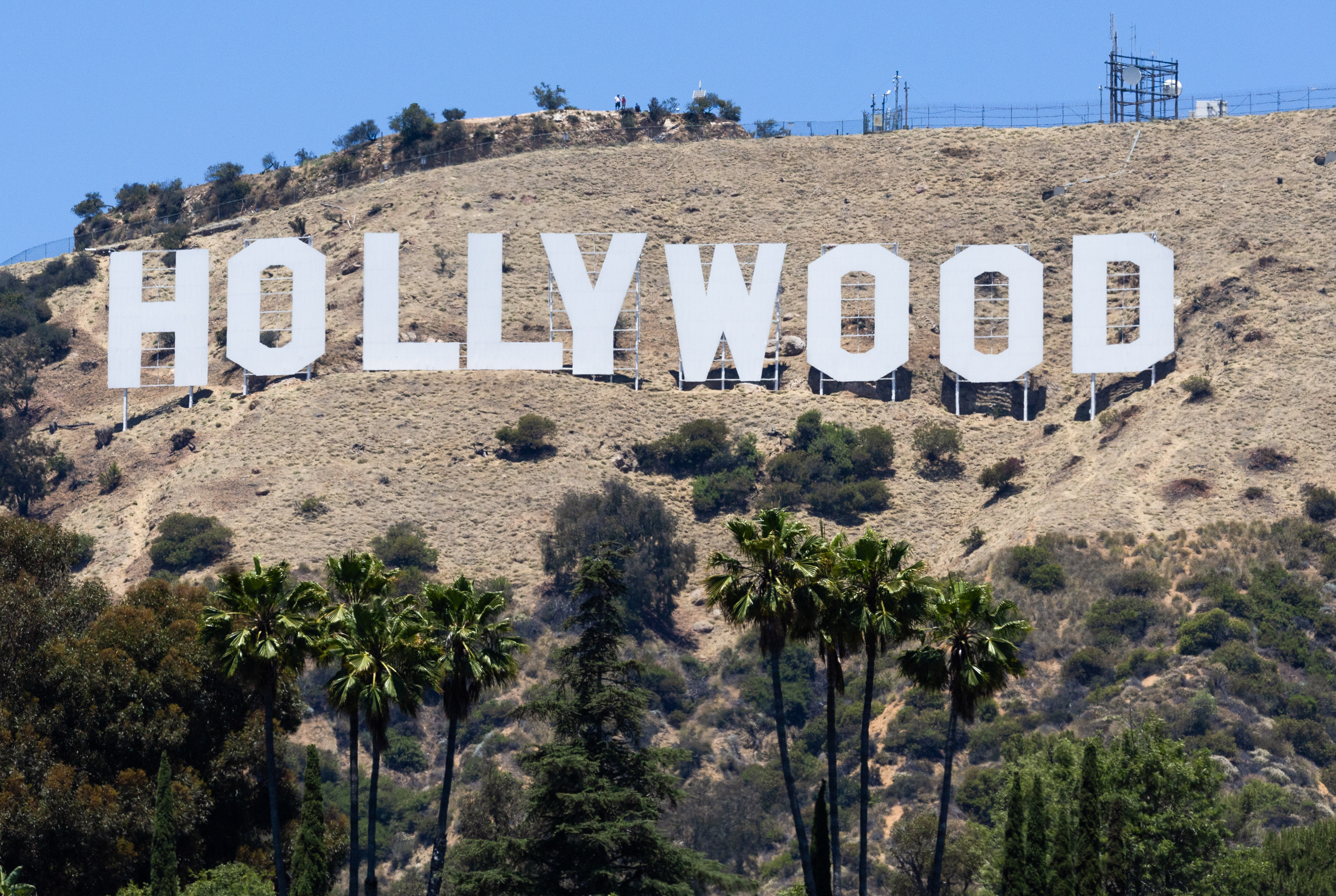
While the Golden State, particularly Los Angeles, remains the leading hub for film, television, streaming, and commercials, other cities—at home and abroad—have eroded its dominance.
For years, foreign markets have drawn film production away from the United States through a broad array of government incentives and strategic infrastructure investments.
In Canada, for example, companies are offered refundable tax credits and rebates that cover about one-quarter of production costs. In London, top-tier sound stages, post-production facilities, and visual effects studios have improved and now often rival those in Hollywood.
Another benefit for U.S. film producers has been the currency advantage that foreign markets have enjoyed in recent years. A weaker Canadian dollar can typically make production cheaper for U.S. studios. However, this component could change, as the U.S. dollar has weakened sharply compared with other currencies.

The Netflix logo at Netflix's Los Angeles headquarters on Oct. 7, 2021. (Mario Tama/Getty Images)
To date, the Motion Picture Association, which represents movie studios, has yet to respond. But other organizations worldwide have voiced their opposition to the president’s proposal.
The Canadian Media Producers Association, following Trump’s initial announcement, said that the tariffs would “cause significant disruption and economic hardship to the media production sectors” on both sides of the border.
“Yesterday’s announcement, and the uncertainty it has caused, underscore the incredible importance of ensuring that Canada has a strong, independent domestic media industry,” Reynolds Mastin, president and CEO of the Canadian Media Producers Association, said in a statement.
U.S. filmmaking has become a crucial source of economic growth in cities across Canada, Europe, and Asia. U.S. film production in Toronto—Canada’s most populous city and North America’s fourth-largest city—has created 30,000 jobs and has made a $2.6 billion economic impact, according to Toronto Mayor Olivia Chow.
“Hopefully it will get sorted out,” Chow told local media outlets in May. “If not, it’s going to be devastating to the film industry, not just in Canada but also in the United States.”
Looming Tariffs
The president’s movie-related tariff comes days after he announced several other levies that are set to go into effect this week.
Last week, in multiple Truth Social posts, Trump announced a 25 percent tariff on heavy-duty trucks manufactured outside the United States, a 50 percent tariff on kitchen cabinets and bathroom vanities, and a 30 percent import tax on upholstered furniture. He also said he will impose a 100 percent tariff on “any branded or patented pharmaceutical product, unless a Company is building [its] Pharmaceutical Manufacturing Plant in America.”
These tariffs will take effect on Oct. 1, the president said.
Jacob Burg contributed to this story.