MIAMI—It has been more than 65 years since Cuban leader Fidel Castro’s regime pushed Dionel and Marina Cotanda to leave their beloved Cuba for the United States.
Unmarried and with only $65 between them—because the communists had taken the rest of their money—they found exile in Tampa, Florida.
“They thought this was temporary,” their daughter, Lourdes Cotanda-Ercia, told The Epoch Times.
However, as the pall of communism settled over their homeland, they made the United States their home, going on to marriage, military service, academic degrees, business successes, outspoken community leadership, three daughters, and several grandchildren.
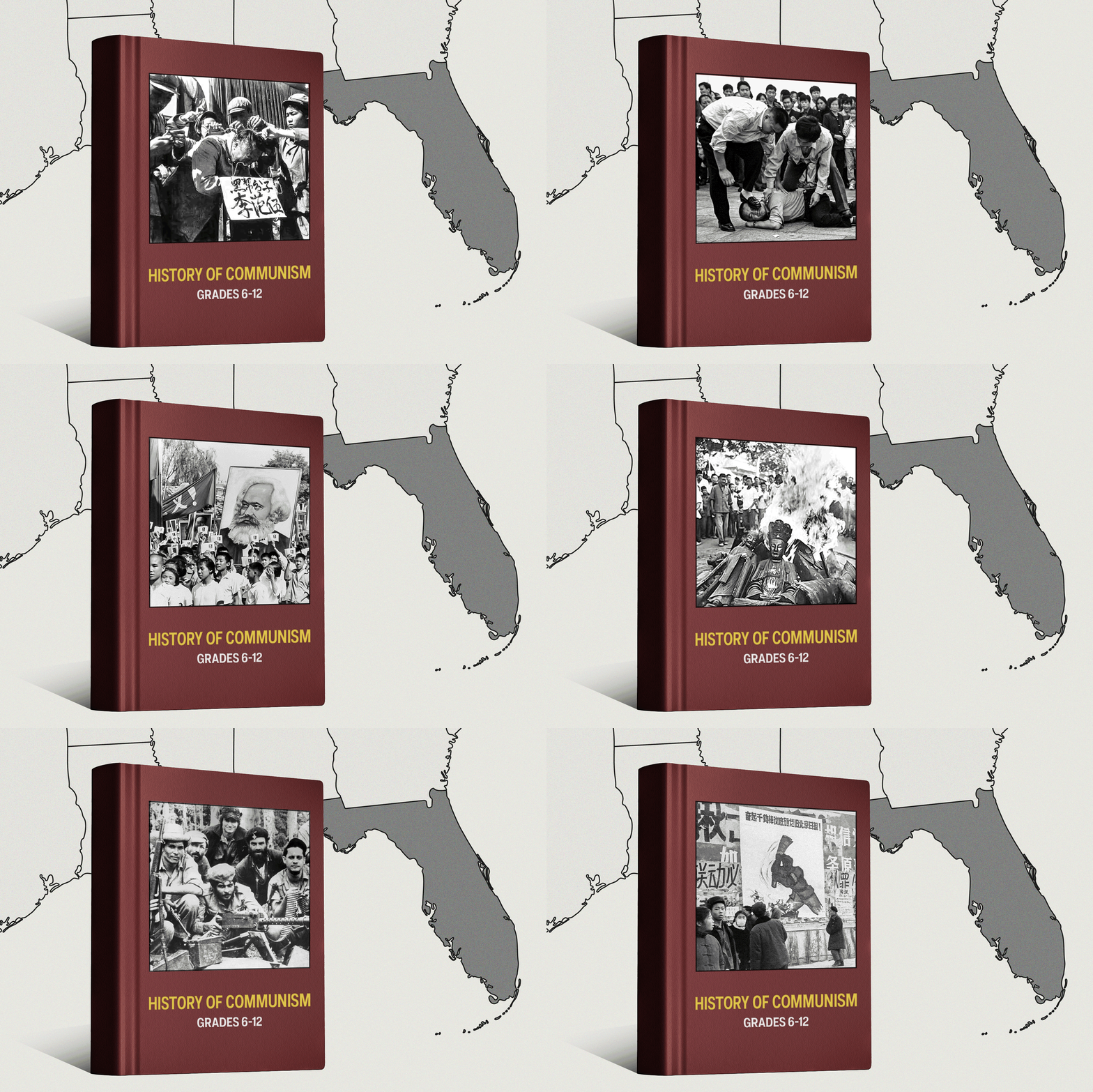
As interest in communism grows among young Americans, the Cotandas, like other Cuban immigrants, welcome Florida’s decision to create the first school curriculum that teaches the dark history of the ideology that they know all too well.
The Florida State Board of Education, at the direction of state lawmakers, voted on Nov. 13 to add lessons on the history of communism to social studies standards for students in grades sixth through 12th for the 2026 to 2027 academic year.
“Florida’s new History of Communism standards will ensure that students learn the truth about the brutal realities of life under communism and gain a deeper appreciation for the blessings of liberty that define our nation,” Florida Commissioner of Education Anastasios Kamoutsas said in a statement at the time.
As Dionel Cotanda fled Cuba 65 years ago, his heart was torn.
In the airport terminal hung a quote from José Martí: “Solo los cobardes abandonan La Patria,” which translates to “Only cowards abandon the motherland.”
“Am I a coward for leaving?” Contanda asked himself.
But after years of watching Castro rise to power and tighten his influence over the minds of their neighbors and his control over their businesses, Cotanda remained firm in his decision.
Writing in his doctoral dissertation, he said he was sympathetic to Castro at first but soon turned against the communists. He described the takeover as a “revolución de los callos,” callos being the Spanish word for “callus” or “blister.”

Cuban leader Fidel Castro addresses a crowd from a podium in Camaguey, Cuba, on Jan. 4, 1959. (Hulton Archive/Getty Images)
“Until they stepped on your toes, you didn’t react,” he said.
Dionel Cotanda was working for the Goodyear Tire and Rubber Co. at the time. He secured a work transfer to a location in Tampa after the state placed a random shoemaker in charge of the Goodyear factory in Cuba simply because he was a longtime Party member.
Marina Cotanda, who was studying journalism at the time, told The Epoch Times that she was against Castro from the start and watched as he manipulated the hearts and minds of her neighbors.
Signs were posted on doors reading, “Fidel, this is your house,” and schools began teaching kids to see Castro as their father. She also recalled watching Castro and his men parade down the street in front of her Havana apartment wearing rosaries to trick practicing Catholics into publicly exposing themselves.
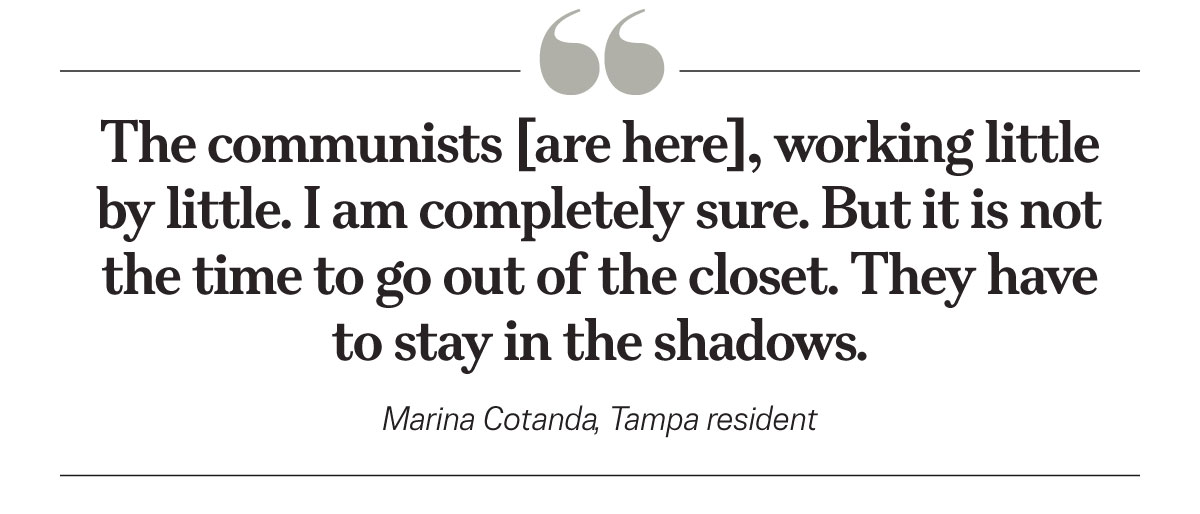
Marina Cotanda said she is concerned about the growing influence of communism across the United States. She said the problem is not limited to young people, and pointed to adults with similar beliefs already serving in politics and education.
“The communists [are here], working little by little,” she said. “I am completely sure. But it is not the time to go out of the closet.”
“They have to stay in the shadows,” she said.
Jose Ramon Perez Campos did not arrive in the United States until 1992, after growing up on the island and working as a filmmaker. Now a grandfather in his 60s, he spoke to The Epoch Times in a Little Havana cigar shop and shared how he watched Castro’s regime steal money and land from the people. Back then, Castro had final say over all his movie productions. Several of his scripts were taken away and have yet to see the light of day.
“The people have a short memory,” he said.
“I lived the experience—and it doesn’t work,” he told The Epoch Times. “If you can tell me one country [in which socialism or communism works], I will give some cigars for free. You don’t have any examples anywhere. Not in Nicaragua, neither in Venezuela.”

The Florida Department of Education building in Tallahassee, Fla., on July 25, 2023. The Florida State Board of Education voted unanimously on Nov. 13 to add lessons on the history of communism to social studies standards for grades sixth through 12th, beginning in the 2026 to 2027 school year, following the passage of a 2024 law. (Joe Raedle/Getty Images)
Changing the Standards
Such sentiments sparked Florida’s decision to put the history of communism on the curriculum.
Just before the unanimous vote, member of the Board of Education Layla Collins recalled a conversation she had with a man who fled socialism and was about to be a father. He told her that he, too, saw the growing favorable trend toward socialism within the United States and that it scared him.
That conversation, along with her own realization of the growing trend toward communism across the country, pushed her to have a talk with her husband, then a state senator.
That talk would result in the writing and introduction of Senate Bill 1264, which Florida Gov. Ron DeSantis signed in April 2024, tasking the Department of Education with adding the history and dangers of communism to its curriculum.
“I had no idea that we would face this intersection that we’re at right now, where you have political violence on a rise, you have socialism and communism penetrating every avenue of our life and every aspect of our children’s education, but the patterns were pretty profound and obvious,” Collins said.
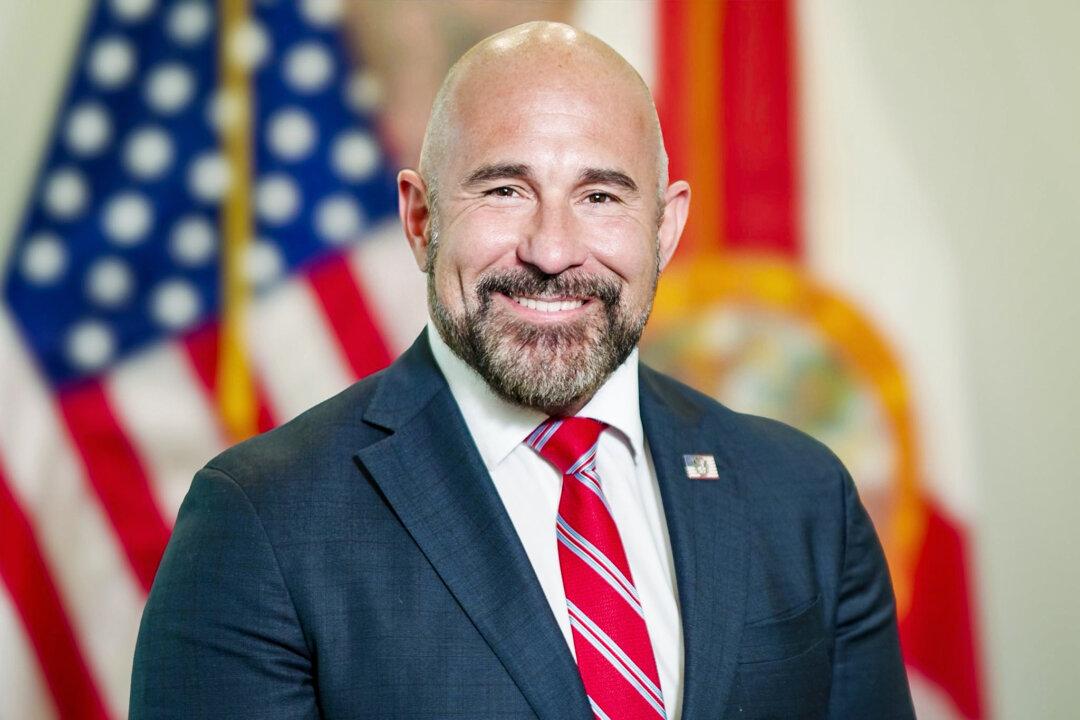
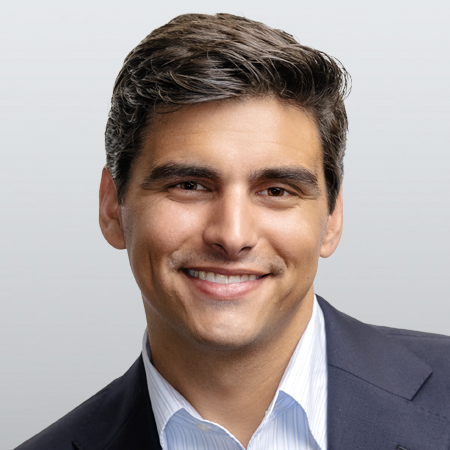
Official portrait of Florida Lt. Gov. Jay Collins in 2025. Senate Bill 1264, authored by then-state Sen. Collins, seeks to teach students to recognize communist regimes and contrast their systems with America’s free market capitalist constitutional republic. (Government of Florida)
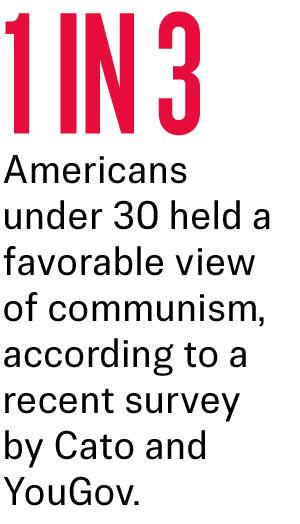
Although more than 80 percent of Americans still hold an unfavorable view of communism, one in three Americans younger than 30 hold a favorable view of the ideology, according to a recent survey by Cato Institute and YouGov.
The survey also found that 28 percent of big city residents hold a favorable view of communism. These results were published months before New York City voted for democratic socialist Zohran Mamdani to become its next mayor.
“This ideology has led to the oppression, suffering, and death of millions of people, and our students deserve an education that reflects that reality,” Collins said.
Dionel Cotanda said he does not believe that the United States is under threat of turning toward communism and socialism.
“I have a lot of faith in the institutions here,” he said. “I think they’re strong enough to overcome that issue.”
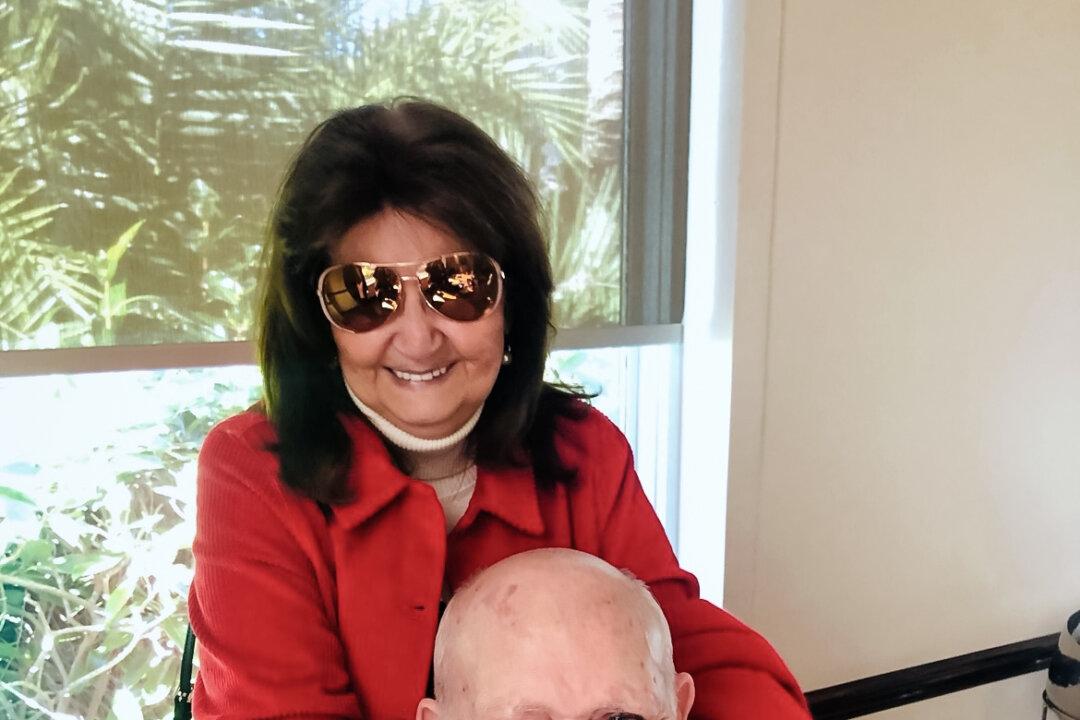
Dionel and Marina Cotanda, pictured together in Tampa, Fla. The pair fled Cuba 65 years ago, after witnessing Fidel Castro’s rise to power. (Courtesy of Lourdes Cotanda-Ercia)
Balanced Education
The next step for Florida’s education leaders is to put the standards into textbooks and instructions to be implemented in the coming year.
“We are adopting these standards today, so that we can then put these standards into courses which the board will be considering,” Paul Burns, senior chancellor of the Florida Department of Education, told the board on Nov. 13.
Yuleisy Mena, executive director of the Bay of Pigs Museum and Library, who also fled communist Cuba in 1992, said she hoped that the curriculum change would bring a more balanced education.
“Students often receive instruction on fascism, particularly through excellent, comprehensive Holocaust education, yet the history and real-world consequences of communism are not always taught with the same depth,” she said.
“To foster true critical thinking, students should be exposed equally to all major political systems, including the documented statistics, human suffering, and historical outcomes associated with communist regimes.”
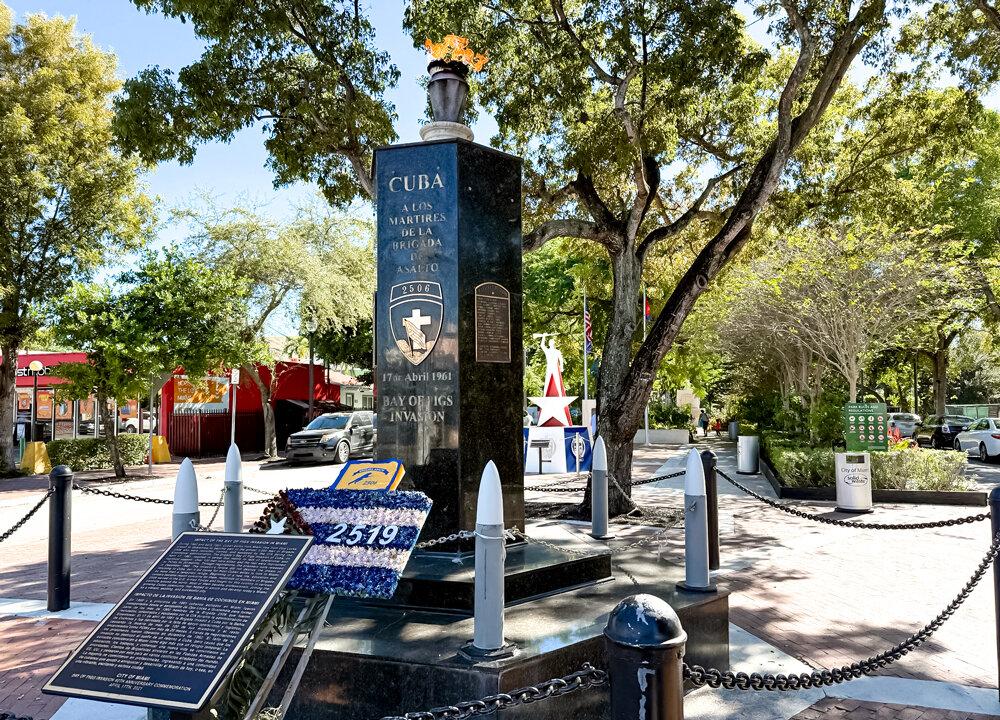
A monument honoring the Bay of Pigs Invasion Brigade stands in Miami on Nov. 18, 2025. Yuleisy Mena, executive director of the Bay of Pigs Museum and Library and a 1992 Cuban exile, said she hopes that the curriculum change will bring a more balanced education. (T.J. Muscaro/The Epoch Times)
Mena was a social studies teacher for 10 years, earned her doctorate, and now teaches at Florida International University.
The curriculum changes only affect students through the end of high school, but Cotanda-Ercia said she is concerned about the pro-socialist environment professors maintain at the college level.

“When [my daughter] Alexis went to [the University of Florida], she learned right away how liberal the professors were there,” she said.
If she wanted to get an A, she would write a paper in accordance with the views of the professor, not her own views, Cotanda-Ercia said. Her nephew did the same.
“They did it just to finish the class,“ she said. ”But that was a big thing back then.”
A recent survey conducted at Northwestern University and the University of Michigan found that 88 percent of students pretended to hold left-wing views to appease their professors.
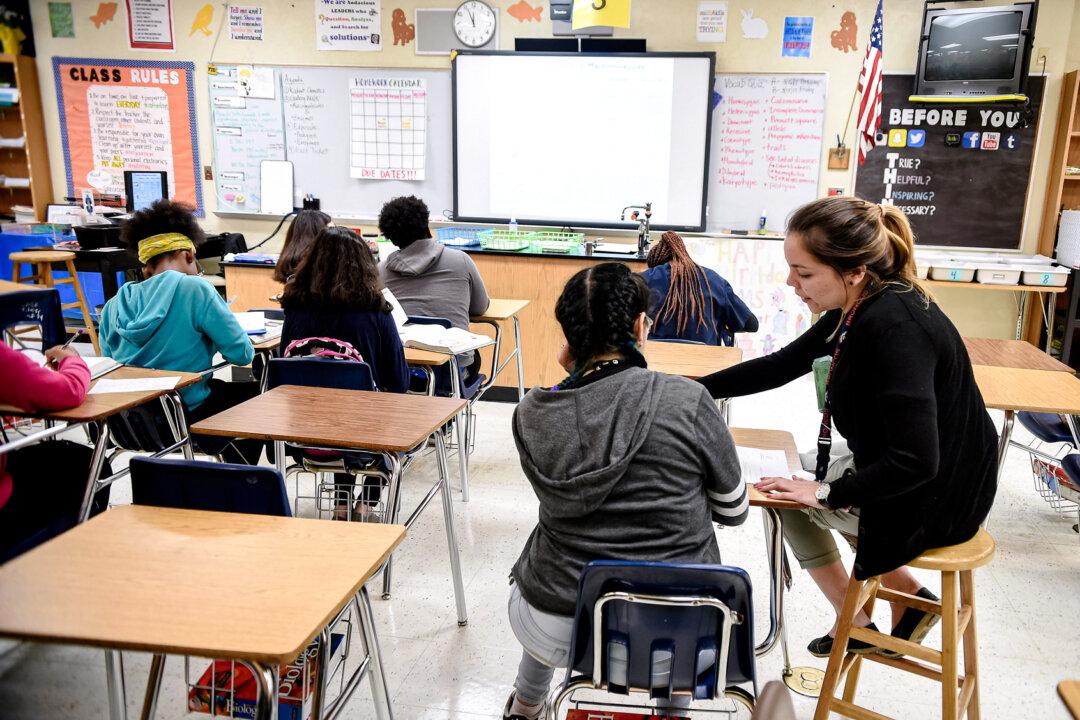
A teacher works with her students in a science class in a high school in Homestead, Fla., on March 10, 2017. Although Florida's curriculum changes affect students only through the end of high school, Lourdes Cotanda-Ercia said she is concerned about the pro-socialist environment college professors maintain in higher education. (Rhona Wise/AFP via Getty Images)