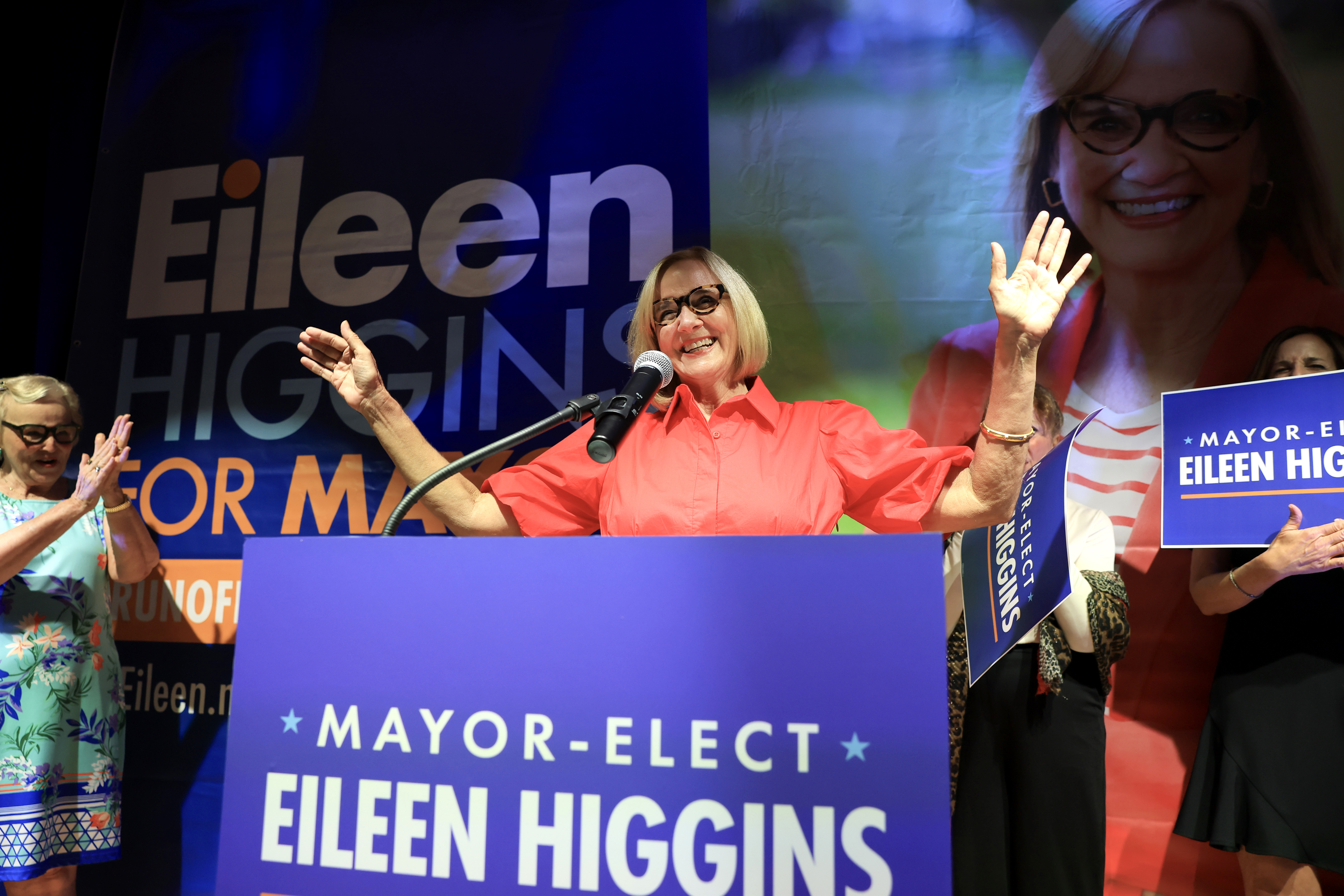
MIAMI—Democratic candidate Eileen Higgins was elected Miami’s next mayor on Dec. 9.
“Tonight, the people of Miami made history,” Higgins said in a statement after the results were announced.
The election was called by DecisionDesk HQ less than 10 minutes after polls closed at 7 p.m. The Democratic candidate had a nearly 20 percent lead after early voting and absentee voting. According to unofficial numbers from the Miami-Dade County Supervisor of Elections, she held a near-20 percent lead over Her opponent, Republican Emilio Gonzalez: 59 percent to 41 percent.
Gonzalez called her at 7:30 p.m. to concede the race.
“We both have our city’s best interest at heart, and we’re going to be here,” Gonzalez told his supporters gathered for a watch party. He celebrated that his team got more people out to vote in December than those who came out a month ago and that the election ended without some “great controversy.”
He also gave a statement and answered reporters’ questions in Spanish.
While the election was officially nonpartisan, both major parties took clear sides, and Higgins became the first known Democrat to lead the city in nearly 30 years. She will also become the first female mayor of the only major city in the United States to be founded by a woman: Julia Tuttle.
Along with being the first Democrat in decades, and first woman ever, Higgins will also become the first non-Hispanic mayor in recent years.
Though divided along party lines and policy choices, both candidates kept their campaign’s focus on essentially the same issues: tackling affordability, especially regarding housing; eliminating long-standing corruption in the city government; cutting spending; and passing policies that prioritize Miami’s residents.
They are both seen as political outsiders despite their previous leadership positions.
Higgins, born in Ohio and raised in New Mexico, seeks to fight affordability by expanding the development of affordable housing, and voters told The Epoch Times that they hope she curbs overdevelopment.
“I have some friends who are architects for some of these buildings going up, I’m so happy for them,” Caroline Gardner, a Miami resident for 23 years and a Higgins voter, told The Epoch Times.
“This is their career highlight. Can we also follow rules and keep some greenery in here and make sure that there’s park access and that kids can go play their sports and stuff in the parks, not so expensively?
“I am really not thrilled with a lot of things that are happening in our country,” Gardner added. ”And I think change starts at home.”
Gardner also reacted to the president’s endorsement of Gonzalez.
“I can’t recall the last time a president has been endorsing mayors,” Gardner said. ”Maybe it has happened, but ... I don’t recall ever experiencing that and hearing it like as much as I’ve heard it on social media, and to me, I think we have to think for ourselves and not just take the word of whoever is in charge of the country.”
Gonzalez voters, meanwhile, noted Higgins’s siding with former Democratic President Joe Biden, but agreed with their fellow residents that affordability was a key issue.
Miguel Granda, president of Miami Young Republicans, told The Epoch Times ahead of the results that it was important to have “someone that will lower taxes, that will lower fees, and just ensure that we have a safe city here in Miami.”
“As young professionals, living in a city—especially here in South Florida—where everyone in the rest of the country wants to move to has made things relatively more expensive for us to have lived here our whole lives,” he said.
Gonzalez’s leadership tenure in Miami has included stints as the city’s chief administrative officer, city manager, and as chief executive officer of Miami International Airport.
Born in Cuba, Gonzalez moved to Tampa with his family to escape Fidel Castro’s communist regime. He graduated from the University of South Florida as part of its first Reserve Officers’ Training Corps class. He served in the Army, rising to the rank of Colonel. He also served in the Defense Intelligence Agency, as the director of the United States Citizenship and Immigration Services under President George W. Bush, and as a part of President Donald Trump’s Department of Homeland Security transition team.
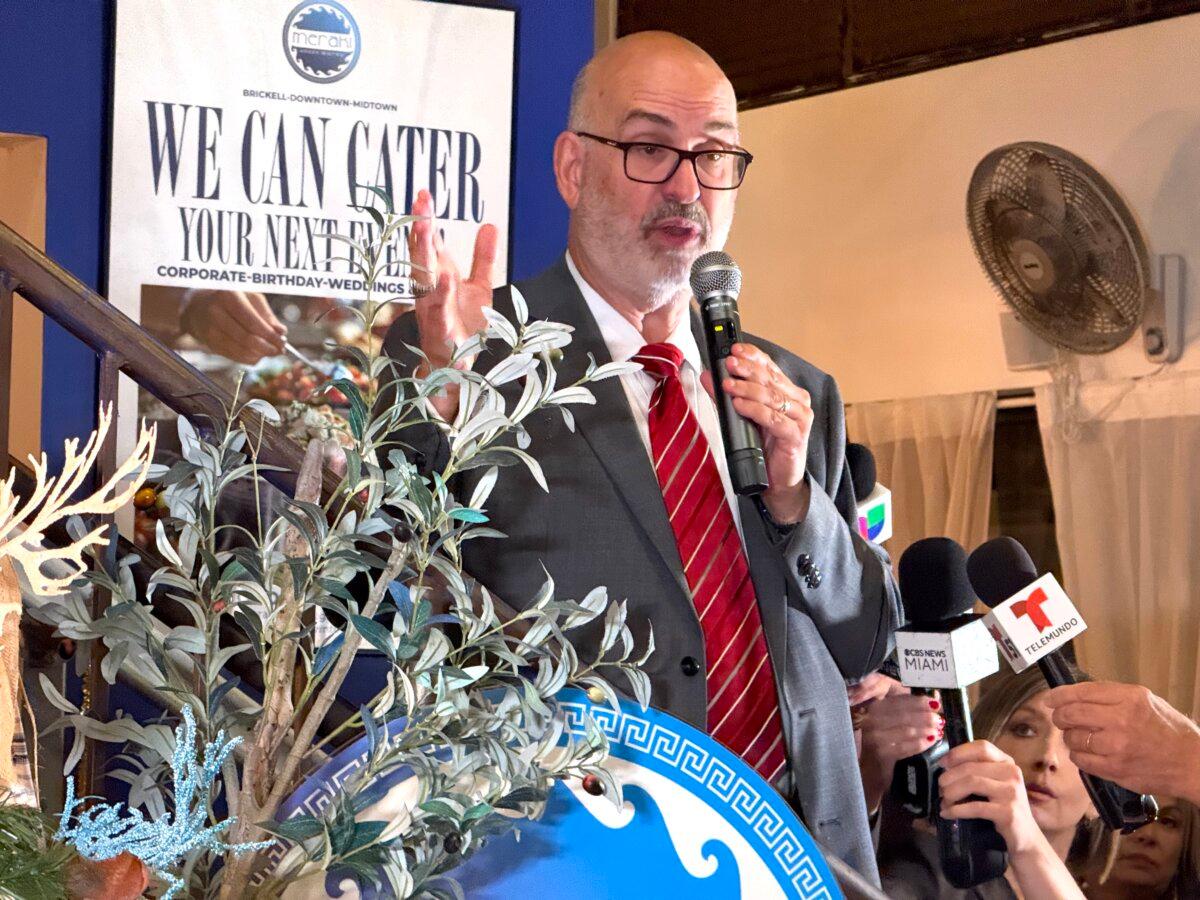
Ret. Col. Emilio Gonzalez concedes the Miami mayoral race to Eileen Higgins on Dec. 9, 2025. (T.J. Muscaro/The Epoch Times)
Eduardo Moya and Manny Alfonso, hosts of the podcast “A Day in Miami,” said the election didn’t include “legacy names” at the top.
“This is a defining moment in Miami politics that is moving on from the usual suspects,” they told The Epoch Times in a joint statement.
Those legacy names appeared on the initial ballot for the Nov. 4 election. They included Xavier Suarez, the father of the current mayor, Francis Suarez. He previously served as mayor from 1985 to 1993 and from 1997 to 1998, and most recently served as a county commissioner from 2011 to 2020.
Gonzalez celebrated how this race brought those issues into the conversation of the city’s voters.
“Nobody’s afraid,” he said. “Nobody’s afraid to say that our budgets are bloated. Nobody is afraid to say that there’s over development and that our neighborhoods are being destroyed. Nobody’s afraid to say, we should do away with homestead property taxes.
“These are all issues that didn’t exist a year ago, and they exist now. And they exist now because of everybody in this room, of what the people on the streets were telling us that was most important to them, and that’s what matters, because our city needs to be about what’s important to them, not about what’s important to vested interests.”
Gonzalez’s approach to tackling the issues included property tax reform, siding with Gov. Ron DeSantis’s push to eliminate the levy for homeowners completely, increasing the police force, and instituting permitting and licensing reforms.
The matter of immigration also came up during the election. Under DeSantis, law enforcement offices in all 67 counties work in alignment with Immigration and Customs Enforcement. Higgins said that she would work to unwind that agreement between her city and the federal government, saying it eroded trust between Miami residents and law enforcement.
Gonzalez supporters expressed concern that Higgins would decrease police funding if she were elected mayor.
Alfonso and Moya pointed out that, regardless of who won, the next mayor will have to convince three of the five city commissioners representing different districts to support their decisions, which helps balance the politics. Republican Rolando Escalona won his City Commissioner race on Dec. 9 as well.
“We need a mayor that can work with the city commission in agreeing to move projects along,” Alfonso and Moya said in the statement, noting permitting, flooding, and housing as major issues that need to be addressed.
“Our only concern is that we get a politician who promises to resolve these major issues and ends up not,” they said.
Along with open endorsements from the president and other politicians, this mayoral election was also seen as an indicator for the midterm elections in November 2026. Everyone who spoke to The Epoch Times agreed that Miami had grown to the point in both size and relevance where its mayoral elections warranted national attention.
The new mayor’s term is expected to begin before the start of the new year.
The Associated Press contributed to this report.