


Causes of Leg Cramps
The following factors, Liu noted, may contribute to leg cramps:
1. Poor Blood Circulation
Calf muscles, being far from the heart and affected by gravity, tend to have reduced blood flow. People who stand for prolonged periods, or those with vascular conditions—such as arteriosclerosis (hardening of the arteries), peripheral vascular disease (such as varicose veins), liver cirrhosis, or arthritis—may experience impaired circulation. This can disrupt calcium metabolism, triggering muscle cramps.
2. Overexertion From Physical Activity
Engaging in intense physical activity—either over a short burst or for extended periods—can overwork the muscles and cause fatigue. Excessive muscle contraction can impair blood flow and lead to an accumulation of metabolic waste, which interferes with calcium function and results in abnormal muscle contractions.
3. Calcium Deficiency and Metabolic Disorders
Older adults often absorb calcium less efficiently, while adolescents undergoing rapid growth have increased calcium needs that may not be met because of poor dietary habits. Both groups face a higher risk of cramps due to inadequate calcium intake.
4. Neurological Disorders and Medication Effects
In more severe cases, neurological conditions such as Parkinson’s disease and dysfunction of the autonomic nervous system can lead to irregular muscle contractions and cramping.
5. Posture, Structural Issues, and External Factors
Some leg cramps may be related to body posture, according to Liu.
Self-Relief for Leg Cramps
When a leg cramp strikes, many people instinctively begin massaging the affected area. However, Liu warned that this is not recommended, as overstimulating the muscle may actually intensify the spasm.
TCM Remedies
Liu said renowned Han dynasty physician Zhang Zhongjing documented an herbal formula in his classic medical text, “Treatise on Cold Damage Disorders (Shang Han Lun).” The formula, known as Peony and Licorice Decoction, has traditionally been used in TCM to treat leg cramps and muscle spasms. It has been a common practice in China and other East Asian countries, such as Japan and Korea, where TCM and Kampo medicine are widely practiced and integrated into clinical care.
Peony and Licorice Decoction
This ancient herbal formula remains a popular choice in TCM for easing muscle cramps and supporting healthy circulation.
- Place the herbs in a pot and add the water.
- Boil the mixture until the liquid is reduced to about 200 milliliters.
- Strain out the herbs, retaining only the decoction.
- Take half of the liquid and drink it warm, twice a day.
This traditional formula is believed to help relieve muscle spasms, enhance blood circulation, and aid in the prevention of venous thrombosis—the formation of a blood clot in the vein, blocking normal blood flow in the lower limbs.
Acupuncture and Acupressure for Leg Cramps
According to TCM, meridians are the channels through which energy flows in the human body. The internal organs are connected to the body’s surface through these meridians. Along the meridians are specific points known as acupoints, which possess unique functions. By stimulating the corresponding acupoints through techniques such as acupuncture and massage, it is possible to treat diseases related to specific organs.
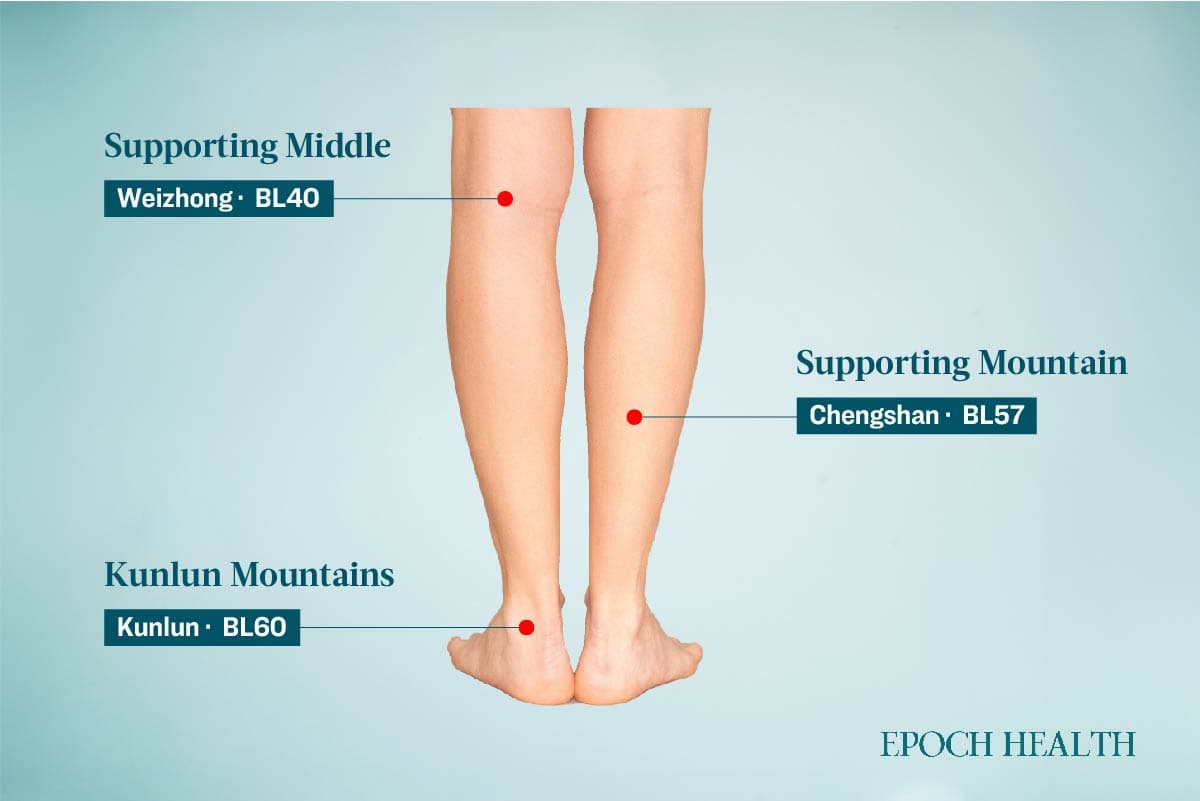
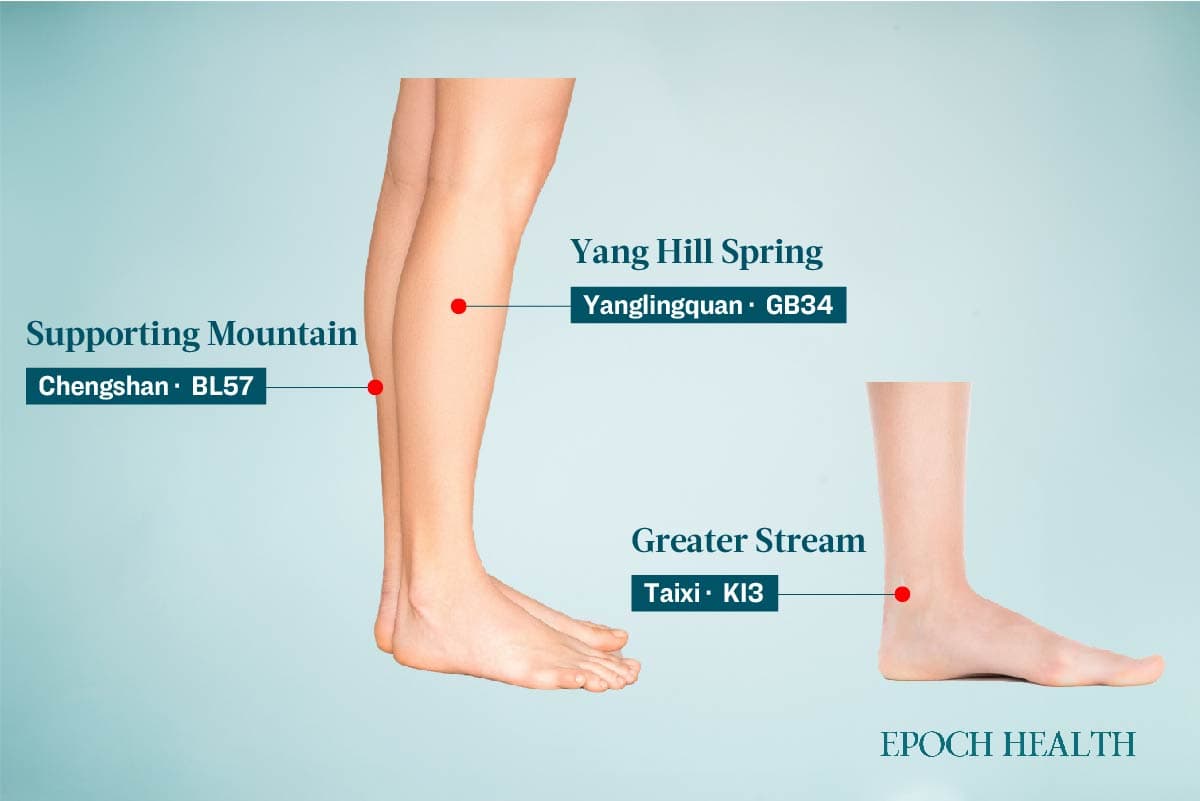
Foods That Help Prevent Muscle Cramps
Electrolyte imbalances—especially those involving calcium, sodium, potassium, and magnesium—can increase the risk of muscle cramps, Liu said. He recommends the following foods to reduce the likelihood of cramping:
- Bananas: High in potassium, magnesium, and calcium—three key minerals that support proper muscle function. Also easy to eat on the go, making them a convenient source of nutrients and electrolytes.
- High-quality starchy foods: Excellent sources of potassium, calcium, and magnesium. Foods such as sweet potatoes, regular potatoes, and pumpkin also have a high water content, which can help prevent cramps caused by dehydration.
- Avocados: Rich in potassium and healthy fats, making them a nutritious way to support muscle health and electrolyte balance.
- Legumes: Loaded with magnesium, a key mineral that supports muscle relaxation and helps prevent cramps.
- Melons: High in magnesium, calcium, and water, and contain small amounts of sodium. Particularly beneficial after exercise, as they help replenish electrolytes and promote muscle relaxation, reducing the risk of cramps.
- Milk: A good source of calcium, potassium, and sodium. Its high protein content also aids in muscle recovery after physical activity.
- Dark leafy greens: Excellent sources of calcium and magnesium—two essential minerals for maintaining strong muscles and bones.
- Oranges: High in vitamin C and also contain potassium, calcium, and magnesium, supporting electrolyte balance and healthy muscle function.
- Nuts and seeds: High in magnesium and calcium and contain heart-healthy unsaturated fats, which support cardiovascular health and aid in the absorption of fat-soluble vitamins such as vitamin D—key for calcium absorption and bone strength.
- Tomatoes: High in water and potassium, which help regulate sodium and potassium balance in the body, supporting healthy muscle and nerve function.
Potential Underlying Health Issues
Leg cramps are not always a minor issue—especially when they become more frequent or severe. In such cases, they may signal an underlying health condition that warrants medical attention. Liu recommends that people with persistent or unexplained leg cramps undergo medical evaluation to rule out the following possible causes:
- Diabetes: Can significantly affect the musculoskeletal system, and muscle cramps are a common symptom. Sudden, persistent, or unexplained leg cramps may indicate diabetes or poor blood sugar control.
- Arthritis: Can cause fatigue in the lower leg muscles and increase susceptibility to recurrent cramps. If cramps continue despite calcium supplementation or adequate dietary intake, underlying joint issues such as arthritis may be contributing to the problem.
- Liver cirrhosis: Particularly in its advanced stages, is often associated with electrolyte imbalances, which can significantly increase the risk of muscle spasms.
- Cardiovascular disease: Conditions such as heart failure and peripheral vascular diseases such as deep vein thrombosis can impair local calcium metabolism in muscle tissue, potentially leading to cramping.
- Neurological disorders: Autonomic nervous system dysfunction and peripheral neuropathy can cause localized leg cramps, often accompanied by numbness, tingling, or a dull aching sensation.
Some herbs mentioned in this article may be unfamiliar, but they are generally available in health food stores and Asian grocery stores. It is important to note that treatment methods may vary depending on the person. Please consult with a health care professional for a specific treatment plan.