For two years, a 35-year-old woman battled the relentless weight of depression. She suffered from chronic insomnia, vivid dreams, heart palpitations, and chest tightness, and she had repeatedly struggled with suicidal thoughts. During one dissociative episode, she self-harmed—a desperate act that was fortunately discovered in time.
Antidepressants helped control some of her symptoms. Although they came at a cost: memory decline, emotional numbness, and a persistent sense of heaviness in her body.
Then she tried something different. After three months of acupuncture treatment within the framework of traditional Chinese medicine (TCM), her sleep quality and mood improved significantly. She returned to work with renewed energy. Under her physician’s guidance, she gradually reduced her antidepressant dosage and was able to stop the medication entirely after six months.
Shu Rong, a TCM practitioner based in Cambridge, UK, shared this case on NTD’s “Health 1+1” program—NTD is a sister outlet of The Epoch Times.
Unlike conventional medicine, which often focuses on brain chemistry, TCM views depression through a broader lens—as a manifestation of imbalances within the body’s internal energy systems, with the liver playing a central role.
Depression Is Caused by Liver Imbalance
In TCM, the term “liver” refers not only to the physical organ beneath the right rib cage but also to a broader energy system centered on the liver.
According to TCM theory, “the liver governs the free flow of qi,” meaning it is responsible for regulating the smooth movement of energy throughout the body—much like a traffic officer directing cars and pedestrians.
TCM views emotional well-being as closely tied to the flow of qi. The liver also helps regulate emotional expression and functions as the “CEO” of the body’s emotional landscape, Shu said. Prolonged emotional stress can weaken the liver and cause qi to stagnate, leading to sensations such as abdominal bloating or chest tightness.
When energy fails to flow smoothly, blood circulation may suffer as well. Over time, this can compromise the functioning of not only the liver, but also the heart, spleen, lungs, and kidneys. Disruptions in these organs can lead to disturbances in the emotions each organ is believed to govern.
According to TCM, the five major organs—the liver, heart, spleen, lungs, and kidneys—are each associated with a distinct emotional function: anger, joy, thought, grief, and willpower. From a TCM perspective, depression is not simply a disorder of the brain, Shu said. Emotional disturbance is believed to cause liver qi stagnation, which then disrupts the flow of qi and blood in all five organs, ultimately influencing their associated emotional functions.
As the imbalance progresses, metabolic waste may accumulate—a condition TCM refers to as “phlegm-dampness”—which can further disrupt the functions of the heart and brain.
Treating Both the Root and the Symptoms
TCM treatment focuses on “treating both the symptoms and the root,” Shu said.
“Treating the symptoms” refers to calming the mind—using acupuncture and herbal medicine to help stabilize the patient’s emotions. “Treating the root” involves regulating the five major organs to address the underlying causes.
Many patients with depression experience sleep and digestive issues, which require dedicated care. Good sleep and adequate nutrition are essential building blocks for gradual recovery.
Throughout treatment, Shu emphasized that family members and close friends can help improve the patient’s living environment and offer companionship. Their understanding and support play a crucial role in the patient’s recovery.
3 Key Acupoints for Regulating Emotions
Acupuncture is commonly used in TCM to treat depression. The method’s principle involves stimulating specific points along the body’s energy network—the
meridians—to enhance the flow of
energy and blood, regulate organ function, and ease emotional stagnation.
A 2022 systematic review found that combining acupuncture with antidepressant medication may improve depression more effectively than using antidepressants alone, with fewer adverse effects.
Shu highlighted several acupoints that can help prevent or alleviate symptoms of depression when massaged regularly:
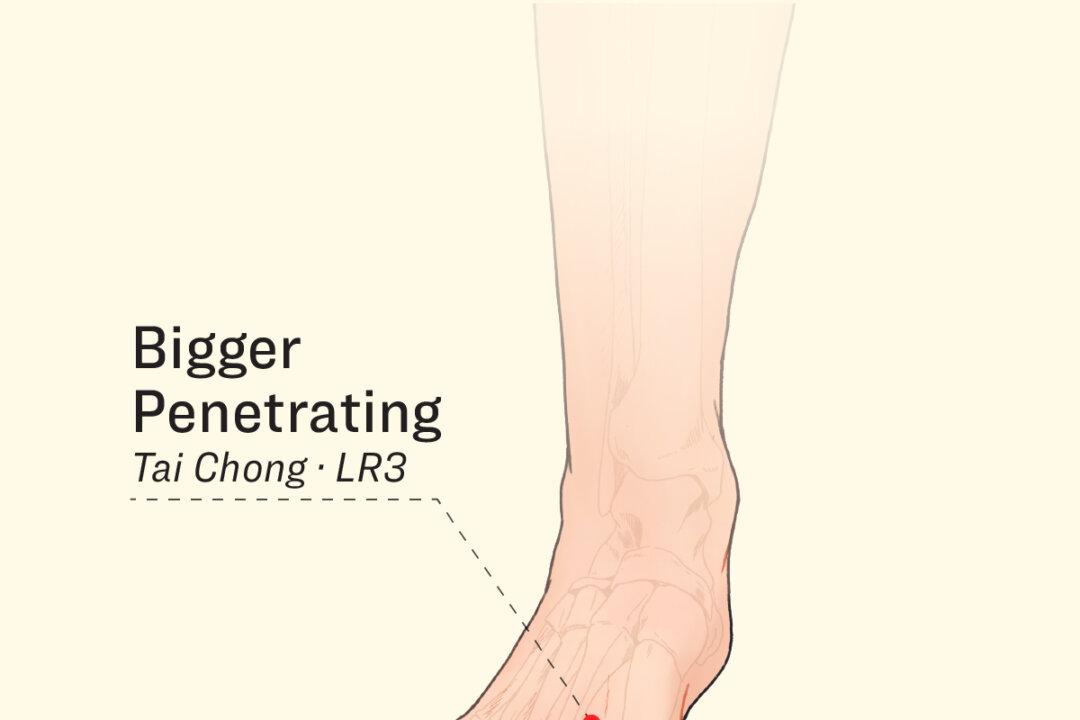
1. Tai Chong (LR3): Bigger Penetrating
Location: On the top of the foot, in the webbing between the big toe and the second toe. Slide your finger along the space between the two toes and move upward about one thumb-width until you reach the depression just before the junction of the first and second metatarsal bones.
Function: The Tai Chong acupoint is believed to soothe the liver and regulate qi, allowing energy to flow freely along the liver meridian. When feeling emotionally tense or unsettled, massaging this acupoint may help gradually ease those feelings.
2. Yong Quan (KI1): Bubbling Spring
Location: On the sole of the foot, in a depression about one-third of the way down from the front of the foot, when the toes are slightly bent.
Function: “Yong Quan” means “bubbling spring,” symbolizing life energy flowing outward from this acupoint. As the first point on the kidney meridian, stimulating Yong Quan is believed to strengthen kidney qi and help reduce fear and anxiety.
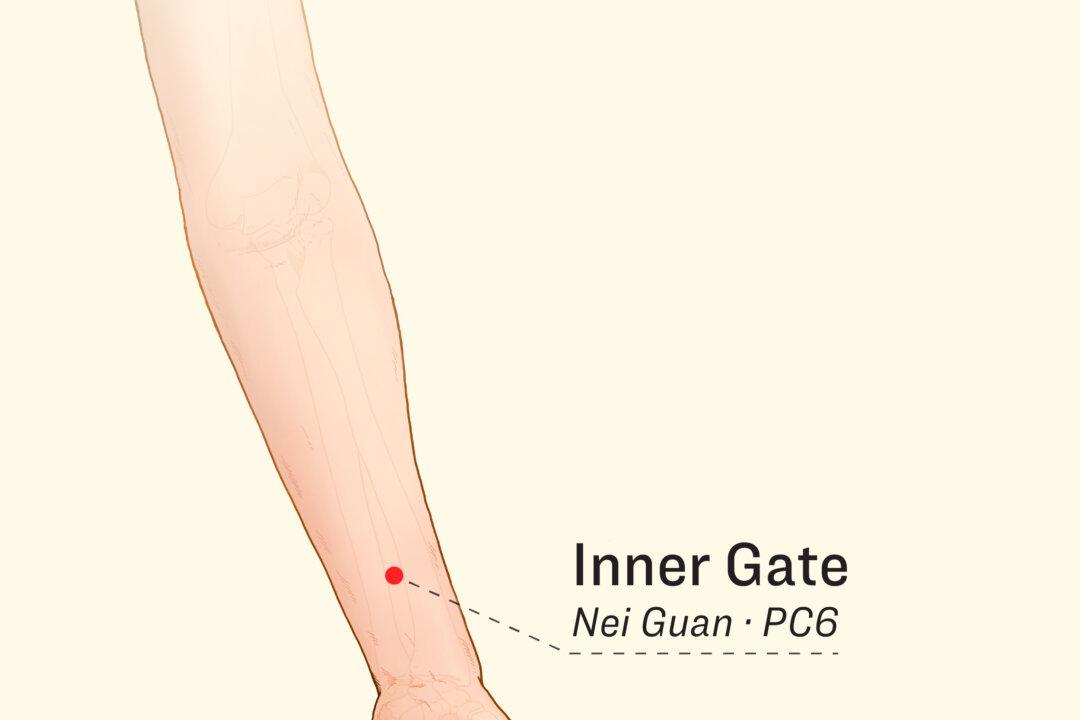
3. Nei Guan (PC6): Inner Gate
Location: Three finger-widths above the wrist crease, between the two tendons on the inner forearm.
Function: The Nei Guan acupoint is believed to nourish the heart and calm the mind, helping to regulate emotions and ease discomfort in the heart, chest, and stomach.
Note: Pregnant women should avoid massaging Tai Chong and Yong Quan without proper guidance. Consult a TCM practitioner before performing acupressure during pregnancy.
When massaging these acupoints, apply gentle to moderate pressure—firm enough to create a slight sensation of soreness, but not pain. Use your thumb to press the point and make small, slow circular motions while maintaining steady, relaxed breathing. Each point can be massaged for about one to two minutes, once or twice daily, or whenever you feel stressed or emotionally tense.
Consistency is more important than intensity. Gentle, regular stimulation is generally more beneficial than applying strong pressure.
Traditional Recipe for Managing Depression
Shu recommends an ancient dietary remedy for managing depression—the Ganmai Dazao decoction, a sweet and calming formula that has been used for more than 1,800 years.
An earlier meta-analysis found that when taken alongside antidepressant medication, the Ganmai Dazao decoction may not only enhance therapeutic effects but also help reduce medication-related adverse effects.
Ganmai Dazao Decoction
A time-honored TCM remedy that combines a handful of simple ingredients to help support emotional balance and relaxation.
Ingredients
- 0.3 ounce licorice root
- 0.8 ounce wheat (preferably “floating wheat”—slightly shriveled)
- 5 pieces of jujube (red dates), pitted
Instructions
- Rinse all ingredients thoroughly and remove the pits from the jujubes.
- Place everything in a pot and add 51 fluid ounces of water.
- Bring to a boil over high heat.
- Reduce to low heat and simmer for 10 minutes.
- Serve warm.
All of these ingredients are generally available in health food stores or Asian grocery stores.
The decoction is typically taken once daily, and in some cases up to twice daily, depending on individual needs and tolerance. It is often taken for several days to weeks as part of a broader approach to emotional regulation. For best results, consistency is recommended, but it should not be used as a substitute for prescribed medical treatment.
Ganmai Dazao decoction is gentle in nature and suitable for most people, but those with high blood pressure or kidney disease should consult a physician before using it. Some side effects may include abdominal bloating, dry mouth, or constipation.
Users should pay close attention to their physical response, and if discomfort occurs, consult a TCM practitioner to adjust the formula.
The Right Way to Reduce Antidepressants
Many patients ask whether they can stop taking antidepressants after beginning TCM treatment, but Shu cautioned against doing so.
Antidepressants work by blocking certain pathways to control symptoms, she noted, and stopping them abruptly can trigger a severe rebound.
The correct approach is to first use TCM to help regulate the body and wait until the overall condition has stabilized. Then, under the guidance of a qualified physician, the medication can be tapered gradually—reducing the dose by only one-tenth or one-fifth at a time.
The Foundation: Sleep, Meditation, and Movement
In addition to acupressure and dietary remedies, sleep and exercise play a crucial role in preventing and managing depression.
Sleep Between 1-3 a.m.: The Liver’s Nourishment Hour
From a TCM perspective, Shu emphasized the importance of going to bed early for mental health: the liver meridian is at its peak between 1 a.m. and 3 a.m. If a person remains awake during this period, the liver cannot be nourished, which may contribute to increased anxiety. Therefore, falling asleep before midnight is considered essential for nourishing the liver and preventing depression.
Meditation: Finding Stillness Within
She advocates sitting meditation to help regulate the body and ease negative emotions. “When we sit in stillness, the flow of qi and blood in our bodies resonates harmoniously with the energy of the universe, and naturally, balancing negative emotions becomes much easier,” she said.
Exercise: Moving Energy Through the Body
Shu also recommends moderate exercise—such as jogging, walking, or swimming—to improve the circulation of qi and blood. As circulation improves, the functions of the five organs—and the emotions linked to them—naturally strengthen.