Working long hours in hospitals or clinics, while raising young children and keeping up with ongoing professional training—how do these three female physicians find moments of calm and balance amid such demanding lives?
In an episode of “Health 1+1” on NTD, a sister outlet of The Epoch Times, these women shared their personal approaches.
“Don’t try to control what you can’t control. Take good care of yourself, and don’t set your expectations too high for everything else—those things are beyond your control,” said Dr. Lin Shao-Chen, a neurologist and director of Pin Xin Clinic in Taichung, Taiwan.
“It’s not about waiting for stress to hit and then scrambling to relieve it. You need to build and maintain your energy proactively, day to day,” said Dr. Chen Hui-Hsuan, chief neurologist at Everan Hospital in Taichung.
“Holding my son and breathing in the scent of his hair—it’s incredibly soothing,” said Lee Chia-Ling, director of Aroma Traditional Chinese Medicine (TCM) Clinic in Taichung.
Sleep Is the Best Healing
Burned out by family and work demands—do these women ever get so overwhelmed they just want to “lie flat?” For them, the answer is yes—and it’s one of their simplest ways to reset.
“I really do just lie flat right there in the clinic,” Lin said. She has a skill that many people envy: the ability to fall asleep instantly. “I’ll nap for just five or 10 minutes, then get up and see the next patient.” These short, efficient power naps are her secret weapon for sustaining energy during intense workdays. Studies suggest that people who regularly take daytime naps tend to have larger brain volumes, suggesting a link between napping and brain health.
Lin also has a beloved shark sleeping bag—she often crawls inside it to sleep, enjoying the cozy sense of security mixed with childlike fun of being wrapped up.
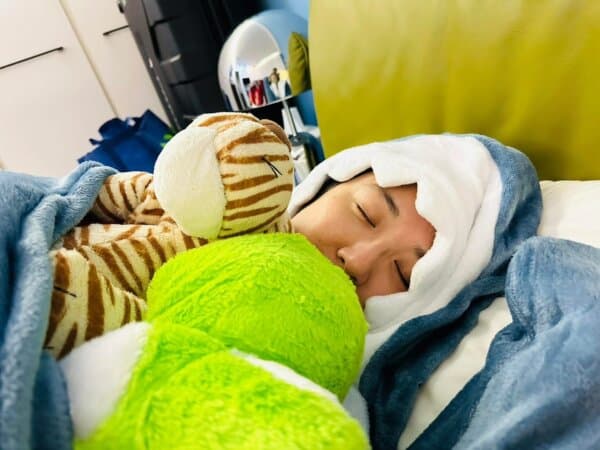
Dr. Lin Shao-Chen, neurologist and director of Pin Xin Clinic in Taichung, Taiwan, sleeps inside her shark sleeping bag, with her face peeking out from the shark’s mouth. (Courtesy of Lin Shao-Chen)
Chen’s go-to stress-relief method is also sleep—a powerful way to restore both body and mind. When she can’t actually lie down for a nap, she finds a quiet spot, closes her eyes, plays healing music tuned to specific frequencies such as 528 Hertz or 432 Hertz, adds a drop of her favorite essential oil to a tissue, and lets herself “zone out” for a few minutes. She also uses self-talk to process any negative emotions that might arise from seeing patients.
For Lee, the ultimate comfort comes from sleeping while holding her son. “I still sleep with him because just smelling him is incredibly calming,” she said. That tender closeness, paired with the familiar scent of her child, becomes her sweetest form of therapy—a simple, heartwarming way to restore balance amid a busy life.
Exercise Boosts Your Body’s Energy
Beyond restful ways to de-stress and recover, they also rely on movement to recharge. Lee recalled how she used dancing during her doctoral studies, when stress was overwhelming. “Dancing was my greatest way to relieve stress. We’d do flamenco—stomping [our] feet, clapping [our] hands—and just pour all the pressure straight into the floor,” she said.
Chen prefers long outdoor runs when the weather is good, and on rainy days, she runs on a treadmill at home while watching short films for about 30 minutes. She also does 15-minute high-intensity interval workouts with her child, and sometimes joins friends for dance classes. More recently, Chen has added core training to her routine, which has helped alleviate back and neck soreness from long hours of sitting during patient consultations.
Exercise builds more than physical fitness—it also enhances brain function. Research shows that it doesn’t have to be intense: Brisk or extended walking can stimulate the release of neurotrophic factors that support cognitive performance.
High-Sugar Diet Harms the Brain
Diet also plays a key role in mental clarity. “During last year’s Mid-Autumn Festival, I broke my usual routine and ate a lot of sweets—egg yolk pastries, mooncakes—and I felt my brain fog worsen, plus my digestive system became unsettled,” Chen said.
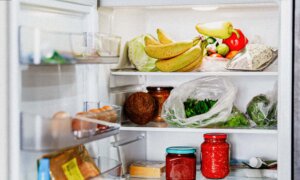
Lee, who said she has a sensitive constitution, has also noticed that improper eating leaves her feeling mentally sluggish. She emphasized a Mediterranean-style diet: plenty of fruits and vegetables, whole grains, legumes, and nuts, with olive oil as the main fat source, along with moderate amounts of fish and seafood, while limiting red meat and processed foods. This approach can help improve cognitive function. She also warned against eliminating starches—she eats at least half a bowl of rice daily to maintain energy.
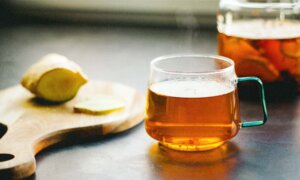
Living in Taiwan, where night markets are a cultural staple, all three physicians admit to occasional indulgences. Lee enjoys family outings on weekends—fried squid and salty crispy chicken—but follows them with herbal tea to help lower her blood lipids. Chen balances oily fried foods by exercising with her kids afterward to speed up metabolism. Lin said that unhealthy foods don’t tempt her much but that if she does indulge occasionally, she drinks extra water to flush them out.
As for bubble tea—a favorite treat among Taiwanese people—Chen avoids giving her children milk tea with added sugar. Instead, she orders a customized version with no sugar and extra milk. “Basically, the kids are just drinking the milk they usually have, but it gives them a little psychological comfort—the feeling that they’re having a hand-shaken drink,” she said.
“Tapioca pearls rarely make an appearance in our household because they’re considered a processed food,” Lin said. “We’ve already taught our kids that it’s something they can eat, but only occasionally.”
Stay Hydrated
Beyond food choices, hydration plays an essential role in maintaining energy and focus.
Research has found that losing just 2 percent of body weight in fluids can impair cognitive abilities, particularly attention, executive function, and motor coordination.
Lee always carries a thermos of warm, boiled water, and from a TCM perspective, recommends drinking warm or room-temperature water and avoiding ice-cold drinks, which may strain digestion.
Lin keeps a 1-liter glass pitcher in her consultation room and follows a personal rule: “One pitcher in the morning, one in the afternoon.” With all of the talking during patient visits, she gets thirsty quickly—so after each appointment, she takes a few sips, making it easy to hit her goal. She noted that gradual sipping is far more effective than drinking a large amount at once—for example, drinking 16 ounces in one sitting versus small sips throughout the day affects hydration and absorption differently.
Water needs vary based on exercise, weather, and individual factors, Chen said. A simple way to monitor hydration is to regularly notice the color of your urine—if it darkens from pale yellow toward amber, your body may be signaling that you’re not drinking enough. Sometimes, Chen adds flower essences to her water, drawing on the gentle, vibrational energy of plants to support emotional and physical healing.
Balancing Personal and Family Life
While good nutrition, regular exercise, and sufficient sleep are essential foundations for both mental and physical well-being, managing personal and family rhythms is equally important for achieving true balance in life.
Modern life often feels like a constant race against the clock, packed with responsibilities and pressures. “I’d like to assess how much energy and time I actually have,” Chen said. She noted the importance of self-reflection and awareness—for instance, cutting back on patient consultations during periods of advanced study, or declining speaking engagements and media appearances when feeling exhausted. She divides her time into “fragmented” slots for minor tasks and “dedicated” blocks for deep-focus work.
When it comes to child care, Lee coordinates with family members to build a support system—including help from parents and in-laws with school pickups. She spends evenings with her son, helping him with homework. Chen, on the other hand, makes good use of external resources, such as after-school programs, to help her children stay on track.
Lin highlighted the value of teaching independence early. From age 3, her children learn to pack school bags, wash uniforms, and fold clothes. While this takes extra time initially, it reduces stress in the long run. Her eldest daughter, after mastering these skills, even became a “little teacher” to her younger sister, showing patience sometimes greater than that of many adults.
Lin encourages her children to study alongside her but does not monitor their homework, respecting it as their own responsibility. She also views each family member as an independent person. Although Lin, her husband, and their two daughters share the same home, they each engage in their own activities—a setup that she finds relaxing.
“I’m more like a single woman who occasionally needs to pick up a couple of cute little kids,” she joked, “but for the most part, I still get to do my own things.”
Chen encouraged people to discover stress-relief and recharging methods that suit their personality. “Some people recharge through self-reflection or quiet time, while others need travel or social meals with friends,” she said. “There’s no need to force yourself to be like everyone else—find what fits you.”