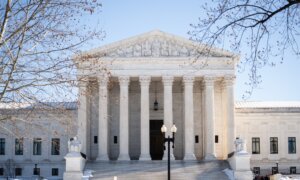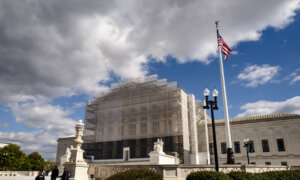

The U.S. Supreme Court turned away the bid of a Jan. 6, 2021, defendant to reject a presidential pardon so he could continue to fight in court to establish that he is not guilty.
The petition in Brooks v. United States was denied in an unsigned order on March 9. No justices dissented. The court did not explain its decision.
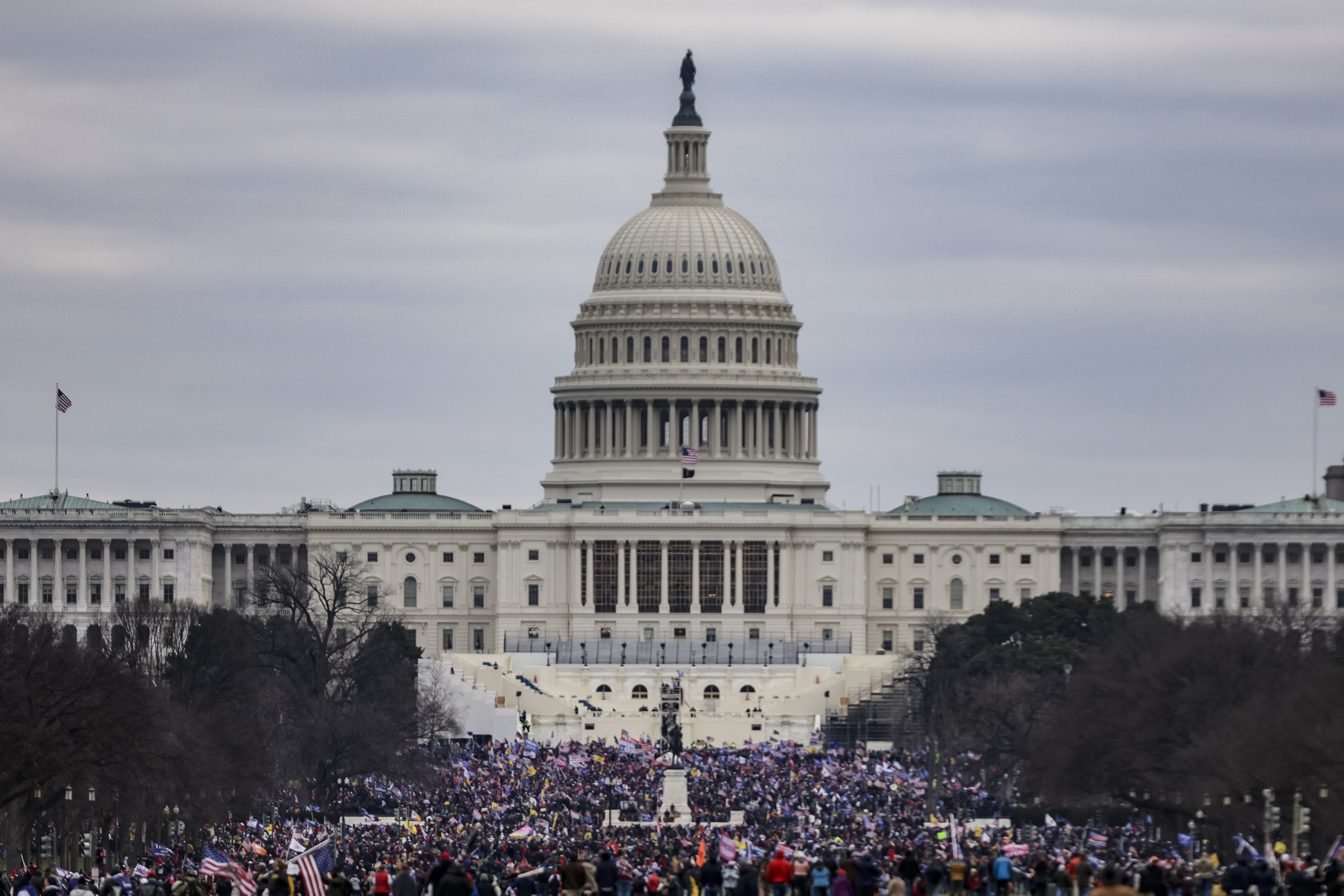
The petitioner, Glenn Allen Brooks, was charged with four misdemeanor counts stemming from the Jan. 6 breach of the U.S. Capitol, including entering a restricted building or grounds.
A jury in a federal district court convicted Brooks on all counts, and in September 2024, he was sentenced to six months of incarceration, $500 in restitution, and a $2,000 fine.
He filed an appeal, and while the appeal was pending, on Jan. 20, 2025, President Donald Trump issued a proclamation pardoning various defendants, including Brooks, who were charged with Jan. 6-related offenses.
Although Brooks had made it clear orally and in writing that he would not accept a pardon because he wished to prove on appeal that he is not guilty, “he was released from custody against his wishes pursuant to the pardon,” according to his petition filed with the Supreme Court.
The petition said the federal government then moved to vacate his convictions, but Brooks opposed the motion, “emphasizing that a pardon is not equivalent to exoneration and that he retained a concrete interest in appellate review.”
A three-judge panel of the U.S. Court of Appeals for the District of Columbia Circuit dismissed the motion on March 24, 2025, and vacated his convictions, sending the case back to the federal district court with instructions to find that the case was moot, or no longer legally relevant.
Brooks argued in his petition that a “forced pardon” functions as a “compelled confession, branding the individual with guilt and stripping him of his chosen appellate forum.”
Just as the government cannot compel an admission of guilt, it cannot force a citizen “to accept the stigma of guilt by means of an unwanted pardon.” By forcing Brooks to accept the pardon, the government has harmed him and deprived him of the procedural mechanism he needs to challenge the underlying convictions, the petition said.
In United States v. Wilson (1833), the Supreme Court held that a pardon must be delivered and accepted to be valid.
“The acceptance element ensures that clemency operates as an offer of mercy, not a compulsion of guilt,” the petition said.
Then, in Burdick v. United States (1915), the court made it clear that acceptance of the pardon implies guilt.
“The defendant’s right to reject the pardon thus serves both his dignity and the integrity of the judicial system,” the petition said.
The Supreme Court should agree to review the case because the ruling of the D.C. Circuit, by treating the pardon as mandatory, “subverts more than a century of jurisprudence and collapses the acceptance requirement into irrelevance,” it said.
U.S. Solicitor General D. John Sauer waived the federal government’s right to respond to the petition. Sometimes after the government files such a waiver, the high court still requests a response, but in this case, it did not.
Trump has long characterized Jan. 6 defendants as victims.
In his Inauguration Day proclamation granting pardons to about 1,500 individuals, he wrote that the proclamation “ends a grave national injustice that has been perpetrated upon the American people over the last four years and begins a process of national reconciliation.”
Brooks’s attorney, Alexander Roots of Bozeman, Montana, said his side was disappointed that the court declined to accept the case.
Roots said his client “has been denied the opportunity to have his conviction overturned on the merits.”
The president’s pardons “unfortunately negated strong appeals by numerous J6ers,” he told The Epoch Times.
The Epoch Times reached out to the Department of Justice for comment. No reply was received by publication time.