

Bostock was decided under Title VII of the Civil Rights Act, related to employment discrimination. The parties in the West Virginia case have pleaded that the Bostock standard should apply here, where Title IX of the Education Amendments of 1972 is at issue.
“I'm very happy, with, however this decision comes out, to have a decision that's focused specifically on the unique context of athletics, as opposed to these broad arguments about Bostock …. the regulations still require equal athletic opportunity,” said Joshua Block, the attorney for the plaintiff-petitioner, B.P.J., in response to Gorsuch’s question.
Gorsuch followed up by asking whether the Javits Amendment would affect that analysis. That provision of law, added to Title IX in 1974, recognized that some aspects of athletic programs may be different for men and women.
Block said the amendment "is absolutely reasonable as applied to cisgender students."
"I think that as applied to transgender students, instead of providing them equal overall opportunity, it's a complete exclusion from the program,” Block said.
“I hate, hate that a kid who wants to play sports might not be able to play sports. Hate that, but we have, it's kind of a zero-sum game for a lot of teams,” he said.
Kavanaugh expressed concern that a female athlete may get bumped from a team by a transgender player.
“We have to recognize on both sides, the zero-sum. It's not like, oh, just to add another person to the team,” he said.
“That's not how sports works … someone else is going to get disadvantaged.”
“How about chess club? … If you look at the ranks of chess grandmasters, there are not a whole lot of women there … and what does that mean?” remarked Kagan.
“There are a lot of chess grandmasters who would tell you that women, just like, for whatever reason … they're not as good at this.”
Williams responded that, “A chess distinction, I think again, might fail because there's an actual lack of evidence of meaningful physiological differences that are reflected in the existence of the express regulations in the athletics context.”
Justice Neil Gorsuch repeated the question with a different hypothetical, asking whether such a distinction would be relevant under Title IX.
He said there is a difference between West Virginia v. B.P.J. and Bostock v. Clayton County. In Bostock, the Supreme Court ruled in 2020 that employers cannot discriminate on the basis of sexual orientation or gender identity.
“In terms of Bostock, I understand that to say that discrimination on the basis of transgender status is discrimination on the basis of sex,” Roberts said.
“But the question here is whether or not a sex-based classification is necessarily a transgender classification.”

“Given that half the states are allowing it, allowing transgender girls and women to participate, and half are not, why would we, at this point … jump in and try to constitutionalize a rule for the whole country while there's still, as you say, uncertainty and debate, while there's still strong interest in the other side?” he asked Kathleen Hartnett, counsel for Hecox.
“They are their unique cases in their own right,” Hartnett said.
“I don't think this court needs to set rules forever on this area. I think the most important thing would be to allow a record to develop, even in areas of controversy,” she said.
Harnett said that the disadvantage is that the athlete would have a “larger frame with weaker muscles and no testosterone. … It could actually put the transgender woman at a disadvantage if they happen to have larger bones and less testosterone or muscle to drive those bones.”
In his rebuttal, Idaho Solicitor General Alan Hurst cited the case of an elite male track athlete who underwent a medical transition, and the athlete’s subsequent track times did not change:
“Unless we can reliably distinguish between those situations and the situations which testosterone suppression does reliably eliminate the advantage. … We need a broader classification, and sex is the right one.”
Alito’s question sought to understand the sex-based distinction in women’s sports for the purpose of applying the Equal Protection Clause of the 14th Amendment.
“We do not have a definition for the court,” Hartnett replied.
Alito responded: “Well, how can a court determine whether there is discrimination on the basis of sex if we don’t know what sex means, for equal protection purposes?”
“I think here we just know that,” responded Hartnett, emphasizing that she was not taking exception with the Idaho statute’s definitions of sex.
Alito asked the question a third time: “The person says, ‘I sincerely believe I am a woman. I am, in fact, a woman.’ Is that person not a woman?”
Harnett said that she would respect the person’s self-identity in addressing them, but said that was distinct from sex-based biological advantages at issue in the statute.
She called the protection of biologically divided spaces a “moral imperative.”
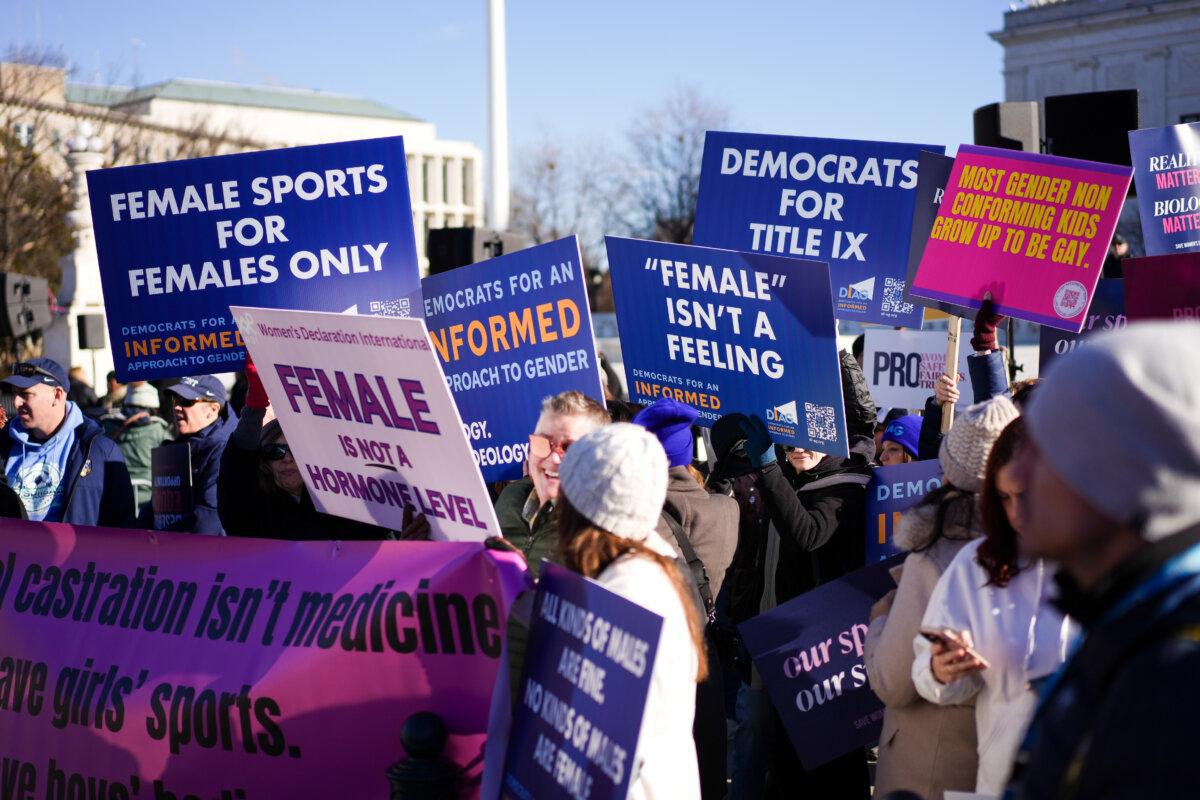
McMahon’s comments were delivered before an enthusiastic crowd gathered in front of the Supreme Court.
She lauded the Trump administration for recognizing that Title IX application should be “rooted in biological reality. Boys are boys and girls are girls.”
Attorney General Pam Bondi also commented on the case in a post on X, saying, “Today, my attorneys are arguing a crucial Supreme Court case pushing back against the trans agenda. Our position: states have the authority to ban men from participating in women’s sports.”
“This is common sense. We are fighting to protect girls and women in the locker room and on the playing field—and we will be successful,” she added.
“There are an awful lot of female athletes who are strongly opposed to participation by trans athletes in competitions with them,” Kathleen Hartnett, who is arguing on behalf of plaintiff Lindsay Hecox, said.
“What? What do you say about them? Are they?” Alito responded. “Are they bigots? Are they deluded in thinking that they are subjected to unfair competition?”
Hartnett denied they were bigots.
Alito then asked: “Do you think that the success of trans athletes in women's sports is proportional to the percentage of trans athletes who participate in women's sports?”
“There are 2.8 million transgender people in the United States. That's an awfully big figure,” she said.
Sotomayor’s question related to the level of scrutiny required in the case. The size of the class may entail intermediate scrutiny, which is a lower threshold for the government’s lawyers to meet, or “strict scrutiny,” which is the highest class of scrutiny for discrimination.
The Principal Deputy U.S. Solicitor General, Hashim M. Mooppan, said that intermediate scrutiny was more appropriate.
Thereafter, Justice Neil Gorsuch asked whether, if a group grows in size, it will continue to merit intermediate scrutiny, or whether the plaintiffs could merely bring an as-applied challenge that does not strike down the whole law.
“I don't think this court really needs to grapple with these fairly tricky analytical questions, because this is the world's easiest as-applied claim to reject. It is a fraction of a percent,” Mooppan responded.
“Is refashioning Equal Protection analysis a fallback? Why aren't you arguing that transgender status is suspect class?” he asked.
“That’s the way the rule used to work … no transgender women in girls’ sports, but we’ll look at your evidence and look at your circumstances and decide whether or not you, individually, can be included,” Jackson said. “Why is that so non-administrable?”
“Making sure that a transgender athlete does not have an unfair advantage would require ongoing testosterone monitoring … that is invasive, that is intrusive,” Hurst responded.
Jackson, however, was unpersuaded.
“That’s the burden of the person. The person who wants to play, he has to demonstrate to you, to whatever degree of scientific certainty, that they don’t have a competitive advantage. Why would you not allow that? I guess I don’t understand,” she said.
This was in response to a question from Justice Samuel Alito as to the definition of Title IX.
“We think it's properly interpreted pursuant to its ordinary traditional definition of biological sex, and I think probably given the time it was enacted, reproductive biology is probably the best way of understanding that,” Mooppan said.
“How would your theory play out if we're talking about 6-year-olds, where there's no difference between boys and girls in terms of athletic ability, testosterone levels?” Barrett asked.
Idaho Solicitor General Alan Hurst responded: “Even at that age, males have about a 5 percent athletic advantage over girls in most situations.”
“If this is not a level of competition where anybody cares about [the athletic advantage], the simple solution is … co-ed sports. You don't divide the teams based on sex, and everybody can play, and Idaho's law doesn't interfere with that,” Hurst added.
“It’s our friends on the other side who want to classify based on gender identity,” Hurst said.
“They're seeking special treatment for males who allegedly lack an unfair advantage, but only if those males also identify as transgender. Denying special treatment isn't classifying on the basis of transgender status. It's consciously choosing not to.”
“Do you dispute that having a case named after you makes your … infamy live forever?” asked Sotomayor.

“There's no basis for heightened scrutiny, intermediate scrutiny in that situation,” Idaho Solicitor General Alan Hurst said.
“Your Honor, if the sex baseline passes intermediate scrutiny, which no one disputes that it does, then the edge cases, the potential exceptions, that's all rational basis review.”
“That makes no sense to me,” Sotomayor said.
Idaho law treats males and females equally, Hurst said.

Idaho and West Virginia passed the laws, but appeals courts said the bans ran afoul of the equal protection clause of the 14th Amendment. West Virginia's law was also held to violate Title IX, which bars sex-based discrimination in educational institutions receiving federal funds.
The case could have widespread implications as more than two dozen states have passed these types of laws. Reasoning from the justices could also impact other cases involving locker rooms, bathrooms, and other gender-related disputes.

Selina Soule was a high school track and field champion in Connecticut, holding multiple state conference titles and school records.
But when male athletes who identified as transgender started competing against her, Soule said her prospects of winning diminished.
“It didn’t matter how much time I put in, in practice; how much extra effort I put in. There was nothing I could do to win the race,” Soule, who graduated from Glastonbury High School in 2020, told The Epoch Times.
Soule’s sentiments have been common in the ongoing national debate surrounding males competing in female sports.
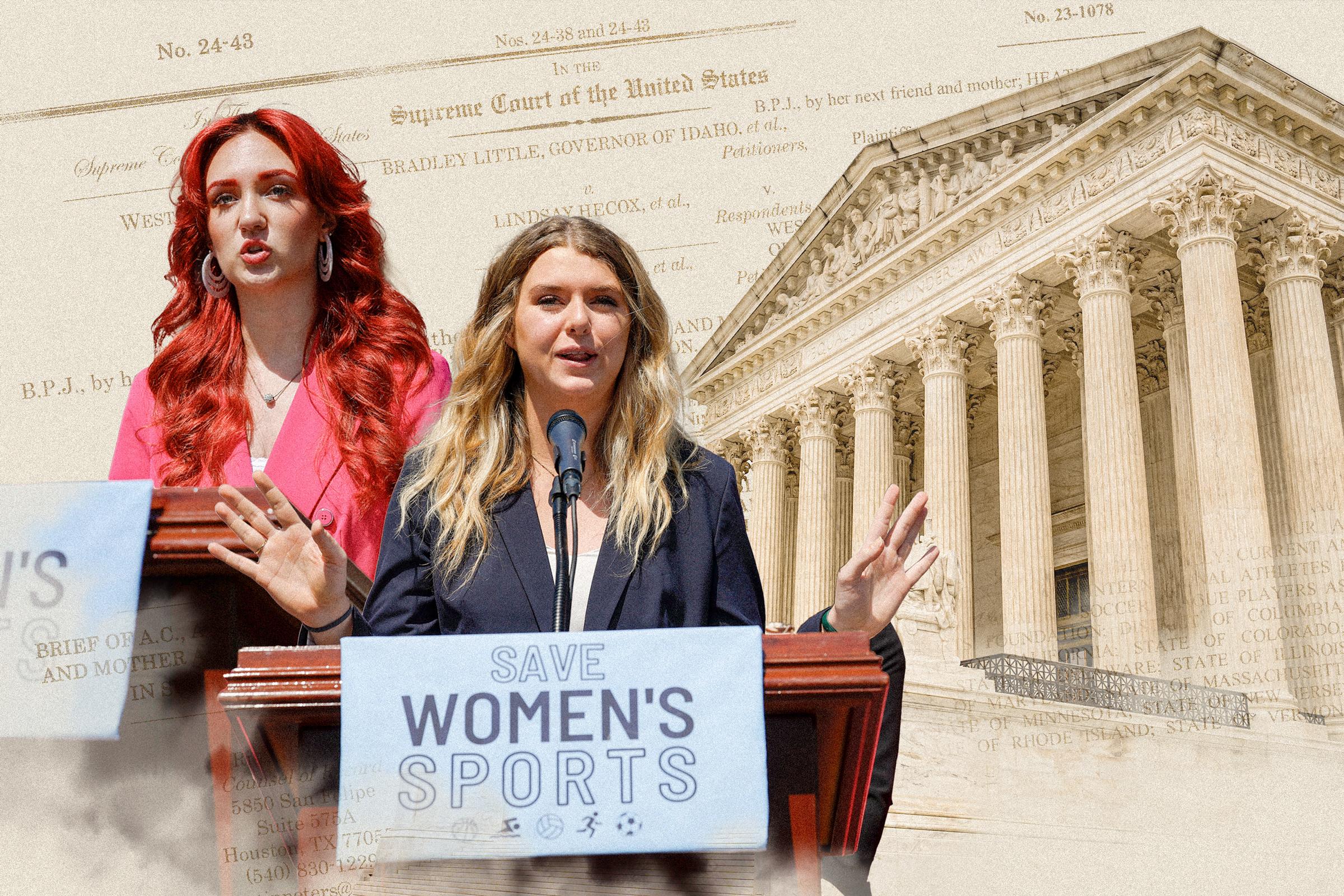
The Supreme Court on Jan. 13 is set to weigh in on the issue by hearing cases challenging state laws barring boys from competing in girls’ sports.
In two cases to be heard back to back, the high court will examine allegations by male students who identify as transgender that West Virginia and Idaho illegally discriminated against them by banning their participation in girls’ sports.
The cases—Little v. Hecox and West Virginia v. B.P.J.—are expected to yield rulings on whether the state laws violate the Constitution and federal civil rights law.
Depending on how the justices decide, the lawsuits could make it easier for states across the country to maintain the sex-segregation some female athletes say is critical for sports.
‘Stakes Are High’
According to the left-leaning Movement Advancement Project, 27 states have enacted bans such as the ones being considered by the Supreme Court. Some states have encountered federal court blocks.
Those included Idaho and West Virginia, which federal appeals courts have ruled they acted illegally discriminatory based on sex and “transgender status.”
But female athletes say their interests are not being respected when males compete against them.
A recent study by the right-leaning Concerned Women for America showed that since the mid-1980s, women have been deprived of more than 1,900 gold medals by men competing in female categories.
An amicus brief from 102 female athletes told the court that “female athletes across the country, at all levels of sports, stand on the precipice of permanently losing their access to equal opportunity and safety in sports.”
“Based on their biological sex, they are at risk of being pushed aside in law and in life in a permanently damaging and irreversible way.”
Macy Petty, a former high school volleyball player, told The Epoch Times, “We’ve come to this point that men have infiltrated women’s sports to the degree where women are walking up to the court wondering if they will actually have the privilege of only playing against women.”
Petty, who participated in countless matches across the country, graduated from Northwestern High School in South Carolina in 2020. She trained in volleyball for seven years and had competed in hundreds of matches across the country by 2018.
That year, she attended an event where college recruiters were in attendance to recruit gifted female athletes and reward them with scholarships. As she walked onto the volleyball court, she was shocked to see that she was matched with a male.
“The only emotion that I knew was pure confusion,” Petty told The Epoch Times.
Countless others, including Alliance Defending Freedom President Kristen Waggoner, share Petty’s critical approach to male participation.
Although “compassion and respect needs to occur for all children,” Waggoner said during a Jan. 8 press briefing, the rights of young women must not be ignored in that process. The organization led by Waggoner, who played volleyball in high school, is helping Idaho and West Virginia defend their laws in court.
The justices are expected to focus on two legal provisions: the equal protection clause of the Constitution and Title IX of the Civil Rights Act. The first generally guarantees equal protection under the law, while the latter prohibits sex-based discrimination in educational institutions that receive federal funding.
“The stakes are high,” an amicus brief from athletic officials and coaches of female athletes reads. They warned that rendering the laws unconstitutional “would not only revoke the very rights and protections that specifically secure women’s access to school athletics, but would do so in order to extend those rights and protections to men.”
Allowing male participation was “blindly adhering to platitudes of equality,” they stated. Other coaches have argued that “allowing transgender women to participate in women’s sports, consistent with applicable rules, neither poses safety concerns nor gives transgender women an unfair advantage.”
Title IX
The West Virginia case is distinctive in that it invites the justices to rule on Title IX, in addition to the equal protection clause. Given Title IX’s history and how the Supreme Court has handled similar laws, legal experts have suggested it could bolster female athletes’ opposition towards male participation.
The U.S. Court of Appeals for the Fourth Circuit ruled in 2024 that the state’s law treated B.P.J., the plaintiff in the case who sued West Virginia as an 11-year-old, improperly on the basis of sex and therefore violated Title IX.
However, others have argued that Congress had a different intent when passing Title IX. An amicus brief from nearly 50 members of Congress argued that Title IX was passed in 1975 to prevent discrimination against women and that the first Title IX regulations adopted a binary view of sex.
“It has to do with safety and for bathrooms and locker rooms, it has to do with the anatomy that is exposed in athletics. And so that’s why sex matters; what a person thinks about their gender doesn’t matter,” Randall Wenger, chief counsel of the Independence Law Center, told The Epoch Times. “If you were looking to preserve athletic opportunities, you do need to divide it on the basis of sex.”
By contrast, a group of Title IX scholars told the court that Title IX’s language was an inconsistent “categorical ban that excludes all transgender girls from participating on girls’ sports teams.” The justices are focusing on participation in sports teams but their reasoning could extend to segregation of locker rooms and bathrooms.
In 2022, Kylee Alons, then a swimmer at North Carolina State University, became increasingly anxious at the thought that Lia Thomas, a male competing with women, would potentially knock some of her teammates out of the competition.
“It wasn’t until I was in the locker room, actually the first day, that I realized, ‘Oh, I had never even given thought to the fact that I would have to be changing with a man in my locker room,’” Alons told The Epoch Times.
“And I think until you’re in that position, you don’t realize how uncomfortable and how violating that feels.”
Both sides of the debate have pointed to the Supreme Court’s 2020 decision in Bostock v. Clayton County, which could bear on the justices’ decision-making.
In Justice Neil Gorsuch’s majority opinion, he said that “discrimination based on homosexuality or transgender status necessarily entails discrimination based on sex.”
That case, however, focused on a different civil rights law—Title VII—and Gorsuch explicitly distanced his decision from disputes about locker rooms.
Fairness and Biology
How the justices parse questions of equality could come down to their view of evidence surrounding physiological differences, and the way hormone-altering drugs impact those.
Both the Fourth Circuit and the Ninth Circuit suggested the states’ bans were too broad because they encompassed males who hadn’t undergone the physical changes of puberty.
The Fourth Circuit specified that B.P.J., the unnamed male who sued over West Virginia’s law, didn’t undergo something called “Tanner 2 stage,” a medical designation for the beginning of puberty. “As a result, B.P.J. has never experienced elevated levels of circulating testosterone,” the court wrote.
But one of BPJ’s teammates, identified in court filings as A.C., told a different story. A.C. said that at the beginning of the school year, she and B.P.J. were evenly-matched in athletics, although she was two years older.
By the end of that year, B.P.J. was vastly outperforming her, had grown, and “developed a deeper and more masculine voice,” despite the puberty blockers. A year after that, B.P.J. was one of the school’s top competitors in discus and shot put.
A.C., who had previously quit jiu-jitsu because she no longer wanted to compete against boys, was forced down in the rankings, and became discouraged when she didn’t qualify for elite events.
During all four years of high school, track and field athlete Soule was forced to race against two young men in her home state of Connecticut. She told The Epoch Times that facing them on the weekends was “extremely mentally draining and demoralizing.”
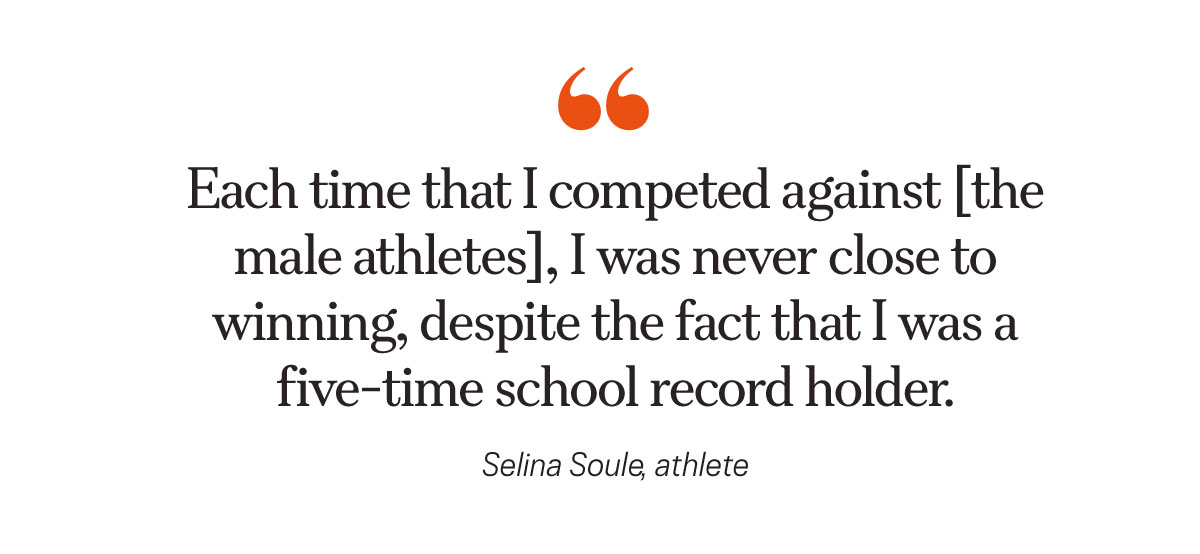
“And each time that I competed against them, I was never close to winning, despite the fact that I was a five-time school record holder,” she said.
Scientific Evidence
The court’s dockets for the two cases are full of amicus briefs on both sides of this issue, with the briefs from sports scientists and doctors tending to express support for the states that have banned males from women’s sports.
On the other side, a group of pediatricians noted important differences that emerge during puberty. “Males must experience endogenous puberty to acquire the significant athletic advantages that manifest during puberty and in adulthood,” one such amicus brief reads.
By contrast, Defending Education Vice President Sarah Parshall Perry told The Epoch Times, “What we have discovered—and the research in increasing measure indicating—is that these differences between natal girls and natal boys begin to express themselves at the age of 10 or 11, when there is a 20-fold surge in testosterone for biological boys.”
Amicus briefs from the group Do No Harm and sports physiologists both argue that these differences exist even before puberty. Do No Harm Medical Director Kurt Miceli told The Epoch Times that puberty blockers and hormone treatments likely don’t eliminate these differences.
“Current evidence indicates that puberty blockers and estrogen only minimally erode the physical advantages gained as one grows up, meaning some strength advantages remain even after several years of hormone interventions,” he said.
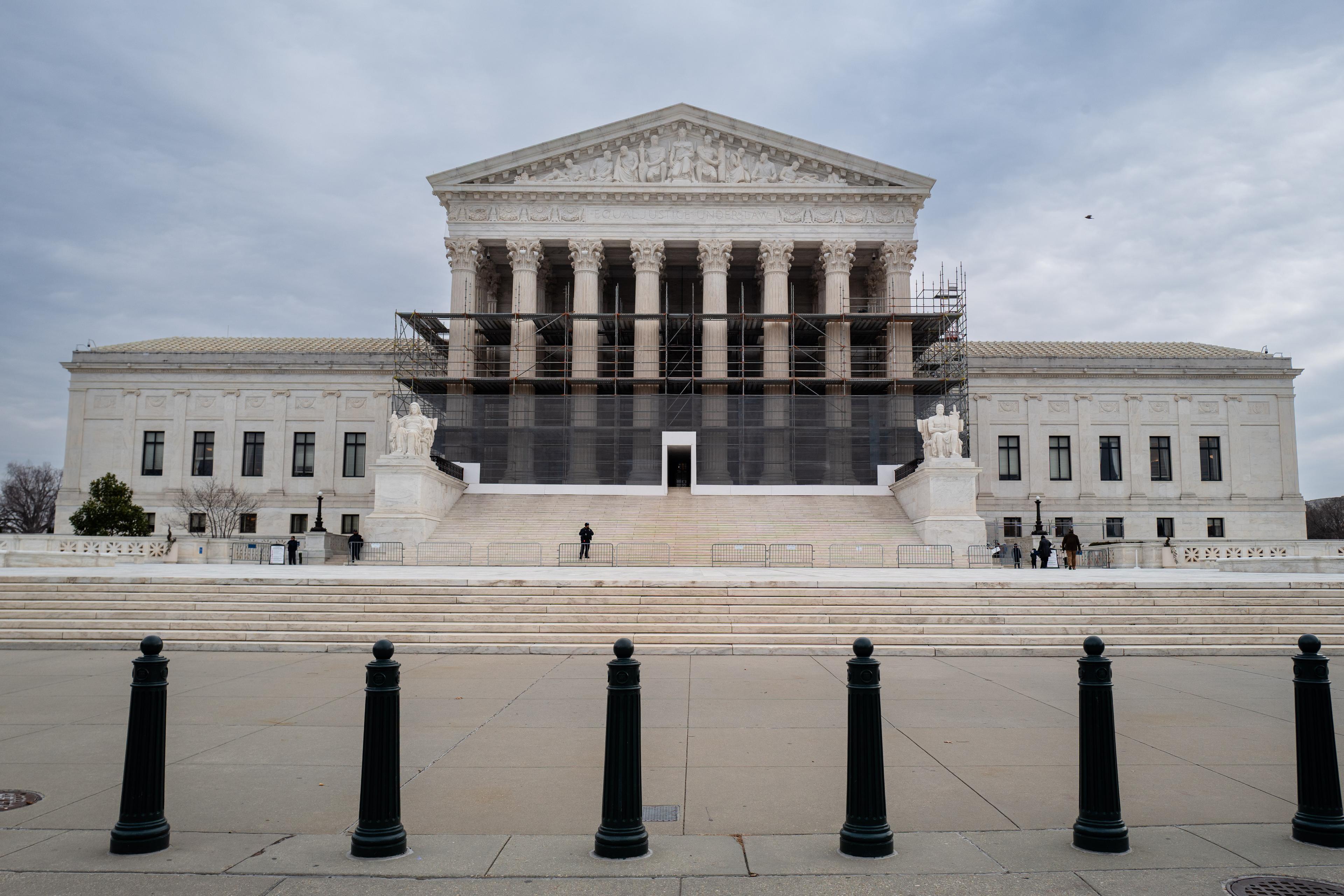

The U.S. Supreme Court will uphold two state laws that ban male athletes who do not identify with their sex from competing on school sports teams intended for females, according to legal experts.
Their comments come as the nation’s highest court prepares to hear back-to-back oral arguments on Jan. 13 in Little v. Hecox and West Virginia v. B.P.J.
Idaho and West Virginia argue that their respective laws comply with the 14th Amendment to the Constitution. Its equal protection clause states that no state “shall ... deny to any person within its jurisdiction the equal protection of the laws.”
The states also say their laws do not violate Title IX, a federal civil rights law that forbids sex-based discrimination at any school that receives federal funding.
Currently, 27 states have bans preventing males who identify as transgender from participating in girls sports and women’s sports, according to a report by the Williams Institute at the University of California–Los Angeles School of Law.
Advocates for transgender participation on female sports teams say these state bans are discriminatory and divisive.
The American Civil Liberties Union, which is representing the transgender-identifying athletes in both cases, said in September 2025 that such athletes have been “the focus of a relentless media campaign designed to make their participation seem like a threat to girls who are not transgender.”
“[Those on the other side want] a sweeping legal precedent that endangers transgender people (and other people, including gay, lesbian, and bisexual people, and all women) across our lives, not just in sports,” the group said.
Idaho Case
Little v. Hecox is about Idaho’s Fairness in Women’s Sports Act, “which ensures that women and girls do not have to compete against men and boys, no matter how those men and boys identify,” according to the petition filed in the case.
Lindsay Hecox, a male who identifies as female, wanted to compete on the women’s track and cross-country teams at an Idaho university. Hecox sued, arguing that Idaho’s Fairness in Women’s Sports Act violates the equal protection clause and Title IX.
A federal district court issued a preliminary injunction blocking the act so Hecox could try out for the teams. The court ruled that the act discriminates against transgender-identifying athletes.
“The physiological differences [between females and males] do not overcome the inescapable conclusion that the Act discriminates on the basis of transgender status,” the petition reads.
The U.S. Court of Appeals for the Ninth Circuit affirmed the injunction, holding that laws making sex-based distinctions in schools serve as “proxy discrimination” against transgender-identifying athletes.
West Virginia Case
West Virginia v. B.P.J. is about that state’s Save Women’s Sports Act, which stipulates that female teams based on “competitive skill” or involving “a contact sport” must exclude males.
State lawmakers voted to keep the sexes separate in sports because of the “inherent physical differences between biological males and biological females,” according to the petition filed in the case.
B.P.J., a young male high school student who identifies as female, sued, arguing that the law’s “biology-based distinction” violates Title IX and the equal protection clause. A district court initially blocked the law, then reversed itself, finding that there was “no genuine dispute that biological males have physiological advantages over biological females.”
The U.S. Court of Appeals for the Fourth Circuit reinstated the block, finding that the district court was wrong to rule for the state because “there is a genuine dispute of material fact” over whether those born male “enjoy a meaningful competitive athletic advantage over” young women born female.
The circuit court also held that the district court should have granted summary judgment to B.P.J. on his Title IX claim because the state law unlawfully excluded him from participating in sports.
What the Lawyers Say
Jim Burling, senior counsel at Pacific Legal Foundation, a public interest law firm, said he is predicting that the Supreme Court “is going to find that men are men and women are women.”
The court will not find that gender identity is protected under Title IX, enacted in 1972, or the 14th Amendment, ratified in 1868, because the concept was unknown when they took effect, Burling told The Epoch Times.
Title IX was adopted to make sure that girls and women could participate in school sports on an equal basis with boys and men, he said. No one believes that transgender identity was part of what was being protected under the law, according to him.
“[The text of the equal protection clause] doesn’t talk about transgenderism—it doesn’t even anticipate it being an issue,” he said.
“You cannot graft a modern-day concern onto the language of a constitutional provision that’s over a century old,” he told The Epoch Times.
Burling said the Supreme Court’s landmark decision in 2025 in United States v. Skrmetti offers a clue as to how the court will rule.
The Tennessee law in Skrmetti forbids all medical treatments intended to allow “a minor to identify with, or live as, a purported identity inconsistent with the minor’s sex” or to treat “purported discomfort or distress from a [disagreement] between the minor’s sex and asserted identity.”
The high court rejected the argument that Tennessee’s ban on transgender procedures for children such as the use of puberty blockers and cross-sex hormones was an example of discrimination, according to Burling.
“[The ban was] an exercise of the state’s police power and power to regulate medical practice,” he said.
The conservative-leaning Supreme Court, which embraces “a text-based, originalist understanding of the Constitution,” will not find that state laws prohibiting males from competing in women’s sports are unconstitutional, he said.
“I think the statutes are going to be upheld at least by 5–4 or maybe 6–3,” Burling said.
Steven J. Allen, senior fellow at the National Legal and Policy Center, said he expects that the Supreme Court will uphold the state laws by a 6–3 or 8–1 vote.
The Supreme Court is not going to say you cannot segregate sports teams by sex because that would eliminate most women’s sports, according to Allen.
Then there is the privacy issue. In our society, people in public facilities shower with others of the same sex and use dressing rooms that are sex-segregated, and “there’s no way that could be unconstitutional,” Allen said.
Supreme Court ‘Can’t Invent New Constitutional Rights’
Carrie Severino, president of JCN (formerly the Judicial Crisis Network), predicted that the Supreme Court “will clarify that transgender status is not a suspect or quasi-suspect class, as it doesn’t fit into the types of classes that have been recognized historically as suspect or quasi-suspect classes.”
“The court cannot simply invent categories of constitutional protection,” she told The Epoch Times.
In constitutional law, a suspect classification is a class or group of individuals meeting criteria that suggest that the group is likely the subject of discrimination.
A quasi-suspect classification refers to groups such as those based on gender or legitimacy of birth. When a law involves a suspect or quasi-suspect classification, courts apply strict scrutiny, meaning that they look at whether the law at issue serves a compelling government interest and uses the least restrictive means to achieve that interest.
“For the Supreme Court to step in and invent new constitutional rights that would have been absolutely shocking to those people who ratified the 14th Amendment, for them to jump in and cut off the right of citizens to pass the laws that they feel are appropriate to protect women in their states, that would be inappropriate,” Severino said.
Kristen Waggoner, president of the Alliance Defending Freedom, a public interest law firm that is part of Idaho’s legal team in the Supreme Court case, said the statutes in Idaho and West Virginia serve the interests of women.
“Women deserve equal opportunity, fairness, and privacy, and states have the right to recognize biological distinctions when those distinctions matter, and they matter greatly on the athletic field,” she said at a Jan. 8 news conference.
When state laws protecting women’s sports are not allowed to be enforced, women and girls are “losing the opportunity to be on the field in terms of fairness” and their safety and privacy are placed in jeopardy, Waggoner said.