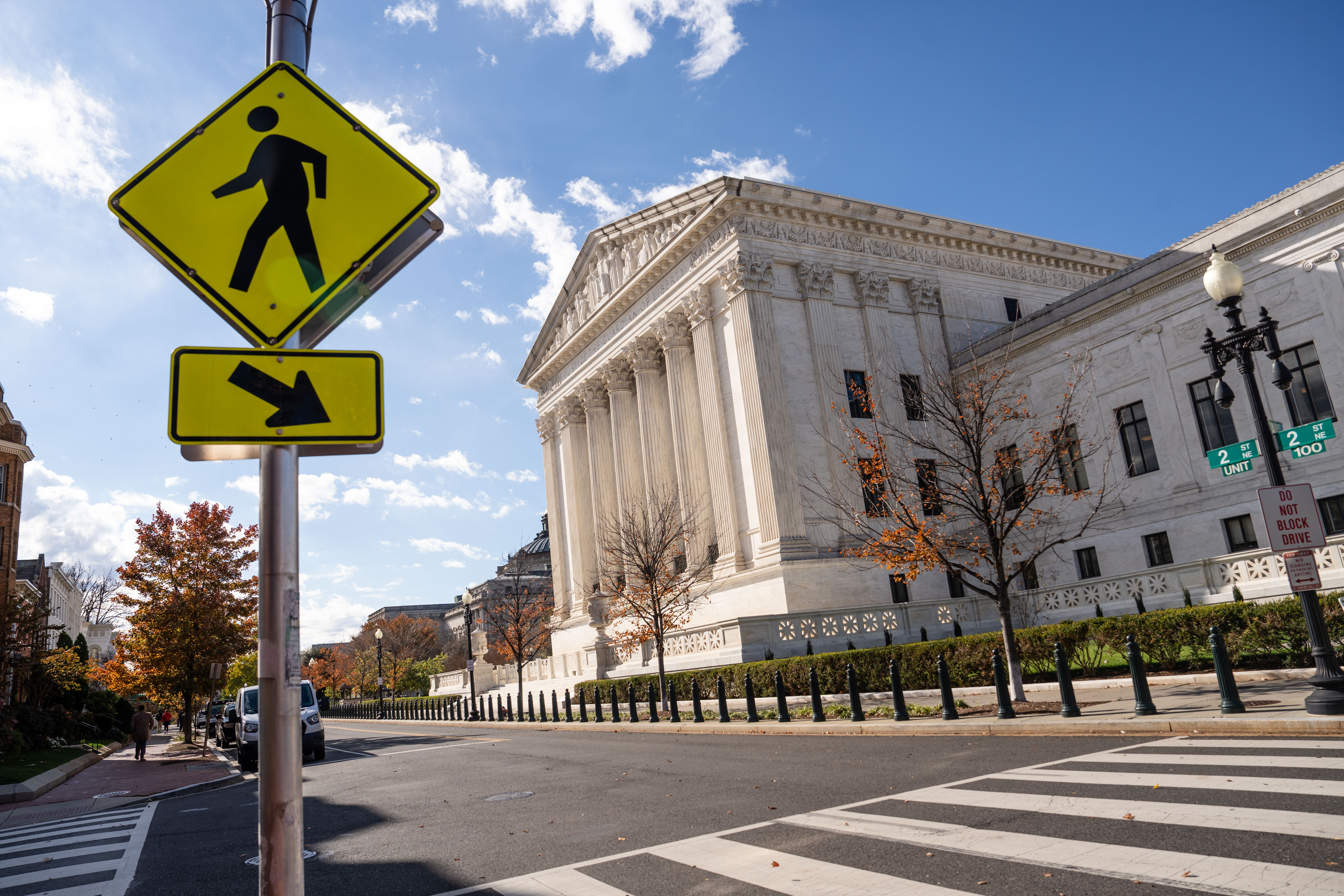

The U.S. Supreme Court grappled on Dec. 1 with internet service provider Cox Communications’ appeal of a $1 billion jury verdict. Music labels won the verdict over music piracy that Cox’s customers allegedly committed.
The piracy complained of often takes place when internet users access peer-to-peer file-sharing protocols such as BitTorrent.
The petitioner, Cox Communications, runs six cable systems in 18 states. The lead respondent, Sony Music, operates dozens of music labels, including Arista Records, Columbia Records, Masterworks, RCA Nashville, and Sony Classical.
Cox argues that the U.S. Court of Appeals for the Fourth Circuit erred when it determined that the provider of the internet connection—as opposed to the internet user—was liable for the infringement. Lawyers call this vicarious liability. The appeals court held that Cox must either cut off connections that were used for infringement or face liability for future infringement, according to the petition Cox filed August 2024.
The Fourth Circuit’s decision installs “the most draconian secondary-liability regime in the country, one that departs from three other circuits, defies this Court’s precedents, and threatens mass disruption across the internet,” the petition said.
The first lawsuit against Cox was filed by music publisher BMG Rights Management in 2014. A federal district court found that Cox’s case-by-case approach to subscriber termination was “not standardized or aggressive enough to immunize Cox” under the federal Digital Millennium Copyright Act. A jury rejected BMG’s vicarious liability claims but ruled in favor of BMG on willful, contributory liability, according to the petition.
Contributory liability is when a party is held liable for contributing to their own injury.
The Fourth Circuit reversed, saying the district court judge failed to tell the jury that contributory negligence requires that Cox had actual knowledge or was willfully blind to specific instances of infringement. However, the appeals court ruled that the district court was correct when it instructed the jury that “contributorily (or vicariously) infringing with knowledge that one’s subscribers are infringing is consistent with at least reckless disregard for the copyright holder’s rights.” The case was later settled out of court, the petition said.
The petition said that a month before the BMG case was settled in July 2018, a large group of record labels and publishers filed a “copycat” lawsuit against Cox, claiming that Cox was liable vicariously and contributorily for individual subscribers’ infringement over file-sharing networks from February 2013 to November 2014. A federal district court ruled against Cox, finding the company was liable because it received the infringement notices and failed to terminate subscribers’ access on the affected accounts. A jury held that Cox acted willfully and was responsible for both contributory and vicarious infringement on the accounts.
The petition said the finding of willfulness boosted the ceiling on damages available under the Act to $150,000 from $30,000 per work. Although Cox presented evidence showing the other side’s actual losses amounted to $692,000, the plaintiffs convinced the jury it should award $1 billion, representing $99,830 for each one of the 10,017 works that were allegedly infringed.
The Fourth Circuit ruled that Cox could not be held vicariously liable but could be held responsible for contributory liability because the company “materially contributed” to infringement on its networks by not cutting off individual infringers.
During the oral argument on Dec. 1, Cox attorney Joshua Rosenkranz urged the justices to reverse the circuit court ruling.
The lower court found that “a provider of basic communications infrastructure to millions of homes and businesses can be held liable because it did not kick enough accused infringers off the Internet,” he said.
“No notion of tort or copyright law ever conceived can support that theory,” the attorney said. A tort is a wrongful act or infringement of a right that gives rise to civil liability.
There is no “sure-fire way” for an internet service provider to avoid liability except to “cut off the internet not just for the accused infringer but for anyone else who happens to use the same connection.” This could lead to whole towns, hospitals, or universities being cut off, he said.
Rosenkranz said that “turning internet providers into internet police for all torts perpetrated on the internet will wreak havoc with the essential medium through which [the] modern public engages in commerce and speech.”
Justice Clarence Thomas questioned how the Supreme Court’s ruling in Twitter Inc. v. Taamneh affected this case.
In May 2023, the Supreme Court unanimously sided with Twitter (since renamed X), Google, and Facebook, finding that the Silicon Valley giants are shielded from liability for content posted by users. That case dealt with whether social media platforms should be held liable if terrorist groups use the platforms to promote their cause.
“How far do you go with Twitter?” Thomas said. “We were dealing with a totally different matter in Twitter than we have here.”
Rosenkranz said that mere knowledge that an account will infringe does not expose his client to contributory liability.
Sony’s attorney, Paul Clement, told the justices that Cox provided services to “known infringers with substantial knowledge that what they themselves called habitual abusers would continue to infringe.”
In addition, Clement said Cox has admitted that it held copyright laws and the Digital Millennium Copyright Act “in contempt.” This is why Cox takes the “extreme” position that it may continue providing services “to habitual abusers, in perpetuity, without consequences.”
If Cox is right on the law, that company could “take tens of thousands of copyright notices and throw them in the trash,” Clement said.
Justice Sonia Sotomayor told Clement that the two companies are arguing “two extremes here.”
“The other side says there’s no liability because we’re just putting out into the stream of commerce a good that can be used for good or bad and we’re not responsible for the infringers’ decision,” she said.
Cutting off the internet for a customer could lead to the internet being suspended “for the 50,000 or 100,000 people who are represented by that customer,” Sotomayor said.
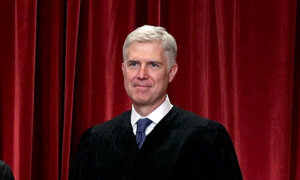
Justice Neil Gorsuch told Clement that the law regarding secondary liability for companies providing services to the public isn’t clear-cut.
“Isn’t that a flag on the field for us?” the justice said.
The Supreme Court is expected to hand down a ruling in the case by the end of June 2026.