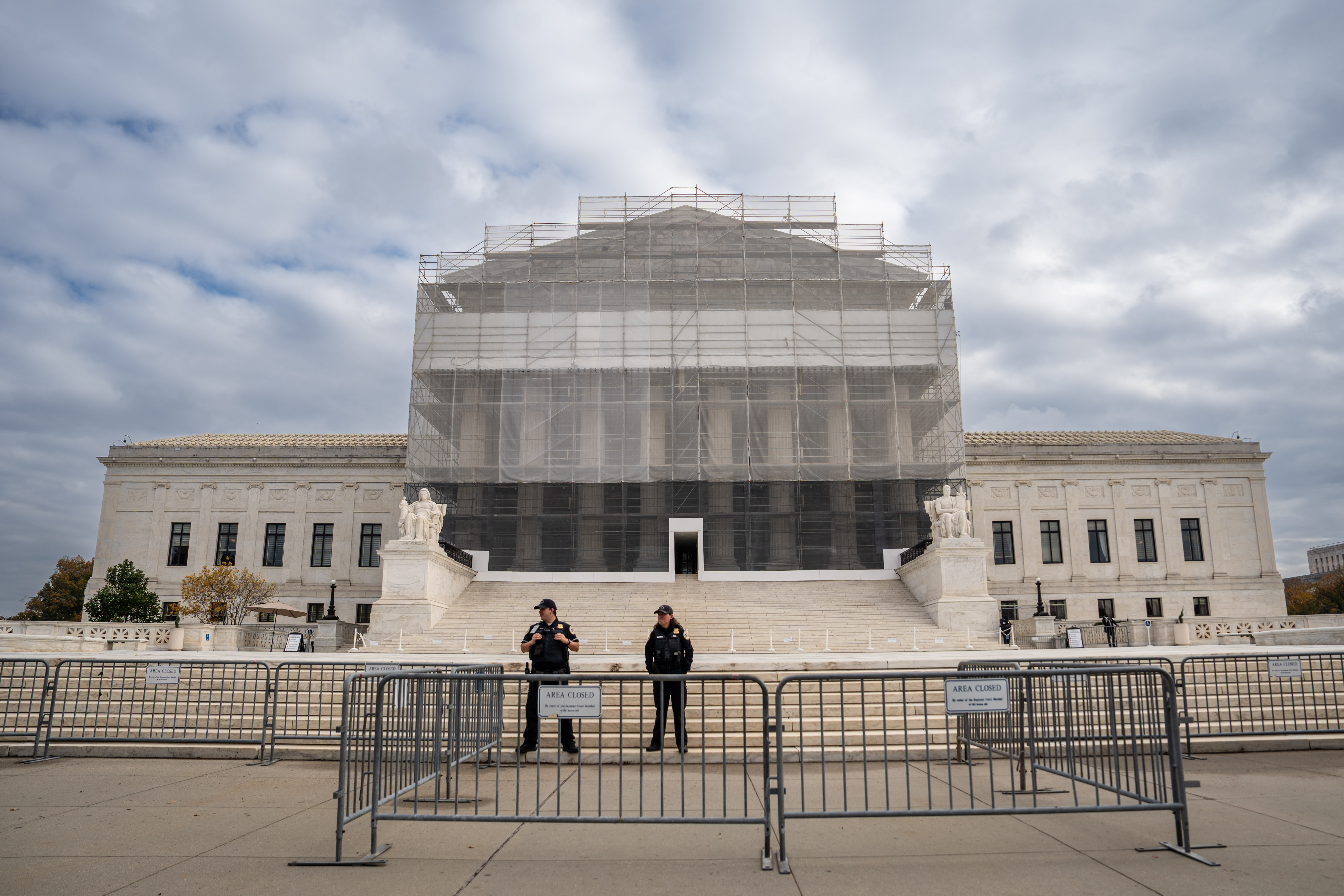

The Supreme Court on Nov. 6 allowed the Trump administration to enforce its policy requiring the sex designation on a U.S. passport to be consistent with the passport holder’s sex at birth.
The court’s decision in Trump v. Orr took the form of an unsigned order without comment.
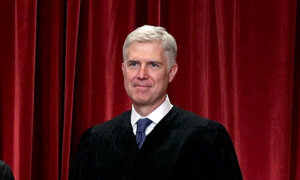
Justices Ketanji Brown Jackson, Elena Kagan, and Sonia Sotomayor dissented from the new ruling.
“Displaying passport holders’ sex at birth no more offends equal protection principles than displaying their country of birth—in both cases, the government is merely attesting to a historical fact without subjecting anyone to differential treatment,” the court’s order states.
The order temporarily stays a June 17 order by the U.S. District Court in Massachusetts, which is now under appeal in the U.S. Court of Appeals for the First Circuit.
The Trump administration filed an emergency application with the Supreme Court on Sept. 19, asking it to reinstate its policy that prevents individuals from opting for sex markers on their passports that do not match their birth sexes.
The district court injunction blocking the policy “has no basis in law or logic,” U.S. Solicitor General D. John Sauer said in the application.
Private citizens may not compel the government “to use inaccurate sex designations on identification documents that fail to reflect the person’s biological sex—especially not on identification documents that are government property and an exercise of the President’s constitutional and statutory power to communicate with foreign governments.”
The injunction harms the government by forcing it “to speak to foreign governments in contravention of both the President’s foreign policy and scientific reality,” Sauer said.
A policy does not discriminate on the basis of sex if it applies “equally to each sex without treating any member of one sex worse than a similarly situated member of the other.”
The passport policy applies equally to everyone by “defining sex for everyone in terms of biology rather than self-identification,” Sauer said.
The respondents—represented by the American Civil Liberties Union and other activist groups—had argued that the policy was unconstitutional and that forcing someone to use a passport that differs from his or her self-identified sex could expose him or her to psychological harm.
An individual might be physically harmed as well, they said, if that person visited a country where transgenderism was frowned upon, and his or her appearance did not match his or her passport’s sex marker.
Judge Julia Kobick of the U.S. District Court for the District of Massachusetts ruled against the government and blocked President Donald Trump’s executive order in April, but only as pertaining to the respondents involved in the case.
In June, she expanded the block nationwide. The First Circuit upheld that block on Sept. 4.
Dissenting Opinion
Jackson wrote a dissenting opinion, which Kagan and Sotomayor joined.
After the federal government sought an emergency stay of a federal district court’s preliminary injunction blocking a policy, this court “misunderstands the assignment,” Jackson said.
Over the past 33 years and six presidents, “transgender Americans have been able to obtain U.S. passports with sex markers that match their gender identity.”
The justice said from 1992 to 2010, applicants who wanted passports with sex markers that were “different from the sex assigned to them at birth” had to provide evidence of “surgical reassignment.”
In 2010, the U.S. Department of State began allowing applicants to file a doctor’s certification stating “they had undergone clinical treatment for gender transition.” By 2021, the department was allowing applicants to choose sex markers consistent with their gender identities without any additional requirements.
According to federal regulations, a passport is supposed to “attest to the identity and nationality of the bearer,” Jackson said.
The State Department’s sex marker policies, she said, have long demonstrated that “what is important for identification purposes is the bearer’s gender identity today.”
Stacy Robinson contributed to this report.