
WASHINGTON—At precisely 3:38 p.m. ET on Feb. 27, President Donald Trump was traveling to Texas on Air Force One when he gave the order for American forces to strike Iran.
“Operation Epic Fury is approved. No aborts. Good luck,” Trump told Secretary of War Pete Hegseth.
The directive was made after months of escalating tensions with Tehran over its nuclear ambitions and stands as one of the most consequential decisions of Trump’s presidency, with the potential to reshape the Middle East.
Nearly 10 hours later, American and Israeli forces launched a coordinated attack, sending more than 100 aircraft into the sky in a “single, synchronized wave,” Joint Chiefs of Staff Chair Gen. Dan Caine told reporters on March 2.
Supreme Leader Ayatollah Ali Khamenei, who had led Iran since 1989, was among those killed in the early hours of the operation. At the time, Khamenei was meeting with his war cabinet inside a secure compound in central Tehran.
Trump later said the Iranian top leaders had convened in broad daylight because they were certain no strike would come at that hour. They were wrong.
In interviews with several media outlets, Trump expressed surprise by the pace of the operation, saying the campaign was “ahead of schedule.” Initially, he had expected that eliminating Iran’s top leadership could take up to four weeks.
The U.S.–Israeli military campaign took out 49 senior leaders of the regime on the first day. Tehran is now rushing to fill the empty positions, Trump said.
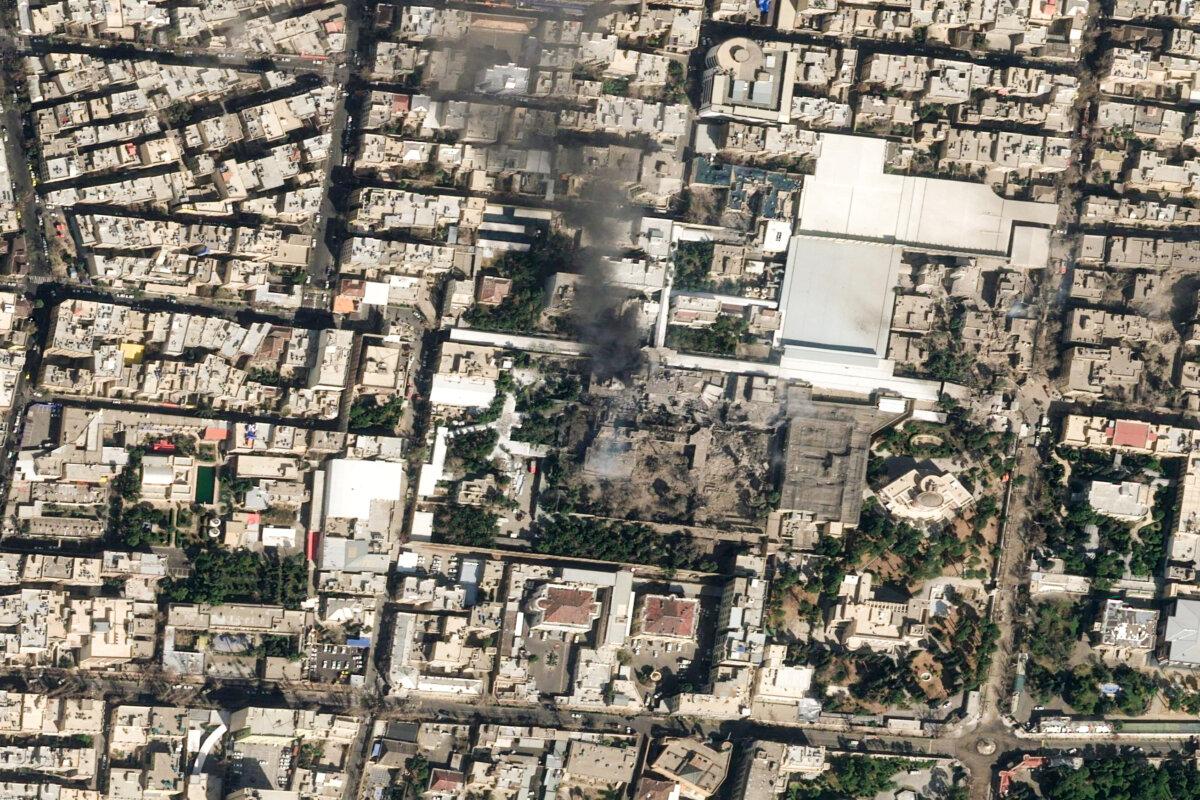
A satellite image shows black smoke rising and heavy damage at Iranian Supreme Leader Ayatollah Ali Khamenei's compound, following strikes by the United States and Israel, in Tehran, Iran, on Feb. 28, 2026. (Pleiades Neo (c) Airbus DS 2026/Handout via REUTERS)
While the U.S. president has shown confidence in the operation, criticism at home has grown. Not only have Democrats spoken out but some prominent people from Trump’s own MAGA base have also criticized U.S. involvement in the Middle East.
Many quiet voices, however, support the military operation against Iran, according to Joel Rubin, a Middle East expert and former State Department official under President Barack Obama.
“In many ways, Iran has been an adversary of the United States for over four decades. And so the question now is: What happens on the ground?” Rubin told The Epoch Times.
“What takes place on the ground will determine how people view this operation.”
Growing Uncertainty Inside Iran
Khamenei led Iran for nearly 36 years, becoming the longest-serving supreme leader in the country’s history. He had absolute and unchallenged power over all state matters, including appointing key officials.
Now, uncertainty reigns inside Iran. With much of its senior military and political leadership eliminated, a three-man council was formed to temporarily lead the government.
Many Americans are concerned about how the political environment will change after the war and whether Iranians will be able to assume control of their government.
Trump indicated there is no need for U.S. troops to be on the ground. In recent messages, he told the Iranian people that their future is in their own hands.
“I made a promise to you, and I fulfilled that promise. The rest will be up to you, but we’ll be there to help,” Trump said in a video message on March 1.
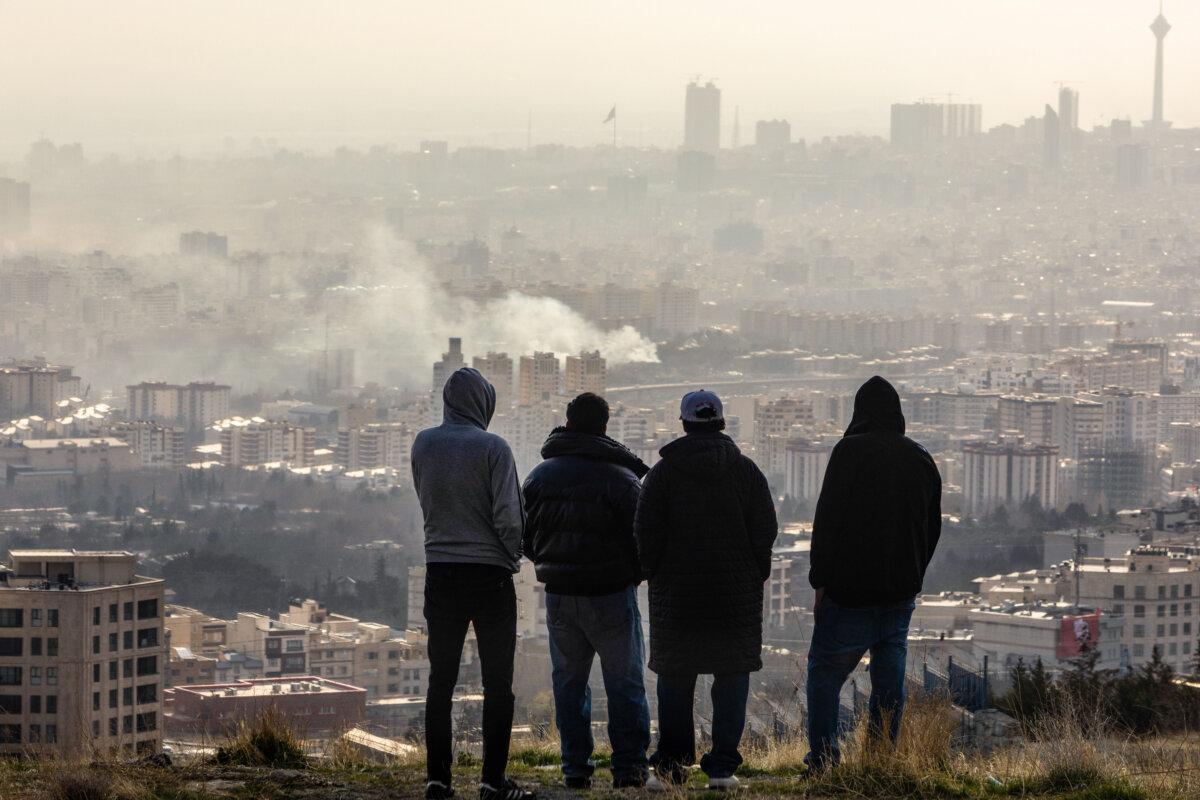
Men watch from a hillside as a plume of smoke rises after an explosion in Tehran, Iran, on March 2, 2026. (Majid Saeedi/Getty Images)
According to Trump, the worst-case scenario would be removing the current regime only to have someone equally bad take power.
“We don’t want that to happen,” Trump said during a meeting with German Chancellor Freidrich Merz in the Oval Office at the White House on March 3.
Trump added that many political figures once considered potential successors are now dead.
“Now we have another group. They may be dead also based on reports,” he said. “So, I guess you have a third wave coming in pretty soon.”
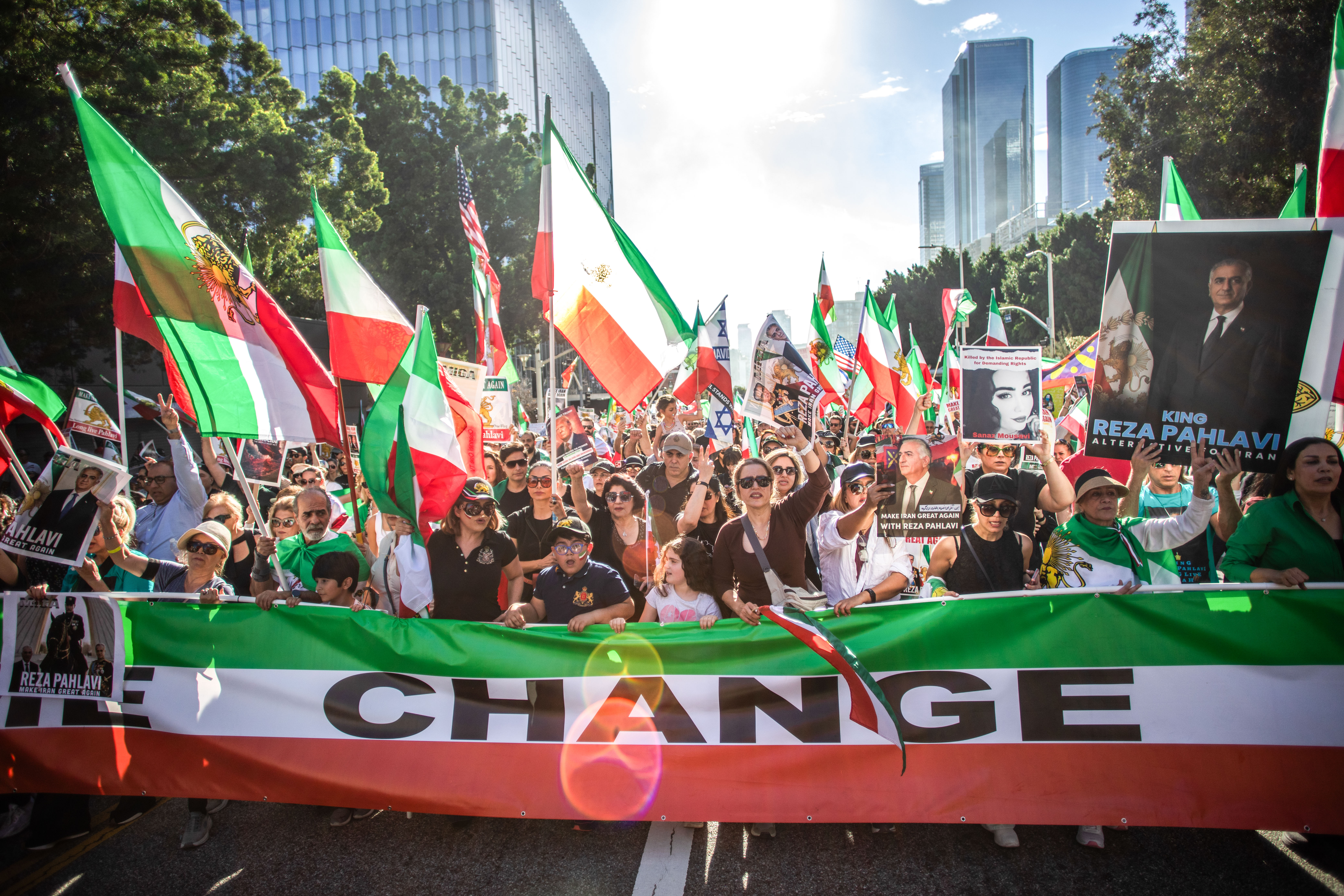
Meanwhile, some Iranian Americans are urging Washington to consider supporting Reza Pahlavi, the eldest son of Iran’s last shah, as a potential transitional figure who could guide the country toward democratic elections.
Trump, however, has expressed caution about Pahlavi.
“It would seem to me that somebody from within maybe would be more appropriate,” he told reporters on March 3. “We'll see what happens. But first we have to finish off the military.”
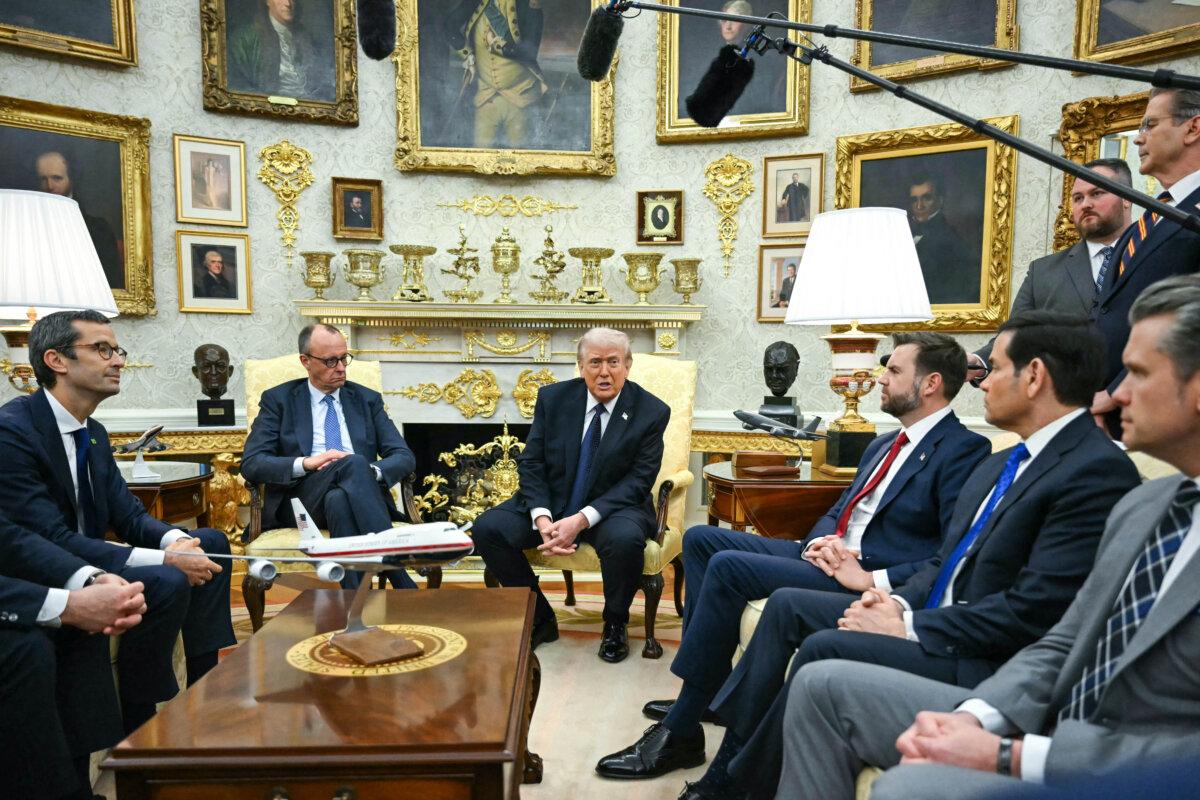
US President Donald Trump speaks during a meeting with German Chancellor Friedrich Merz in the Oval Office of the White House on March 3, 2026. (ANDREW CABALLERO-REYNOLDS / AFP via Getty Images)
According to Rubin, if the Islamic Republic is weakened, there will be opportunities for more moderate and pragmatic leaders to emerge in the country.
How Might the Region Transform?
Some observers believe that the U.S.–Israeli strikes could dramatically change the Middle East.
Michael Walsh, a foreign policy expert, said that after the Oct. 7, 2023, Hamas attacks on Israel, Iran’s regional proxy network, especially Hamas and Hezbollah, has weakened significantly and become less effective as a deterrent. For years, Iran relied on these groups to discourage U.S. or Israeli military strikes by threatening regional instability.
Iran has shifted its strategy, strengthening its own deterrent capabilities in recent months, Walsh noted, particularly its ballistic missile program, and seeking partnerships with countries like Russia, China, and North Korea.
Although the proxy groups are still active, their future is uncertain, he told The Epoch Times.
“If the regime in Iran does fall, then they’ve lost their key state enabler,” he said.
Dismantling Tehran’s leadership and weakening its proxy network could reshape the region and pave the way for greater stability, according to Bijan Kian, a former U.S. official who served under President George W. Bush and Obama.
“We’re going towards a completely different Middle East,” Kian, an Iranian American, told The Epoch Times.
“The biggest menace in the Middle East today is the Islamic Republic in Iran. Removing that structure is going to create a peaceful and prosperous Middle East,” he said, adding that more countries are likely to join the Abraham Accords with Israel.
The U.S.–Israeli campaign eliminated a significant portion of Iran’s national security leadership, disrupting entire chains of command.
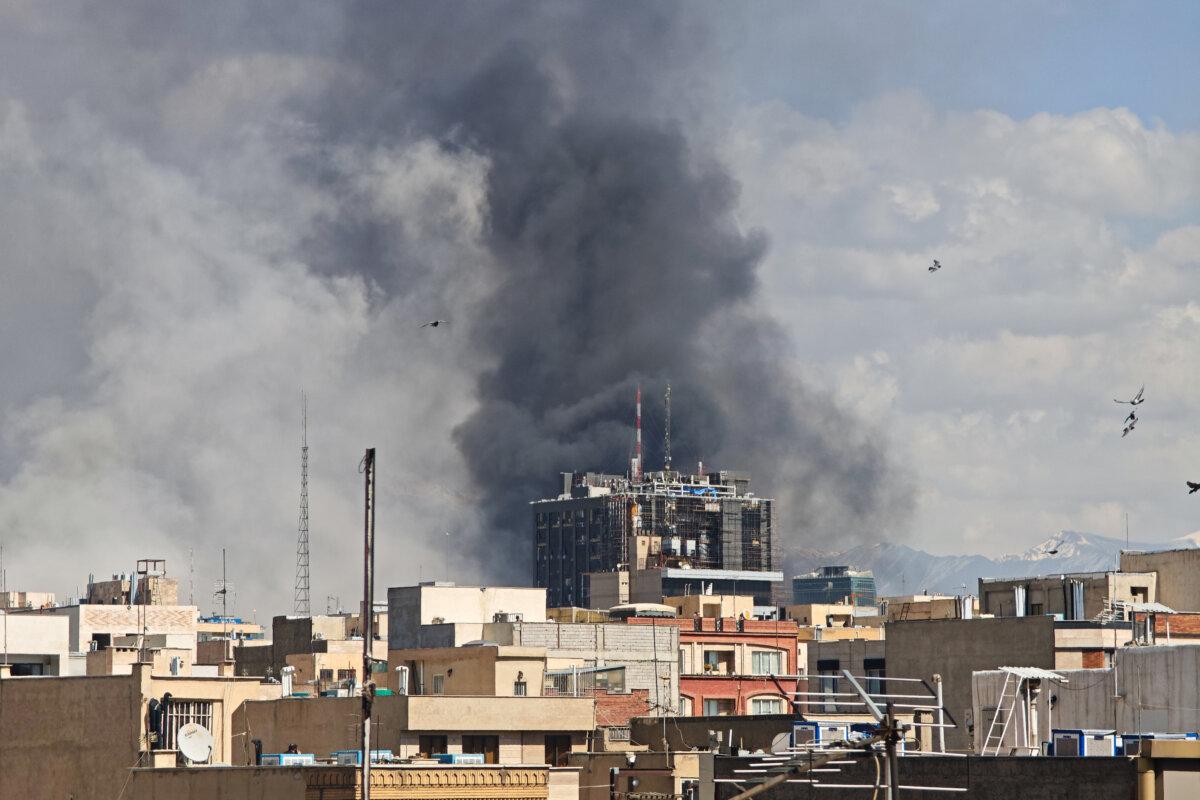
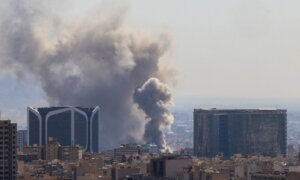
Plumes of smoke rise over the skyline following explosions in Tehran, Iran, on March 1, 2026. (Majid Saeedi/Getty Images)
According to Alex Vatanka, senior fellow at the Middle East Institute, the regime in Iran is fighting for its survival without a clear strategy and leadership.
Iranian-led attacks on U.S. bases in the region, Israel, and the Gulf states are “designed to convey endurance,” Vatanka wrote in a recent report.
“Iran believes that imposing sustained costs on its adversaries might force the U.S. and Israel to reconsider the pace or scope of their operations,” he said. “It is a gamble born of necessity.”
From Ally to Enemy
Following the 1979 revolution, Iran shifted from a secular monarchy under Shah Mohammad Reza Pahlavi to an Islamic Republic. This transition introduced broad social restrictions, such as mandatory hijab laws for women and strict religious codes. It also changed Iran’s foreign policy toward the United States and Israel.
Iranian militants seized the U.S. Embassy in 1979 and detained 52 Americans as hostages, which led to a crisis that lasted 444 days. The United States ended diplomatic relations with the country and imposed heavy economic sanctions.
“They’re just evil,” Trump said of the regime during his meeting with Merz. “It’s just a very evil ideology, and nobody’s really seen anything like it.”
Trump denied claims that he was forced to launch a strike on Iran because of Israel’s pressure.
“We were having negotiations with these lunatics, and it was my opinion that they were going to attack first,” Trump said, referring to talks with Iranian officials on the country’s nuclear program.
“If we didn’t do it, they were going to attack first. I felt strongly about that,” Trump said.
Trump’s decision to launch an operation against Iran has struck many observers as contradictory, especially given the administration’s recently released national security strategy.
According to the new document, the Trump administration signaled a strategic pivot toward the Western Hemisphere and away from the previous focus on the Middle East.
Iran, however, is an anomaly, according to Walsh.
“Making decisions as a leader sometimes means making decisions that are unpopular. And he’s willing to bear the political cost of making that unpopular decision,” Walsh said.
“He legitimately believes that Iran poses a threat to the United States.”