On May 16, 1868, the Senate chamber in the Capitol Building was packed.
Members of Congress, government officials, and guests who could secure invitations or tickets had gathered to witness the verdict in the trial of President Andrew Johnson. Impeached by the House, he faced several charges, the key one being his violation of the 1867 Tenure of Office Act, which declared that the president could not remove a cabinet officer without the Senate’s consent. Regarding the law as unconstitutional—the Senate had passed it over his veto—Johnson basically fired Secretary of War Edwin Stanton, who supported the Radical Republicans in Congress rather than the president.
The Radicals wanted harsher conditions imposed on former Confederate states; Johnson and his supporters were following the more lenient course advocated by Abraham Lincoln before his assassination.
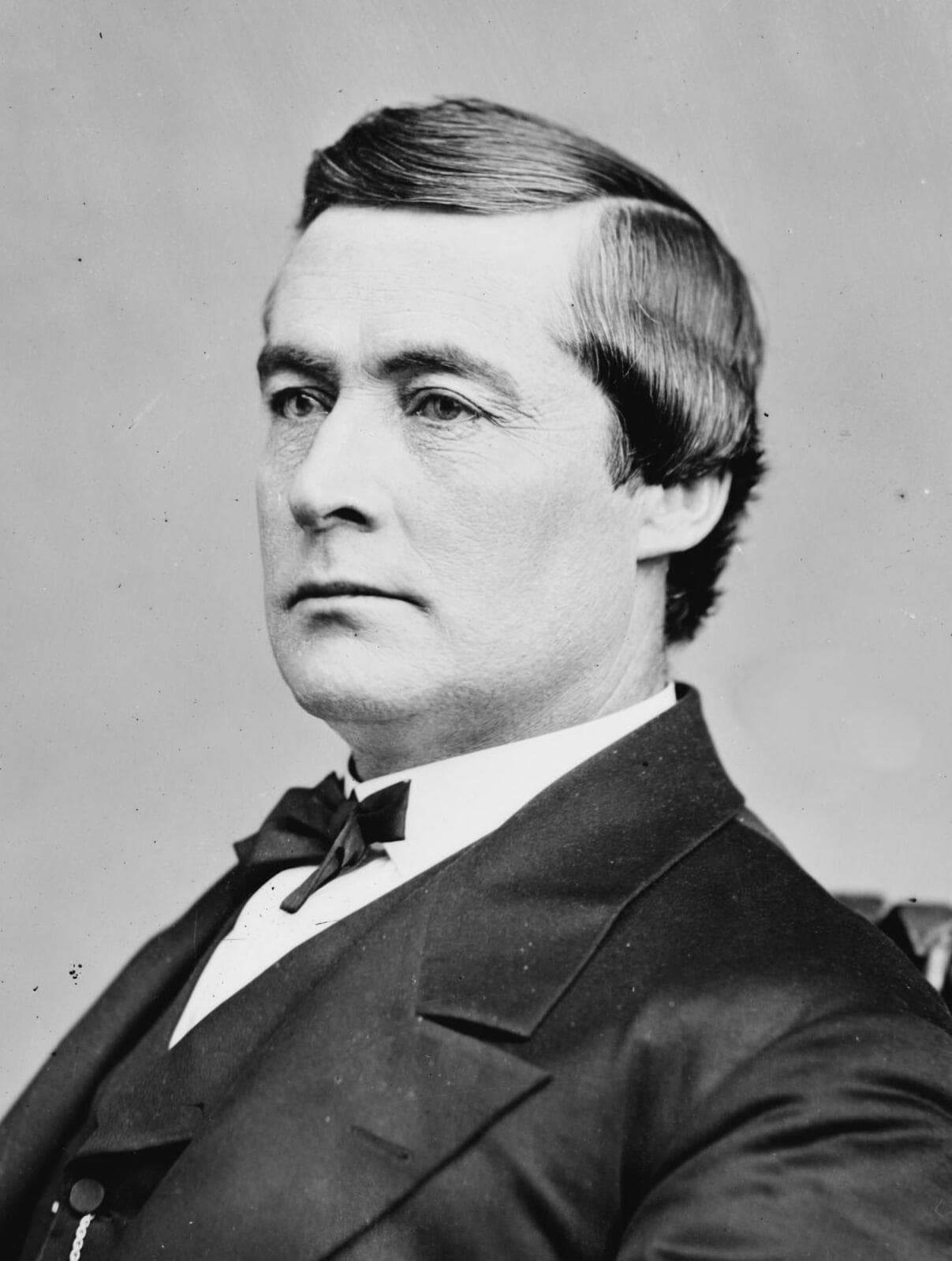
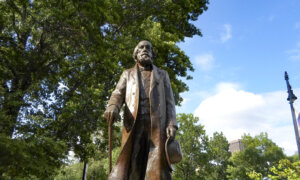
Sen. Edmund G. Ross of Kansas cast a decisive vote against convicting President Andrew Johnson in 1868. (Public Domain)
Now the Radicals saw the opportunity to extract this thorn in their side. A guilty vote would remove the president from office and give the Radicals the power to follow their agenda unimpeded. A two-thirds majority of the Senate would secure that guilty verdict. As the trial got underway, it soon became clear that only one senator would now determine the guilt or innocence of this highly controversial president.
That senator was Edmund G. Ross (1826–1907).
Abolitionist and Soldier
On July 11, 1866, Kansas Senator Jim Lane died from wounds received by his own hand 10 days earlier, accused of financial corruption and viciously assailed by many voters who despised Lane’s support for the president’s programs. Governor Samuel Crawford appointed Ross to fill the seat, and the state legislature then voted to have him complete the rest of Lane’s term.
On July 11, 1866, Kansas Senator Jim Lane died from wounds received by his own hand ten days earlier, accused of financial corruption and viciously assailed by many voters who despised Lane’s support for the president’s programs.
Ross brought an outstanding set of credentials to Washington. Before the Civil War, he had taken a bold abolitionist stance, helping rescue a fugitive slave in Milwaukee and then heading for Kansas, where he fought slavery both by his journalism and by joining in the battles against the proslavery forces invading the state.
He next helped found two newspapers, became active in Republican politics, and helped citizens adopt the state’s new constitution. When war between North and South erupted in 1861, he raised a company of volunteers and the governor soon promoted him to serve as a major in command of a regiment. He fought alongside his men until the war’s end, became the editor of the Kansas Tribune in Lawrence, and was then appointed to the Senate after Lane’s death.
This turn of events delighted Radical Republicans. Surely here was a man who would vote along party lines and stand with them against Johnson’s reconciliation policies.
Then came the Johnson impeachment trial, and Ross entered into a trial all his own.
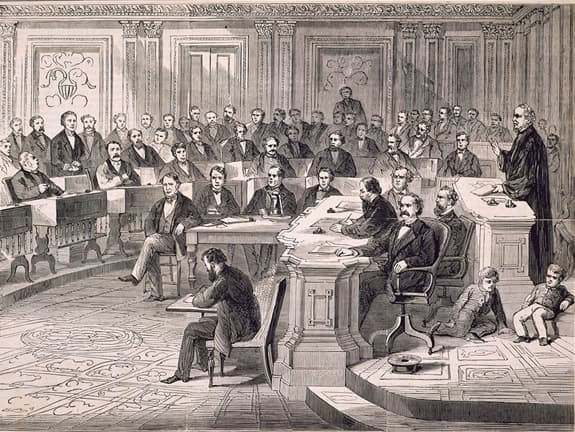
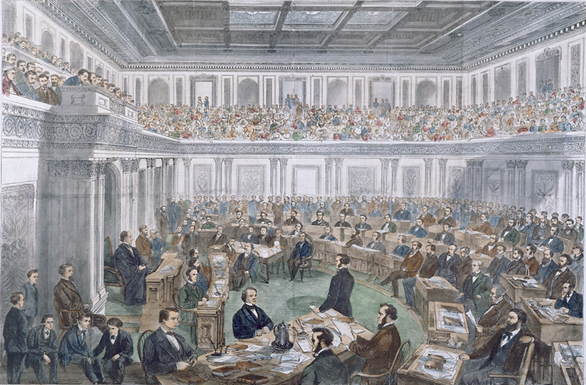
An illustration from Frank Leslie’s Illustrated Newspaper depicts Sen. Edmund G. Ross casting his "Not Guilty" vote during the impeachment trial of President Andrew Johnson. (Public Domain)
Silence and Solitude
When impeachment brought Johnson’s case before the Senate, Ross made it clear that he intended to judge the president only after hearing the evidence. To Rhode Island Sen. Sprague, he said, “So far as I am concerned, though a Republican and opposed to Mr. Johnson and his policy, he shall have as fair a trial as an accused man ever had on this earth.”
That promise, and his refusal to follow those Radicals who declared the president guilty before and during the trial, created a storm of speculation and animosity that barreled directly into Ross. As they did with the other six Republican dissidents, the Radicals followed him to see with whom he met or spoke, and his conversations became fodder for gossip and discussion.
Day by day the pressure intensified. Unlike the others who were bucking the party, Ross was a relative newcomer to D.C. politics. He lacked collegial ties in Congress, and many newspapers urged him to convict the president or face dire consequences. From Kansas on May 15, the day before the Senate vote, came this telegram to Ross: “Kansas has heard the evidence and demands the conviction of the President. (signed) D.R. Anthony and 1,000 Others.”
It’s difficult to imagine Ross sleeping well that night. The following morning he dispatched a telegram back to “D.R. Anthony and 1,000 Others” in which he stated, “I do not recognize your right to demand that I vote either for or against conviction. I have taken an oath to do impartial justice according to the Constitution and laws, and trust that I shall have the courage to vote according to the dictates of my judgment and for the highest good of the country.”
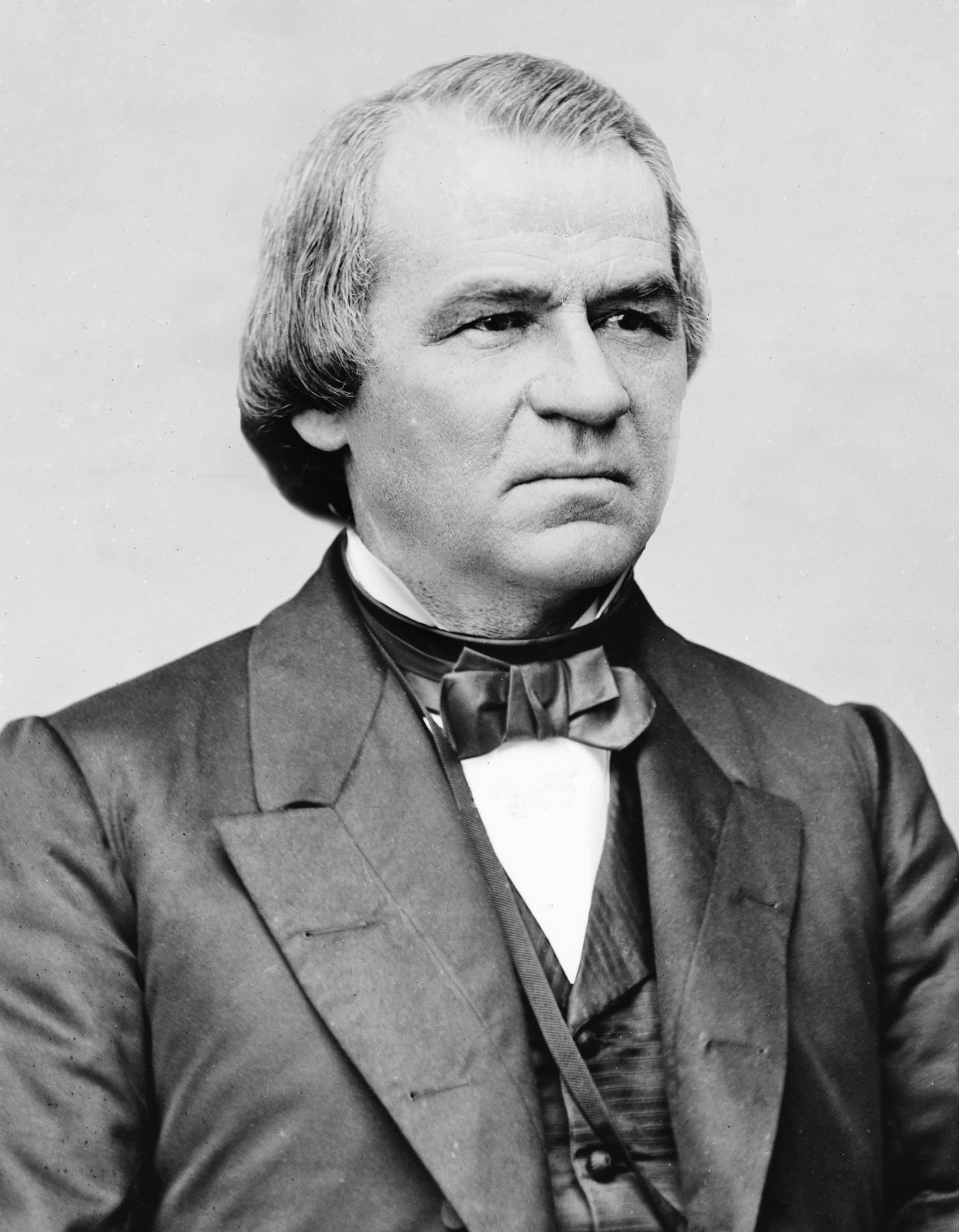
President Andrew Johnson, whose 1868 impeachment trial over the Tenure of Office Act ended in acquittal by a single vote. (Public Domain)
‘Not Guilty’
Now the moment for testing that courage had arrived. The chief justice of the Supreme Court, who had presided over the trial, called the chamber to order, reminded “the citizens and strangers in the galleries that absolute silence and perfect order are required,” and called on the senators one by one to deliver their verdicts. By the time the chief justice called on Ross, 24 had voted guilty. “Mr. Senator Ross, how say you?“ asked the chief justice. ”Is the respondent Andrew Johnson guilty or not guilty of a high misdemeanor as charged in this Article?”
Later, Ross recalled the stillness in that chamber when he rose to his feet: “Every fan was folded, not a foot moved, not the rustle of a garment, not a whisper was heard.” He recalled as well the faces of those around him: “Some with lips apart and bending forward in anxious expectancy, others with hand uplifted as if to ward off an apprehended blow ... and each peering with an intensity that was almost tragic upon the face of him who was about to cast the fateful vote.” And then there were his own feelings: “I almost literally looked down into my open grave. Friendships, position, fortune, everything that makes life desirable to an ambitious man were about to be swept away by the breath of my mouth, perhaps forever.”
“Not guilty,” Ross said. “When my answer was carried waveringly over the air” so that some senators called for a repetition, he answered again, this time loud and clear: “Not guilty.”
Personal Consequences
For Ross, Johnson’s political salvation meant immediate shame and disgrace. Just as he had foreseen, all that he valued and had worked so hard for was swept into the grave. He was known as the man who had set free a criminal president. He served out his term in Congress, but in his own words, most members of that body treated him like “a leper, with averted face and every indication of hatred and disgust.”
From Kansas the reaction was harsh. A Kansas Supreme Court justice telegraphed Ross what many others were doubtless thinking: “The rope with which Judas Iscariot hanged himself is lost, but Jim Lane’s pistol is at your service.” A Kansas newspaper editorialized:
“This act was done deliberately, because the traitor, like Benedict Arnold, loved money better than he did principle, friends, honor and his country, all combined. Poor, pitiful, shriveled wretch, with a soul so small that a little pelf would outweigh all things else that dignify or ennoble manhood.” The New York Tribune labeled Ross a “miserable poltroon and traitor.”
Ross returned to Kansas, resumed his journalism, and moved to New Mexico in 1882, when it was still a territory. In 1885, Grover Cleveland appointed him governor of that territory, a post he held until 1889. He lived out the rest of his life in Albuquerque.
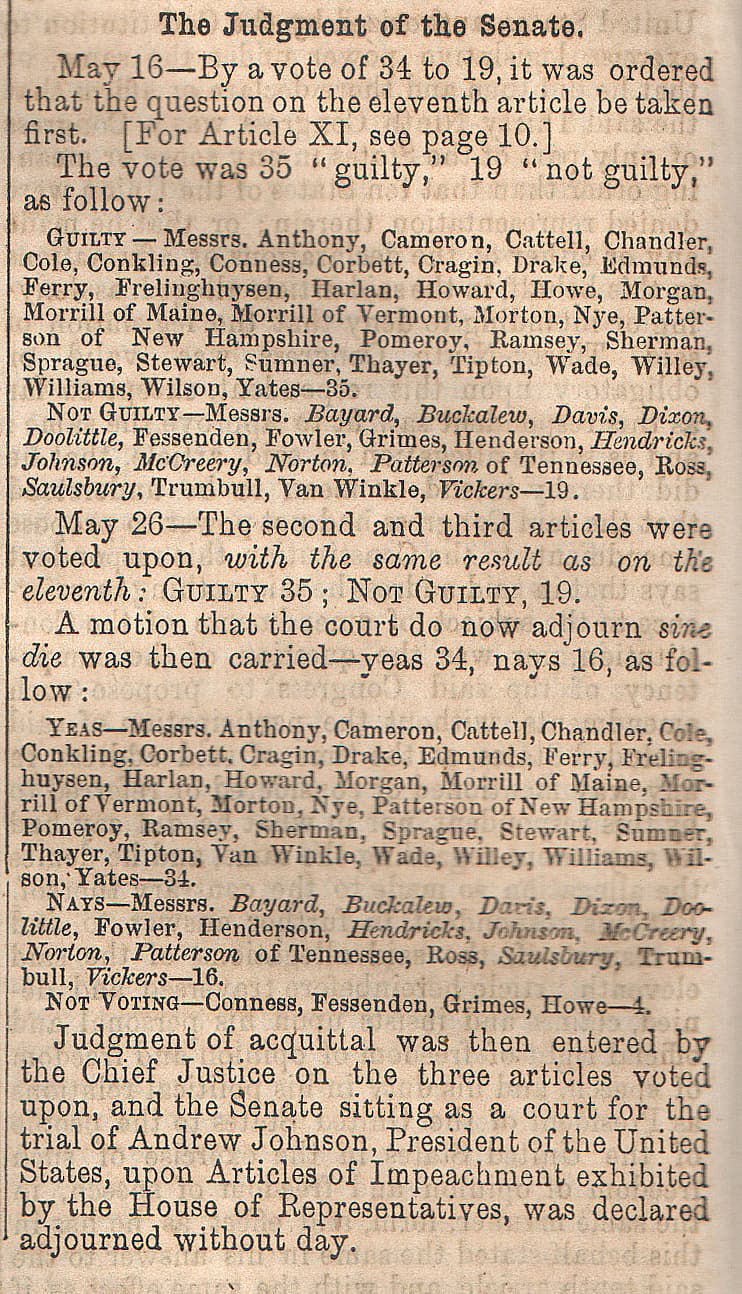
The U.S. Senate roll call of votes during the 1868 impeachment trial of President Andrew Johnson. (Public Domain)
Complications
Did Ross accept bribes in exchange for his vote, as that Kansas newspaper claimed? In his article “Edmund G. Ross Was a Profile in Impeachment Corruption, not Courage,” historian David Stewart contends that yes, Ross took gifts of money and patronage from Johnson’s supporters for his “no” vote. Given that such corruption was not then at all uncommon in the corridors of government, this is a real possibility.
In the 1959 article “When Congress Tried to Rule,” another historian, Milton Lomask, makes the case that the impeachment trial wasn’t so much about Johnson’s policies—the Senate had already demonstrated its ability to override his veto power—but was an attempt, even a sort of conspiracy, to cripple the presidency and increase the power of the legislative branch. Ross himself would later write of these consequences:
“The office of President would be degraded, cease to be a coordinate branch of the government, and ever after subordinated to the legislative will. It would practically have revolutionized our splendid political fabric into a partisan Congressional autocracy ... This government had never faced so insidious a danger.”
Moreover, the papers which had once savaged Ross later made him a hero for this very reason: “‘By the firmness and courage of Senator Ross,’ it was said, ‘the country was saved from calamity greater than war, while it consigned him to a political martyrdom, the most cruel in our history ... Ross was the victim of a wild flame of intolerance which swept everything before it.’”
It should be noted, too, that in 1926 the Supreme Court declared the 1867 Tenure of Office Act unconstitutional, thereby vindicating Johnson and, by extension, Ross.
What arts and culture topics would you like us to cover? Please email ideas or feedback to features@epochtimes.nyc.