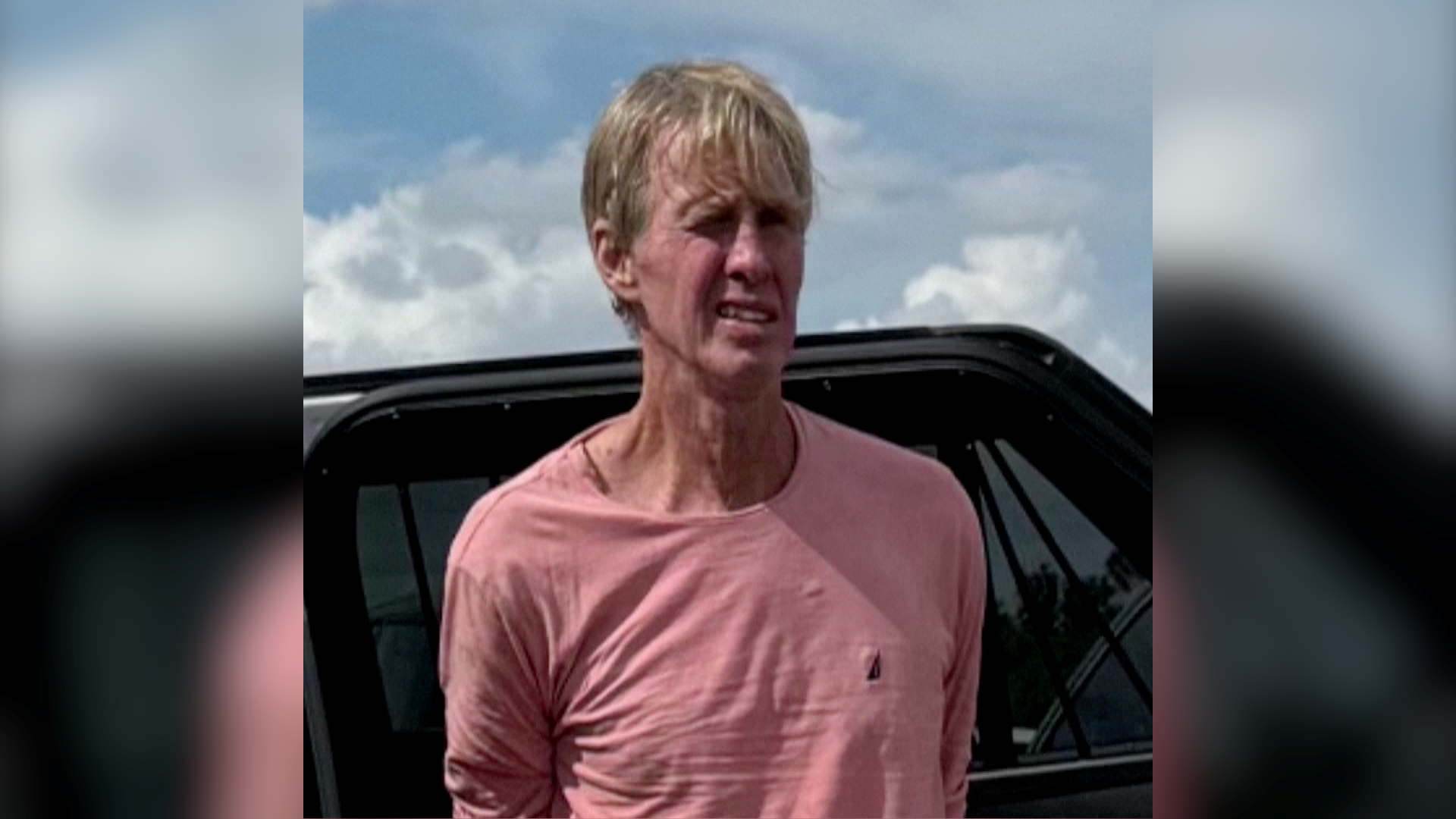

FORT PIERCE, Fla.—A federal judge on Feb. 4 sentenced Ryan Routh to life in prison for attempting in 2024 to assassinate President Donald Trump, then a presidential candidate.
Routh was also sentenced to seven years behind bars on a gun charge and received a $500 fine.
During the sentencing hearing, prosecutors sought life imprisonment for his assassination plot, while the defense mounted broad but ultimately unsuccessful objections.
Defense attorney Martin Roth opened by making a blanket objection to all facts in the pre-sentence investigation report, reiterating Routh’s not-guilty plea and disputing any finding that he intended to commit murder. Judge Aileen Cannon of the U.S. District Court for the Southern District of Florida pressed Roth on whether he would offer evidence to support the objection. When he said “no,” prosecutors argued that the report contains facts, not allegations. Cannon overruled the objection.
Roth next argued that the federal terrorism statute did not apply, claiming that it does not cover former presidents or major presidential candidates. Cannon read the statute aloud and repeatedly asked Roth to identify a legal gap.
Prosecutors countered that the statute is not exhaustive and clearly covers conduct related to protected individuals, including assault and interference with protective duties. They emphasized that assault under the law includes impeding agents in the performance of their duties. Cannon agreed and ruled that the charges qualified as terrorism offenses, citing overwhelming evidence such as text messages, months of planning, and weapons acquisition.
Cannon stated that removing the terrorism designation would require ignoring statutory evidence.
Prosecutor John Shipley called for a life sentence, arguing that Routh had been prepared to kill or assault anyone who interfered with his plan, had come close to carrying out the assassination, and showed no remorse.
He said that in the assassination attempt, Routh had had a round chambered in his gun with the safety off. Shipley described the plot as carefully planned over months and said Routh had intended to alter American democracy by killing Trump.
Shipley also cited additional criminal conduct tied to the plot, plans to flee to Mexico, Routh’s extensive criminal history, and the psychological harm inflicted on a Secret Service agent. He argued that a life sentence was necessary for deterrence and public safety.
The defense responded that Routh never fired a shot and claimed that he chose not to act when confronted by an agent. Roth highlighted what he described as Routh’s humanitarian efforts and argued that the court was seeing only one side of him, attributing much of his behavior to mental health struggles. Cannon rejected this characterization, pointing to Routh’s long history of criminal conduct and disregard for the law.
While seated, as he was not allowed to approach the lectern, Routh addressed the court in a stream of consciousness, touching on global suffering, Ukraine, the Gaza war, and human morality. Cannon repeatedly interrupted him, limited his remarks, and instructed him to move on from impermissible arguments.
As he was led away, he turned toward the courtroom gallery and blew a kiss. It is unknown who the intended recipient was.
Routh targeted Trump on Sept. 15, 2024, while the then-Republican presidential nominee was golfing at Trump International Golf Club in West Palm Beach, Florida. The incident occurred just months after a separate assassination attempt against Trump at a campaign rally in Butler, Pennsylvania.
Trial evidence showed that Routh concealed himself outside the golf course perimeter, aiming an AK-style rifle through a hole in the fence. He was spotted by then-Secret Service Special Agent Robert Fercano, who was patrolling one hole ahead of Trump. At the time, Trump was golfing with longtime friend Steve Witkoff, now special envoy to the Middle East.
Fearing for his own safety and that of the former president, Fercano fired a shot at Routh, who fled the scene and drove away. Routh was arrested shortly afterward on a nearby highway.
In a statement, Attorney General Pam Bondi said the assassination attempt was an attack on America’s democracy.
“Ryan Routh’s heinous attempted assassination of President Trump was not only an attack on our President—it was a direct assault against our entire democratic system,” Bondi said.
Roth did not respond to a request for his reaction to the sentence by publication time.