

Causes of Joint Degeneration
The rise in joint problems after age 50 is largely driven by three factors, according to Tsai.
1. Declining Repair Capacity
As we age, the body’s ability to repair itself declines, making everyday wear and tear more likely to lead to degeneration and pain.
2. Loss of Muscle Mass
Research shows that muscle mass begins to decline by about 3 percent to 8 percent per decade starting around age 30, with an even faster drop after age 60.
3. Falling Estrogen Levels After Menopause
Estrogen has anti-inflammatory effects and helps maintain the elasticity and lubrication of joint cartilage. When estrogen levels decrease, joint degeneration may accelerate, increasing the risk of arthritis.
Movements That Help–and Harm–Joint Health
“The key to joint care is movement. The biggest concern with prolonged immobility is joint adhesions—but the quality of movement matters,” Tsai said.
Movements to Avoid
- High-Impact Activities: such as running and jumping.
- Movements Performed With Poor Posture: such as cleaning while squatting or kneeling for long periods.
- Repetitive, High-Load Activities: including climbing long flights of stairs or mopping for extended periods. If these tasks cannot be avoided due to work, it is advisable to use assistive tools or adjust one’s posture to reduce joint strain.
In daily life, activities such as climbing stairs, using squat toilets, and bending over to do household chores place considerable stress on the joints, Tsai said. Older adults and people with arthritis should limit these movements.
Exercises to Reduce the Risk of Falls
Tsai shared three simple at-home exercises that strengthen the core and improve joint stability, both of which are essential for lowering the risk of falls.
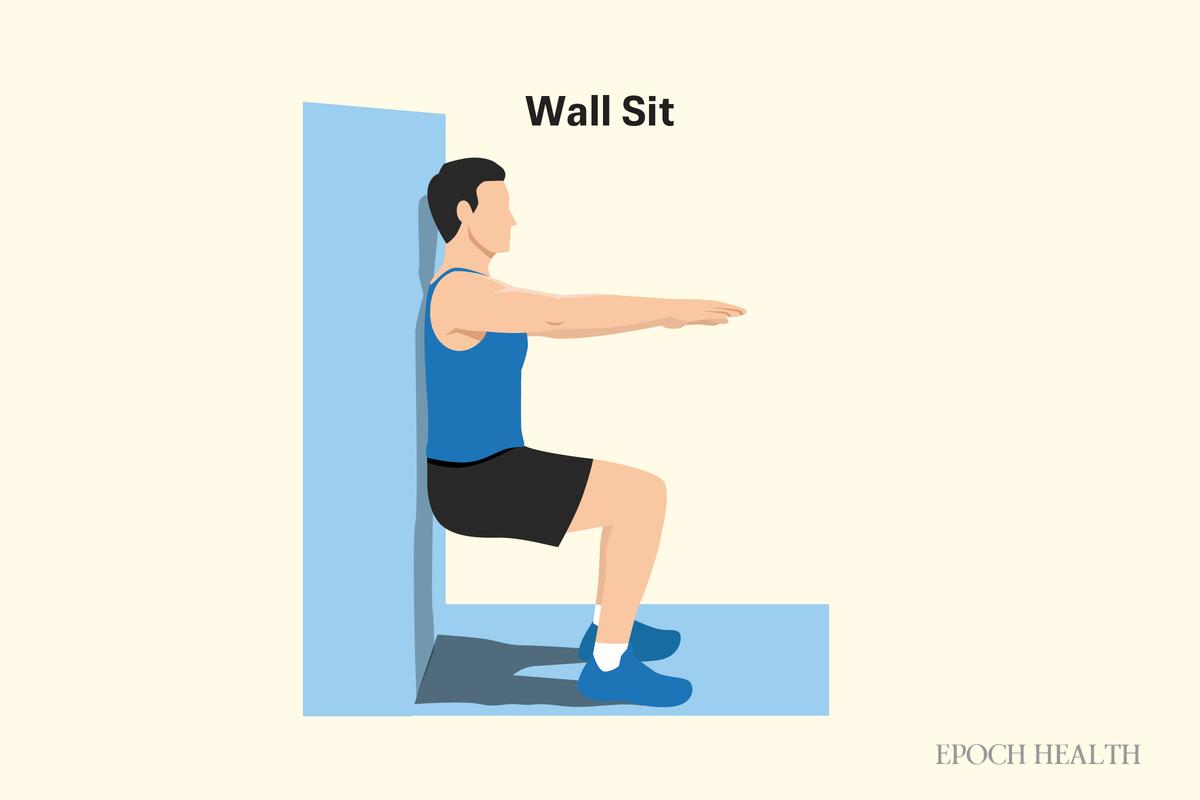
Exercise 1: Wall Sit
The wall sit exercise is safer than a full squat and helps strengthen the quadriceps, glutes, and lower back.
- Stand with your feet shoulder-width apart, about one step away from the wall.
- Slowly lower into a squat to roughly a 45-degree angle.
- Hold for five seconds, then rise slowly.
- Perform 10 repetitions per set, two to three sets per day.
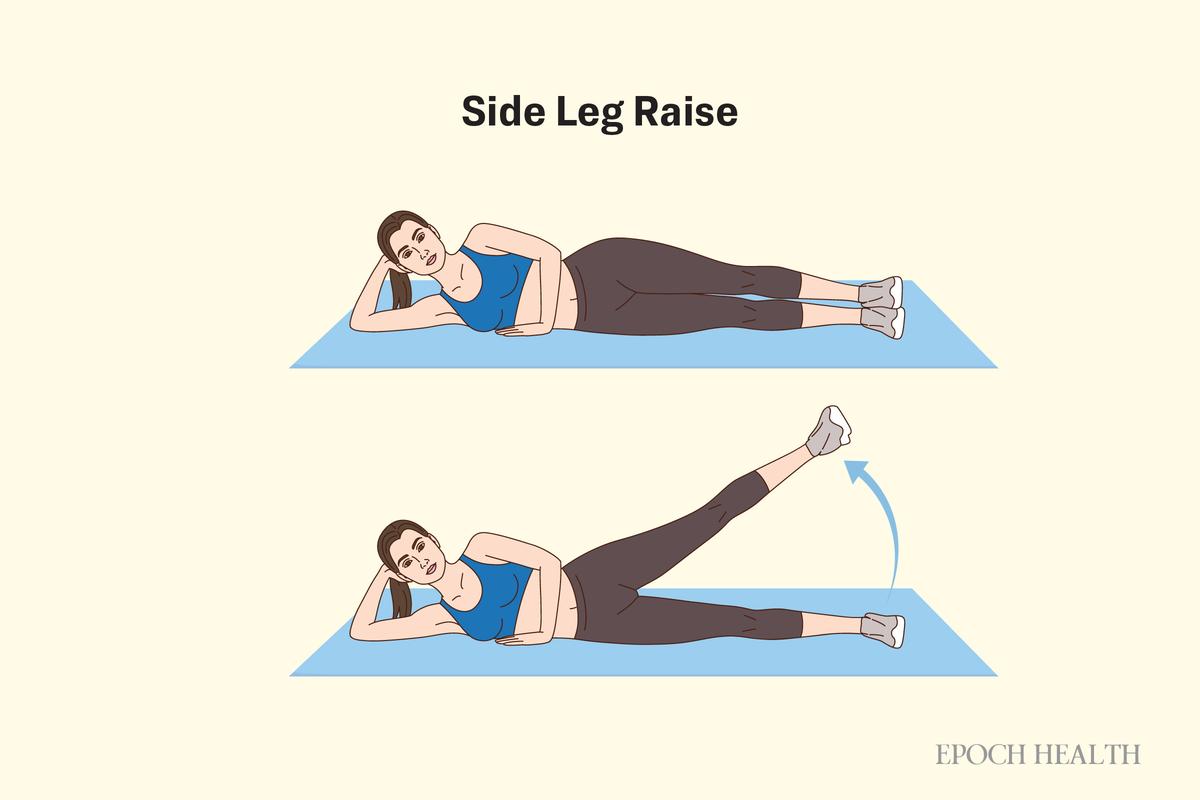
Exercise 2: Side Leg Raise
Side leg raises target the hip abductors, improving stability of the hip joint and pelvis.
- Lie on your side and slowly lift your upper leg to about a 30-degree angle.
- Hold for three to five seconds, then lower it slowly.
- Perform 10 repetitions on each side per set, two to three sets per day.
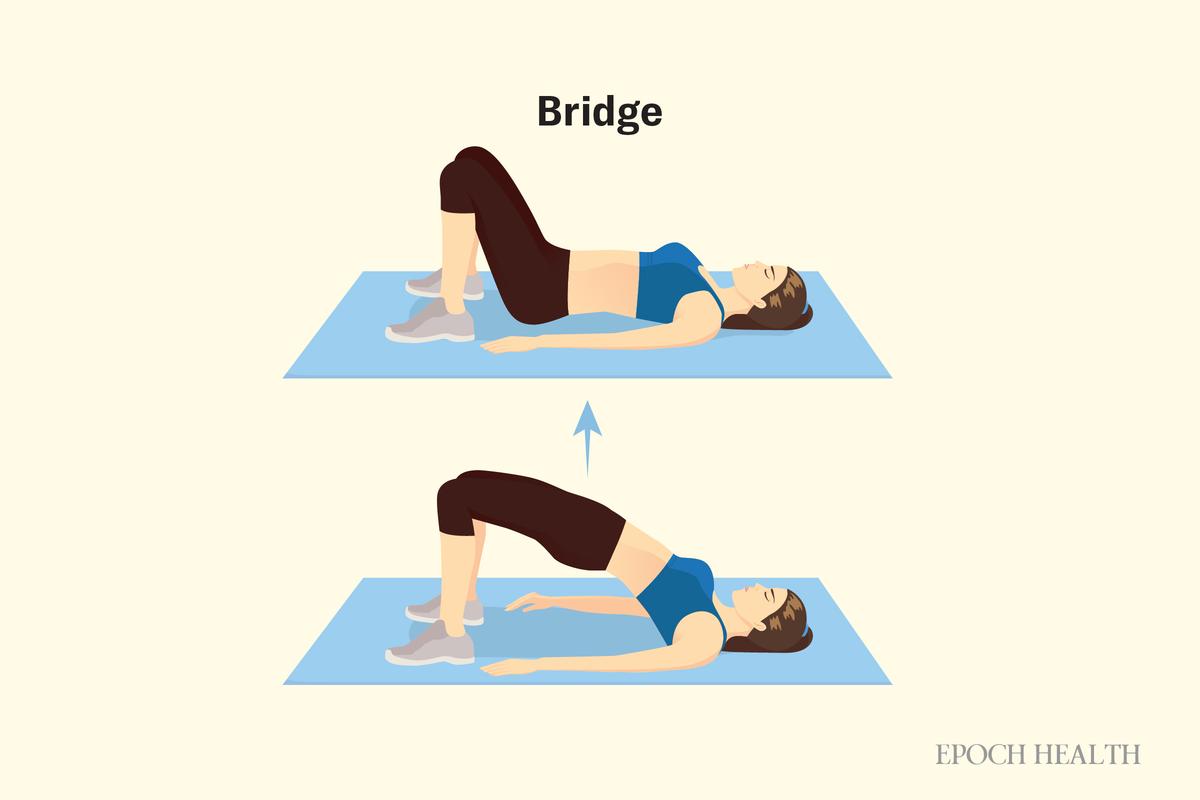
Exercise 3: Bridge
The bridge exercise strengthens the lower back, core, and glutes, which can help reduce lower back pain and protect the lumbar spine.
- Lie on your back with your knees bent and your feet flat on the floor.
- Tighten your abdominal and gluteal muscles, then slowly lift your hips until your body forms a straight line.
- Hold for five seconds, then lower slowly.
- Perform 10 repetitions per set, two to three sets per day.
When to Seek Medical Care for Joint Pain
Medical evaluation is recommended if joint pain persists for more than two weeks without improvement, becomes more frequent or severe, occurs even during complete rest or sleep, or is accompanied by leg weakness or reduced knee stability, Tsai said.
- Redness, Swelling, Warmth, and Pain in the Joints: These symptoms may indicate infectious arthritis.
- Radiating Numbness or Tingling: Numbness or tingling from the lower back down to the foot may suggest nerve compression.
- Fever or General Malaise
Summary
After the age of 50, maintaining proper posture and engaging in appropriate strength training are essential for improving joint stability and preserving mobility.