
WASHINGTON—Growing up in communist Albania, Elida Dakoli’s family worked hard to shield her from the worst of the persecution experienced by her relatives. Her father and grandfather were staunch opponents of the regime headed by Enver Hoxha, who seized power in the 1940s and held on until his death in 1985.
“Don’t ever mention your grandfather. Do not ever talk about the family’s history if you still want to see your parents,” her family warned her when she was around seven or eight years old.
Dakoli, who later became a renowned concert pianist, said her family lived under constant surveillance and government suspicion. Her paternal grandfather refused to turn over his property and income to the government.
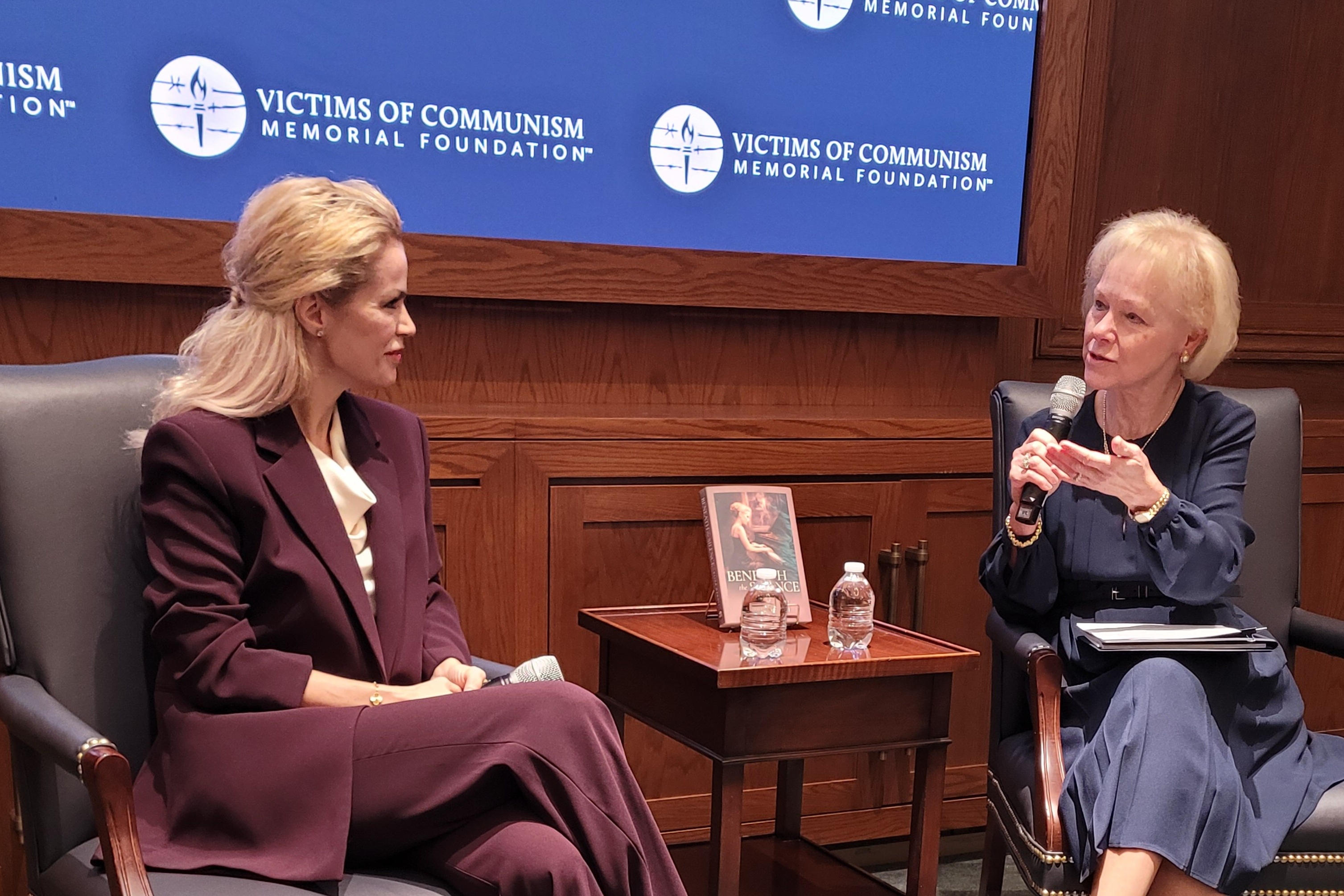
He died in a communist prison, she told former U.S. Ambassador to Estonia Aldona Wos during a Nov. 5 event at the Victims of Communism Museum in Washington.
Every time she visited her grandmother, she knocked on the door—the man who lived one apartment over would open it, look at her, and then quickly shut it in her face.
She asked her grandmother why the man never said “hi” to her.
“It’s okay. Just continue being pleasant, be yourself. But don’t worry about it,” her grandmother said.
“Little did I know that he was a spy placed there by the government,” she said. Dakoli has chronicled her life in a book, “Beneath the Silence: The Names a Regime Tried to Erase.”
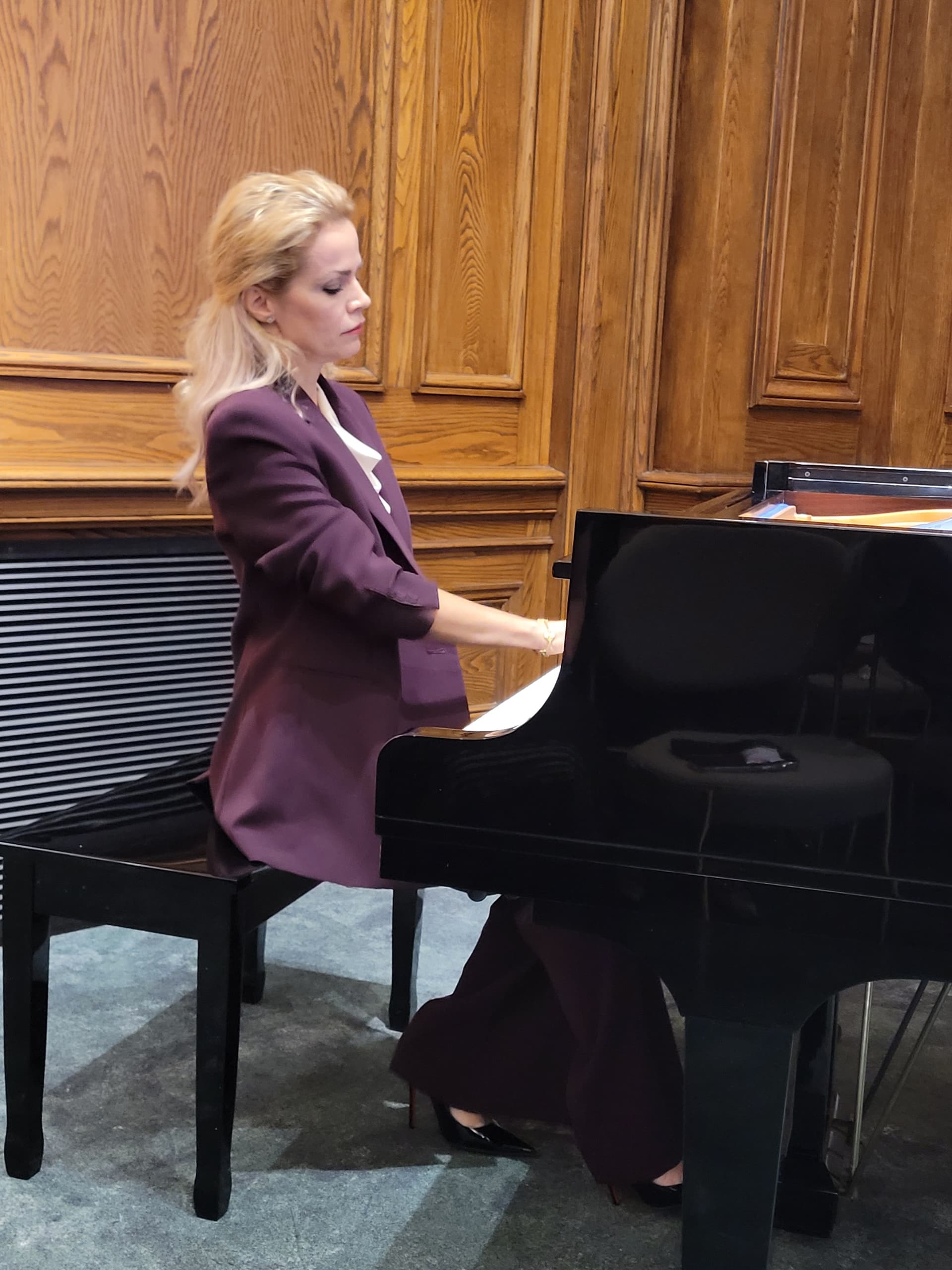
Albanian pianist Elida Dakoli performs during an event at the Victims of Communism Museum in Washington on Nov. 5, 2026. (Stacy Robinson/The Epoch Times)
Passing Every Obstacle
Dakoli showed an aptitude for music at a very early age, but life under communism forced her to leap hurdles to realize her potential.
She wanted very much to study the piano, she said, but in Albania the government chose the instrument, not the pupil. They gave her a violin in first grade.
“I’m sorry, it wasn’t for me, and I did not want to go to class and so on. … I guess I was pretty stubborn,” she said. Fortunately, one of her teachers took her aside and suggested she try piano lessons.
But under communism in Albania, private property was not allowed, and she had no instrument to practice with at home. Her mother had an idea: She used a strip of paper to draw a keyboard, and the little girl used that to study.
“It was the best thing that they did actually, because somehow I would practice the notes, and very often I'd imagine performing at some of the most amazing stages in Albania,” she said.
“My hands would hurt,” but she worked diligently every day, for 30 minutes to an hour.
When she was seven, a music school opened a 6 a.m. practice slot. There were no cars under the regime, she said, so her father had to take her there on a bicycle, leaving the house around 5 a.m. Eventually, she was allowed to practice about an hour and 15 minutes a day.
But the challenges didn’t end there.
Because her family was under suspicion, someone sabotaged the little girl’s progress by removing the light bulbs and light fixtures from the practice room during her sessions; they would replace them when students from more acceptable families showed up.
“So my father would come with light bulb, light fixture, all kinds of stuff, peering in his bag on the bike, just so I could have the opportunity to practice,” she recalled.
“And of course, there was no electricity, so you'd also bring a warmer, so my fingers can move.”
After communism fell in Albania, Dakoli pursued a bachelor’s degree in piano at the University of Tirana. She emigrated to the United States in 2003, earned a master’s degree at Baylor University in Texas, and then began a career as a concert pianist.
The audience at Thursday’s event was treated to a brief display of her piano prowess: She performed a lush arrangement of Mikhail Glinka’s “The Lark,” followed by the opening of Robert Muczynski’s Piano Sonata No. 1.
The Glinka piece is a staple of the piano repertoire, while the lesser-known Muczynski features the dissonances and harsh chords that characterize 20th-century piano music.
Why did she choose that one? She said it’s one of her favorites.
“So it actually ends in a regular chord, which tells me that it’s all resolved,” she said. “It’s all good, and overall, you know, at least for me, my goal is to achieve whatever I was brought in this world to do and to be.”