
“A tree is a tree. A rock is a rock. Film it in Griffith Park.”
This was the motto of movie producers during the Golden Age of Hollywood, when the film industry was notoriously reluctant to waste money and time on location footage. Instead, Griffith Park was the farthest they would authorize directors to venture beyond the studio backlot.
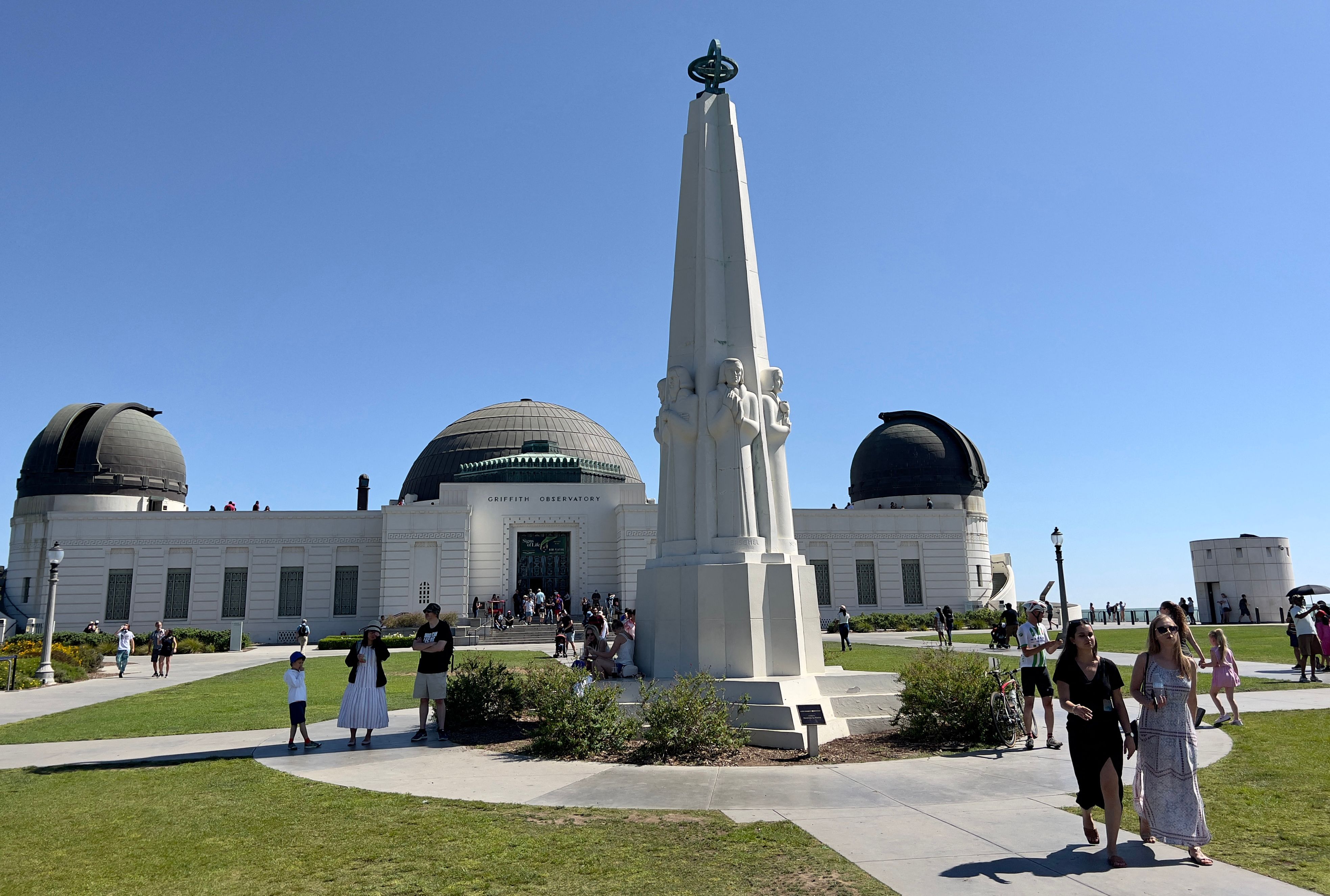
Today, Griffith Park is one of Los Angeles’s most popular attractions, drawing tourists and locals alike. Its crown jewel is the Griffith Observatory, a recognizable building that looks like a cross between Greek architecture and a giant telescope.
Although it’s best known to nature lovers and astronomy enthusiasts today, Griffith Park is a forgotten link in Hollywood’s filmmaking history. From its use as a location in countless films to its unique position overlooking the movie town’s sites, it’s the perfect place to watch a Hollywood sunset.
About Griffith Park
Since 1935, Griffith Park has offered Angelenos and tourists alike a place to escape the city’s bustle and get out in nature.
Of course, Los Angeles had far less city bustle over 90 years ago. One man’s vision gave birth to Griffith Park: L.A. needed a great park to become a great city. That man was Griffith J Griffith, the park’s namesake, and his vision began many years earlier.
In 1896, Griffith donated 3,015 acres on Mount Hollywood to the City of Los Angeles. The land had once been a Spanish settlement called Rancho Los Feliz.
Griffith, a Welsh-born mining speculator, had purchased what remained of the ranch in 1882. He donated the land to create a public park for the residents of his adopted city.
When he offered the acreage to the City Council, he said, “It must be made a place of rest and relaxation for the masses, a resort for the rank and file, for the plain people.”
“I consider it my obligation to make Los Angeles a happy, cleaner, and finer city. I wish to pay my debt of duty in this way to the community in which I have prospered.”
Griffith Park became the United States’ largest urban park with wilderness areas. Now covering 4,511 acres, it’s the largest historic landmark in the City of Los Angeles and one of North America’s largest municipal parks.
The grounds include golf courses, tennis courts, athletic fields, a swimming pool, a merry-go-round, miles of biking and hiking trails, bicycle rentals, Fern Dell, Bronson Caves, pony and train rides, gardens, bird sanctuaries, the Greek Theatre, museum, and the Los Angeles Zoo.
The park’s crowning feature, however, is the realization of another vision Griffith had: the Griffith Observatory.
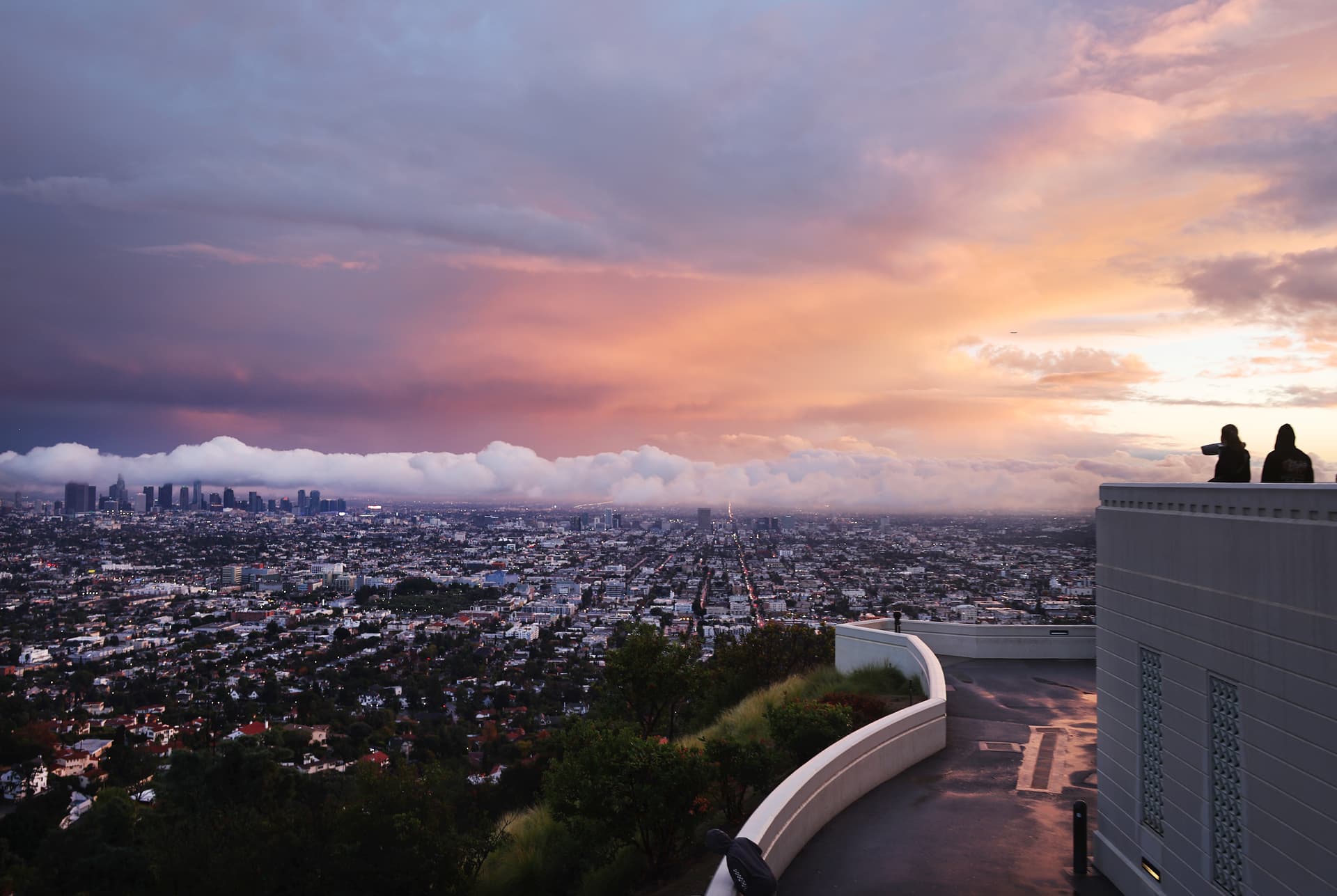
The downtown skyline is viewed from Griffith Observatory during a clearing storm in Los Angeles on Jan. 22, 2024. (Mario Tama/Getty Images)
The Griffith Observatory
After visiting the observatory on Mount Wilson in Pasadena, Griffith developed a keen interest in astronomy.
In 1912, he offered the City of Los Angeles $100,000 to build and operate an observatory on Mount Hollywood. His conditions required a telescope for free public viewing, a Hall of Science for exhibits on the physical sciences, and a movie theater to show educational films.
Although the city accepted Griffith’s offer and put him on a committee to oversee the building of both the observatory and the Greek theater he proposed, political delays kept the project from being fulfilled in his lifetime. Before he died in 1919, Griffith detailed plans for the observatory and the theater in his will.
Serious planning finally began in 1930, and the observatory was finished five years later.
On May 14, 1935, the formal dedication ceremony officially opened the Griffith Observatory to the public. At that point, the City of Los Angeles took over the Observatory’s operation and management from the Griffith Trust, and it has maintained it ever since. In 2002, the building was expanded and renovated, and it reopened to the public in 2006.
Today, you can visit Griffith Park and Griffith Observatory for free, honoring Griffith’s vision.
The Observatory is open from 12 p.m. to 10 p.m. on Tuesday through Friday and 10 a.m. to 10 p.m. on Saturday and Sunday; it’s closed on Mondays.
The Park opens at 6 a.m. and closes at 10:30 p.m. every day. Although there is no admission fee to the Observatory, parking anywhere near the top of the hill may cost you a hefty fee. You’re more likely to need paid parking during peak times, such as weekends and around sunset.
Hollywood History
In 1923, a bluff in Griffith Park became home to an unusual billboard for a new housing development in Beachwood Canyon below: a giant sign spelling out HOLLYWOODLAND.
Although it was only meant as a temporary advertisement, the white letters quickly became synonymous with the blossoming movie industry.
The LAND portion of the sign was abandoned in 1949, leaving only the incredibly recognizable sign we know today. Though private citizens can’t walk right up to the sign, the Griffith Observatory is one of the best places to view it from across the canyon. As the California sunset casts shadows over the city, the sign is a stunning sight.
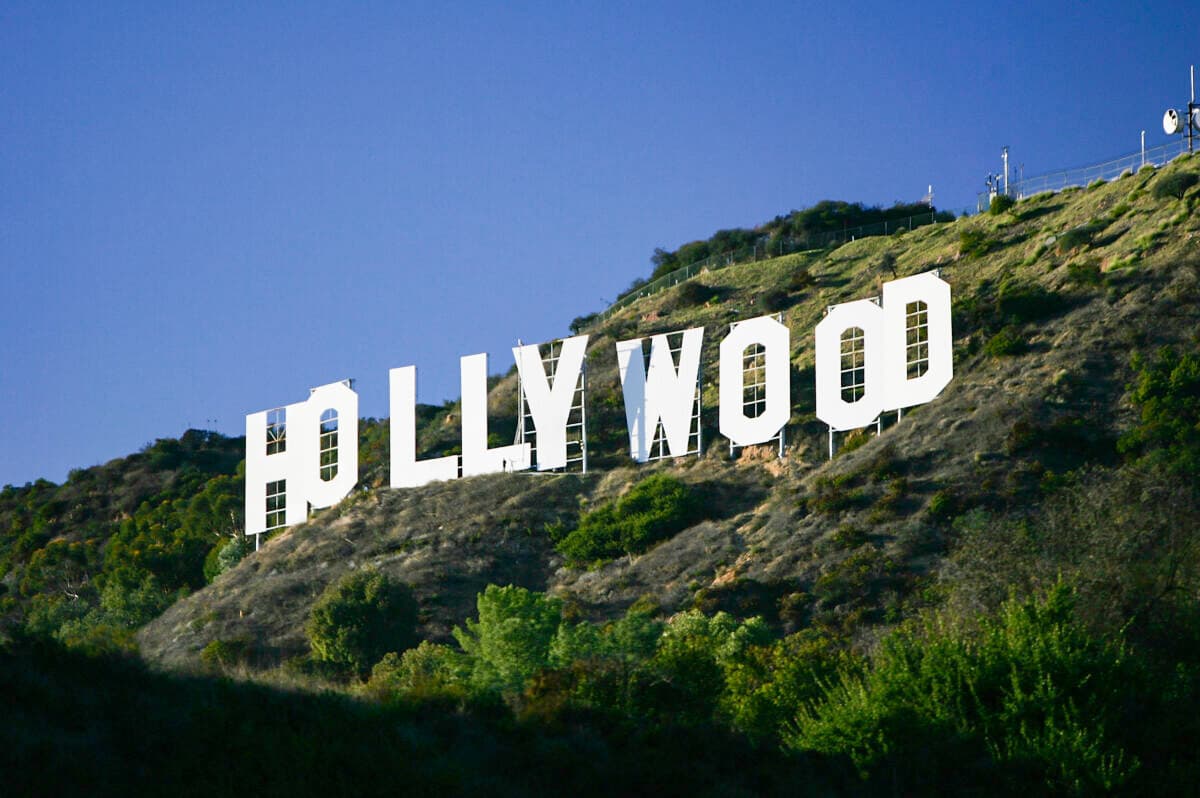
The Hollywood sign in Los Angeles on Nov. 16, 2005. (David McNew/Getty Images)
By the time this sign was erected, Griffith Park was already becoming a favorite filming location for movie studios.
Over the years, the park and the observatory have served as the backdrop for countless film and television productions. Often, the park’s natural features stood in for more exotic locales, such as when Bronson Canyon represented a tropical island in “King Kong” (1933) or when Bronson Caves masqueraded as a remote Southwestern hideout in “The Searchers” (1956).
In films set in Los Angeles, Griffith Park and the observatory unashamedly serve as the location for the screen action, most famously in “Rebel Without a Cause” (1955), and, more recently, “La La Land” (2016).
The first movie filmed at Griffith Observatory was the Western science fiction film “Phantom Empire” (1935), in which the famous dome played a role before the observatory even opened to the public.
As a popular filming location, a prime viewing point for the Hollywood sign, and an inspiring vantage point of Los Angeles, the Griffith Observatory is the perfect place to gaze at Hollywood’s stars.