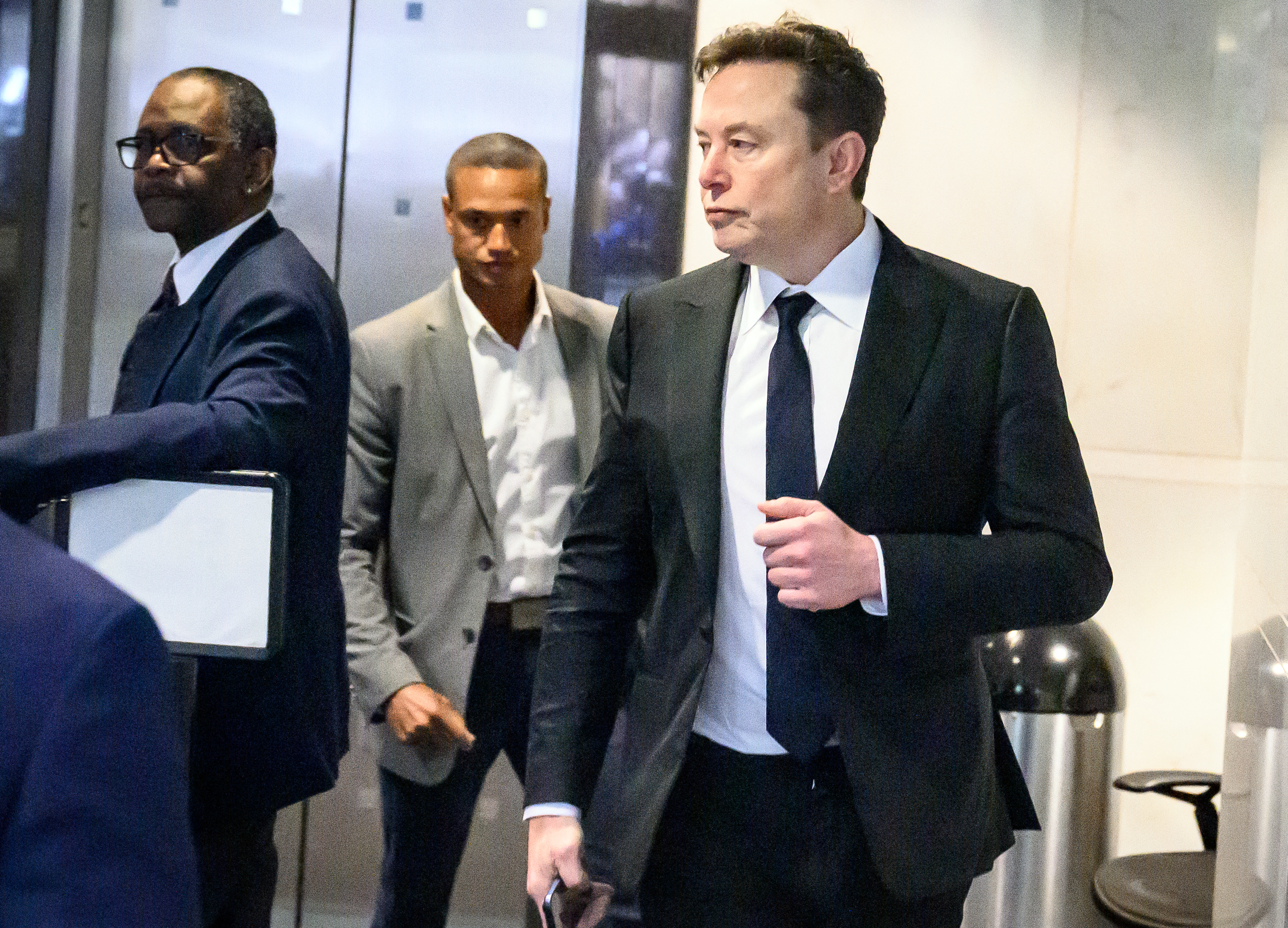

LOS ANGELES—After nearly three weeks of evidence in one of the most scrutinized legal battles of the century, nine jurors on May 18 took less than two hours to decide Elon Musk had waited too long to accuse his former partners in a nonprofit startup of betraying their founding mission to create artificial intelligence for the benefit of humanity.
The Tesla CEO sued OpenAI co-founders Sam Altman and Greg Brockman in 2024, alleging they “looted” the charity he funded and flipped it to a for-profit company by exclusively licensing their flagship technology, ChatGPT, to Microsoft.
The advisory jury’s unanimous ruling on a statute of limitations defense, which was quickly accepted by Judge Yvonne Gonzalez Rogers of the U.S. District Court, Northern District of California, clears the way for OpenAI’s expected initial public offering later this year. The company is currently valued at $852 billion.
OpenAI and Microsoft denied Musk’s claims, alleging he abandoned the project in 2018 to start his own for-profit competitor, xAI, when other founders rejected his bid to take full control of the operation. His legal claims, they said, amounted to “sour grapes” once it became clear the company would succeed.
While arguments in the trial centered on lofty goals around developing safe AI to benefit humanity—a mission both Musk and Altman claim they continue to espouse at the helm of their respective for-profit ventures—at the heart was a power struggle between two of the world’s most powerful tech leaders, and, some observers say, little else.
“I don’t think we’ve learned anything from this case. I think it’s been a complete waste of time,” Tre Lovell, a Los Angeles-based corporate and intellectual property lawyer, told The Epoch Times.
The “ego battle between billionaires,” he said, is “silly compared to what’s really at stake.”
“The real significant issues around AI are its safety, its development, how autonomous it’s going to be, and how it can be used to hurt others—not whether or not one person is mad because it’s making money and it should be a charity. That’s just not on the scale of significance for AI at this point.”
The technology, as yet unregulated, will be heavily litigated because of potential harm and abuse, he said.
“With these companies, it’s a dash to get the deals and reach the top without any guardrails. ... Billions of people are going to be subject to AI fraud, abuse, harm. The real serious litigation is going to happen down the road,” Lovell said.
There are currently 294 AI-related cases in the United States, of which 175 are active, according to the database AI Lawsuit Tracker. Another tracker, Fisher Phillips, counts 220 cases filed since 2021, the vast majority related to IP and privacy.
“What you’re going to start to hear about is people conned on the internet through fake profiles, fake voices,” Lovell said. “We’re already starting to see it. There are lawsuits filed against AI companies for practicing law without a license.”
The same, he expects, will happen in medicine as people rely more on AI for diagnosis and medication.
“Then we’re going to start to see Ponzi schemes, fraud, investments—it’s just going to be unlimited,” he added.
Power Struggle
At the heart of the OpenAI trial was Musk’s claim that his former partners violated a founding agreement and shared mission. Each side relied on a cache of internal documents to prove their version of a conflicting narrative over how the company was founded and evolved over time.
The details of OpenAI’s journey from a scrappy, underfunded nonprofit in 2015 to one of the most powerful and valuable AI companies are highly contested.
In addition to a power struggle with Musk in 2017 and 2018, it involved a messy 2023 governance shakeup in which Altman and Brockman were briefly ousted, and Microsoft was deeply entangled.
In 2025, the company restructured as a public benefit corporation, transferring the nonprofit’s assets in exchange for a 26 percent equity stake in the company, the value of which is approaching $200 billion, making it one of the world’s best-resourced charities, company officials testified; Microsoft owns a 27 percent stake.
Brockman’s private diary entries and text and email chains among the founders offered potential insights into underlying motivations and shifting alliances as a power struggle over the future structure of the company intensified.
But observers said the court’s ruling answered few questions about the often-nebulous agreements that underpin such companies.
“The reason why everyone in our space is talking about this is because if this had gone the other way—if that piecemeal combination of emails and mission statements and all these internal communications had come together to bind the company, it would have been opening Pandora’s Box,” Lindsey Mignano, a Northern California attorney who represents early-stage startups, told The Epoch Times.
Young startups, she said, go through an “insane” number of pivots each day, with roles and responsibilities constantly shifting.
“There’s so much that shakes out informally,” Mignano said.
“My takeaway is that, if you’re a founder and you want to have some sort of mission-driven or purpose-driven charter, it better be somewhere signed or in a state filing. There’s no more argument you can make that says, ‘we’re just going to vibe out on what we wrote in early emails or informal calls or WhatsApp messages.’”
‘Easy Way Out’
In questions submitted to the court, jurors early in the trial considered daunting ideas about the broader implications of AI development. One asked whether OpenAI was working to control “misinformation and manipulation,” and how energy, emissions, and water depletions from data centers needed to power AI would impact the planet.
But by the end, they quickly rejected Musk’s timeline, and along with it, his warnings that OpenAI’s approach to developing AI poses an existential threat to humanity.
For jurors, Mignano said, deciding on a statute of limitations was less daunting than piecing together and weighing the evidence.
“I think it was kind of an easy way out. It’s really hard conceptually to consider the weight of the evidence in a totality, and the informal understandings.”
What was surprising, she said, is that such wealthy, well-lawyered plaintiffs were tussling over a messy paper trail.
“They could have put together a founders’ agreement very easily. Everyone in the room had money to do so,” Mignano said.
Had he prevailed, Musk was asking that defendants “disgorge” up to $150 billion from OpenAI’s for-profit into its nonprofit foundation, and that Altman and Brockman be removed from their leadership roles.
A court inserting itself into corporate governance—especially in a company on the verge of a nearly trillion-dollar IPO—was always a long shot, Lovell said.
“If there’s a way that money can resolve this issue and properly compensate somebody, the court will do that before making any injunctive relief. Courts are very reluctant to get into the underpinnings of corporations,” Lovell added.
In a social media post on May 18, Musk called the ruling a “calendar technicality.”
“There is no question to anyone following the case in detail that Altman & Brockman did in fact enrich themselves by stealing a charity,” he wrote.
William Savitt, an attorney for OpenAI, suggested the ruling was more substantive.
After listening to three weeks of testimony and reviewing hundreds of pages of evidence, he told reporters after the trial, jurors concluded: “Mr. Musk’s lawsuit is nothing more than an after-the-fact contrivance that bears no relation to reality.”
“We’re disappointed in the jury’s verdict on the technical defense of statute of limitations,” Musk’s lead attorney, Steven Molo, said in an email to The Epoch Times.
“There’s been no ruling on breach of charitable trust, and we believe the evidence is overwhelming. We will appeal.”