
Crude oil production has declined by more than 30 percent since the start of the war in Iran in late February, according to the Organization of Petroleum Exporting Countries (OPEC).
Output fell by 1.7 million barrels per day in April after production levels dropped by 7.9 million barrels per day in March, the cartel said in its latest Monthly Oil Market Report, released on May 13.
In total, OPEC output sits at 18.893 million barrels a day, down from 28.65 million before the war.
Saudi Arabia registered the sharpest decline in April, with a loss of 958,000 barrels a day. This is followed by Kuwait (561,000), Iraq (291,000), and Iran (211,000).
The United Arab Emirates, which withdrew from the 12-member cartel, posted an increase of 131,000 barrels a day. This will likely be Abu Dhabi’s final inclusion in the monthly report.
Countries in OPEC+—the broader alliance that includes Russia, Mexico, and Kazakhstan—have seen little change in aggregate levels.
The Iranian conflict has disrupted regional energy infrastructure and shipments of oil, petroleum products, and liquefied natural gas through the Strait of Hormuz.
As a result, U.S. and international crude oil prices have surged to above $100 a barrel. This has also contributed to the spike in gasoline prices, with the U.S. national average around $4.50 per gallon.
This comes as the Energy Information Administration reported a drawdown in U.S. storage for the third consecutive week.
For the week ending May 8, domestic crude inventories declined by 4.306 million barrels to 452.9 million, higher than market expectations.
Gasoline stockpiles also fell by 4.084 million barrels to 215.7 million.
Global Demand
Looking ahead, OPEC trimmed its outlook for the year. It now expects global crude demand to grow by just under 1.2 million barrels per day, a downgrade from its earlier 1.4‑million‑barrel forecast.
“The global economic growth continues to show resilience for this year despite geopolitical tensions, particularly in the Middle East,” OPEC said in the report.
Officials cited solid growth in Asia and the United States and slight economic moderation in the eurozone and Japan.
OPEC’s outlook contrasts with the less optimistic forecast from the International Energy Agency (IEA).
The Paris-based group anticipates oil demand to fall by 420,000 barrels a day this year, to 104 million barrels per day.
Additionally, in its May report, the agency noted that global oil supply dropped by an additional 1.8 million barrels per day in April, pushing cumulative losses to 12.8 million barrels a day since the joint U.S.-Israeli war with Iran erupted on Feb. 28.
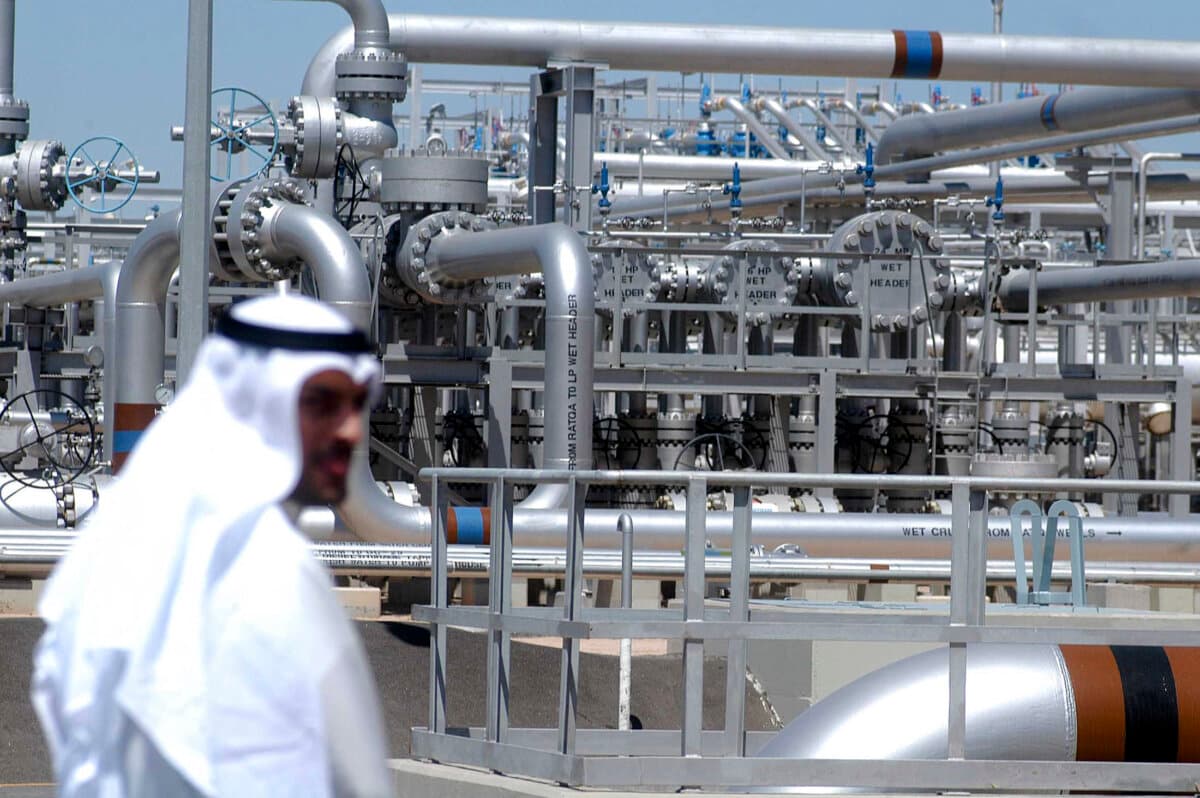
A worker at an oil facility in the northern Al-Rawdhatain oilfield in Kuwait on March 28, 2005. (Yasser Al-Zayyat/AFP/Getty Images)
Production losses from Gulf countries “already exceed by one billion barrels, with more than 14 mb/d of oil now shut in, an unprecedented supply shock,” according to the agency.
“The current supply-demand gap is significantly smaller, however, as the market was already in surplus heading into the crisis while producers and consumers alike are responding to market signals,” the report, released on May 13, states.
Oil prices could remain volatile heading into the peak summer-demand season, the IEA said. With global supplies unlikely to match worldwide demand, prices will likely stay elevated.
“This volatile backdrop underscores the market’s sensitivity to geopolitical supply risks and the limited near-term buffer from spare capacity,” Phill Flynn, energy strategist at The PRICE Futures Group, said in a May 13 note.
“The International Energy Agency is worried about demand desertion.”
Inflation Risks
The energy shock has revived inflationary pressures—at home and abroad.
April’s U.S. annual inflation rate heated up to a higher-than-expected 3.8 percent, from 3.3 percent in March. This was the highest level in nearly three years, fueled almost entirely by rising gasoline costs.
Wholesale inflation also jumped 1.4 percent last month, higher than the consensus estimate of 0.5 percent. A spike in the indexes for energy and services contributed to the hot reading.
But it is not only oil that has been caught in the war-fueled rise in commodities prices, says Adam Turnquist, chief technical strategist at LPL Financial. Prices for agriculture and industrial and precious metals have accelerated over the last several weeks.
“Importantly, the rally has been broad-based despite a weaker global growth backdrop over the last few months and limited support from the U.S. dollar,” Turnquist said in a note emailed to The Epoch Times.
“If sustained, rising prices across industrial metals, precious metals, and agricultural commodities (not just oil) could create broader inflationary pressures by lifting input costs across manufacturing, construction, transportation, and food production.”
This could exacerbate broader inflation, even if energy markets stabilize, he added.