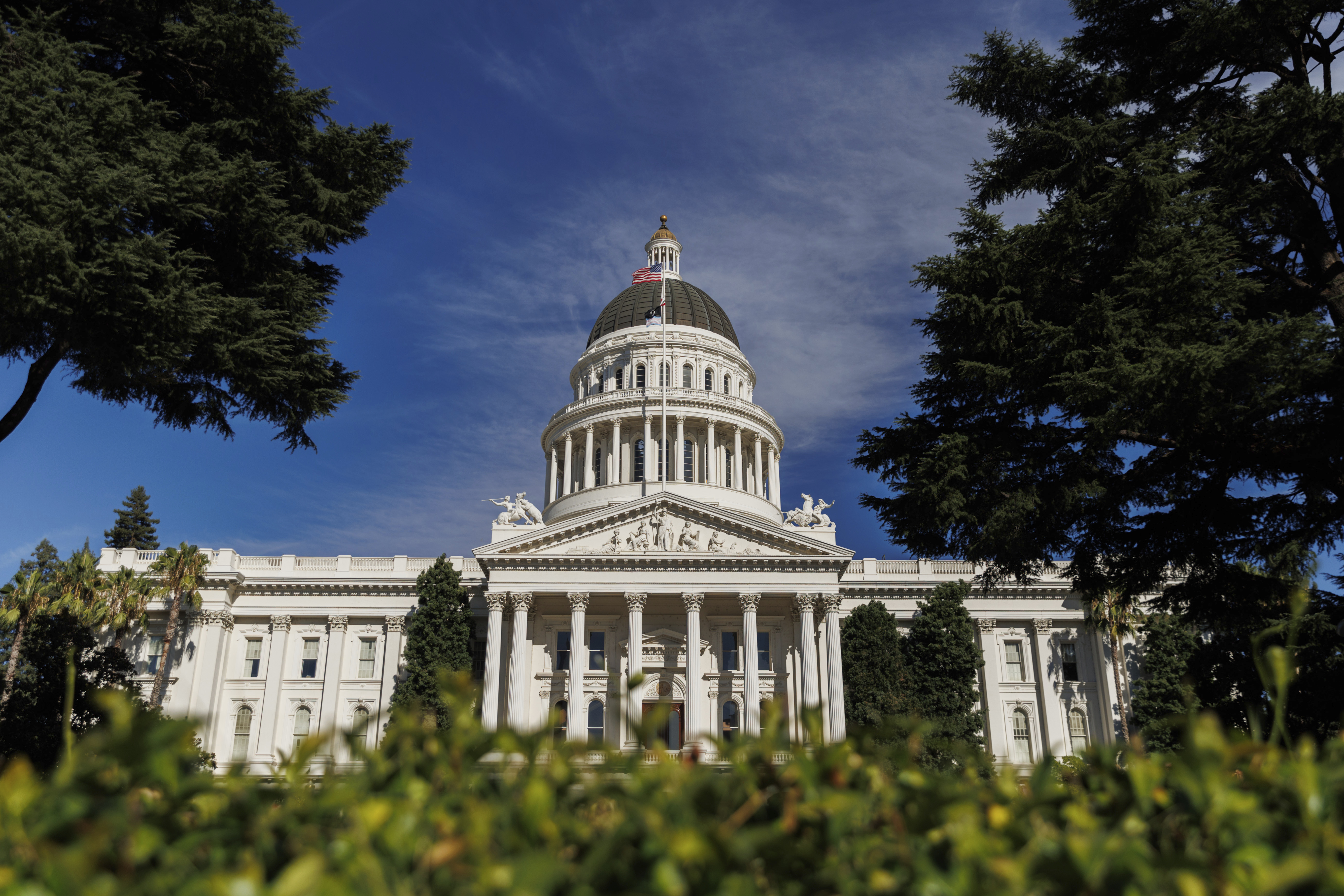

California Gov. Gavin Newsom and top lawmakers have announced a climate and energy deal that extends the state’s cap-and-trade program through 2045, rebrands it as “cap and invest,” and includes measures aimed at boosting domestic oil production in an effort to stabilize fuel prices amid economic pressures.
The agreement, announced on Sept. 10, comes as the Democratic-controlled Legislature wraps up its session, facing a $12 billion budget deficit and rising consumer costs for electricity and gasoline. It aims to secure ongoing revenue for the states’ environmental goals while addressing threats of refinery closures and job losses in the oil sector.
Under the deal, AB 1207 reauthorizes the cap-and-trade system, which caps carbon emissions and requires polluters to buy permits for exceeding limits.
The program, originally set to expire in 2030, will now run until 2045 with minor adjustments to how free pollution allowances are distributed by the California Air Resources Board.
SB 840 specifies how revenues—expected to amount to billions of dollars annually—will be spent starting in 2026, including $1 billion each year for high-speed rail and another $1 billion directed by lawmakers for priorities such as housing, transit, clean air, wildfire prevention, and safe drinking water.
The package also mandates a 2026 study on carbon offsets, which allow companies to fund emission reductions elsewhere instead of cutting their own pollution. Consumers will continue receiving a twice-yearly climate credit on utility bills, timed to offset high-usage months.
A key component boosting oil production is SB 237, which waives certain environmental review requirements for new oil wells in Kern County and expedites permits stalled by litigation for nearly a decade.
It increases the safety requirements for idle oil pipelines with added environmental assessments, intended to protect communities living near petroleum wells.
Other elements of the deal include an expanded wildfire liability fund, creating a state fund for pollution monitoring in disadvantaged communities, and establishing a Western regional energy market to export excess clean power, potentially lowering electricity rates.
SB 254 provides public financing for new transmission lines and prevents utilities from profiting on the first $6 billion in post-2025 fire-safety infrastructure costs.
Newsom, Assembly Speaker Robert Rivas, and Senate President Pro Tem Mike McGuire said the agreement was a historic compromise that advances California’s climate ambitions while protecting consumers.
“After months of hard work with the Legislature, we have agreed to historic reforms that will save money on your electric bills, stabilize gas supply, and slash toxic air pollution—all while fast-tracking California’s transition to a clean, green job-creating economy,” Newsom said in a statement.
“We took the time to get it right because real change, lowering costs, and protecting homeowners is essential,” Rivas said in a statement.
McGuire emphasized the deal’s focus on affordability and the state’s clean energy goals.
The oil industry, represented by the Western States Petroleum Association, strongly opposed the reauthorization process.
“With the state already experiencing leakage in real time with two announced refinery closures, this deal does nothing to create the kind of investor certainty that is necessary to ensure a reliable, affordable fuel supply for California and our neighboring states,” President Jodie Muller said in a Sept. 8 statement.
Tim Carmichael, president and CEO of the California Council for Environmental and Economic Balance, described the deal as rushed.
“CCEEB has long supported California’s cap-and-trade program as the foundation of the state’s climate policy,” Carmichael said in a statement. “A rushed deal that raises costs for working Californians and job-creating industries should not move forward.”
The negotiations unfolded in the Legislature’s final days, requiring a waiver of rules to allow voting through Sept. 13 because of a state constitutional requirement for 72 hours of public notice on bills.
The bills now head to the full Legislature for votes, with passage expected before the session ends on Sept. 13. If the bills are signed by Newsom, the changes will take effect immediately.