
It looks like a standard suburban parcel when viewed by the curbside observer. No different from any other South Jersey abode.
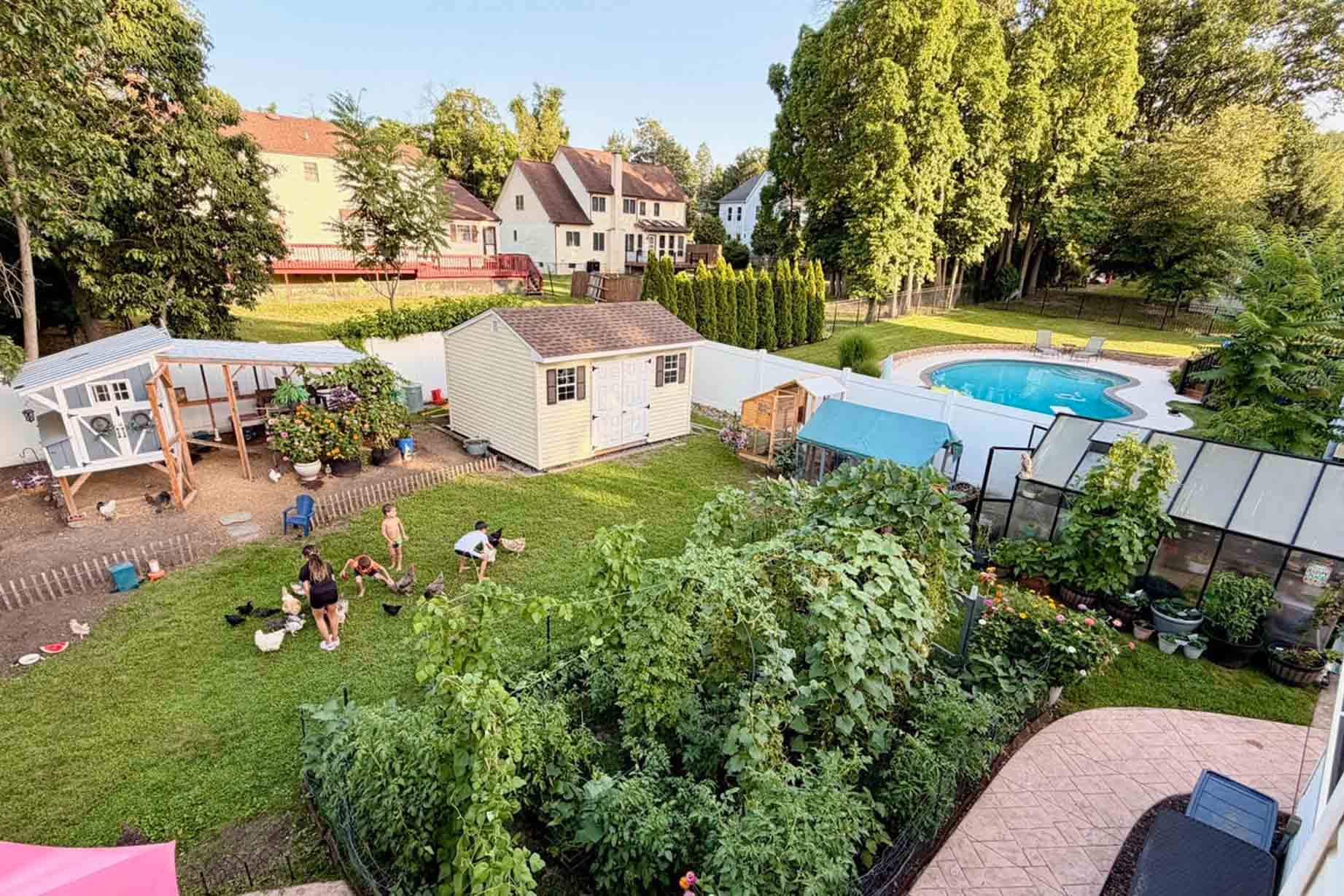
But behind the fence, hidden in the backyard, the Lindell family tends a bustling homestead, growing hundreds of pounds of vegetables, raising dozens of chickens, and contending with five pairs of small, perpetually dirty hands.
Alyssa Lindell is a homesteader of an urban sort. By living off a small plot of land, homeschooling, and eating healthy, fresh food, the mother of five (with another on the way) from Gloucester Township, New Jersey, is leading what she calls a more intentional, Christian lifestyle.
Inside the Lindell kitchen, breakfast starts with freshly laid eggs. Basket-loads of tomatoes and cucumbers are constantly being hauled in. Homemade marinara sauce and pizza from scratch are always on the go.
They know where their food comes from. They eat clean.
The Lindells are part of a growing cohort of suburban dropouts. Weary of industrialized food supply chains and corporate overreach, they have turned toward their own backyard for self-reliance. But it’s more than a home-built chicken coop; it’s also about reclaiming spiritual autonomy.
“The land was meant for us,” Lindell, 38, told The Epoch Times. “It wasn’t meant for multi-million dollar companies to just take it, and it wasn’t meant for them to have all of it and to make the food. It’s for us.”
The family spent the last two years raising a miniature rebellion in their backyard. On just a quarter acre of land, they found their exit strategy from grocery store food.
“You never know what’s in this stuff,” she said, pointing to an “organic” label. “When it says organic, is it really organic?” The dubious question sends her mind back to 2024.
The family hadn’t seriously thought of homesteading back then. But Sam, the second eldest, suddenly fell catastrophically ill. His ankles swelled like balloons, leaving him wheelchair-bound after a trip to the ER. He wasn’t himself, couldn’t even move.
Sam’s condition was a mystery for the Lindells. Eventually doctors diagnosed him with a type of arthritis for juveniles and wanted to prescribe heavy medication.
Lindell balked at that approach.
“I’m not pumping my child with drugs,” she said. “What caused this?” A healthy, athletic 7-year-old had crumbled overnight for no apparent reason. It made no sense.
They brought Sam to a functional medicine practitioner who diagnosed him with two different strains of Lyme disease. It’s possible to get post-arthritis from Lyme disease, the family learned.
In the end, antibiotics were prescribed.
But chickens, it turned out, were the solution for everything else—including Sam’s blues.
Lindell’s voice cracks when she recalls a visit to a friend’s farm in January 2025. “Sam lit up,” she said. “He was so happy. They were playing with the chickens. They had cows and sheep and the kids were just on cloud nine.”
The idea of a homestead was planted.
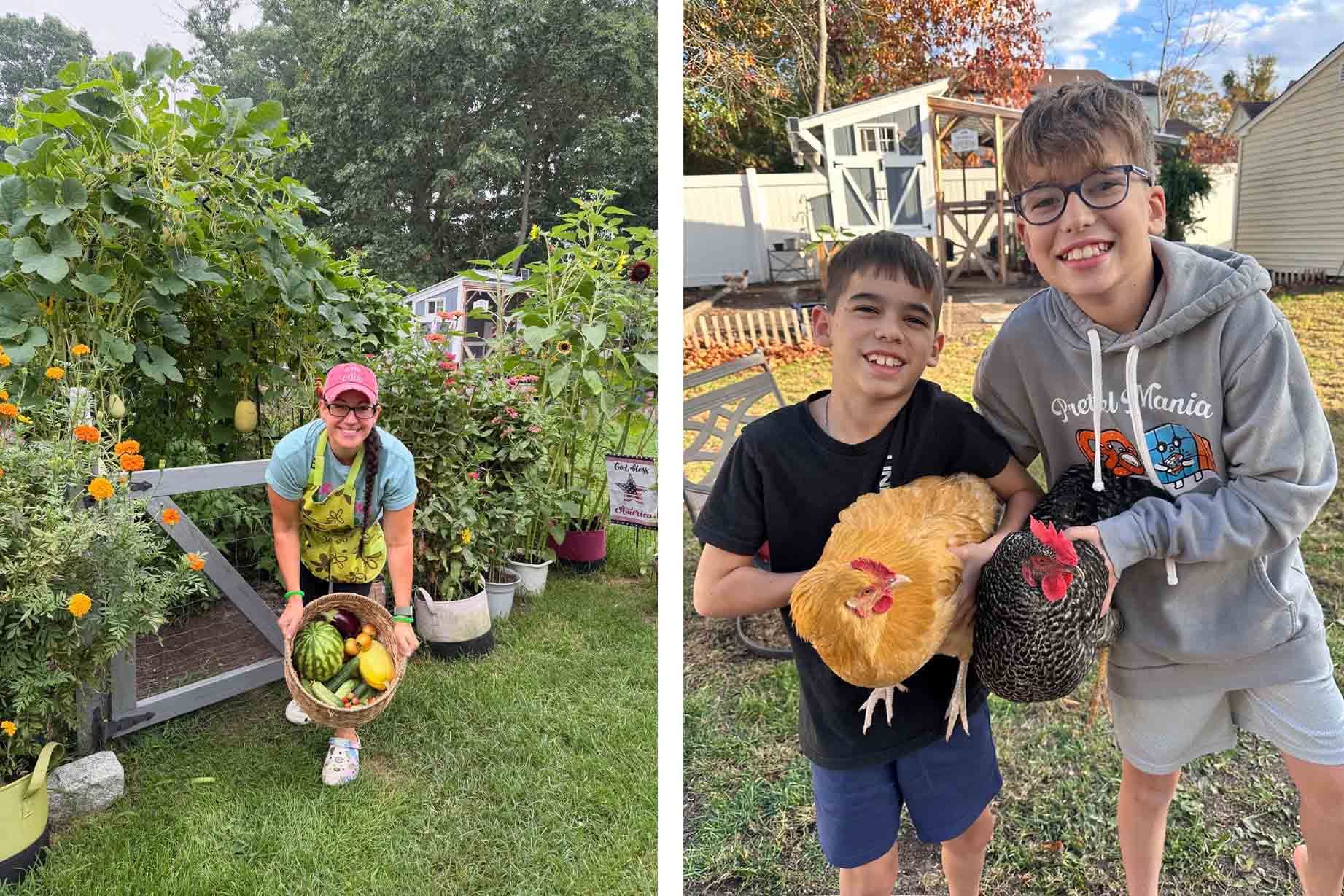
The Lindell family grow vegetables and raise dozens of chickens on their suburban lot. (Courtesy of Alyssa Lindell)
(Courtesy of Alyssa Lindell)
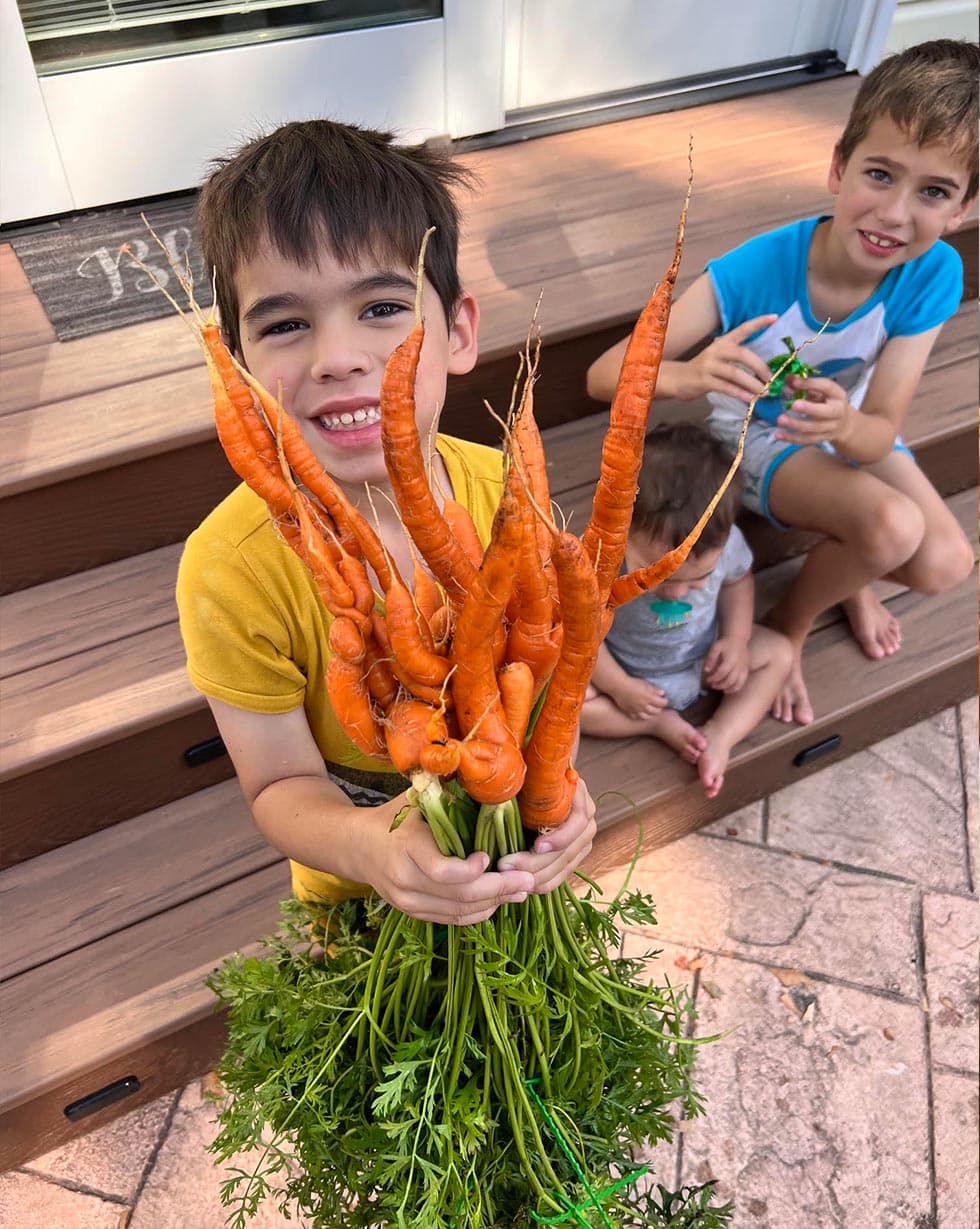
(Courtesy of Alyssa Lindell)
Today, the Lindells have made it a reality without fleeing to Montana or Idaho. They still live in the very same Gloucester Township suburb. Alyssa quit her job as a junior high science teacher to homestead full time, while the kids quit Christian school to learn at home. Her husband, a 41-year-old firefighter, still works at the same firehouse.
So, keeping one foot planted firmly in suburbia, they buried the other ankle-deep in their huge new garden plot. They still enjoy the occasional grocery store luxury, but they have basically transitioned to an entirely homegrown diet.
That includes chickens.
“You can have chickens in our township,” Lindell said. “You just have to apply for a permit and take this online chicken course, and you can have a chicken.” Her husband built a huge coop. Seven of their initial brood turned out to be roosters, and that presented a problem: noise pollution.
“I can’t have a rooster. Isn’t that interesting?” Lindell said. “All the neighbors have all these crazy loud dogs, which is OK. I don’t get bothered by the dogs, I like dogs.”
She says the family wanted goats too, but that was also against the township code. “Oh, it drives me crazy,” she said, referring to the regulations.
There’s a price to pay for living in suburbia. Yet the returns on their quarter acre are staggering. The family hauled in around 300 cucumbers and upwards of 500 tomatoes in a single season (being half Italian, Lindell says tomatoes run in the family). They sprouted 10 huge watermelons, dozens of eggplants, and thousands of green beans. Not bad for a 15 by 20-foot plot.
“We never buy vegetables from the store anymore,” she said.
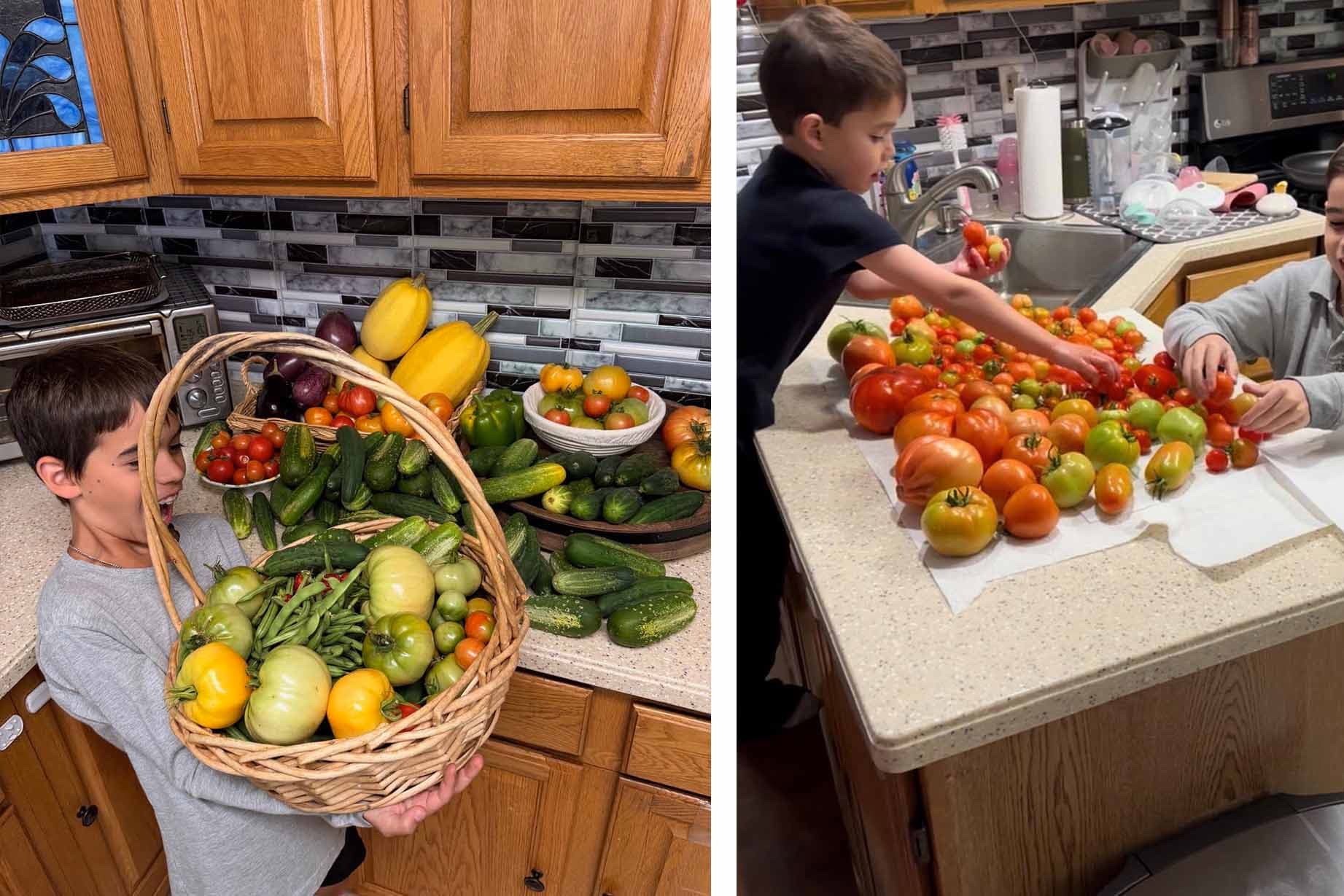
The Lindell homestead has become so productive that they sell extra vegetables and are teaching neighbors how simple and easy it can be to grow their own. (Courtesy of Alyssa Lindell)
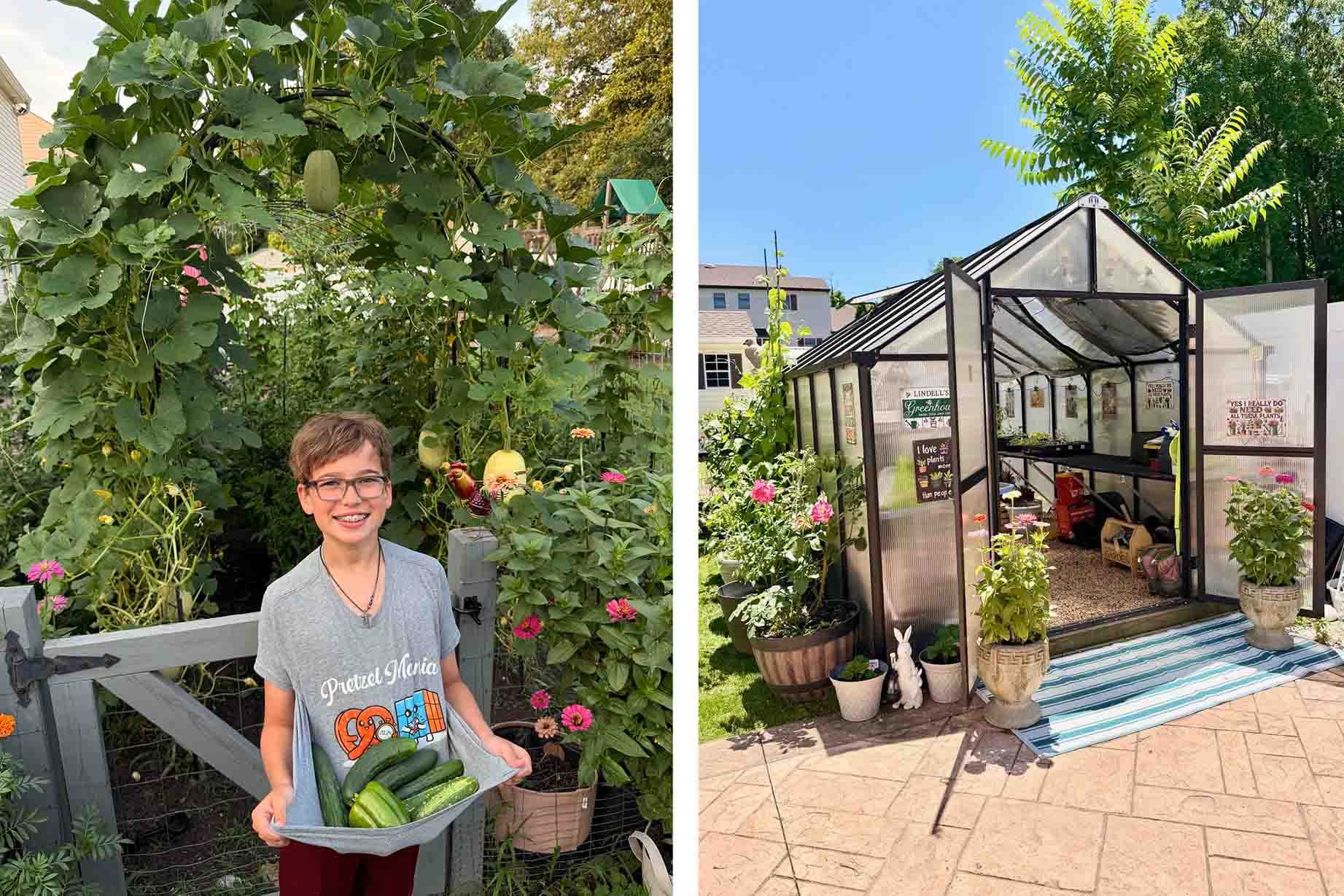
(Courtesy of Alyssa Lindell)
The operation became so productive it even spurred the kids into business. Every spring the family converts their greenhouse into a neighborhood hub to sell seedlings. They hawk extra veggies during the summer months after the harvest.
“My kids keep all the money,” Lindell said. “It’s their little entrepreneurial job.”
But beyond the product and profit margins, Sam has fully recovered. He has now ditched the wheelchair, and loves running and playing golf. Lindell says her son’s joints flare up only every few months, usually tracing the culprit to some stray inflammatory ingredient in his food.
“It took a while, about six months,” she said. “He’s back to himself again, which is amazing.”
The antibiotics alongside his Lyme disease treatment and the effects of the homestead worked.
For the family, the frantic pace of the outside world now feels obsolete.
“Once you start this life, you honestly cannot even understand how you exist in the other direction anymore,” Lindell said.
“Can I shield [the kids] forever? No, that’s not going to happen. But when they’re little, at this age, I try my hardest. I’m trying to build them up with the biblical principles of life.”
Now the homestead is even reaching beyond it’s original purpose. The neighbors and their kids can’t help but admire the suburban-country hybrid. It brings together the best of both worlds.
“I need to do this. I want to learn,” one neighbor told Lindell while buying seedlings last spring.
“You can,” she replied. “It’s actually easier than what you’re doing now, and it’s better and it’s healthier and it slows life down.”
She added: “It brings you back to where you’re supposed to be with our families, growing our own food, and using the land that God gave us.”