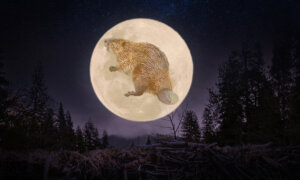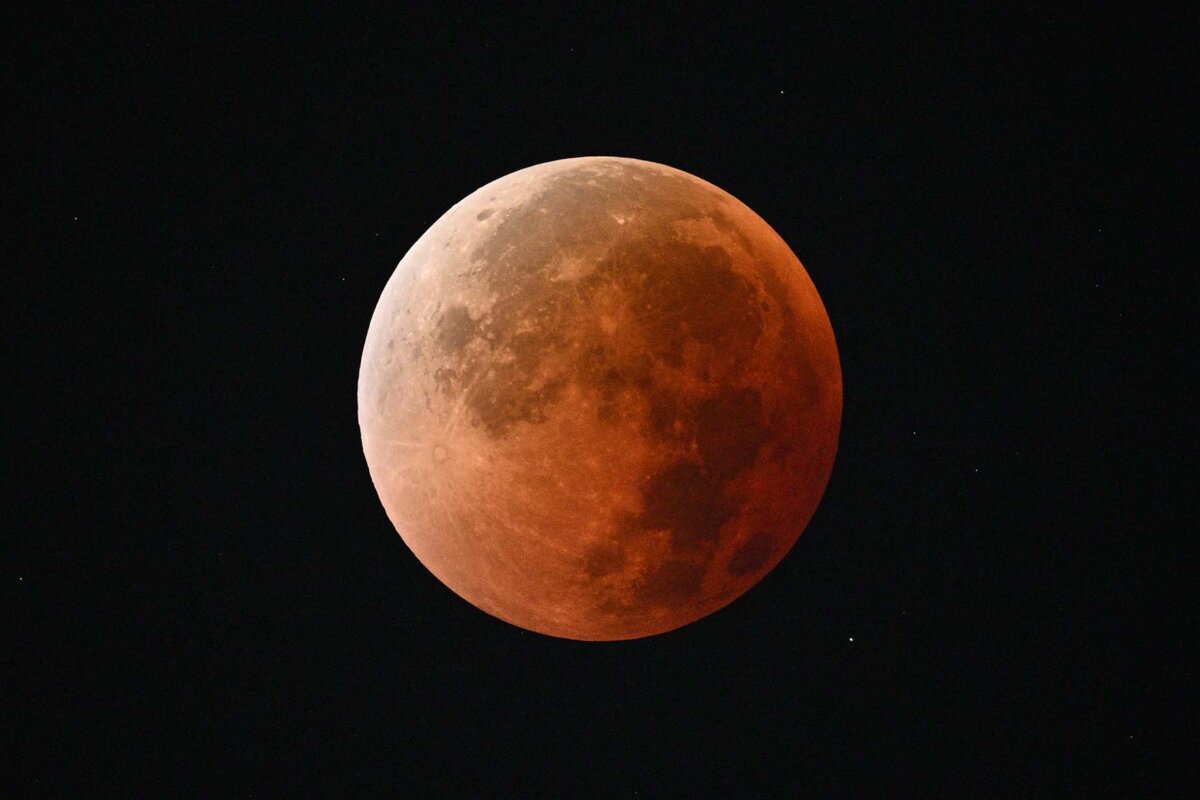

This winter has been bitter for many of us, so let’s talk about a traditional sign of spring appearing in the night sky next month—the “Worm Moon.”
Ushering in morning runs and perhaps some early gardening, the March full moon will signal getting outside more as the weather warms and daylight lengthens. For Native Americans, similarly, this full moon meant maple syrup flowing again and birds like geese and eagles returning.
It also signified beetle larva squirming in the bark of trees and worms wriggling in the thawing soil, thus tribespeople dubbed it the Worm Moon. The name was adopted by colonial explorers centuries ago and it stuck. It’s still used today.
On average, full moons in March don’t look terribly different from those in other months, but a total lunar eclipse next month will make this one exceptional. When the full Worm Moon falls on March 3, at 6:38 a.m. ET, the Earth’s shadow will cause it to darken and turn deep red. This is known as a “Blood Moon.”
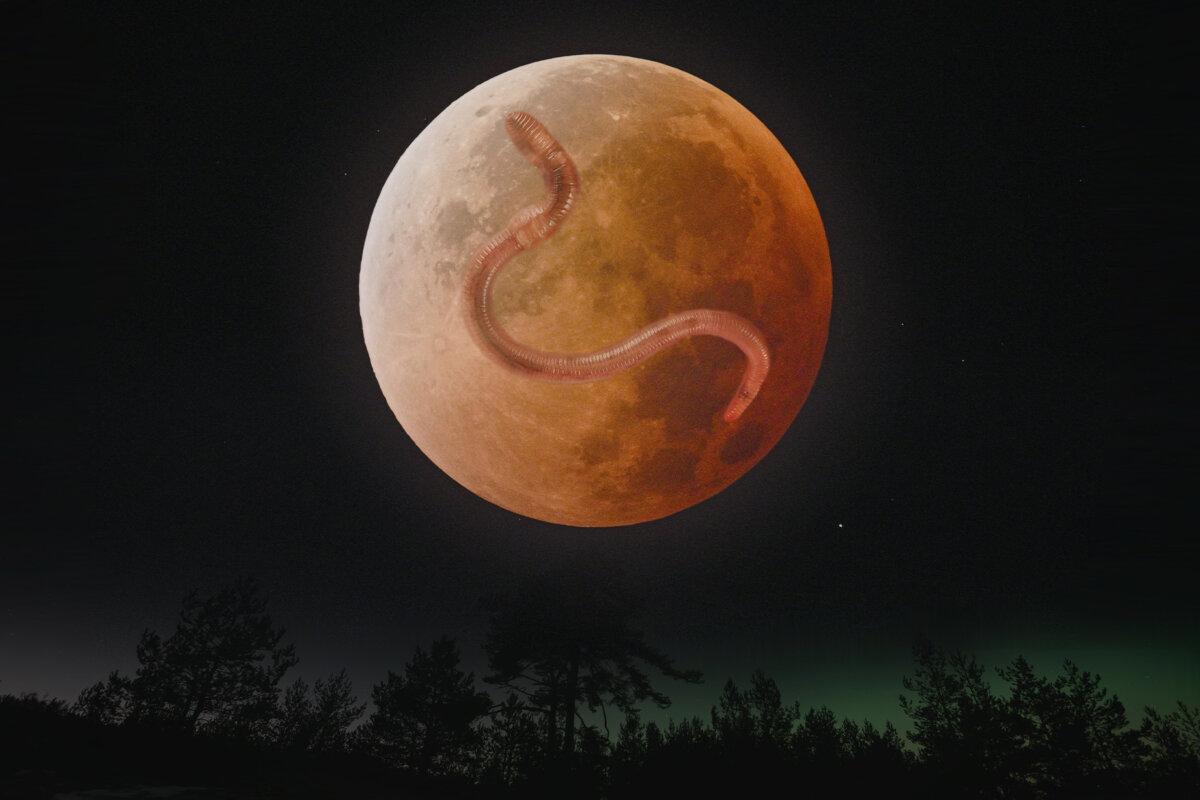
An illustration of the full "Blood Worm Moon." (The Epoch Times/Shutterstock/Dmitri T/Richard Peterson/HECTOR RETAMAL/AFP via Getty Images)
It will cross fully behind the darkest part of Earth’s shadow, the umbra, where no direct sunlight hits, and then be bathed in red light. Literally the glow of all the sunrises and sunsets on Earth will, at the same time, refract through the atmosphere and onto the moon’s surface. This eerie glow only appears during totality and never during partial or penumbral lunar eclipses.
Obviously, the Blood Moon was named after this deep-red hue. However whenever it coincides with the Worm Moon it officially becomes the “Blood Worm Moon”—no joke. That’s really what next month’s moon is called.
Not everyone in the world will be privy to see the March 3 lunar eclipse. Most North Americans will, though, as will observers in Australia, Asia, and Oceania. If you’re in New York City, the Blood Worm Moon will appear over the western horizon at 6:03 a.m. ET, just 20 minutes before sunrise. Those in Los Angeles will have to wake up at 3:03 a.m. PST to watch the moon go red.
Across the Pacific, sky-watchers in Honolulu will see the Blood Moon at 1:04 a.m. while for those in Tokyo it will be 8:03 p.m. and in Sydney 10:03 p.m. Lunar eclipses happen at the same time everywhere, though the time of day depends on what time zone you’re in.
Regardless of where you are, the ominous crimson shade will last a full 65 minutes.
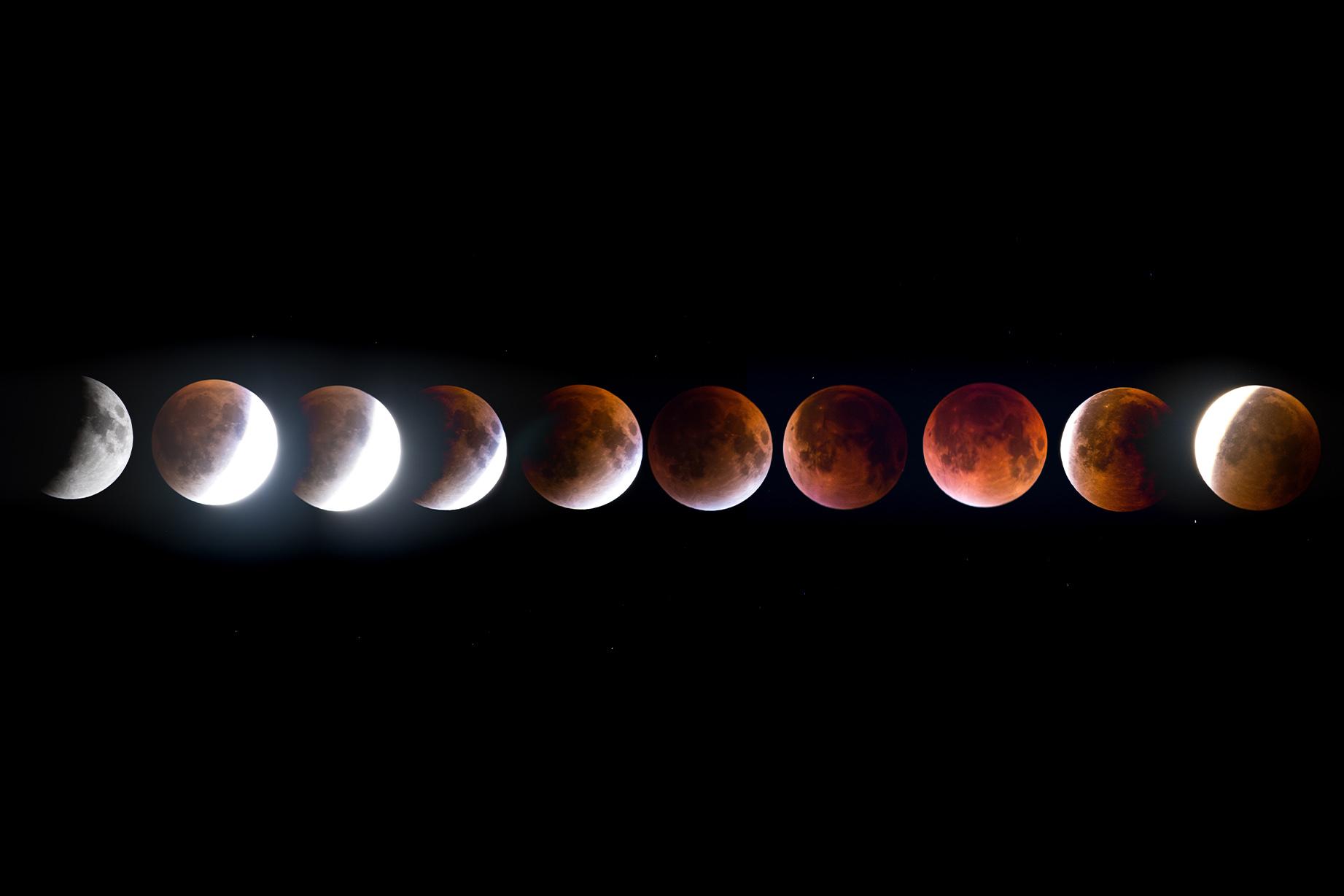
Illustration of a total lunar eclipse entering the stage of totality, making it glow red from sunlight refracted through Earth's atmosphere. (Shutterstock/Shubhajit Roy Karmakar)
While lunar eclipses are perfectly safe to view with the naked eye without eye protection, the Full Worm Moon can still play tricks on the eye. Since the spring solstice makes it hang low, near terrestrial objects such as trees and buildings, it may seem suspiciously larger than usual. This optical illusion is called the moon illusion.
One of the first explorers to hear the term Worm Moon was Captain Jonathan Carver, who recorded knowledge obtained from the Dakota Indians during his journeys along the upper Mississippi in 1766 and 1767, including moon names from the tribe’s lunar calendar. However, the Dakota weren’t the only ones inventing colorful lunar monikers.
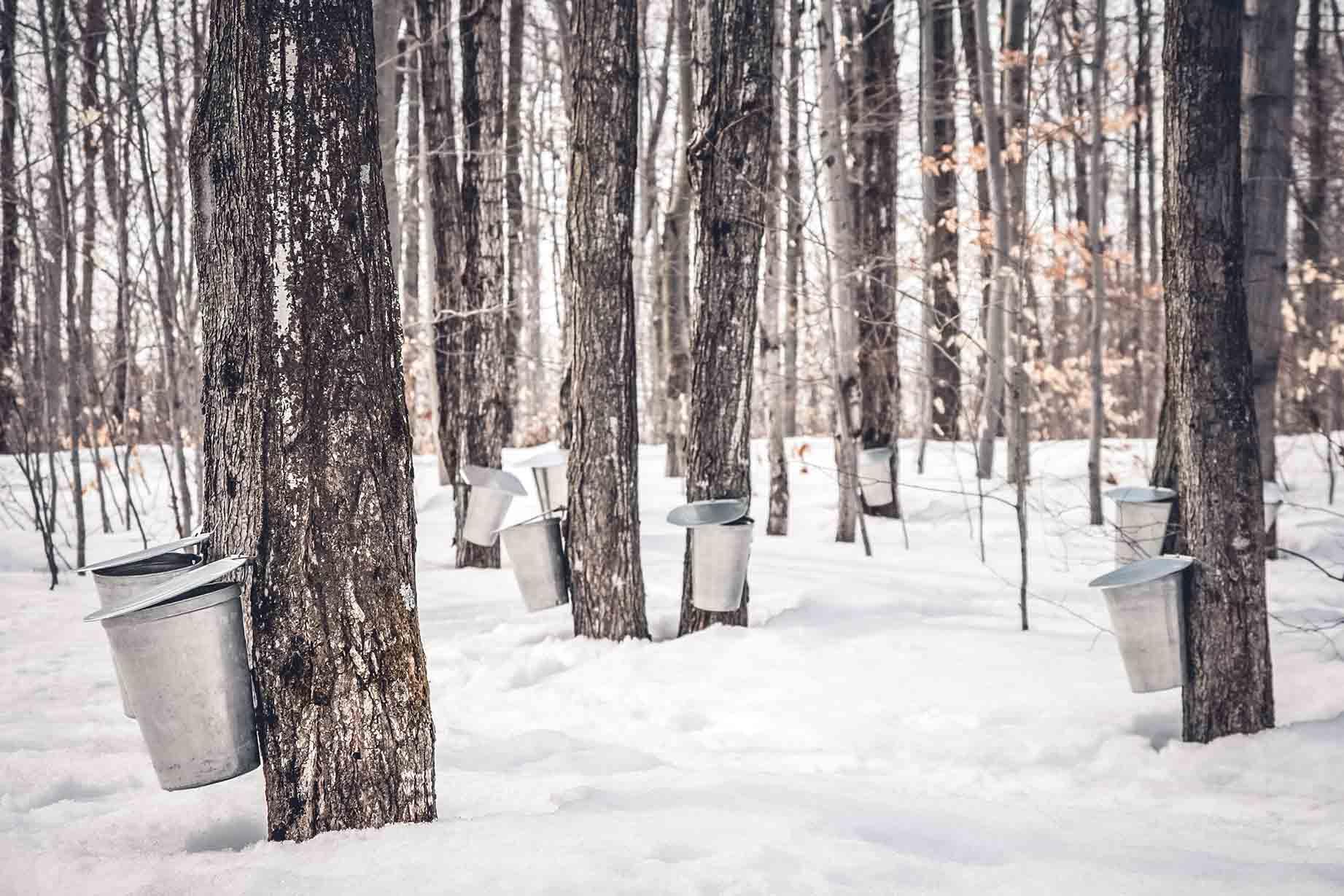
Maple syrup being collected from sugar maple trees in Eastern Canada. (Shutterstock/ Studio Light and Shade)
Other tribes linked the month to spring by describing its fruit, creatures, and climate. The Ojibwe, for example, tasted the maple syrup dripping from thawing trees and came up with “Sugar Moon.” Migrating black-feathered birds led them to also call it the “Crow Comes Back Moon.” The Pueblo called it the “Wind Strong Moon.”
While full moons come and go on a monthly basis, this one is rarer than most and will look extraordinary. While lunar eclipses always happen on full moons, the reverse isn’t always true. Not every full moon is a Blood Moon. You can count yourself lucky if you rise early enough and catch this one.
Correction: A previous version of this article misstated the time of the total lunar eclipse in Los Angeles. The Epoch Times regrets the error.