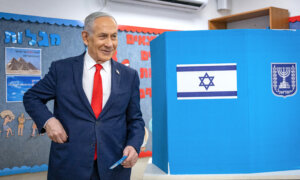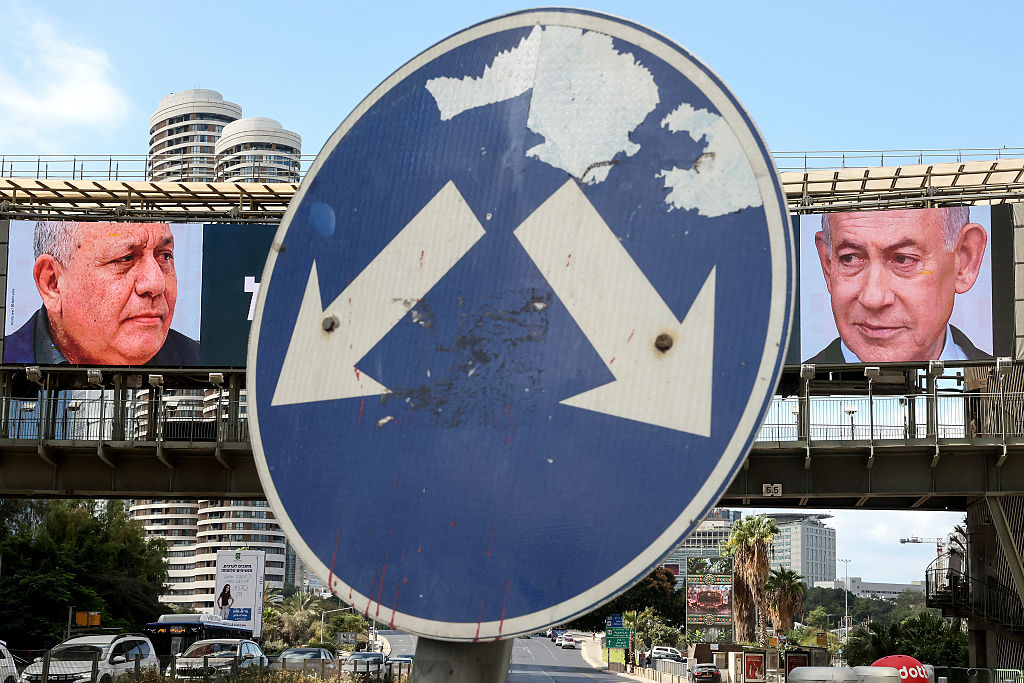

Israeli Prime Minister Benjamin Netanyahu has accused Arab political parties of committing fraud during the Oct. 27 national election and demanded that authorities launch an investigation as the tallying of the final results continues.
“The elections in the State of Israel were stolen by Arab parties that support terrorism and the elimination of the Jewish state through serious criminal offenses of bribery, threats, violence, forgeries, and the use of prohibited software to mobilize voters,” Netanyahu wrote in a post on X on Oct. 28.
The Joint List and Ra’am parties, both representing predominantly Arab constituencies, are projected to win 12 and seven seats, respectively.
Their combined 19-seat projection would represent a historic showing for Arab parties in Israeli elections, according to The Times of Israel.
With the outcome of the 2026 Israeli election not yet finalized, efforts to disqualify allegedly fraudulent ballots could play a consequential role in determining the balance of power.
Ballot counting is expected to be completed on Oct. 30, with results published on Nov. 4.
Netanyahu, who is seeking another term, said his Likud Party has provided police, the Shin Bet security service, and Israel’s Central Elections Committee with witness testimonies and other evidence to support the election fraud allegations.
“We demand from the police and the Shin Bet a thorough investigation into the election theft by the Arab parties and the full prosecution of the criminals,” Netanyahu said.
Following Netanyahu’s appeal, Israel’s Central Elections Committee announced that it was conducting routine election-integrity efforts.
“The Central Elections Committee has launched its election-integrity monitoring operation, as it does in every election, as part of which all inquiries from parties concerning election integrity or alleged errors in the results will be examined,” the committee said in a statement published by The Times of Israel.
In a statement shared with AFP, Ra’am leader Mansour Abbas accused Netanyahu of “lying and inciting against” his party.
To form a government in Israel, a party must win at least 61 seats in the 120-member Knesset.
In the likely event that no single party wins a 61-seat majority, the Israeli president selects the political leader he believes is best positioned to form a governing coalition and gives that person 42 days to form a multi-party government.
If no coalition is created after this first window, other party leaders may try to form a governing coalition before a new election can be called.
As of the evening of Oct. 28, the Likud Party leads in the ballot count and is projected to win 26 seats, while other parties within its current coalition are projected to win another 27 seats, for a total of 53.
An opposition coalition, led by the Yashar Party, is projected to win 48 Knesset seats.
Should the Arab parties ally with the Yashar-led opposition bloc, they could form Israel’s next government and remove Netanyahu from office.
In an X post on Oct. 28, Joint List leader and Knesset candidate Yousef Jabareen signaled his willingness to join a coalition opposed to Netanyahu.
“We are ready and prepared to pave the way for the ousting of the Netanyahu government. Against a government of bloodshed, against a politics of supremacy, racism, and exclusion, we offer a completely different alternative,” Jabareen said.
“The change comes through Jewish-Arab partnership, a true and equal partnership.”
Yashar Party leader Gadi Eisenkot has previously raised doubts about his opposition bloc allying with Israel’s Arab parties.
In an interview with Channel 12 on Sept. 26, Eisenkot indicated he wouldn’t coalition with Arab or Haredi parties unless they affirmed that Israel is to be a Jewish and democratic state, declared Hamas a terrorist group to be dismantled, and expressed support for universal conscription.
At the time, Eisenkot said, “I don’t see any Arab or Haredi parties who accept these principles.”
Before polls closed on the evening of Oct. 27, Netanyahu and other leaders in his current government made multiple last-minute appeals for their supporters to turn out, citing high voter turnout in opposition and Arab-dominated communities.
“My brothers and sisters, right-wing voters, if we don’t go out to vote, we'll get a government of the Muslim Brotherhood,” Netanyahu said in one election day post on X.
“The turnout in the strongholds of the left and the Arab sector is breaking records.”
Likud previously petitioned the Israeli Central Elections Committee to disqualify the Ra’am and Joint List parties.
The Central Elections Committee ruled in favor of disqualifying the Arab parties on Sept. 26, but Israel’s Supreme Court reversed the committee’s decision in a unanimous ruling on Oct. 2.