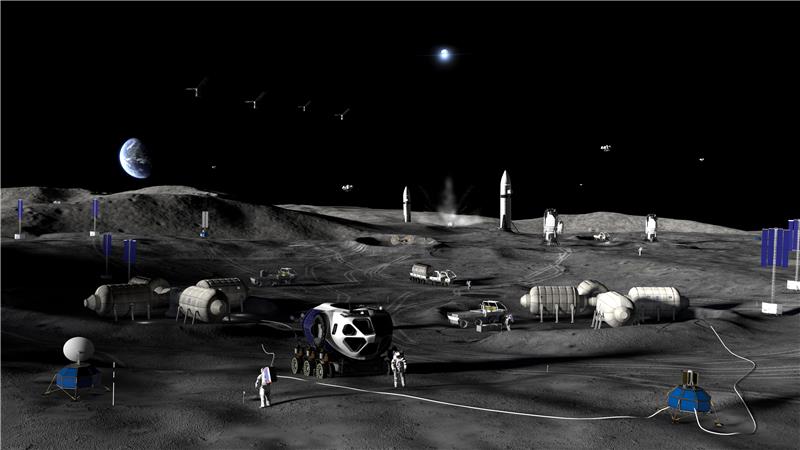

NASA Administrator Jared Isaacman unveiled an initiative on March 24 to expedite the construction of a $20 billion lunar base that would ultimately support permanent human crews.
“We will invest approximately $20 billion over the next seven years and build [the base] through dozens of missions, working together with commercial and international partners towards a deliberate and achievable plan,” he told a room of politicians and representatives of space partners in Washington, D.C.
However, this means that plans for an international lunar space station called Gateway will be put on pause. Isaacman recognized that there were “very real hardware and schedule challenges” with this change. But, he said that some equipment and international commitments could still be repurposed to support the new project.
The base’s construction will happen in three phases. The first phase will feature unmanned landings utilizing the Commercial Lunar Payload Services program. The tempo of missions will also pick up, with several unmanned vehicles accelerating activities such as conducting scientific investigations and demonstrating new technologies ahead of the crewed missions.
Phase two of the program will establish “semi-habitable infrastructure” supporting recurring but limited astronaut operations, and phase three will introduce the infrastructure needed to support continuous human presence on the moon.
NASA will also continue to increase the frequency of its flagship Artemis crewed lunar missions. The fourth Artemis mission is slated to fly in early 2028 and be the first manned lunar landing since 1972. Later that same year, Artemis V will aim to put a second set of astronauts on the surface.
After that, Isaacman said he wanted to utilize at least two commercial carrier options to launch human landing missions to the moon every six months, and he expressed his desire to see that annual moon-bound traffic increase even further.
Isaacman also said that his leadership team continues to work on cutting bureaucratic red tape, which he partially blamed for the slow progress in the space agency’s moon ambitions, that in turn puts it at risk of losing a new space race to America’s “competitors.”
“They may be early, and recent history suggests we might be late,” he said.
He also emphasized that America’s return to the lunar surface and establishment of a permanent presence was a promise to the country’s taxpayers that was long overdue.
“The public has invested over $100 billion and has been very patient with respect to America’s return to the moon,” he said. “Expectations are rightfully very high. The taxpayers and their representatives in Congress should demand accountability from every vendor, every leader, every CEO if those expectations are not met.”
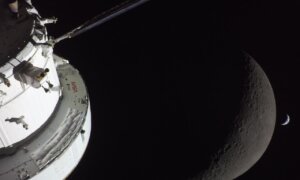
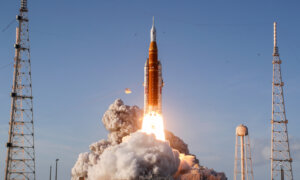
Meanwhile, the first manned mission of this endeavor, Artemis II, is set to launch its flight around the moon no earlier than the evening of April 1.