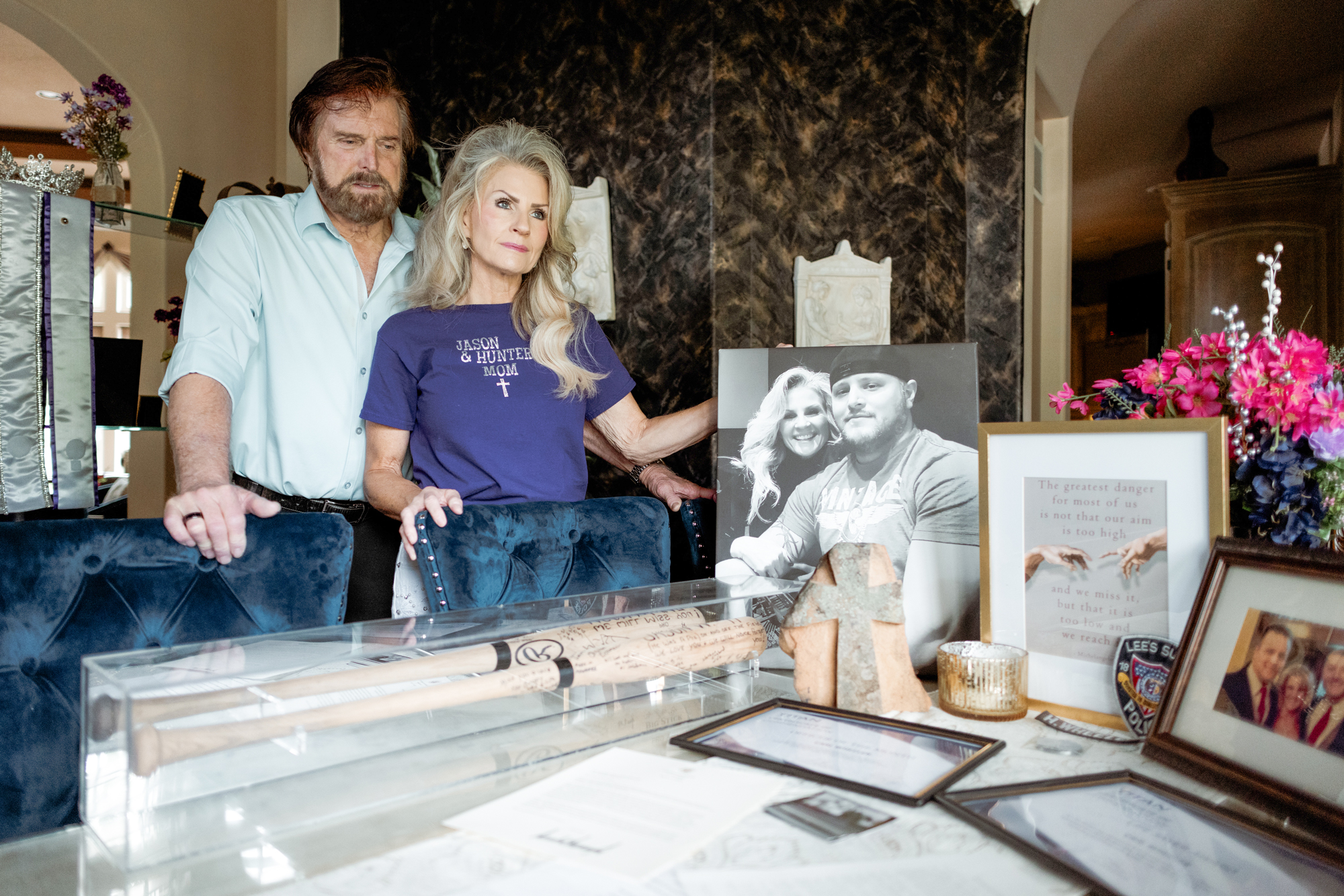

Jason Wheeler, the second of four brothers, vigilantly watched over his siblings, always protecting them, his mother says.
He excelled as an athlete, playing baseball and football in college. Life was promising.
“Jason was a golden boy,” Storm Dillenschneider told The Epoch Times.
Dillenschneider called her son in the spring of 2021 for help with his younger brother, Carl Hunter Wheeler, known as Hunter. The pain pills Hunter thought he was taking were actually laced with fentanyl, she had learned.
Jason quickly agreed to bring his brother home to Missouri from Kansas. They became roommates after finding a place close to Dillenschneider.
She recalls Jason telling her, “‘Mom, I don’t want you to get that phone call,” as they talked about how to help his little brother.
However, just a few months after the family was reunited, Dillenschneider’s world turned upside down. Jason began taking his brother’s pills after suffering a rotator cuff injury while playing league baseball, she said.
Ultimately, her “straitlaced” son—the same young man who earned college scholarships in baseball and football—could not save himself from fentanyl.
“It was Jason who died,” she said, her voice breaking.
He was 33 when synthetic opioids took his life on June 25, 2021.
“I thought a drug addict was somebody homeless under the bridge,“ Dillenschneider said. ”I had no idea it could be somebody that was, you know, a semi-pro baseball player.”
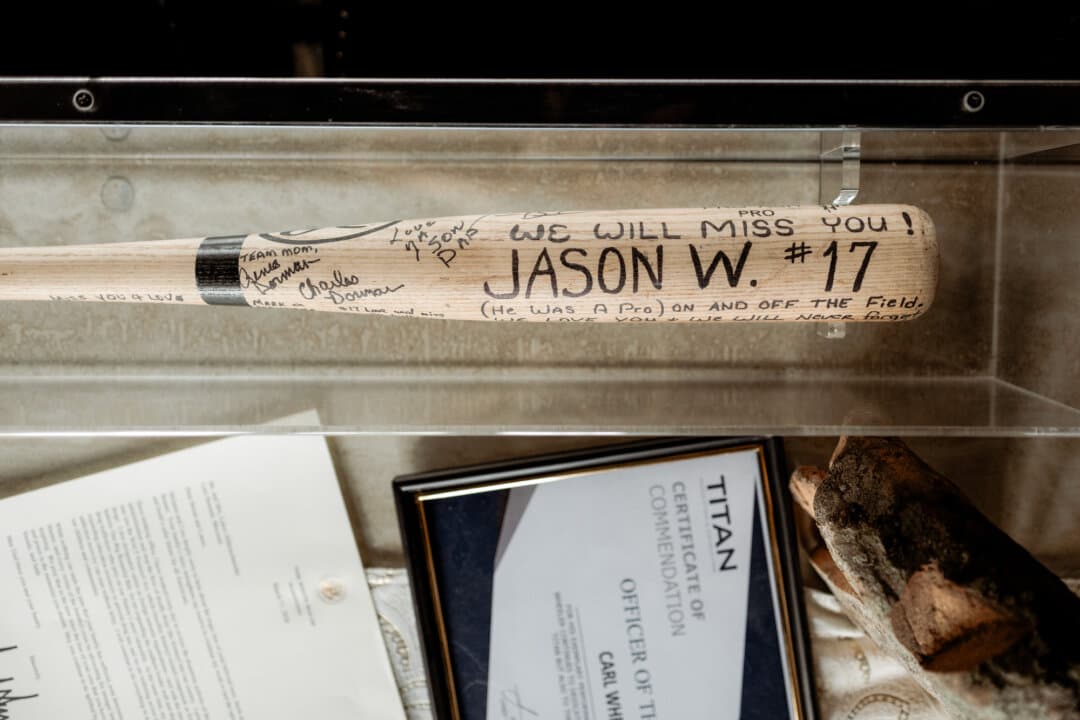

(Top) A baseball bat belonging to Jason Wheeler is displayed in Lee’s Summit, Mo., on May 23, 2026. Wheeler, who played baseball and football in college, died at age 33 from fentanyl. (Bottom) A memorial garden for Jason Wheeler at the home of Storm and Lance Dillenschneider in Lee’s Summit, Mo., on May 23, 2026. (Liz Davenport for The Epoch Times)
Four years later, her heartbreak deepened. On March 5, 2025, Hunter also died after taking a pill laced with carfentanil—a cousin of fentanyl but 100 times more potent. He was 32.
He had struggled with fentanyl addiction for about 10 years and had just gotten out of rehab. Before he died, he told his mother that his drug dealer wouldn’t stop calling him, she said.
“He knew. He told me all the time: ‘The only difference between me and an alcoholic is that if an alcoholic relapses, they can get back on the wagon. I will die,’” Dillenschneider recalled.
Kansas authorities arrested the dealer in January 2025, alleging that he distributed controlled substances that resulted in Hunter’s death.

Certificates, photos, and memorial items belonging to Hunter Wheeler are displayed in Lee’s Summit, Mo., on May 23, 2026. Hunter died at the age of 32 after taking a pill laced with carfentanil—a cousin of fentanyl but 100 times more potent. (Liz Davenport for The Epoch Times)
‘Silent Prayer’
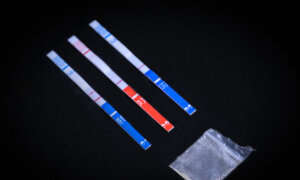
Dillenschneider said she believes that carfentanil may have killed Jason as well. She said one dealer supplied the lethal pills that killed both her sons. Tests that detect carfentanil aren’t always performed.
The ultra-potent synthetic opioid largely disappeared from the United States in recent years, but it is now reappearing on the streets, according to law enforcement.
It is becoming increasingly prevalent as the fentanyl supply faces pressure in China—the primary source of precursor chemicals used in fentanyl production—and intensified enforcement operations against narco-terrorists.
Dillenschneider speaks publicly, warning parents about the dangers of carfentanil and fentanyl alike. She and her husband began working with the Jackson County drug task force.
She said she remembers being at an event to bring awareness to fentanyl, trying to hand out naloxone (often known by the brand name Narcan) to a father, who refused.
“‘Oh no, no, my kids are in sports. They’re too responsible to do drugs,’” Dillenschneider recalled the man saying.
“I’m thinking: ‘Oh my gosh, oh my gosh. Lord help them.’ All I could do was say a silent prayer.”
She lobbies for tougher laws in Missouri that would make it easier to put drug dealers behind bars and hold them accountable for the deaths they cause.

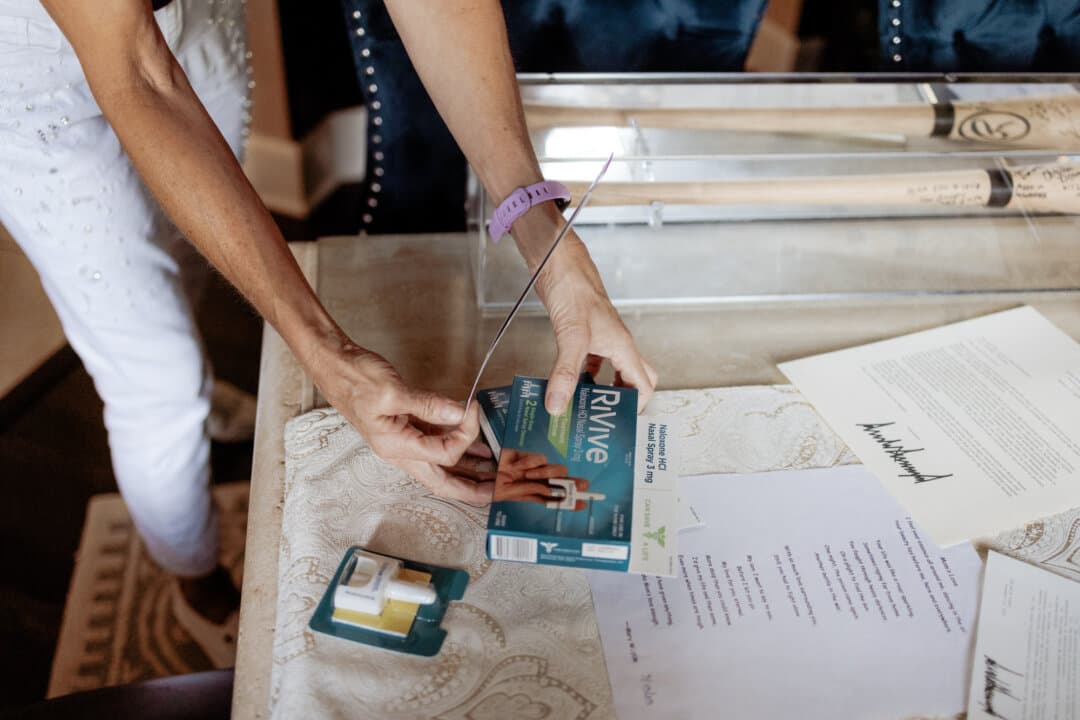
(Top) Storm and Lance Dillenschneider look at family photos at their home in Lee’s Summit, Mo., on May 23, 2026. (Bottom) Naloxone is displayed at the Dillenschneiders’ home in Lee’s Summit, Mo., on May 23, 2026. (Liz Davenport for The Epoch Times)
Powerful Replacement
Carfentanil’s rise corresponds with Beijing’s recent crackdown, in response to international pressure, on the sale of precursors used to make fentanyl. To compensate, traffickers in Mexico are using carfentanil to boost the potency of a weaker version of fentanyl, according to U.S. Drug Enforcement Administration (DEA) intelligence bulletins reviewed by The Associated Press.
According to the DEA’s 2025 National Drug Threat Assessment, the purity of fentanyl dropped throughout 2024. The decrease in purity was consistent with indicators that many Mexico-based fentanyl cooks were having difficulty obtaining some key precursor chemicals.
“DEA reporting indicates that some China-based chemical suppliers are wary of supplying controlled precursors to its international customers, demonstrating an awareness on their part that the government of China is controlling more fentanyl precursors to comply with recent updates to the United Nations counternarcotics treaty,” the report stated.
Carfentanil, although more complex to manufacture than fentanyl, is more profitable for the Mexican drug cartels because it’s more powerful, allowing them to use less to get people hooked, said Frank Tarentino, associate chief of operations for the DEA’s northeast region.
“I think it’s about opportunity,” Tarentino told The Epoch Times. “I think it is a business decision. ... They can make more money off it.”
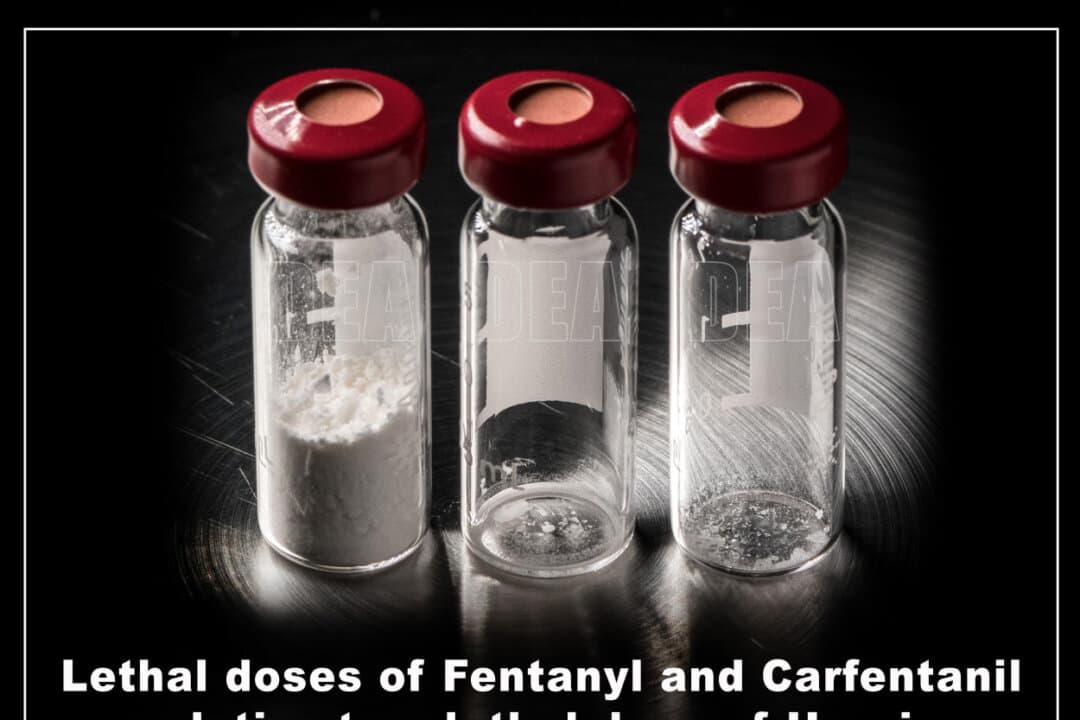
A comparison of the lethal doses of heroin, carfentanil, and fentanyl. Law enforcement reports say carfentanil, which largely disappeared from the United States in recent years, is reappearing as the fentanyl supply faces pressure in China and intensified operations targeting narco-terrorists. (U.S. Drug Enforcement Administration)
Tarentino said carfentanil powder used to come directly from China. Now, rather than the finished product, precursor chemicals needed to produce the drug are going to Mexico, where cartel chemists are synthesizing them, he said. China remains the major source of precursor chemicals for both fentanyl and fentanyl analogues such as carfentanil.
Not surprisingly, the DEA is seizing large amounts of carfentanil on or along the southwest border in places such as Arizona and California, he said.
Tarentino said the drug’s reemergence on the streets began in 2024, as shown by DEA drug exhibits analyzed in labs.
From 2024 to 2026, Tarentino said, the DEA found 144 drug exhibits containing carfentanil in its northeast region, which encompasses 12 states and the District of Columbia. Of those 144 exhibits, 112 exhibits also contained fentanyl.
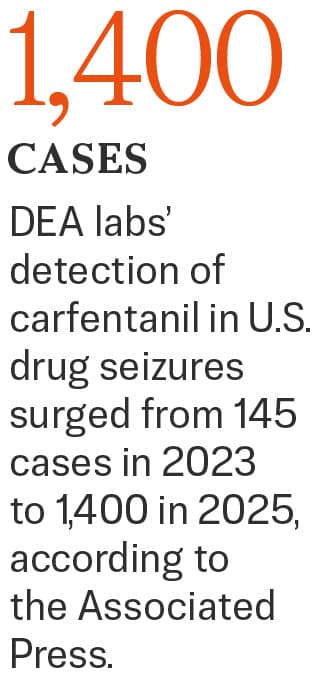
In 2025, DEA labs detected carfentanil 1,400 times in U.S. drug seizures, far more than the 145 instances in 2023 and the 54 instances in 2022, according to The Associated Press.
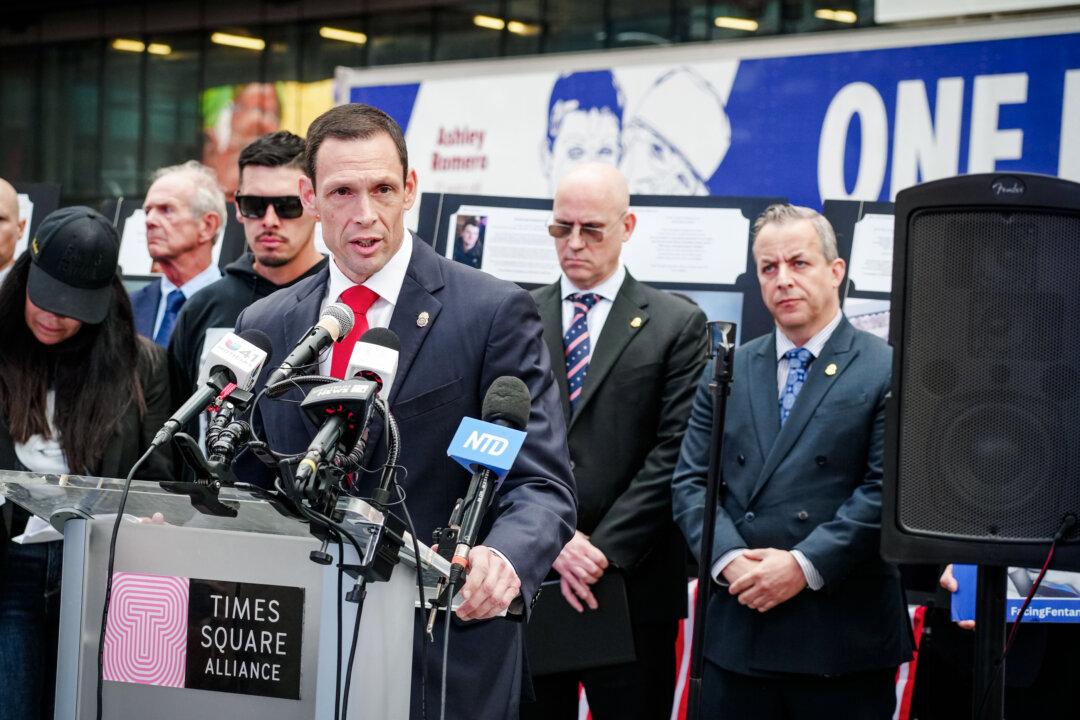
Frank Tarentino, special agent in charge of the Drug Enforcement Administration’s New York Division, speaks at the fourth annual National Fentanyl Prevention and Awareness Day in New York City on Aug. 21, 2025. Tarentino said carfentanil is more profitable for Mexican cartels than fentanyl because its greater potency allows smaller amounts to get users hooked. (Samira Bouaou/The Epoch Times)
Chemical Weapon
Carfentanil is a synthetic opioid used as an elephant tranquilizer or sedative for large animals. It is far more deadly than fentanyl. Just .02 milligrams of carfentanil can be lethal. That is smaller than a grain of salt.
British researchers discovered that Russian forces used the drug as a chemical weapon against Chechen rebels who had taken about 800 people hostage at a Moscow theater in 2002. All the rebels died; so did more than 120 hostages.
In 2017, the World Health Organization deemed carfentanil so dangerous that it recommended the most stringent level of international control.
“Carfentanil can produce lethal effects at extremely small doses equivalent to a few granules of salt, and has potential use as a chemical weapon,” according to the World Health Organization.
A decade ago, carfentanil prompted the DEA to issue a public warning. The drug, which was tied to a slate of overdose deaths across the nation, was so deadly that police and emergency workers were advised not to handle the substance, which can be absorbed through the skin.
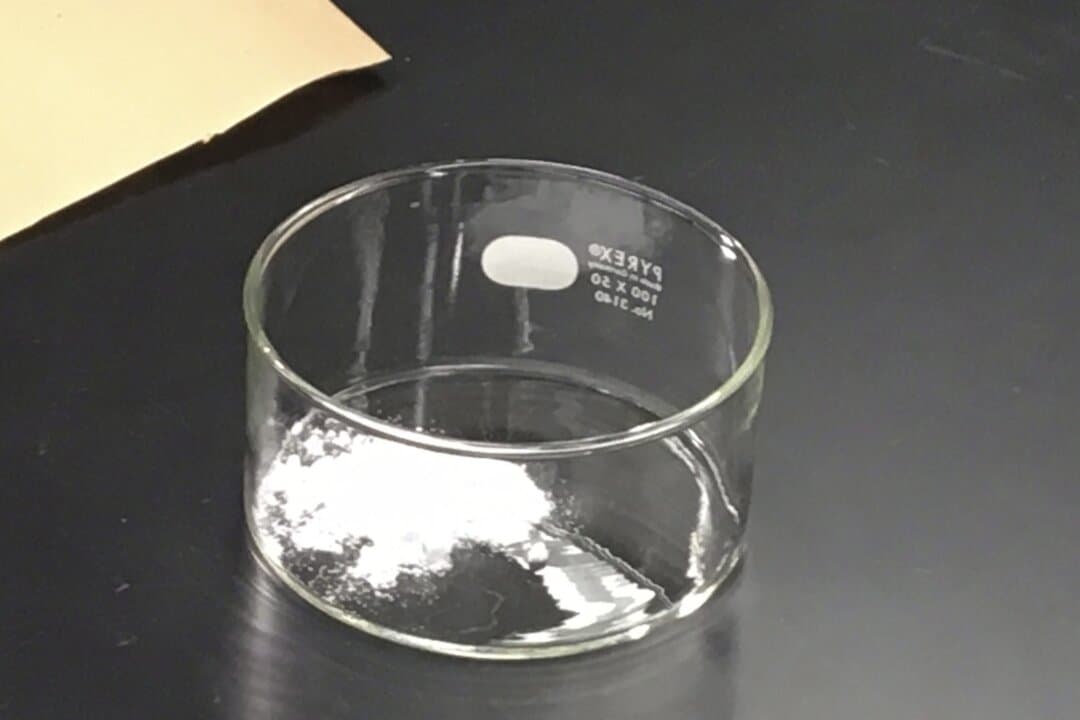
A sample of carfentanil is analyzed at the DEA’s Special Testing and Research Laboratory in Sterling, Va., on Oct. 21, 2016. (Russell Baer/U.S. Drug Enforcement Administration via AP)
Carfentanil’s prevalence declined following China’s 2017 ban, but the situation has shifted again in recent years.
Synthetic Opioid Deaths
Although naloxone can reverse a carfentanil overdose, multiple doses may be needed to save a life because of the opioid’s potency, Tarentino said.
How carfentanil’s spread might affect the number of synthetic opioid deaths, which has been steadily decreasing, has yet to be seen.
A January study published in the journal Science examined the drop in opioid overdose deaths that began in 2024. It suggested that the decrease is the result of the disruption in the supply chain of fentanyl precursor chemicals from China.
The report noted that the drop in the death rate corresponded with a drop in the potency of fentanyl found in illicit drugs.
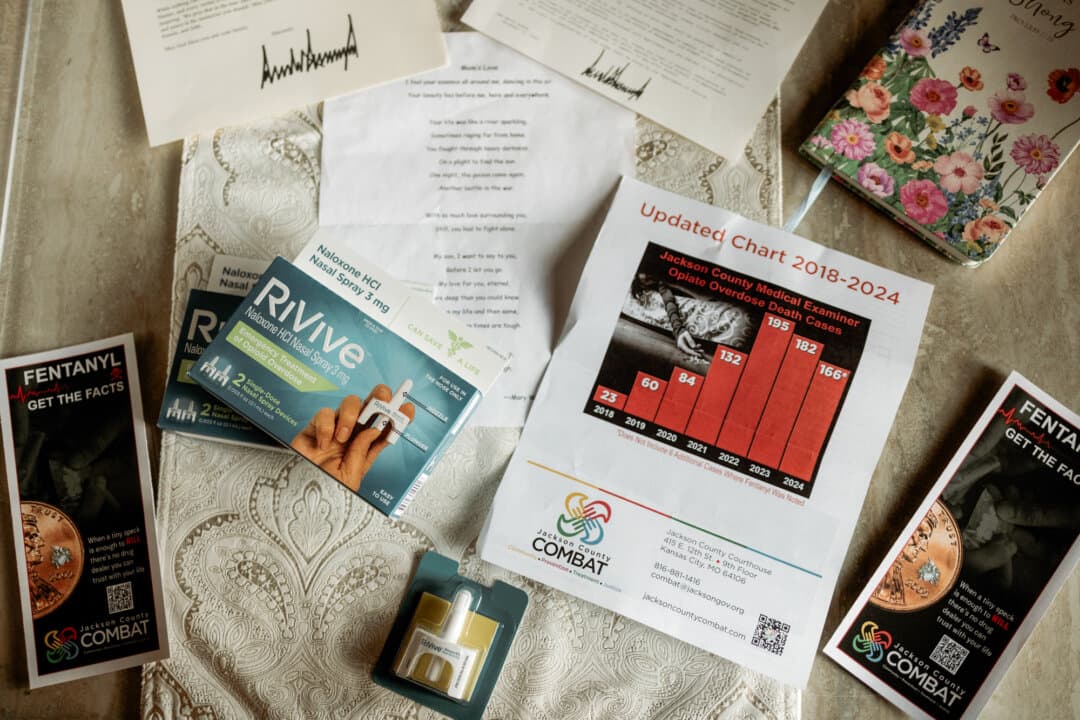
Naloxone is displayed at Storm Dillenschneiders’ home in Lee’s Summit, Mo., on May 23, 2026. Multiple doses of naloxone may be needed to reverse a carfentanil overdose because of the drug’s potency. (Liz Davenport for The Epoch Times)
According to a Centers for Disease Control and Prevention report, the average number of deaths with carfentanil detected sharply increased from 3.3 per month in the period from January 2021 to June 2023, to 34.4 per month from July 2023 to June 2024.
The good news is that carfentanil seizures in 2026 are declining, Tarantino said, although it’s too soon to tell whether the trend will last.
“We’re seeing a little bit of a decrease in the powder and pills seized here in New York, but also across the Northeast,” he said.
Although the drop in carfentanil comes too late for Dillenschneider, she continues to raise awareness in the hope that other parents never lose a child to synthetic opioids.
“Nothing is impossible for God,” she said.