
A Macao court has sentenced a prominent pro-democracy campaigner to 12.5 years in prison, in the communist-ruled territory’s first national security trial.
Au Kam San, a former legislator, received the verdict on Nov. 6 following two days of closed-door trials at the Court of First Instance in Macao.
Au, 69, was convicted of subversion of state power and two counts of establishing contact with organizations outside Macao to conduct activities endangering national security, the court said in a Nov. 6 press release.
He was also found guilty of one count of violating confidentiality, it added.
The case is Macao’s first national security prosecution since Portugal handed the city over to the Chinese Communist Party in 1999, according to the court.
The ruling has renewed concerns over the Chinese regime’s assault on the city’s dwindling freedom, which Beijing has promised to keep untouched for 50 years under a “one country, two systems” framework that also applies to neighboring Hong Kong.
The European Union condemned the jailing of Au, an EU citizen, under Macao’s national security law, enacted in 2009.
His conviction “confirms the erosion of political pluralism and freedom of speech” in Macao, an EU’s diplomatic services spokesperson said in a Nov. 6 statement.
“We regret that access for public, press and diplomats was restricted in the Special Administrative Region,” the spokesperson said.
The sentence was handed down just a day after a Hong Kong court issued a 10-year jail term to Joshua Wong, a leading democracy activist, under a Beijing-imposed national security law—a ruling that drew international condemnation.
For more than two decades, Au served in Macao’s legislature, before announcing in 2021 that he would not seek reelection.
One of the few pro-democracy voices in an assembly dominated by pro-Beijing camps, Au publicly called for an end to Beijing’s human rights abuses and criticized the city government’s policies, including the restrictions on commemorating the 1989 Tiananmen Square massacre in Beijing.
He was behind Macao’s annual vigil commemorating the bloody clampdown in June 1989, when hundreds—possibly thousands—of unarmed pro-democracy protesters were killed by troops and tanks in Beijing.
Macao and Hong Kong used to be the only Chinese territories where people could publicly memorialize the victims, although the event in the former Portuguese colony was relatively smaller than the annual gathering in the nearby financial hub.
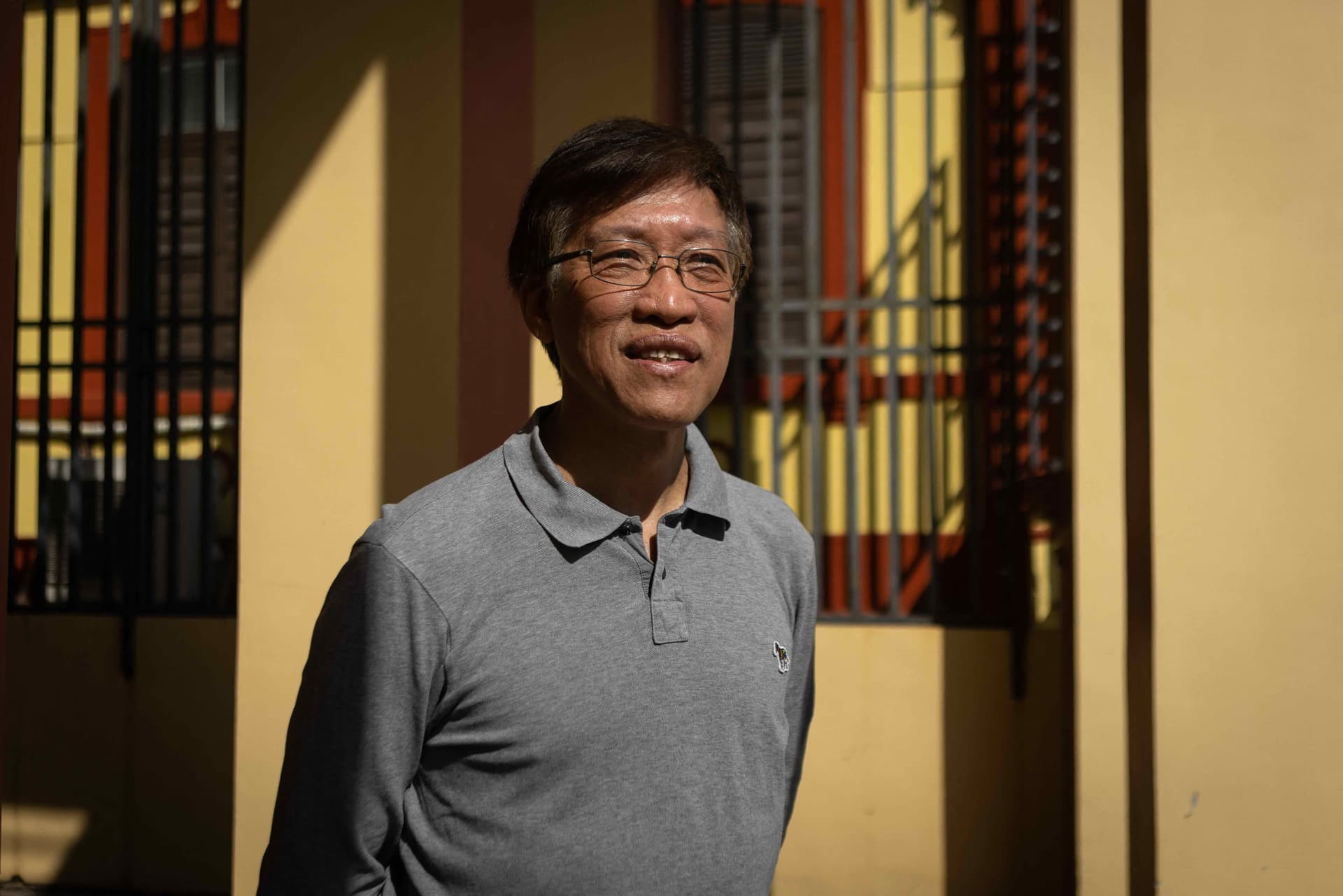
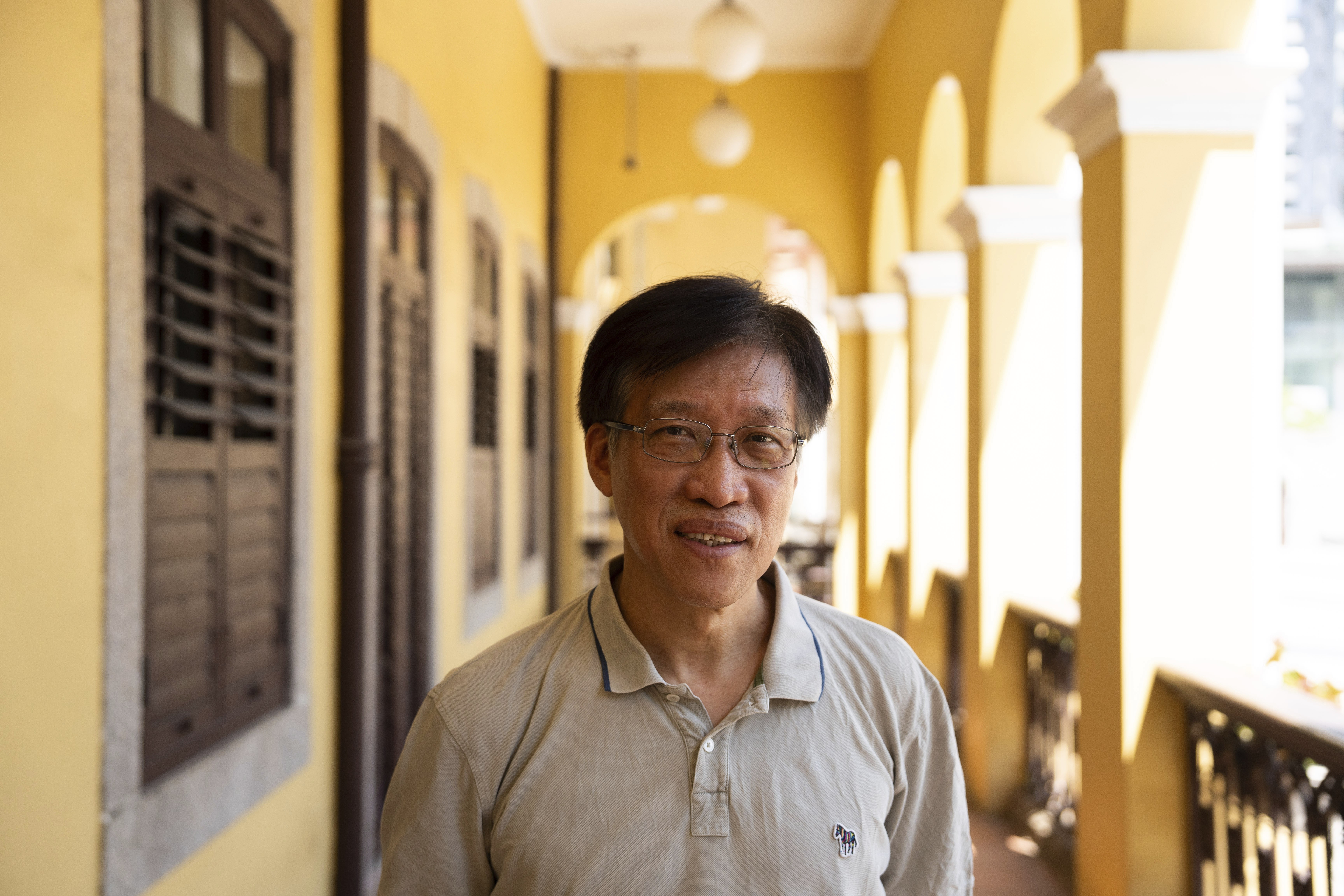
Au Kam San, a primary school teacher who became one of Macau's longest-serving pro-democracy legislators, posing for a portrait in Macau on Dec. 12, 2024. (Eduardo Leal/AFP via Getty Images)
‘Sham Trial’
Au, who was arrested last year, would be over 80 by the time he completes his jail term.
His wife, Cheang Mio San, said her only hope is that the authorities could allow the family to correspond with Au by letter and visit him regularly, without imposing additional conditions.
“From a closed-door trial to a public verdict, what kind of procedure is this? This is a political trial, an unjust persecution based on fabricated accusations, and an attempt to humiliate one’s character!” Virginia Cheang wrote in a letter published by multiple Chinese-language media outlets in Hong Kong.
Michael Polak, Au’s international counsel, said his client should never have been detained for his “non-violent beliefs.”
He denounced the proceedings against Au, whom he said is a Portuguese citizen, as a “sham trial” that “brings shame upon Macao” and will damage the city’s global reputation for the rule of law.
The ruling “brings Macao in line with the most repressive states around the world, where the executive has the power to imprison those with whom it disagrees, with no semblance of a proper, fair legal process,” Polak, director of London-based Justice Abroad, said in a Nov. 8 statement.
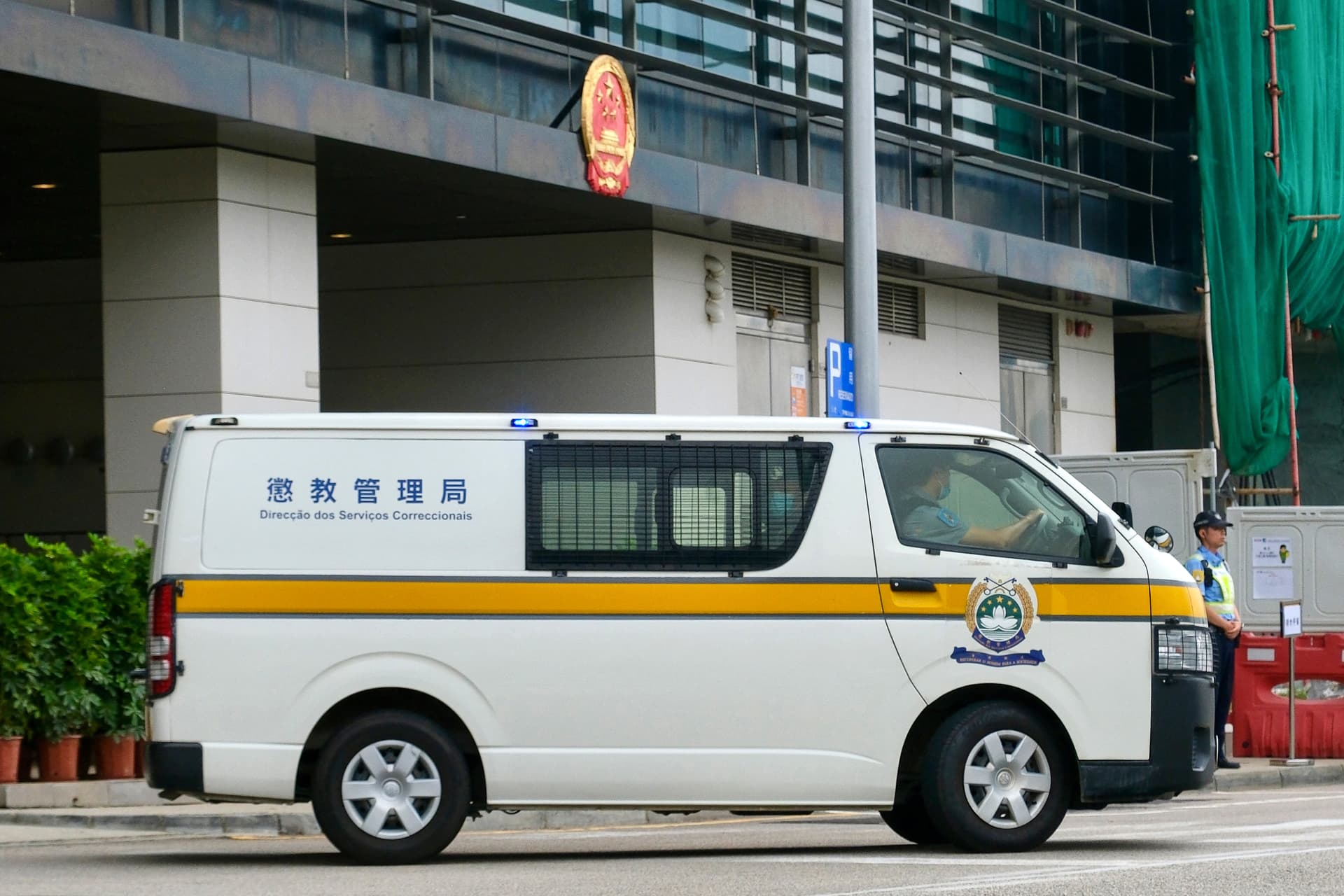
A prison van is seen outside the Court of First Instance in Macau on Nov. 6, 2026. (Tommy Wang/AFP via Getty Images)
Taiwan’s Mainland Affairs Council said the case deepened international concerns about the independence of Macau’s judiciary and the rule of law.
“Following the case, we fear Macau residents could face further restrictions on their political rights, freedom of expression, and basic human rights,” the council said in a statement.