
A Chinese environmental activist known for investigating industrial pollution has been detained, according to his family and environmental volunteer groups.
Environmental advocates suspect the arrest is due to his previous investigations into pollution in a major lithium-producing region of China.
Zhang Wenbin was taken into custody on the evening of Oct. 18 or 19 while going to work in Urumqi, the capital of Xinjiang, his sister told a fellow activist in an online interview. His family realized he was missing on the evening of Oct. 21 and contacted the local police. They later learned that officers from Wanzai County in Yichun, Jiangxi Province, had taken him, according to his sister.
Jiangxi Province is about 2,100 miles away from Urumqi, Zhang’s hometown.
On Oct. 23, Zhang’s family received an official document from the Wanzai Police Department. The police later called the family and said that Zhang had been placed under criminal detention on suspicion of extortion. They also said he would be held for at least 37 days and asked the family to send him clothing, Zhang’s sister said.
Authorities have not publicly stated there is a connection between Zhang’s detention and his investigations. But environmental groups believe there is one.
Zhang has spent more than a decade investigating industrial pollution across China. He operates a WeChat public account called Zero-Distance Pollution Task Force, which has published reports on alleged environmental problems at industrial sites, including in Wanzai.
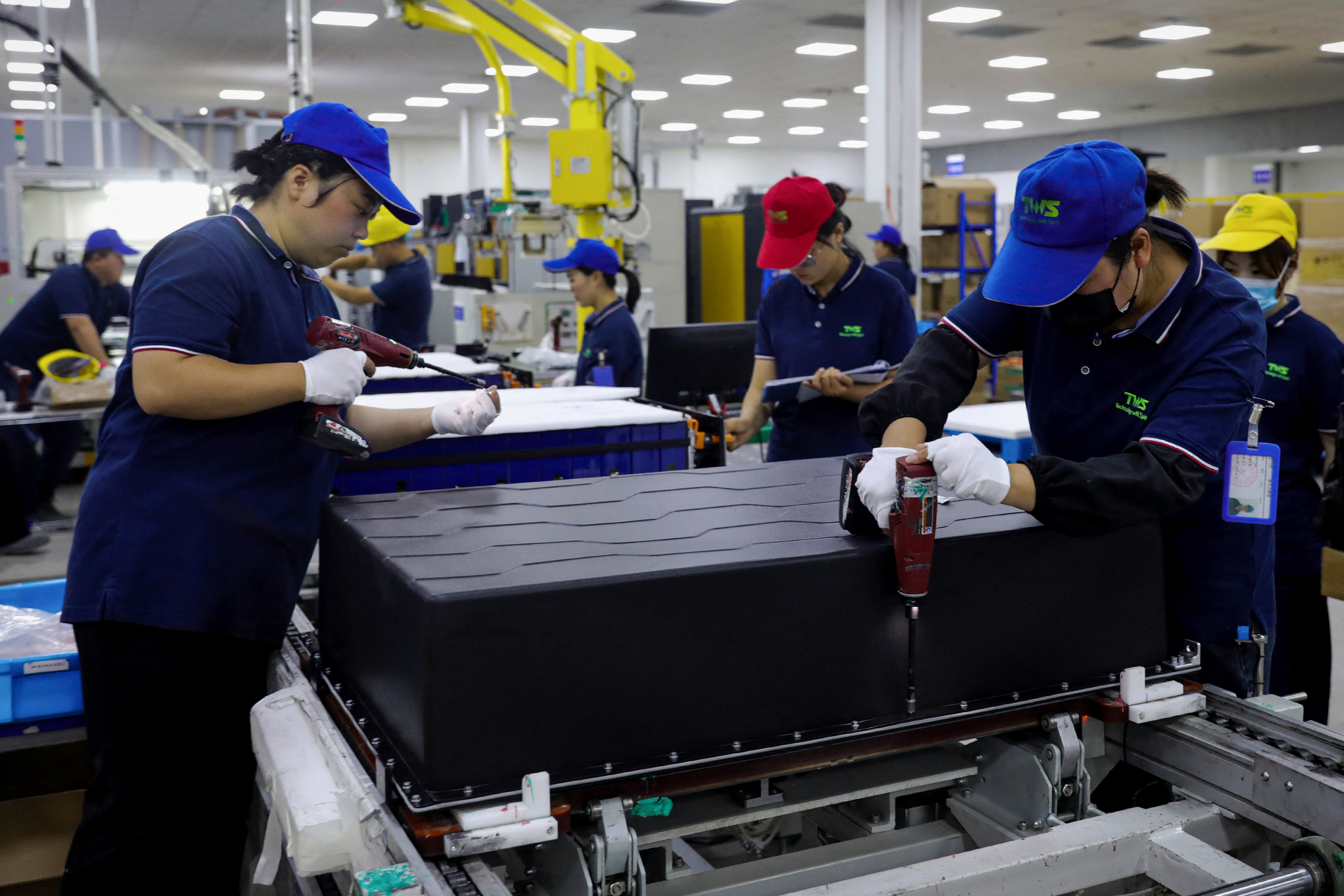
Wanzai is a county within Yichun, an important center of China’s lithium industry, which has expanded rapidly in recent years amid the growth of electric vehicle production, drawing attention to the environmental risks associated with lithium extraction, processing, and waste disposal.
One report, published in January 2018 under this account, examined a wastewater outlet beside the Jinjiang River near Wanzai Industrial Park. Chemical oxygen demand, a measure used to assess organic pollution in water, was found to be more than 15 times the acceptable level cited in the report.
Zhang returned to Wanzai in 2023, publishing a report that named Jiangxi Nanshi Lithium New Materials Co., a company operating in the industrial park. The report alleged that two lithium-slag storage facilities had damaged roof coverings and lacked systems to collect leachate and barriers to prevent seepage. It also said trucks transporting lithium slag spilled material along roads and generated dust.
Lithium slag, a waste product, can contaminate soil and water if improperly stored.
In 2019, Zhang traveled to the site of a major explosion at a chemical industrial park in Xiangshui county, Jiangsu province, to investigate environmental conditions. Zhang later said he had been questioned by authorities at the time on suspicion of “picking quarrels and provoking trouble,” a public-order offense under Chinese law. Xiangshui police confirmed he was taken in for investigation, and he was released the same day.
In 2023, Zhang conducted an investigation at the Xiegou coal mine in Xing county, Shanxi province, on behalf of the environmental organization Friends of Nature, according to the organization. He photographed what appeared to be black wastewater flowing from the mine toward the Lanyi River, a tributary of the Yellow River. He was subsequently beaten in a confrontation with company personnel, and his vehicle was damaged, the report said.
Under China’s Criminal Procedure Law, 37 days is the maximum period police can hold an individual in pre-trial detention.
Fellow activists and The China Human Rights Defenders network have condemned the arrest, demanding that the Jiangxi provincial government immediately disclose the grounds for Zhang’s detention and ensure his access to defense counsel.