
Rank-and-file lawmakers have voiced frustration over the lack of progress on finding a way to keep health care affordable for Obamacare users while reducing overall health costs for all Americans.
This issue drove the recent federal government shutdown, as Senate Republicans refused to reauthorize the enhanced tax credits that shielded Obamacare users from skyrocketing costs for five years, and Democrats refused to fund the government unless they did.
Now, four weeks before the tax credits expire, some rank-and-file legislators are proposing solutions of their own—and voicing frustration at party leaders for inaction.
Meanwhile, Republican leaders are working furiously to craft a plan that will unite their razor-thin majority while top Democrats continue to insist on a clean extension of the credits, with no reforms to curb the fraud and abuse.
Bipartisan Plan Offered
A bipartisan group of 35 House members led by Reps. Josh Gottheimer (D-N.J.) and Jen Kiggans (R-Va.) on Dec. 4 introduced Common Ground 2025, a plan that would extend the enhanced credits for two years, accompanied by some initial reforms and followed up with a revision of the Affordable Care Act.
Rep. Jeff Van Drew (R-N.J.), an opponent of Obamacare, said the plan would allow people to remain insured next year while buying time to craft a permanent solution.
“Quite frankly, I wish we didn’t have 43 days off,” Van Drew added, referring to the six weeks the House was out of session during the shutdown. “We could have worked on health care that entire time. But here we are.”
Rep. Mike Lawler (R-N.Y.) voiced similar frustration at the lack of progress. “It’s very easy to say what you’re against, and it’s very easy to point the finger at the other side,” Lawler said. But solving a problem “requires all of us working together, and our leadership focusing on getting a solution, rather than a political win.”
Kiggans said the two-year extension of the enhanced tax credits would include some reforms Republicans have sought, including an income cap on eligibility and measures to prevent fraud, waste, and abuse.
The next step would be to enact Obamacare reforms by mid-2026 to address hospital billing transparency, eliminate $0 premiums, and introduce Health Savings Accounts to the program.
Democratic Leaders Push for Clean Extension
Republicans, who control the Senate, promised Democrats a vote on extending the enhanced tax credits in exchange for eight Democrats voting with the majority to reopen the government on Nov. 12.
That vote will take place on Dec. 13.
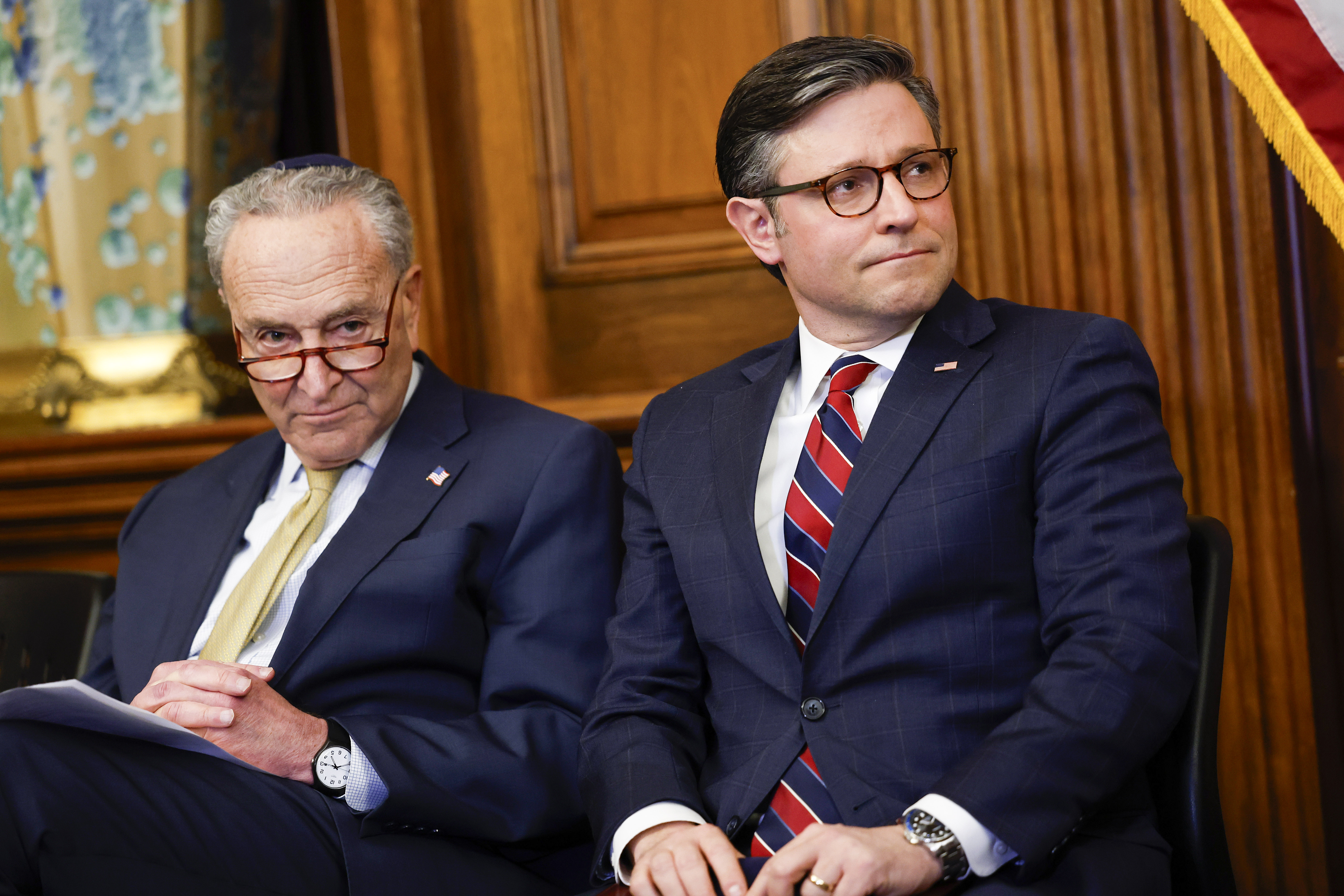
Senate Minority Leader Chuck Schumer (D-N.Y.) said his party will present a clean extension of the enhanced tax credits for three years, which he said is a test for Republicans.
“Every single Democrat will support it,” Schumer said on Dec. 4. “That means Republicans have only one week to decide where they stand.”
Both Schumer and House Minority Leader Hakeem Jeffries (D-N.Y.) declined to discuss Common Ground 2025 or a competing plan put forward by 115 House Democrats on Dec. 3.
“The path forward that has the greatest number of votes in both the House and the Senate is a three-year extension of the Affordable Care Act tax credits,” Jeffries told reporters on Dec. 4.
Some Democrats doubt that.
Rep. Greg Landsman (D-Ohio), a member of the Common Ground 2025 group, said, “We haven’t seen a plan from leadership on either side that would get 60 votes [in the Senate] or the votes necessary in the House,” Landsman told reporters on Dec. 4.
Republicans Seeking Unity
Several rank-and-file Republicans have proposed their own ideas for resolving the high cost of health care, but none has gained broad acceptance.
Sen. Josh Hawley (R-Mo.) was the latest, with his proposal to allow taxpayers to deduct all out-of-pocket medical expenses up to $25,000 per person, even if not itemizing deductions, and to make health insurance premiums paid by individuals tax-deductible.
Sen. Rand Paul (R-Ky.) proposed allowing consumers to buy association health plans through vendors such as Amazon, Costco, or Sam’s Club.
President Donald Trump and Sens. Rick Scott (R-Fla.) and Bill Cassidy (R-La.) have separately pitched ideas for making cash payments to individuals that can be used for health care only, rather than paying insurance companies.
Some Republicans have said they are willing to extend the enhanced tax credits. Others have said they would do so only grudgingly, or only if accompanied by significant reform.
Schumer said of Republicans: “They don’t even have a plan. They don’t even have two plans they’re divided about. They’re all over the lot.”
House Speaker Mike Johnson (R-La.) said that’s because the razor-thin House majority requires finding a plan that nearly every Republican can agree on, but added that they would present a proposal soon.
“What I’ve got to do is build consensus deliberately around the best ideas, and we’ve been working on that,” Johnson told reporters on Dec. 2. “We understand the need of bringing down health care costs and at the same time raising access to care and quality of care.
“We’re going to improve the system for Americans,” Johnson said.