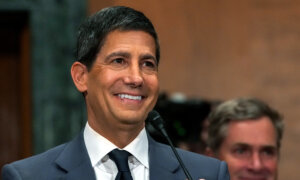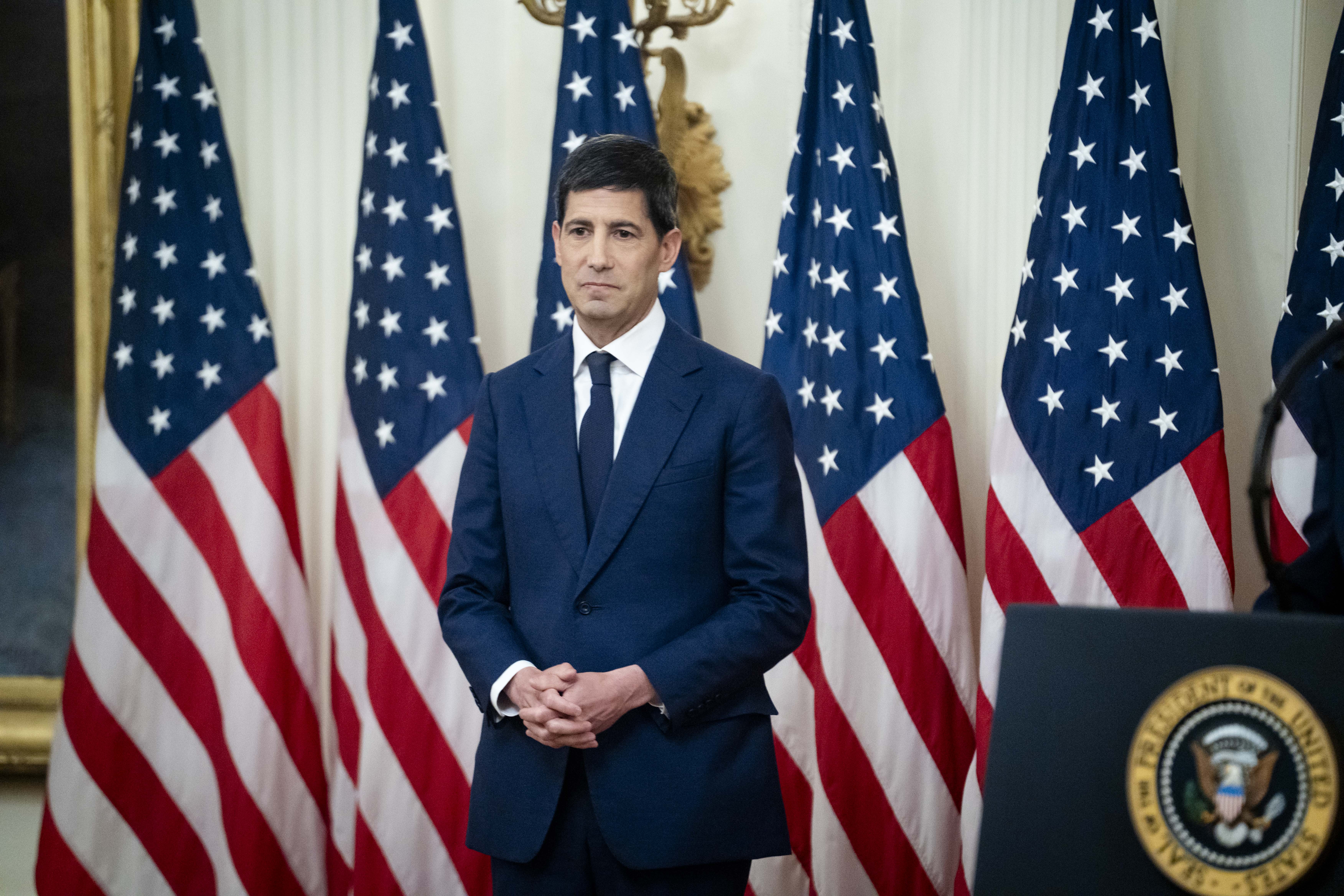
Federal Reserve Chair Kevin Warsh was sworn in on May 22 and said that he plans to lead a reform-oriented central bank for the next four years.
At his swearing-in ceremony, Warsh said he’s committed to fulfilling the Fed’s core mission of price stability and maximum employment while also bringing changes to the institution.
“I will lead a reform-oriented Federal Reserve, learning from past successes and mistakes both, escaping static frameworks and models, upholding clear standards of integrity and performance,” he said, alongside President Donald Trump.
This initiative, he says, will mark a “return to an institution that I do, in fact, cherish.”
The swearing-in ceremony was held in the White House’s East Room for the first time in 39 years. Supreme Court Justice Clarence Thomas administered the oath, and Trump hosted the ceremony.
Alan Greenspan, appointed by President Ronald Reagan to succeed Paul Volcker, was also sworn in at the White House in August 1987.
In January, the president nominated Warsh to become the 17th chairman in the Fed’s 113-year history.
In his introductory remarks, Trump urged Warsh to “just do your own thing and do a great job.”
“I want Kevin to be totally independent,” Trump said. “Don’t look at me, don’t look at anybody.”
Trump’s pick to succeed Jerome Powell has come under fire over concerns that he will erode monetary autonomy and take direction from the White House, specifically by cutting interest rates.
This marks Warsh’s second stint at the Fed, after serving as a member of the Board of Governors from 2006 to 2011, including during the global financial crisis.
But Warsh reaffirmed his commitment to carrying out the “mission and the very best traditions” of the Federal Reserve.
“Our mandate at the Fed is to promote price stability and maximum employment,” Warsh said.
“When we pursue those aims with wisdom and clarity, independence and resolve, inflation can be lower, growth stronger, real take-home pay higher, and America can be more prosperous, and no less important, America’s place in the world more secure.”
Over the past two years, Warsh has been vocal about the mistakes the central bank has made and the policies he would implement.
During his confirmation hearing before the Senate Banking Committee last month, Warsh proposed making changes to how the Fed communicates, what it should target when crafting policy, and how he views the current economic landscape.
Warsh’s ascension to chairman comes at a time when he will navigate a minefield, particularly with a reacceleration of inflation.
April’s annual inflation rate reached 3.8 percent for the first time since May 2023. Underlying inflation pressures also appear to be building following the latest tranche of data.
Minutes from last month’s Federal Open Market Committee suggest monetary policymakers are considering a rate hike to be their base case.
“A majority of participants highlighted, however, that some policy firming would likely become appropriate if inflation were to continue to run persistently above 2 percent,” the meeting summary, released on May 21, stated.
While he does not believe the Fed will have to raise interest rates, Fed Gov. Christopher Waller says it is “kind of crazy” to consider lowering interest rates in the near future.
“You just can’t look at this data and say, ‘Yeah, we could cut rates by September or something,’” Waller said during a European Central Bank event in Germany on May 22. “You can’t be serious as a central banker and talk like that.”
Investors have been gradually pricing in the Fed pulling the trigger on a quarter-point rate hike later this year, according to futures market data.
How the president would react to this is unclear, but senior administration officials have said they would understand if the Fed kept the prospect of a rate cut on hold until the war in Iran was resolved.
But Trump has repeatedly lambasted former Fed Chair Jerome Powell, who will remain on the board, for failing to cut interest rates.
Warsh will helm his first policy meeting when the central bank convenes on June 16 and 17.
Wall Street overwhelmingly expected the Fed to leave the benchmark federal funds rate—a key policy rate that influences borrowing costs for businesses and consumers—in the current target range of 3.5 percent to 3.75 percent.
Emel Akan contributed to this report.