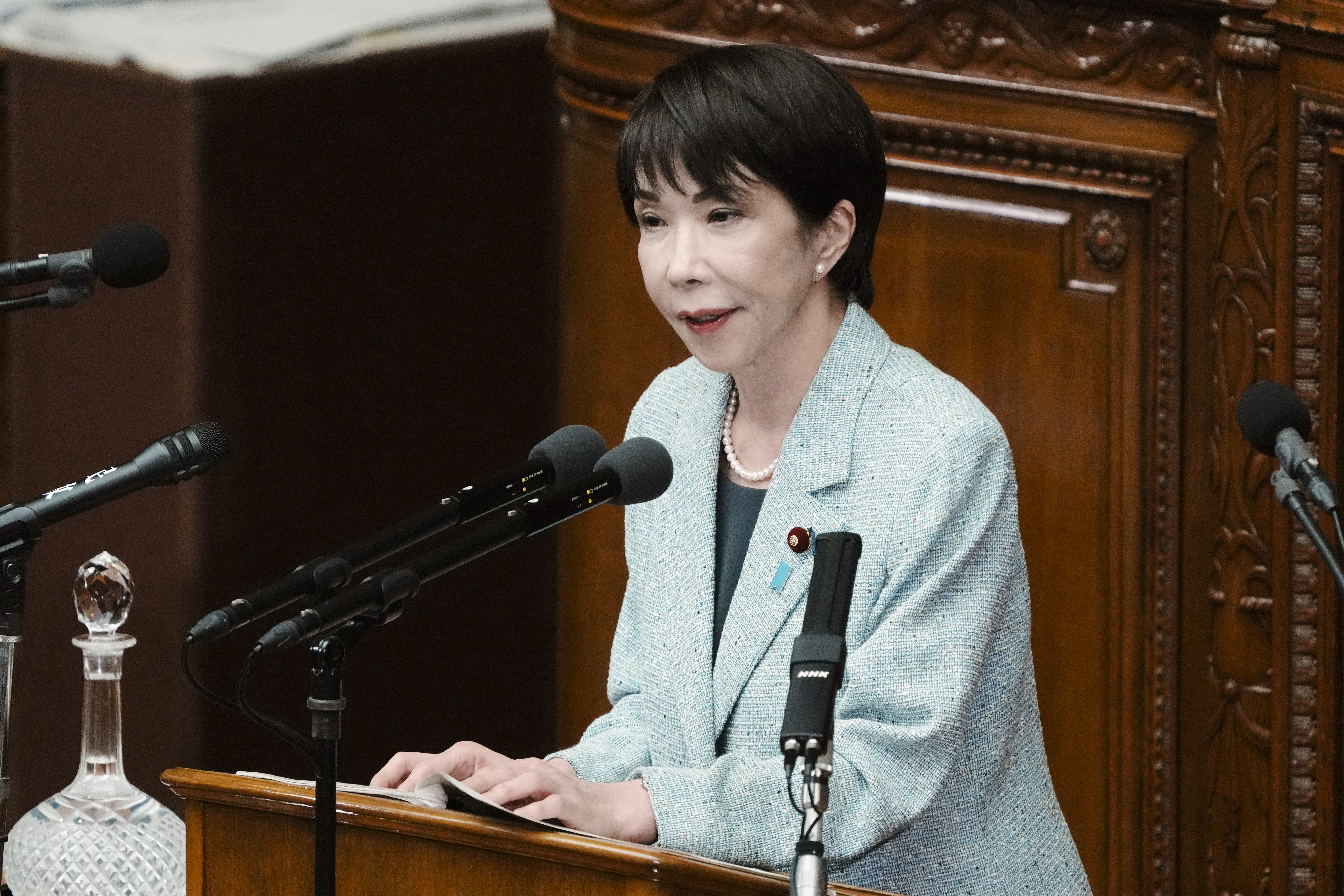

The Japanese government will keep assessing the impact of Beijing’s reprisals on the nation’s economy, Prime Minister Sanae Takaichi said on Dec. 9, as the Chinese regime’s trade and diplomatic pressures on Tokyo escalated.
“We will closely monitor the situation, including the impact of a series of measures taken by the Chinese side, and respond appropriately,” Takaichi told a parliament committee.
The prime minister was responding to a question about the economic impact of Beijing’s retaliation, which includes warning Chinese tourists against traveling to the archipelago, instructing airlines to reduce Japan-bound flights, and canceling concerts by Japanese singers.
Takaichi told lawmakers that the Japanese government remained open to various forms of dialogue with China and that its policy of reducing these issues and increasing understanding and cooperation with Beijing remained “unchanged.”
“At the same time, the government has long believed it is important to promote inbound tourism from various countries and regions, as well as the broad overseas expansion of Japanese content,” she said. “We will continue to steadily advance these efforts.”
The Chinese Communist Party (CCP) has unleashed a sweeping campaign against Japan since Takaichi, in response to a Nov. 7 parliamentary question, linked a Taiwan contingency to a potential “survival-threatening situation” for Japan, a classification that could allow the government to mobilize its troops to intervene.
Major Chinese airlines, in response to the regime’s travel warnings, have announced full refunds for flights to Japan through the end of this year. On Dec. 5, the three largest state-backed airlines—Air China, China Southern, and China Eastern—said in separate notices that the free refund policy for Japan-bound flights had been extended for an additional three months.
More than 40 percent of Japan-bound flights scheduled from China in December had been canceled, China’s state broadcaster reported on Dec. 1, citing an unspecified platform. It added that the number of cancellations had surpassed 1,900.
On Dec. 8, the operator of Jian Zhen Hao, a ferry that sailed between Shanghai and the Japanese cities of Osaka and Kobe, announced the suspension of its passenger service, citing directives from Chinese authorities. The operator added that it’s unclear when the service will resume.
China has consistently been the top source of visitors to Japan. In October, there were 3.9 million international arrivals, with nearly one-quarter of them from mainland China and Hong Kong, according to figures from Japan’s National Tourism Organization.
The tourism sector is a key driver of Japan’s economy. Tourists from China and Hong Kong spent 2.4 trillion yen ($15.2 billion)—more than visitors from any other country—data from Japan’s tourism agency showed.
While the influx of billions of tourists brings substantial economic benefits every year, local residents have complained of disruption to their daily lives. Authorities in popular destinations, such as Okinawa, have been grappling with issues of overtourism, as well as the growing dependence on tourism revenue.
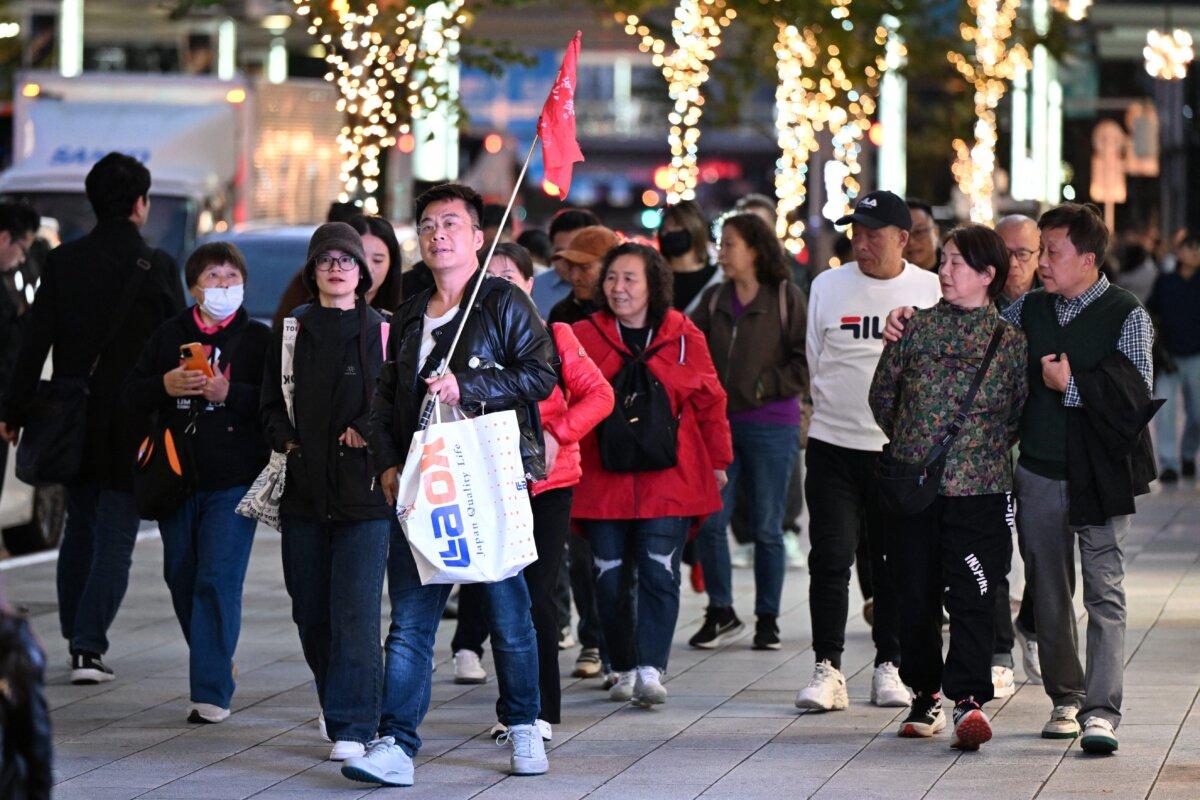
A Chinese tour group walks in the Ginza shopping district in Tokyo on Nov. 17, 2025. (Greg Baker/AFP via Getty Images)
Taiwan
Aside from economic measures, the CCP has been working to rally support from foreign nations, such as Russia, France, and the UK, in an effort to isolate Japan in the simmering spat.
On Dec. 8, while hosting visiting German Foreign Minister Johann Wadephul, the CCP’s top diplomat Wang Yi urged Berlin to “understand and support” China’s position on Taiwan, according to a Chinese summary of the meeting.
Wang told Wadephu that Japan—referred to as a “defeated country” in World War II—should “act with great caution,” since this year marked the 80th anniversary of the end of the war, according to a separate statement from his ministry, which focused on Wang’s remarks regarding Taiwan.
Accusing the Japanese prime minister of threatening “the use of force against China,” Wang called her remarks “completely and utterly unacceptable,” the foreign ministry said.
Japan ended its colonial rule over Taiwan in 1945, transferring control to the Chinese nationalist government led by Chiang Kai-shek.
The nationalist government retreated to Taiwan in 1949 after losing the Chinese Civil War to the CCP, which has since started one-party rule on the mainland.
Despite the CCP’s pledges of reunification with Taiwan—and refusals to renounce the use of force to achieve the target—it has never governed the self-ruled democracy.
In Taipei, the Foreign Ministry said on Dec. 9 that no matter how many times the CCP repeated its claims, it would “never become the truth.”
“Only the Taiwanese government, elected through democratic processes, can represent Taiwan and its 23 million people in the international community and multinational organizations. China has no right to intervene,” Hsiao Kuang-wei, a spokesperson for Taiwan’s foreign ministry, told reporters, according to Taiwan’s national Central News Agency.