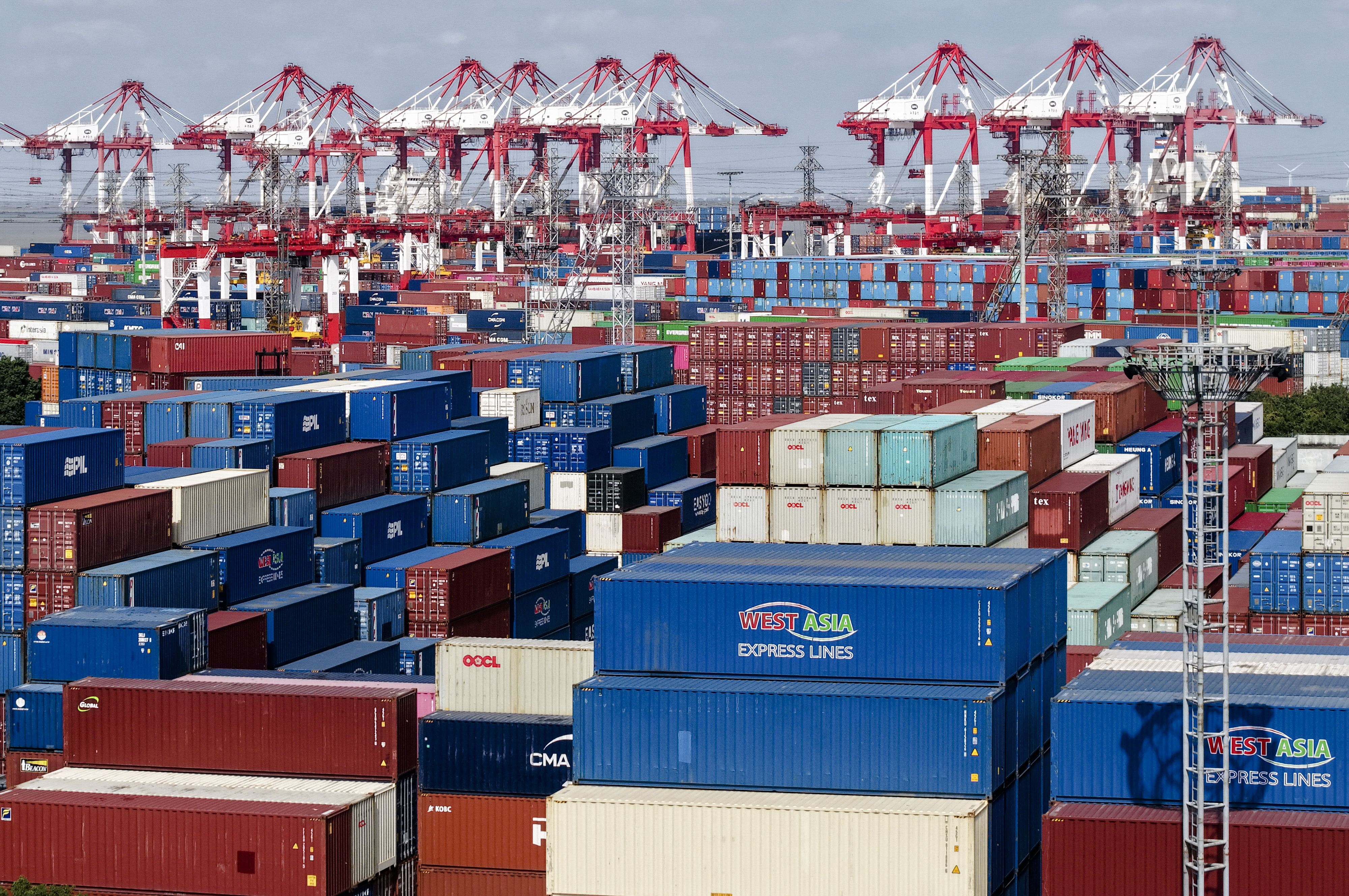

As the Trump administration implements tariffs to correct decades of trade imbalances with China, Beijing’s export-driven playbook is drawing fresh scrutiny around the world.
Analysts said China’s “beggar-thy-neighbor” strategy of expanding exports at the expense of other countries’ industries is now being met with growing international backlash, prompting other countries to consider new tariffs and defensive trade measures.
Export Surge Masks Trade Imbalance
The Chinese Communist Party (CCP) is preparing for its annual Central Economic Work Conference, and its newly released “15th Five-Year Plan” again highlights its ambition to build a “manufacturing powerhouse.” But according to analysts, the global environment is shifting drastically against Beijing’s model.
Despite high U.S. tariffs, reduced only slightly from 57 percent to 47 percent under a late-October agreement, China has adapted. Since the Trump administration first raised tariffs in 2017, Chinese exporters have increasingly routed goods through lower-income countries, shifting parts of their supply chains to Southeast Asia before re-exporting to the United States.
Official Chinese customs data published on Dec. 8 reveal the consequences. China’s exports to the United States plunged by 28.6 percent in November year over year. Yet total exports rose by 5.9 percent, beating expectations because of soaring shipments to Association of Southeast Asian Nations members and the European Union.
Imports, by contrast, grew by just 1.9 percent, well below forecasts.
In a Dec. 6 column for The Wall Street Journal, chief economics commentator Greg Ip wrote that while some U.S.–China data may be distorted by firms rushing to import before tariffs rise, the broader pattern is unmistakable. For five straight years, China’s exports have surged while its imports have stagnated. Beijing, he wrote, is expanding its share of global manufactured goods at the expense of other nations’ growth.
Goldman Sachs reached a similar conclusion in a recent forecast, saying that China’s economic relationship with the rest of the world has turned negatively correlated, meaning that China’s gains increasingly come as other economies lose ground. As Beijing pushes its manufacturing sector to become even more competitive, the firm warned, the pressure will intensify on industrial economies in Europe, East Asia, Canada, and Mexico.
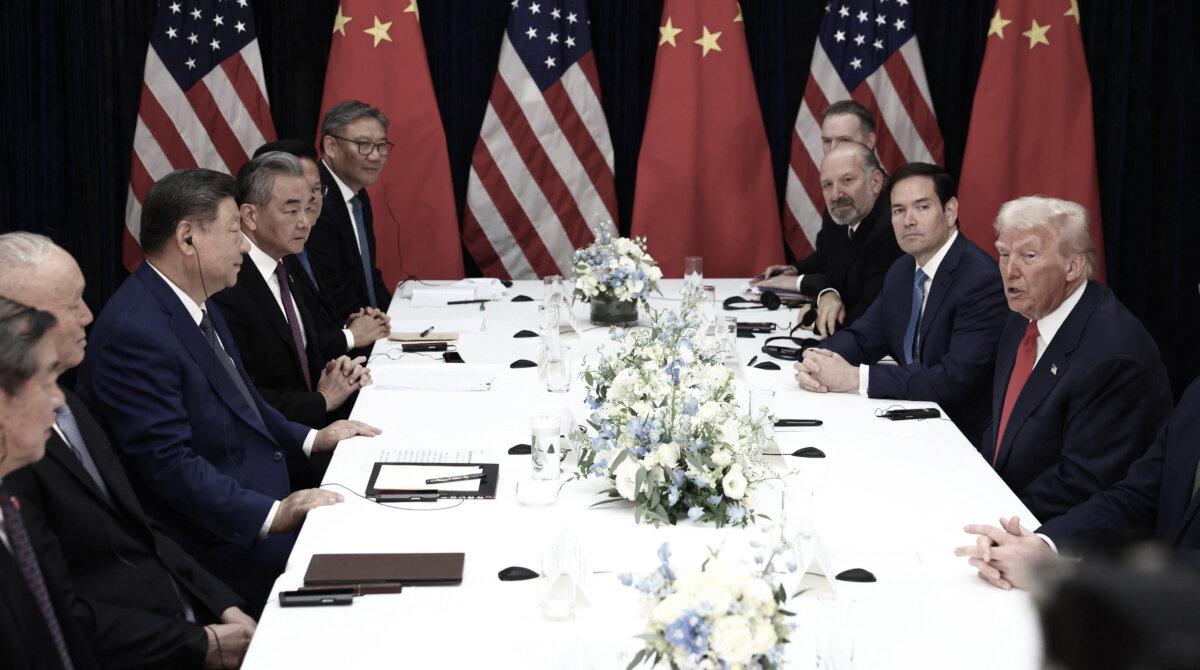
U.S. President Donald Trump (R front) and Chinese leader Xi Jinping (3rd from L) hold a bilateral meeting at Gimhae International Airport in Busan, South Korea, on Oct. 30, 2025. (Evelyn Hockstein/Reuters)
A Model Fueled by Subsidies and Political Strategy
According to analysts, this aggressive export orientation is not new. Instead, it has become more extreme in recent years.
Elliot Fan, economics professor at National Taiwan University, told The Epoch Times that Beijing has pushed its export-driven model to “a highly distorted level,” which involves manipulating the Chinese currency and deploying subsidies, tax breaks, and other industrial policies to keep manufacturing costs artificially low.
He cited two reasons.
“One reason is that China’s economy has been declining in recent years, making exports the last remaining engine of growth, and that provides the regime with some political legitimacy,“ he said. ”The second reason is that the CCP has realized that manufacturing can serve as a symbol of national strength while simultaneously weakening other countries’ industrial capabilities, such as the U.S. shipbuilding industry.”
“That model has gone on for years,“ he said. ”Now the United States is no longer tolerating it, and other countries can’t absorb the impact, either.”
Paul Chiou, associate professor in economics at Northeastern University, told The Epoch Times that China’s price-driven export strategy has “disrupted the entire global economic order,” hollowing out labor markets elsewhere and weakening innovation in foreign manufacturing industries.
This model also reflects Beijing’s internal constraints, which include collapsing domestic consumption, deepening deflation, and severe industrial overcapacity in sectors such as steel, electric vehicles, and solar panels, among others.
“China’s economic strategy has always prioritized production over consumption,” Chiou said.
The post-COVID-19 pandemic reorganization of global supply chains has accelerated the shift. The world is splintering into trade blocs, according to Chiou. The United States and the EU are drawing closer, while China is relying more heavily on countries aligned with or isolated alongside it, such as Russia, Iran, North Korea, and small African states susceptible to pressure. Other regions, including India, Southeast Asia, and parts of Latin America and the Middle East, are attempting to balance between competing powers.
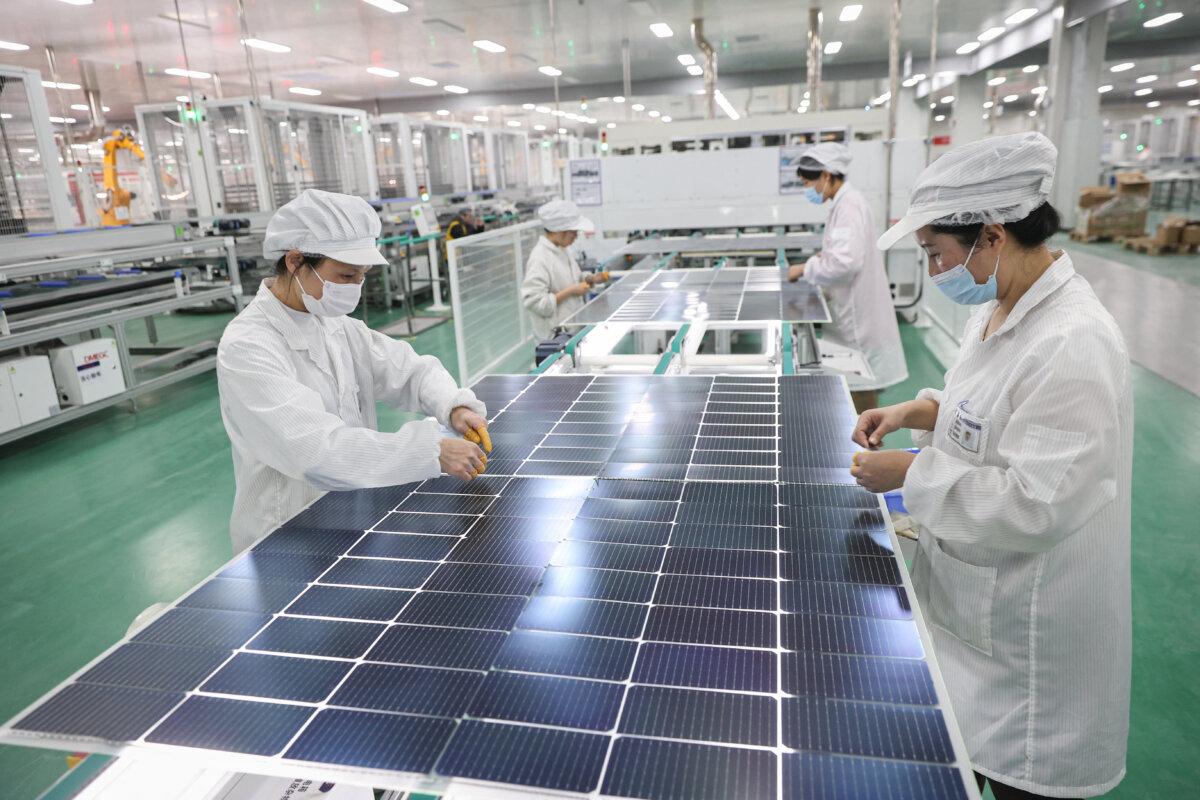
Employees work on solar modules made for export at a factory in Lianyungang, Jiangsu Province, China, on Jan. 4, 2024. (STR/AFP via Getty Images)
Growing International Resistance
China’s industrial overcapacity is increasingly seen as a global problem.
The Trump administration’s new National Security Strategy released on Dec. 4 calls for a rebalancing of U.S.–China economic relations and stresses reciprocity to restore “America’s economic independence.” The document urges allies, including the EU, Japan, South Korea, Australia, Canada, and Mexico, to adopt similar rebalancing measures, arguing that no region alone can absorb China’s immense surplus production.
The EU’s tone is also hardening. Fresh off a visit to China, French President Emmanuel Macron issued one of his strongest warnings yet, telling French business daily Les Échos that China’s trade surplus with Europe is unsustainable, particularly as Beijing imports fewer European goods.
“If [China doesn’t] react, in the coming months, we Europeans will be obliged to take strong measures and decouple, like the U.S., [with], for example, tariffs on Chinese products,” Macron said.
He said he had already discussed the issue with European Commission President Ursula von der Leyen.
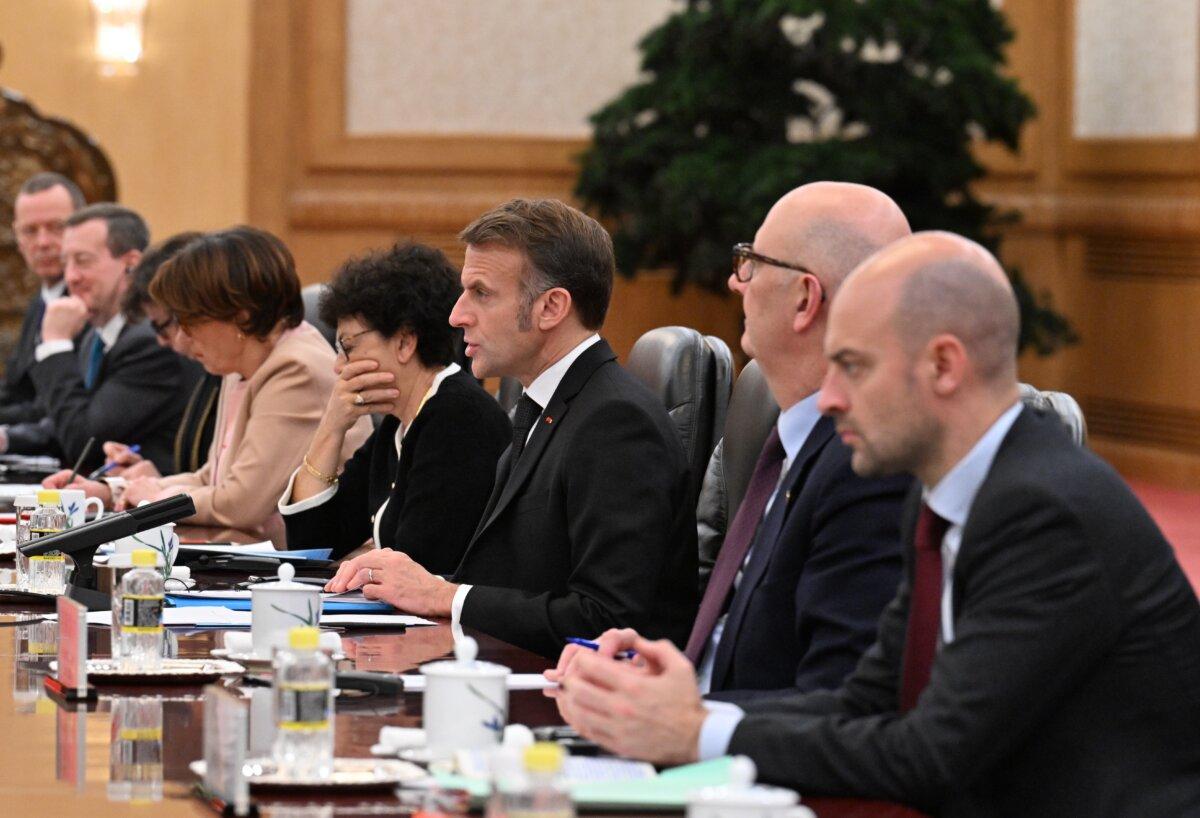
French President Emmanuel Macron (C) speaks to Chinese leader Xi Jinping (not seen) during a meeting in Beijing on Dec. 4, 2025. (Adek Berry-Pool/Getty Images)
The numbers are stark. France ran a goods trade deficit of 47 billion euros ($54.7 billion) with China in 2024, according to Fortune Magazine, which cited the French Treasury. Chinese data showed that China’s surplus with the EU reached a historic $143 billion in the first half of 2025.
Mexico is also signaling a shift. Its legislators are set to vote this week on a proposal by Mexican President Claudia Sheinbaum to impose new tariffs on Chinese imports, which is widely viewed as a move to align more closely with U.S. trade policy.
Fan said he expects more countries to follow, deploying tariffs and non-tariff barriers as China’s model increasingly destabilizes global markets. With Beijing unwilling to address problems created by its overcapacity, he said, rising trade conflict is inevitable.
Can Beijing’s Current Trade Model Endure?
Recent assessments suggest that the model may have a limited runway. In the 2025 sustainable trade index released by the Hinrich Foundation and the International Institute for Management Development’s World Competitiveness Center, China ranked 16th out of 30 major economies, lagging behind other Asian economic hubs.
The index evaluates countries based on economic openness, social resilience, and environmental sustainability.
Chiou said China is slipping across all three. Beijing is running large fiscal deficits with diminishing returns. Its property-market collapse is worsening and China’s local governments face mounting debt risks. Meanwhile, weak social safety nets push the Chinese public to save heavily rather than spend.
“The CCP’s strategy of pushing exports won’t go far,” he said. “It assumes that once products are shipped abroad, there will always be buyers, but real economic prosperity ultimately depends on domestic consumption. In China, the money earned from exports is not shared by the whole population, and ordinary people cannot partake in the benefits of economic growth.
“So the more China exports and the more capacity it builds, the weaker domestic demand becomes. Once foreign trading partners raise barriers, China’s exports will run into serious obstacles.”
“Strengthening exports worked 30 years ago, but the era has changed,“ Chiou said. ”Export expansion alone cannot save the economy.”
Fan offered a similarly bleak outlook. By repeatedly disrupting global trade norms, Beijing has ensured international pushback, he said, and over time, the global system will find a new equilibrium, one far less favorable to China.
“The CCP is likely to face a very dark period,” Fan said. “Because when international markets close off and domestic demand is insufficient, this model either collapses or is forced into transformation. It’s only a matter of time.”
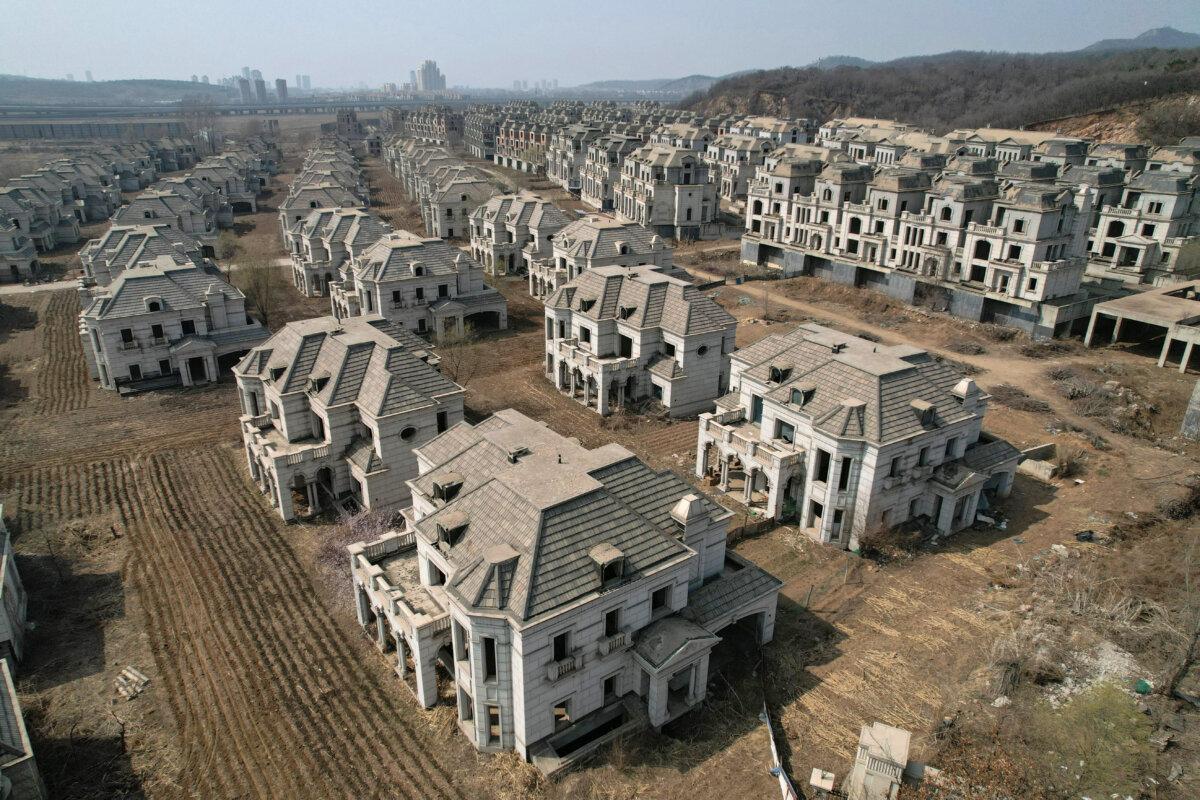
Deserted villas in a suburb of Shenyang, Liaoning Province, China, on March 31, 2023. (Jade Gao/AFP via Getty Images)
Ning Haizhong and Yi Ru contributed to this report.