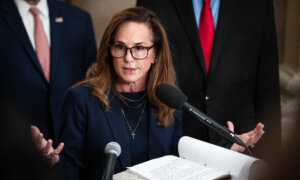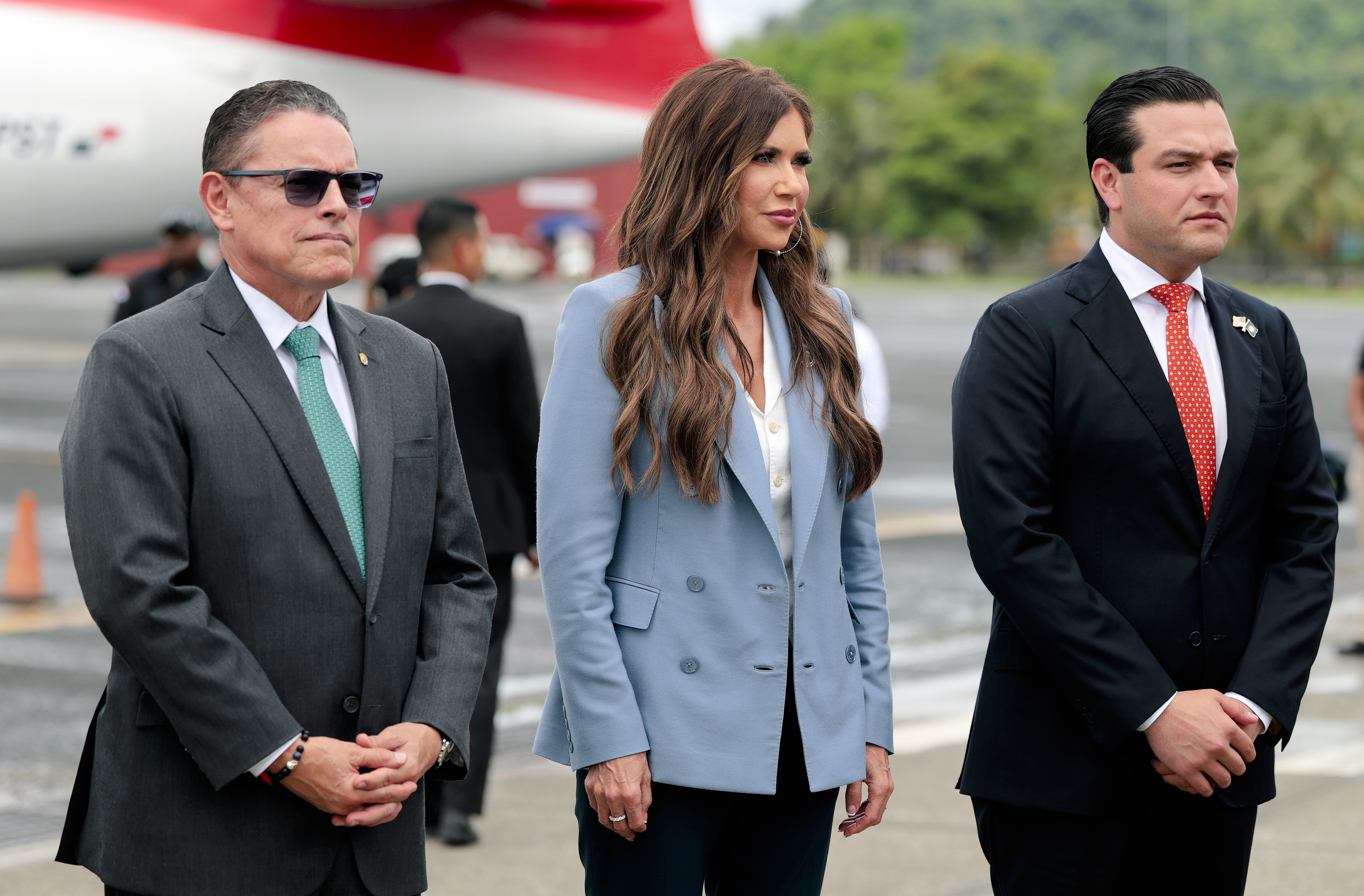

U.S. Ambassador to Panama Kevin Marino Cabrera said in an interview published on Oct. 5 that the United States views the Chinese Communist Party (CCP) as a “malign” influence in Panama and that those participating in the regime’s corruption won’t be granted visas to the United States.
Cabrera sat down with local publication Contrapeso Panama for an interview in Spanish and was direct about the United States’ concerns.
“We see the Chinese presence as malign. ... At the end of the day, 70 percent of what passes through the [Panama] Canal goes to and from the United States, so their influence is very worrying to us,” he told the publication.
Cabrera’s position echoes that of U.S. Secretary of War Pete Hegseth, who voiced similar views in April, and President Donald Trump, who raised the idea of U.S. ownership and control of the canal during his campaign. During his inauguration speech, he said China was “operating” the passage, critical for its role in global trade.
“We didn’t give it to China. We gave it to Panama and we’re taking it back,” he said.
Secretary of State Marco Rubio told Panama President José Raúl Mulino in February that the United States viewed the CCP “threat” as a violation of the neutrality treaty and would take necessary measures if Panama did not.
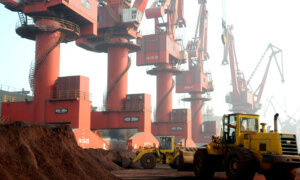
Hong Kong-based CK Hutchison holds a 90 percent stake in the Panama Ports Company, which operates the Panama Canal. Under pressure from Washington, the conglomerate in March agreed to sell its stake and hand over operations of two ports to a group led by U.S. investment company BlackRock.
Cabrera pointed to an audit that found that the Panama government had “left $1.3 billion on the table” in its contract with CK Hutchison.
“They owe Panama more than $600 million. I'd say that’s pretty malignant. Ten million would be something, because it’s a large contract... but $600 million?” Cabrera said.
Panama had joined the CCP’s Belt and Road Initiative (BRI) in 2017, and saw direct investment from Beijing in ports, mines, transportation, banking, and trade. Panama exports to China increased from about $43 million in 2017 to more than $1 billion in 2021, according to export data. After Rubio’s visit this year, Mulino withdrew from BRI.
Cabrera said BRI projects have seen delays, construction issues, and also “corruption.”
“They come in, give away money, and engage in corruption, which the U.S. doesn’t do. American companies can’t participate in those things. Just look at Chile, Peru, and Ecuador: the dams they built, the mines they built. It’s been a disaster,” Cabrera said.
He added that the regime has backed cyberattacks around the world and in the region, and Chinese state-backed companies have had a hand in the regime’s global cyberespionage.
“In the end, China is selling you a pig in a poke,” he said, adding that the United States is keeping an eye on officials under CCP influence.
Contrapeso Panama had reported in September that former Panama Canal official Jorge González received a $13,000 monthly consultancy contract from a Chinese firm building a bridge over the canal. González was subsequently called on by the Assembly to testify on the issue and failed to appear.
“It’s quite worrying that a Canal official receives contracts. I would call it a bribe. He received a bribe from a Chinese Communist Party company. That would violate the Neutrality Treaty,” Cabrera said.
He said he hoped it was an isolated case, but it was a clear example of the CCP’s “malign influence on the Canal. Corrupting, giving bribes to a Canal executive.”
Corrupt officials will be denied U.S. visas, Cabrera said, including in cases of “participation with Chinese companies that sell corrupt and untrustworthy technology.”
“Again, a visa is a privilege, not a right. And we’re going to make sure that people who enter our country do so to contribute,” he said. “People have to bear the consequences for their actions. ... Everyone has the right to do what they want, but we also have the right to decide who enters our country.”
Reuters contributed to this report.