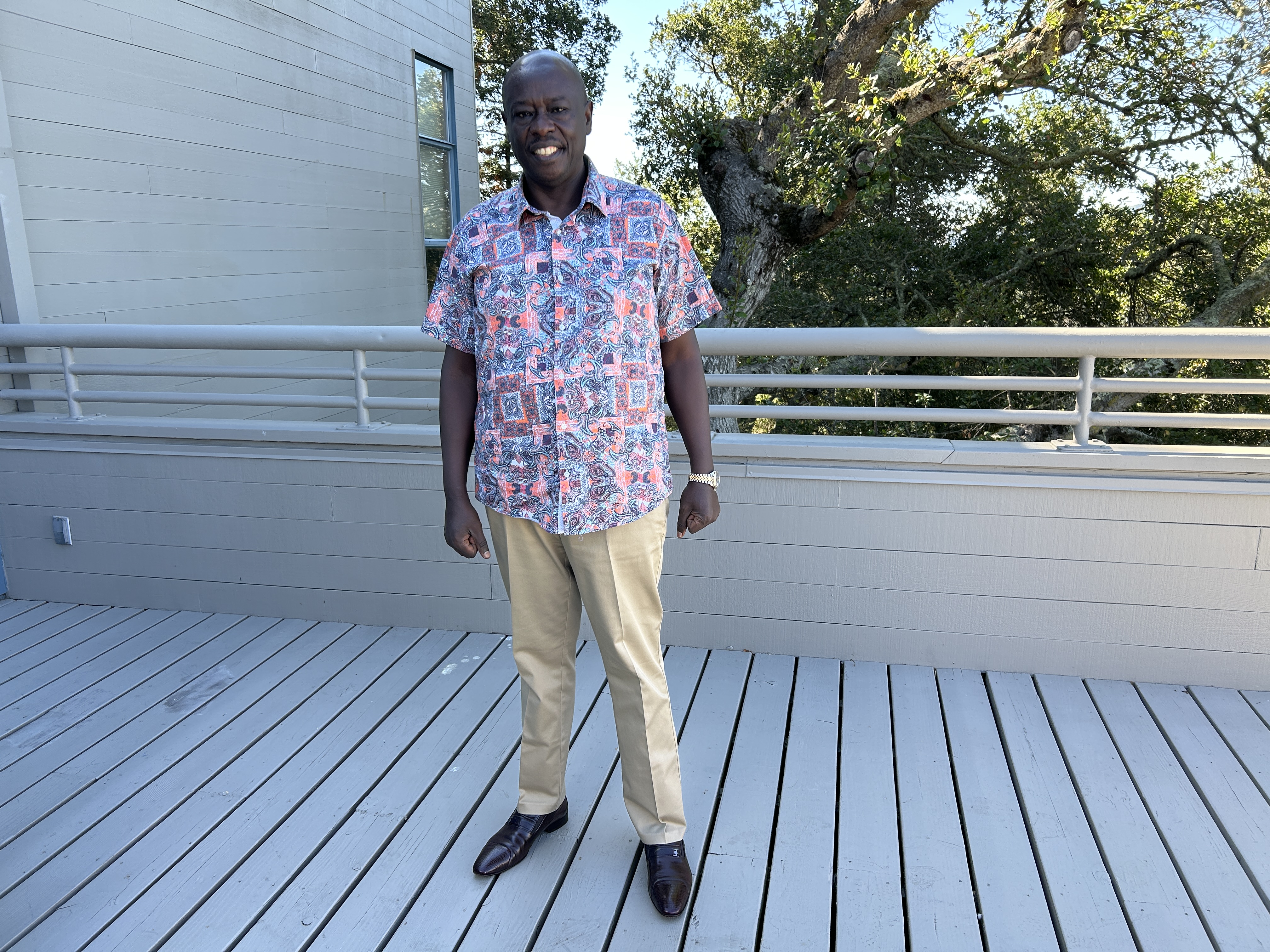
Kenyan politician and former Deputy President Rigathi Gachagua said China’s Belt and Road Initiative (BRI) has entrenched systemic corruption in Kenya and fueled severe human rights abuses, including the abduction of activists who criticized the alleged misuse of Chinese loans.
The Epoch Times and its sister media outlet NTD conducted an exclusive interview with Gachagua on Aug. 9 while he was visiting Northern California.
Gachagua said the Kenya–China partnership has shifted from development to exploitation.
“Billions of dollars borrowed from China are not being utilized for public good,” he said. “There is a lot of deal-cutting between the Chinese contractors and the Kenyan government officials. Most of these projects that are being done by Chinese companies, they are full of corruption.
“The contractors who have come from China are in bed with government officials to steal most of this money. And this is money that the people of Kenya will have to pay one day.”
He called the BRI an “economic invasion” by communist China that is crippling Kenyan businesses.
“[The BRI] has literally reduced our businesspeople [to] beggars,” he said. “The Chinese [businesses] have come and taken over even small businesses—hardware shops, small-scale construction, even kiosks—so our people have been driven out of business.”
According to Gachagua, flagship BRI infrastructure projects benefit Chinese firms while excluding local labor.
“These contracts are opaque by design,“ he said. ”Chinese state firms get the deals, local oversight is bypassed, and billions disappear.”
Human Rights Violations
Over the past two years, international media and human rights organizations have closely followed and reported on the phenomenon of dissidents continually disappearing within Kenya. Amnesty International and the Kenya National Commission on Human Rights have repeatedly condemned these “enforced disappearances” as serious human rights violations, calling for government accountability.
Gachagua said this widely reported political repression is linked to allegations of corruption related to Chinese involvement in the local economy.
“The young people—who are the subject of victimization by government—complain about ... the very huge loans that are taken from China and are not utilized for the public good, yet the Kenyan people will have to pay,“ he said. ”And they have raised concerns about how the Chinese have taken over the Kenyan economy.”
Dissidents have experienced torture and other mistreatment after speaking out, according to media reports.
Gachagua said these government actions violate rights protected by the 2010 Constitution of Kenya, especially freedom of expression, the right to assemble and demonstrate, and the rights of arrested persons.
“These disappearances are not just attacks on individuals; they are attacks on our democracy,” he said.
Sovereignty at Stake
Kenya is billions of dollars in debt to China. Gachagua warned of potential loss of sovereignty.
“This is not just about money,“ he said. ”It’s about our ability as a nation to protect our people’s rights, our economy, and our sovereignty.”
He called on leaders to honor constitutional rights and resist foreign power encroachment.
“Our constitution is clear about the rights of Kenyans,” Gachagua said. “It is the duty of our leaders to defend those rights against any external or internal threat, whether that threat comes from economic exploitation, political intimidation, or foreign interference.”
Gachagua was impeached and removed from the deputy presidency in October 2024 on five of the 11 charges raised against him—all of which he denied. The charges included money laundering and corruption. Kithure Kindiki was sworn in as his successor.
Gachagua said he intends to run in the August 2027 presidential election, signaling his readiness to continue his political efforts.
“Our message is clear,” he said. “We have a date with you in August 2027. ... We shall be elected.”
US–Kenya Relations
Gachagua said he envisions a “strategic reset” with the United States if he is elected, emphasizing democratic values, transparency in trade, and mutual respect.
“The United States has been a traditional partner of Kenya,“ he said. ”We share values of democracy, human rights, and the rule of law. My government would prioritize strengthening those ties, ensuring that our partnerships are based on transparency and mutual benefit—not exploitation.”
He expressed hope that future U.S.–Kenya relations will focus on capacity building, anti-corruption cooperation, and sustainable infrastructure rather than debt-heavy projects.
“We want to work with the United States to invest in projects that are clean, accountable, and that truly benefit the Kenyan people without mortgaging our future,“ Gachagua said. ”America can be a great ally in restoring our sovereignty and safeguarding our constitution.”
International Appeal
He urged global democracies to hold China’s BRI accountable.
“This is not just about Kenya; it’s a continental problem,” he said. “China’s model is spreading debt, corruption, suppression. If Africa’s democracies fall to this, the geopolitical balance will shift in ways that favor authoritarian regimes.”
Despite political challenges, according to Gachagua, silence is complicity.
“We owe it to the people of Kenya—and to future generations—to expose the truth about China’s economic invasion and the corruption it breeds,” he said.
Nancy Githoitho contributed to this report.